Cao Wei · Attendant Gentleman of the Palace
Sima Fu
courtesy name 叔达 · 180–272
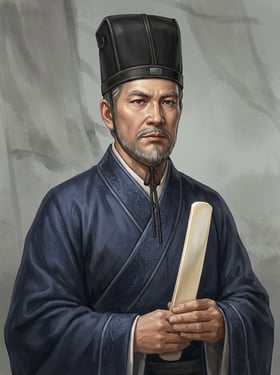
When the Duke of Gaogui Village, Cao Mao, was assassinated, Sima Fu was overcome with grief; he pillowed the corpse of Cao Mao on his lap and wept, blaming himself with the words, 'That Your Majesty was slain is this subject's crime,' showing his loyalty and compassion toward the house of Wei. He once urged the officials to establish an heir-king early to settle the people's hearts, and when Cao Huan abdicated the throne he bowed weeping, declaring of himself, 'To the end I will not betray Wei'; even when enfeoffed as Prince of Anping he would not accept it, showing his unwavering fidelity to the state of Wei.

Life
In the novel: 5 chapters · In the Records: 3 volumes
Life180–272
254 CE (Zhengyuan 1)
- Deposition of Cao FangLuoyangAdvisor
- Battle of TaoxiTaoxiCommander
266 CE (Taishi 1)
Allegiance
- Cao Wei
- Hatched: dated by chapter
- Life event
List all 3 stops
On the boards
Compare with someone →Where this person ranks on each board.
Who they were
Character profile
- Character
- When the Duke of Gaogui Village, Cao Mao, was assassinated, Sima Fu was overcome with grief; he pillowed the corpse of Cao Mao on his lap and wept, blaming himself with the words, 'That Your Majesty was slain is this subject's crime,' showing his loyalty and compassion toward the house of Wei. He once urged the officials to establish an heir-king early to settle the people's hearts, and when Cao Huan abdicated the throne he bowed weeping, declaring of himself, 'To the end I will not betray Wei'; even when enfeoffed as Prince of Anping he would not accept it, showing his unwavering fidelity to the state of Wei.
- Life
- In the third year of Jiaping, Sima Fu was promoted from Minister of Works to Grand Commandant. When the Duke of Gaogui Village was assassinated, he grieved without end, pillowing the emperor's corpse on his lap and weeping.
- Anecdotes
- Sima Fu was the younger brother of Sima Yi, a senior minister who served through three reigns, holding such posts as Palace Steward, Prefect of the Masters of Writing, Grand Commandant, and Grand Tutor of Wei. He took part in the Incident at the Gaoping Tombs and once commanded the central army eastward to relieve the siege of Xincheng. After Cao Mao was assassinated, he requested that Cao Mao be buried with the rites of a prince.
Historical Record
Sima Fu, courtesy name Shuda, was Sima Yi’s younger brother and for many years held a prominent position among the Wei court’s senior ministers. In the third year of the Jia Ping era, he was transferred from Director of the Imperial Secretariat to Minister of Works, and in the seventh month of that same year succeeded Wang Ling as Grand Commandant. Later, when Wu forces besieged Hefei Xincheng, the court ordered Sima Fu to repel them. After the Shu general Jiang Wei invaded Didao and Wang Jing was defeated at Taoxi, Sima Fu was again dispatched to provide reinforcements. The material cited in Pei’s commentary, together with the annals, portrays the military responsibilities entrusted to him: he was charged both with resisting Eastern Wu and with supporting the fighting on the western front.
During the Incident at the Gaoping Tombs, Sima Fu, as Director of the Imperial Secretariat, joined Grand Commandant Jiang Ji and others in submitting a memorial supporting the removal of Cao Shuang and his brothers from command of the troops and ordering them to return to their residences. Cao Mao raised troops to attack Sima Zhao and was ultimately killed by Cheng Ji. On hearing the news, Sima Fu rushed to the scene, wept with the emperor’s thigh beneath his head, and said, “I am to blame for the killing of Your Majesty.” This account places him at the scene of a dramatic upheaval in the political order and preserves his grief over the emperor’s death. Thereafter, Grand Tutor Fu and other ministers petitioned for Cao Mao to be buried with the rites of a king, and the empress dowager approved their request.
In the Novel
Romance of the Three Kingdoms portrays Sima Fu as a cautious, decorous elder of the Sima clan. After Cao Cao’s death, while serving as an attendant to the heir apparent, he urges Cao Pi to assume the title of King of Wei without delay, so as to reassure the people. This early scene appears in the novel, but has no corresponding account in the historical biographies provided. During the Incident at the Gaoping Tombs, the novel has him draft a memorial together with Jiang Ji, in support of Sima Yi’s move. The historical biographies do record Sima Fu’s participation in the memorial, but the novel gives the specific events a more dramatic treatment.
At the Deposition of Cao Fang, Sima Fu supports the empress dowager’s choice of Cao Mao at the ministers’ discussion over who should be installed as the new ruler. After Cao Mao is killed, he weeps with his head resting against the emperor’s body and asks that he be buried with the rites of a king, broadly following the historical accounts of his grief and petition for a royal burial. For the Wei-Jin Dynastic Transition, the novel then has him weep and bow before Cao Huan, declaring that as a minister of Wei he will never betray the dynasty, and refusing the title of Prince of Anping. This specific episode of refusing a princely title and demonstrating loyalty to Wei through his actions is not recorded in the Records of the Three Kingdoms; it is the novel’s concentrated portrayal of his character.
Key Relationships
Sima Fu and Sima Yi were brothers and members of the Wei court’s power center. During the Incident at the Gaoping Tombs, he and Sima Yi and others jointly drove the removal of Cao Shuang; the novel goes further, depicting him as a court official who helped draft the memorial. His political position thus combined family ties with his official responsibilities at court.
His relationship with Cao Mao is most vividly expressed in his mourning after the emperor’s death: historical accounts say that he wept with the emperor’s thigh beneath his head and requested a royal burial; the novel retains this scene and casts his grief as a defense of the legitimacy of the Wei house. In the novel, Sima Fu is also connected with Cao Huan: on the day of the dynastic transition, he weeps and bows before Cao Huan, refuses a title, and declares that he will “never betray Wei.” This specific episode is unique to the novel.
Signature Scenes
The scene with the strongest basis in the historical biographies takes place after Cao Mao is killed: Sima Fu hurries to the scene, weeps with the emperor’s thigh beneath his head, and takes responsibility as a minister. He then joins the other ministers in petitioning for Cao Mao to be buried with the rites of a king. The pairing of grief with the granting of royal honors makes this one of the most distinctive episodes in his life.
The novel concludes its portrayal of Sima Fu with the Wei-Jin Dynastic Transition: after Cao Huan hands over the imperial seal and ribbons, Sima Fu weeps and bows before him, declares that he will not betray Wei, and refuses the title of Prince of Anping. The scene extends the grief for the emperor recorded in the historical accounts into an explicit display of loyalty to Wei. However, both the refusal of the title and the oath at the scene of the dynastic transition are unique to the novel and must not be conflated with the historical record.
Quotes
6 lines in the books · 3 featured
「臣身為魏臣,終不背魏也。」
This line shows Sima Fu's loyalty to the state of Wei, standing in sharp contrast to the Sima clan's usurpation.
「弒陛下者,臣之罪也!」
This is Sima Fu's declared stance on the death of Cao Mao, embodying his complex position amid the political struggle.
「伏見中令,故高貴鄉公悖逆不道,自陷大禍,依漢昌邑王罪廢故事,以民禮葬。臣等備位,不能匡救禍亂,式遏姦逆,奉令震悚,肝心悼慄。春秋之義,王者無外,而書『襄王出居于鄭』,不能事母,故絕之於位也。今高貴鄉公肆行不軌,幾危社稷,自取傾覆,人神所絕,葬以民禮,誠當舊典。然臣等伏惟殿下仁慈過隆,雖存大義,猶垂哀矜,臣等之心實有不忍,以為可加恩以王禮葬之。」
This memorial embodies Sima Fu's final respect for and defense of the Cao-Wei royal house after Cao Mao was killed.
Family, lords and rivals
2 relationships
 Sima ShiFamily · Kina clan uncle of Sima Shi; the first among the ministers to submit a memorial supporting the Empress Dowager’s proposal to install Cao Mao
 Cao MaoLord & vassal · LordHe went inside, saw the corpse resting on his thigh, and wept, saying, “It is my crime that Your Majesty was murdered”; he requested that he be buried with the rites of a king
Who is Sima Fu connected to?
Pick someone to see how many steps lie between them and Sima Fu.
History vs. novel
5 points · 4 novel-only
| History | Novel |
|---|---|
| Persuading Cao Pi to Take the ThroneNovel only | |
| — | After Cao Cao’s death, Sima Fu urged Cao Pi to stop mourning for the moment and discuss major affairs. He also advocated appointing an heir to the throne as soon as possible to steady people’s hearts. ch. 78 |
| Enthroning Cao MaoNovel only | |
| — | When Sima Shi wanted to enthrone Cao Ju, the Empress Dowager proposed Cao Mao. Sima Fu supported her, helping bring about Cao Mao’s enthronement. ch. 109 |
| Burying Cao Mao with the Rites Due a KingNovel embellishes | |
After Cao Mao was assassinated, Sima Fu and the ministers submitted a memorial. Though they acknowledged that burying him with the rites due a commoner accorded with ancient precedent, they still requested that he be buried with the rites due a king as an act of special grace. The Empress Dowager accepted their recommendation. vol. 4 | After Cao Mao was assassinated, Sima Fu laid his head upon the body and wept bitterly, blaming himself for the crime of regicide, then had the body prepared and laid out. ch. 114 |
| Lamenting Over the Body in Self-ReproachNovel only | |
| — | When Sima Fu saw Cao Mao’s body, he laid his head on Cao Mao’s legs and wept, lamenting that he was guilty of regicide. ch. 114 |
| Weeping and Bowing Before Cao HuanNovel only | |
| — | After Cao Huan abdicated, Sima Fu wept and bowed before him, declaring that as a Wei subject he would never betray Wei. Sima Yan made him Prince of Anping, but he declined the title. ch. 119 |
- Persuading Cao Pi to Take the ThroneNovel only
- Novel
After Cao Cao’s death, Sima Fu urged Cao Pi to stop mourning for the moment and discuss major affairs. He also advocated appointing an heir to the throne as soon as possible to steady people’s hearts.
ch. 78
- Enthroning Cao MaoNovel only
- Novel
When Sima Shi wanted to enthrone Cao Ju, the Empress Dowager proposed Cao Mao. Sima Fu supported her, helping bring about Cao Mao’s enthronement.
ch. 109
- Burying Cao Mao with the Rites Due a KingNovel embellishes
- History
After Cao Mao was assassinated, Sima Fu and the ministers submitted a memorial. Though they acknowledged that burying him with the rites due a commoner accorded with ancient precedent, they still requested that he be buried with the rites due a king as an act of special grace. The Empress Dowager accepted their recommendation.
vol. 4
- Novel
After Cao Mao was assassinated, Sima Fu laid his head upon the body and wept bitterly, blaming himself for the crime of regicide, then had the body prepared and laid out.
ch. 114
- Lamenting Over the Body in Self-ReproachNovel only
- Novel
When Sima Fu saw Cao Mao’s body, he laid his head on Cao Mao’s legs and wept, lamenting that he was guilty of regicide.
ch. 114
- Weeping and Bowing Before Cao HuanNovel only
- Novel
After Cao Huan abdicated, Sima Fu wept and bowed before him, declaring that as a Wei subject he would never betray Wei. Sima Yan made him Prince of Anping, but he declined the title.
ch. 119
Events
Events (7)
Battles and events the texts place this person in, by date.
Battles
- 255Battle of TaoxiCommander
Continue
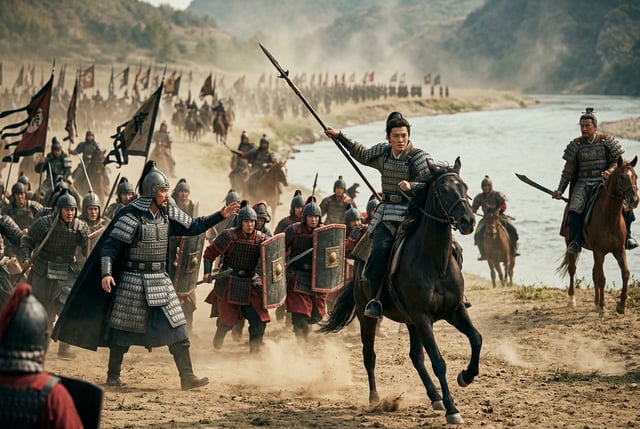
Battle of Taoxi
Relationship timeline2 entries ▸
Novel · ch. 109
- Sima Shi§21
Kin
a clan uncle of Sima Shi; the first among the ministers to submit a memorial supporting the Empress Dowager’s proposal to install Cao Mao
Novel · ch. 114
- Cao Mao§14
Lord
He went inside, saw the corpse resting on his thigh, and wept, saying, “It is my crime that Your Majesty was murdered”; he requested that he be buried with the rites of a king
Inner monologues · AI-generated1 monologue ▸
- I am Sima Fu, courtesy name Shuda. Living through the transition from Wei to Jin, I often held fast to the duties of a s