
Background
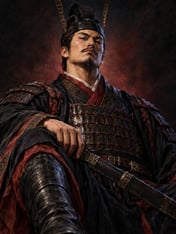
The killing of Sun Chen was not an isolated palace attack, but the concentrated eruption of a power imbalance within the Eastern Wu regime. After Sun Xiu took the throne, Sun Chen and his clan controlled the palace guard, and Sun Chen’s power eclipsed that of the other ministers. The Records of the Three Kingdoms states that “five marquises from one family all commanded the palace guard,” and that Sun Xiu even “treated him with respect and did not contradict him” when speaking to him. The emperor maintained the relationship through frequent rewards, but could not dispel his fear of a coup, revealing a clear divide between the sovereign’s nominal authority and actual military control.
The power of Sun Chen’s faction was rooted in earlier political struggles. The novel presents Sun Chen’s earlier deposition of the King of Kuaiji and elevation of Sun Xiu as a dramatic explanation for how he came to rely on his merit in “establishing a ruler” and, after being rebuffed over a birthday banquet, began to harbor rebellious intentions. The historical record offers a more complex picture: Sun Xiu publicly praised Sun Chen for bringing him to the throne, ordered that those who had participated in the decision be identified and rewarded according to precedent, and at the same time separately appointed a General of the Guards, a Censor-in-Chief, and a General-in-Chief to divide up responsibilities. This both rewarded merit and sought to redistribute power. Yet while the palace guard remained under the control of the Sun clan, institutional arrangements were not enough to resolve the security dilemma.
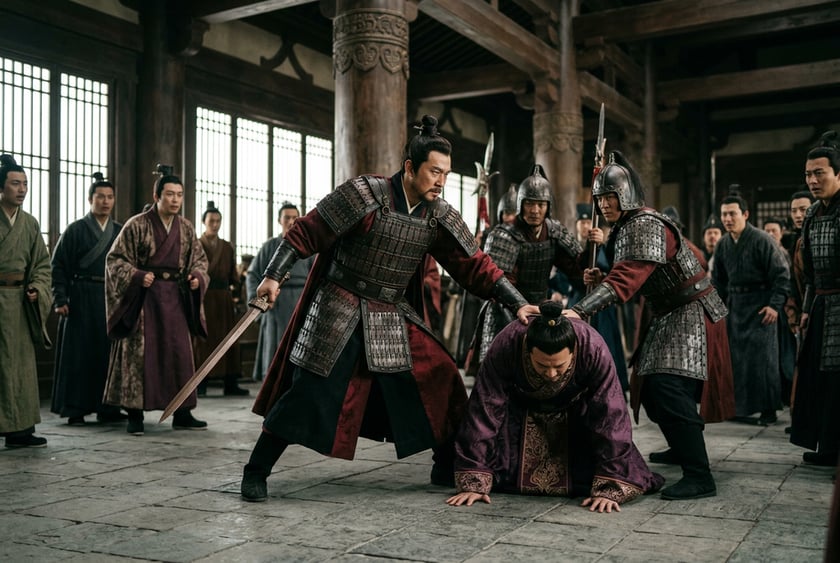
The date also requires careful treatment. The title “Execution of Sun Chen at the Lari Feast” summarizes the event, but juan 48 of the Records of the Three Kingdoms first records the political situation and edicts of the eleventh month, then states that Sun Chen was executed on the “twelfth month, Wuchen, the Lari Feast.” Juan 64 likewise records a Lari gathering on Wuchen in the twelfth month of the first year of Yongan. The event should therefore be understood as a coup at the Lari gathering near the end of the first year of Yongan, rather than treating the month given in the novel’s chapter title or modern summaries as an indisputably precise date.
Main Figures
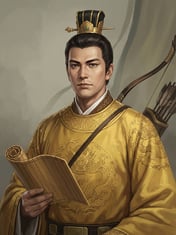
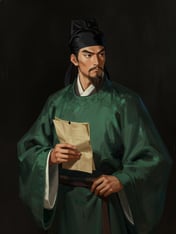
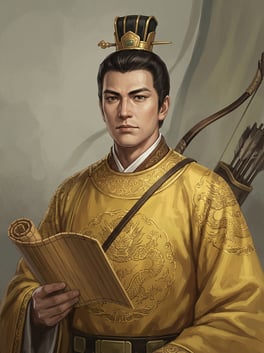
Sun Xiu was the political mastermind and final decision-maker. After detecting Sun Chen’s “treasonous plot,” he did not confront him openly at once, but secretly conferred with Zhang Bu and Ding Feng, summoned Sun Chen to the palace for the Lari gathering, and then used an imperial edict to arrest and execute him. This strategy exploited the palace ritual’s controlled setting: Sun Chen had to obey the emperor’s summons and enter a space where the emperor could concentrate his forces. Sun Xiu, meanwhile, framed the capture as a state action against a “treacherous minister,” rather than an open clash between two factions.
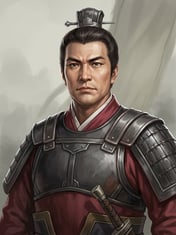
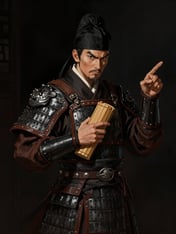
Zhang Bu played a key role in coordinating between the court and the outside and in carrying out the operation within the palace. The historical record says that Sun Xiu secretly plotted with Zhang Bu and, after Sun Chen was captured, issued an edict crediting Zhang Bu with suppressing treachery and raising his rank. The novel, by contrast, has Zhang Bu first secretly report Sun Chen’s words to Sun Xiu and then act as an inside agent. Ding Feng provided the plan of action and the military deterrent: the novel particularly emphasizes his suggestion to use the Lari gathering and his assignment of Wei Miao and Shi Shuo to handle outside affairs. Both accounts stress cooperation, but their specific divisions of responsibility and details of the scene should not be conflated as though they were all the same kind of historical evidence.
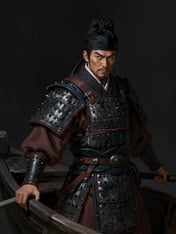
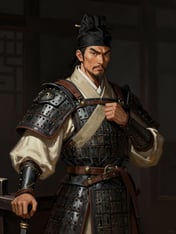
In the novel, Wei Miao and Shi Shuo witness Sun Chen mobilizing troops and moving weapons from the armory, prompting Sun Xiu to act more quickly. The brief account in juan 64 of the Records of the Three Kingdoms does not mention this secret report. Sun Kai was a member of Sun Chen’s clan: the historical record says he tried to flee north by boat and was pursued and killed, after which Sun Chen’s three clans were exterminated. Sun Jun, Zhuge Ke, Teng Yin, Lü Ju, Wang Dun, and others link the episode to earlier internal struggles and purges in Wu. When Sun Xiu challenges Sun Chen with the cases of Teng Yin and Lü Ju, he places Sun Chen’s personal plea for survival back within the context of past crimes and political responsibility.
Central Issues
First, the central issue was whether sovereign authority could function independently of a powerful minister’s military protection. Sun Chen controlled the palace guard, so even with edicts at his disposal, Sun Xiu had to rely on people such as Ding Feng and Zhang Bu to organize effective force. The Lari gathering worked not because the ritual itself had some miraculous power, but because it temporarily brought the powerful minister, the emperor, and those carrying out the plan into a setting the palace could control. Sun Chen entered the palace with his men, but still could not mobilize enough force at the banquet to reverse the situation. His arrest was thus a sudden reversal of the power network, not merely a contest of personal courage.
Second, the distinction between individual and collective responsibility determined whether the coup could be turned into stable rule. The historical record says that Sun Xiu ordered an announcement that “all who conspired with Chen are pardoned” and had five thousand men lay down their weapons. This reflects a strategy of isolating the principal offender quickly and preventing the palace guard from resisting as a whole. Yet the killing of Sun Kai and the extermination of Sun Chen’s three clans show that the pardon did not mean an end to reprisals against the clan. The novel further dramatizes the arrest of Sun Chen’s brothers, the killing of hundreds of his relatives and followers, and the restoration of the tombs of former ministers, presenting a stronger narrative of good being vindicated and evil punished. Both accounts reveal the tension between removing a powerful minister and controlling the scale of the purge.
Third, the legitimacy of the coup came not only from victory, but also from the reinterpretation of earlier political trauma. By challenging Sun Chen over Teng Yin and Lü Ju, Sun Xiu implies that Sun Chen cannot ask to be relocated and spared while evading the political persecutions in which he himself took part. The novel also includes Zhuge Ke and others in a narrative of loyal ministers being vindicated. However, this execution, as recorded in the historical sources, does not by itself prove that Wu thereafter gained a lasting capacity for institutional self-correction. Punishing past crimes could establish moral legitimacy, but could not on its own replace stable constraints on power.
Political Consequences
In the short term, Sun Xiu successfully removed a faction powerful enough to threaten his throne, and the response avoided the large-scale counterattack by the palace guard mentioned in the accounts. The announcement that Sun Chen’s followers who had conspired with him could be pardoned, and the acceptance of weapons laid down by five thousand men, show that the victors understood that if they drove every soldier who had carried out orders into becoming an enemy, a palace coup could escalate into a military conflict. At the same time, Sun Xiu immediately appointed Zhang Bu and granted him rank and rewards, showing that the post-coup order still depended on core allies and their military resources.
But this victory did not eliminate the structural vulnerabilities in Wu’s politics. Sun Chen’s ability to rule autocratically stemmed from the deep entanglement of the palace guard, the clan, and central decision-making. Sun Xiu used a single secret plot and sudden arrest to remove the immediate personal threat, but still had to rely on military commanders to enforce imperial authority. The episode therefore looks more like a transfer of power from Sun Chen back to Sun Xiu and his confidants than the establishment of institutions capable of sustainably checking powerful ministers. Its political significance lay both in the restoration of imperial authority and in the renewed confirmation of the logic of palace coups.
Counterfactual Analysis
If Sun Chen had refused to attend the Lari gathering, or immediately mobilized the palace guard after entering the palace, Sun Xiu’s plan might have lost its element of surprise. The historical record describes Sun Chen as having power that eclipsed the ruler and a clan that controlled the palace guard, making this no mere fantasy. But the surviving passages do not provide a complete account of the forces deployed by either side, so it is impossible to say with certainty that Sun Xiu would have won or lost. The more cautious judgment is that if the action had turned into open confrontation, the stability of the court and the security of Jianye would have faced greater danger, while whether Sun Chen’s followers would respond as a united force would have been a key factor in determining the outcome.
Conversely, if after capturing and killing Sun Chen, Sun Xiu had pursued more thorough individual interrogations and graduated pardons rather than extending punishment to the Sun clan, he might have reduced the grounds for another round of retaliation. But this could also have left the remnants of Sun Chen’s faction room to form new alliances. The coexistence of the historical record’s “all who conspired with Chen are pardoned” with the killing of Sun Kai and the extermination of Sun Chen’s three clans shows that the policy of the time was neither simply lenient nor purely punitive, but a compromise between removing the military threat, appeasing the troops, and punishing political responsibility. Whichever course was chosen, the real long-term test was whether military power could cease to be a tool by which powerful ministers coerced the emperor. The available evidence is insufficient to prove that this coup at the Lari gathering accomplished such an institutional transformation.