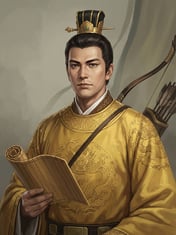
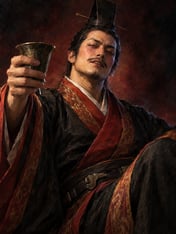
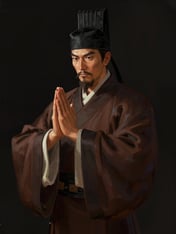
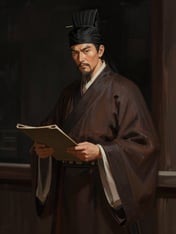
In 264 (the seventh year of Wu’s Yongan era; after Sun Hao Ascends the Throne, the era name was changed to Yuanxing), Sun Xiu died while Shu Han had just fallen, Jiaozhi had rebelled, and the situation within Wu was unstable. Wan Yu, Left Commandant of the Palace Guard, said that Sun Hao, Marquis of Wucheng, was talented and perceptive, eager to learn, and observed the laws. The Chancellor, Puyang Xing, and General Zhang Bu then proposed to Empress Dowager Zhu that Sun Hao be appointed. She agreed to let the ministers deliberate, and Sun Hao was subsequently welcomed and installed as ruler at the age of twenty-three; the era name was changed and a general amnesty was declared. This act settled the succession after Sun Xiu, placing Sun Hao on the throne of Wu and ushering in the period of his rule.
The Records of the Three Kingdoms records that when Sun Xiu died, Shu had just fallen, Jiaozhi had rebelled and defected, and the country was in shock and fear. The officials “desired to have a mature ruler,” and Wan Yu therefore recommended Sun Hao as “talented, discerning, decisive, and observant of the laws.” This was a collective decision to choose an adult ruler in a time of national crisis, not simply a rejection of the crown prince.
Romance
The novel makes the reason for changing the succession hinge on the statement that “[he was] too young to rule alone,” downplaying the external pressures of Shu's fall and the rebellion in Jiaozhi. This makes the deposition of the legitimate heir and the enthronement of Sun Hao seem more like the judgment of a few powerful ministers, such as Puyang Xing, about the young ruler's abilities.
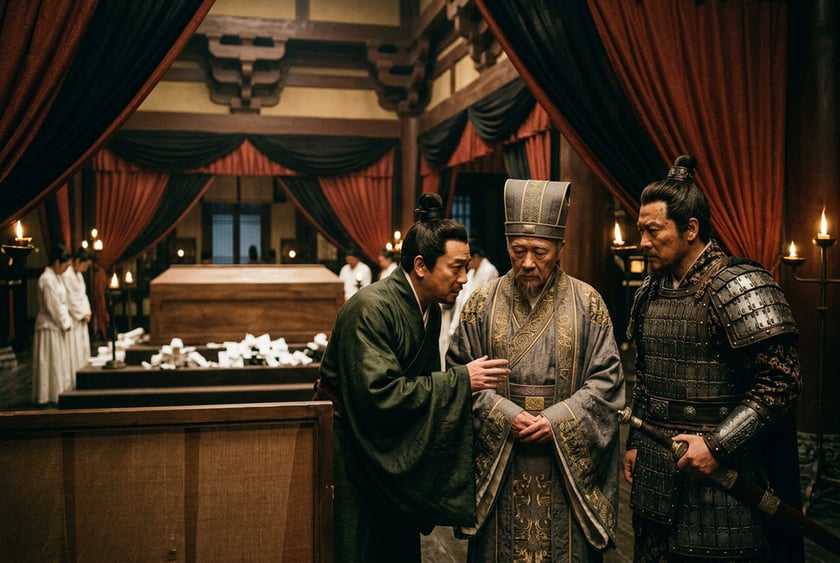
In the memorial hall of Wu ruler Sun Xiu, Wan Yu strongly recommends Sun Hao to Chancellor Puyang Xing and Left General Zhang Bu. The three look solemn, as if plotting in secret.
Sun Hao’s succession took place as Wu’s political situation came under pressure. When Sun Xiu died, Shu Han had just fallen, and Jiaozhi had also rebelled and broken away. The turmoil on the frontier and the external situation left Wu deeply alarmed. The histories summed up the political need of the time as “seeking a long-reigning ruler”: the successor was expected not only to be a member of the imperial clan, but also to govern for a considerable time and stabilize the situation. Thus, choosing an heir was not simply a matter of arranging succession by bloodline; it became a political choice amid crisis.
Sun Hao was originally the Marquis of Wucheng, a grandson of Sun Quan and son of Sun He. During Sun Xiu’s reign, Sun Hao received his title and went to his fief. The Records of the Three Kingdoms also records that some people among the commoners claimed Sun Hao would one day attain great eminence, and that Sun Hao “was secretly pleased, but did not dare reveal it.” This account indicates that, before his succession, he was already part of people’s imaginings about power. It does not, however, justify concluding that he had openly sought the throne or that the succession had already been decided. What can be confirmed is that, after Sun Xiu’s death, Sun Hao’s imperial-clan status and existing reputation made him a viable candidate.
Key Figures
Sun Xiu was the ruler whose death initiated this transfer of power, and a key figure about whom the historical sources provide limited information. The Records of the Three Kingdoms records that after his death, the Wu court welcomed Sun Hao to the throne; it does not elaborate on whether Sun Xiu designated a successor on his deathbed. The Romance of the Three Kingdoms, by contrast, adds a scene in which Sun Xiu summons Puyang Xing to the palace, has the crown prince Sun Wan pay his respects, and then dies after pointing at the prince. This dramatic scene makes the succession dispute more concrete, but it cannot be treated as equivalent to the historical record: it is a work of fiction and does not independently prove that Sun Xiu left an explicit testament.
Wan Yu, Puyang Xing, and Zhang Bu formed the political chain that advanced Sun Hao’s candidacy. Wan Yu had once served as magistrate of Wucheng and was on good terms with Sun Hao, giving him both prior contact through his local post and a voice in evaluating the candidate. He told Puyang Xing and Zhang Bu that Sun Hao was “talented, perceptive, and decisive,” and also stressed his love of learning and respect for the law, turning personal familiarity into public arguments for his fitness to govern. Puyang Xing and Zhang Bu then carried this recommendation into the sphere of power and jointly proposed enthroning Sun Hao to Empress Dowager Zhu.
Empress Dowager Zhu did not endorse Sun Hao’s abilities in her own name. Citing her status as a widow and her lack of understanding of the affairs of state, she left the judgment to her ministers, while setting a condition: that Wu suffer no harm and that the ancestral temples have a protector. Her response acknowledged the ministers’ responsibility for decision-making amid crisis while preserving the imperial family’s approval of the new ruler. The historical sources do not prove that the Empress Dowager had no influence at all. A more cautious interpretation is that, through a limited but crucial statement, she bridged the ministers’ recommendation and the succession within the imperial clan.
Core Issues
The first core issue is how succession qualifications were balanced between clan law and governing ability. Sun Hao belonged to the Sun imperial clan and was Sun He’s son; Wan Yu further praised him as “talented, perceptive, and decisive,” studious, and law-abiding. The Records of the Three Kingdoms does not record a public, fixed procedure for succession at this time, nor does it provide a full comparison with other candidates. Thus, enthroning Sun Hao drew on blood ties to preserve dynastic continuity while also invoking an assessment of ability to meet the demand for a “long-reigning ruler.” This dual argument appears more like a political consensus formed under crisis than the outcome of a fully open contest conducted according to established procedures.
The second issue is the network of relationships among those making the recommendation and its political role. Wan Yu’s close ties with Sun Hao may have lent his judgment a personal element, but the historical source also clearly records how he conveyed his assessment of the candidate to Puyang Xing and Zhang Bu. Puyang Xing and Zhang Bu did not merely repeat his words passively; they brought the proposal to Empress Dowager Zhu, advancing the choice at the level of decision-making. Sun Hao’s accession was therefore not the result of a single person “installing” him, but of a process in which a recommendation by an acquaintance, deliberation among senior ministers, and the Empress Dowager’s approval followed one another.
The third issue is how a crisis narrative shaped the legitimacy of the decision. The fall of Shu, Jiaozhi’s rebellion, and the alarm within Wu are placed by the Records of the Three Kingdoms in the context of the succession, showing that choosing a long-reigning ruler served a practical need for stability. But the need for stability does not mean that Sun Hao already possessed the governing ability that later events would require of him. The source’s assessment of his talents was a reason given when he was recommended, not a summary of his performance as ruler. Distinguishing between the two helps avoid using hindsight to conclude that Sun Hao’s enthronement was necessarily right or wrong at the time.
Political Consequences
As far as the directly verifiable outcome is concerned, the ministers welcomed Sun Hao to the throne, Empress Dowager Zhu did not oppose them, and Sun Hao ascended the throne at the age of twenty-three, after which he changed the reign era and issued a general amnesty. This completed the transfer of power after Sun Xiu’s death and gave Wu a new ruler swiftly amid internal and external troubles. Age and the expectation of a “long-reigning ruler” are not simply equivalent: the source records that Sun Hao was twenty-three, while also noting the court’s desire for a ruler who could govern for a long time and provide stability. This suggests that “long-reigning ruler” more likely referred to someone able to preside over political affairs continuously, rather than simply someone advanced in age.
However, the two passages available are insufficient to determine whether this enthronement brought stability or produced long-term institutional consequences. The Records of the Three Kingdoms focuses on the circumstances and process by which Sun Hao was chosen, and the cited passage does not describe the political situation afterward. The Romance of the Three Kingdoms, by contrast, casts the transfer of power as a dramatic conflict between a deathbed charge and a change of course by the ministers. The two accounts can be used to analyze differing narratives of succession, but cannot fill in what happened later. Since the outcome of the event is unspecified, discussion should be limited to how the succession was completed, rather than treating unrecorded success or failure as the event’s conclusion.
Counterfactual Analysis
If Sun Xiu did in fact designate the crown prince Sun Wan, but the ministers still enthroned Sun Hao, the succession could be interpreted as the ministers departing from the ruler’s wishes on the grounds of the crisis. But this scenario depends on an episode in the Romance of the Three Kingdoms and cannot serve as the basis for a historical judgment. If we rely on the information in the Records of the Three Kingdoms, the more cautious counterfactual question is this: in the absence of a recorded deathbed order, if Puyang Xing and Zhang Bu had not supported Wan Yu’s recommendation, would Sun Hao still have become a candidate on the strength of his imperial-clan status and existing reputation? The available sources cannot answer this; they only show that the senior ministers’ support was a key link in the known decision-making chain.
Another counterfactual is whether the ministers could still have completed the enthronement had Empress Dowager Zhu refused to approve it. Her response left the choice to the assembled ministers while setting Wu and the ancestral temples as the measure, and thus, at least in the narrative, provided the necessary approval from the imperial family. This does not prove that she had an absolute veto, nor does it establish that the ministers would have enthroned Sun Hao regardless. The more cautious conclusion is that this succession reflected the combined influence of the crisis, the views of senior ministers, and the Empress Dowager’s statement. Any hypothetical change to one of these elements might have altered the basis of the succession’s political legitimacy, but the sources are insufficient to project a definite outcome.