Eastern Wu · Emperor
Sun Hao
courtesy name 元宗 · 242–284
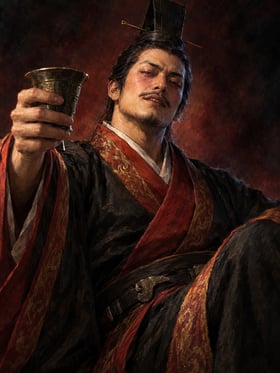
Sun Hao was brutal and overbearing by nature, full of suspicions and taboos, fond of wine and women, wanton in punishment and reckless in penalties, growing more savage by the day. He favored those close at hand and hated blunt words, repeatedly putting upright ministers to death.

Life
In the novel: 2 chapters · In the Records: 14 volumes
Life242–284
264 CE (Xianxi 1)
- Sun Hao's Accession and the Decline of WuJianyeInstigator
- Enthronement of Sun HaoJianyeInstigator
265 CE (Xianxi 2)
- Sun Hao's Purge of Loyal MinistersJianyeInstigator
6 more events
265 CE (Xianxi 2)
266 CE (Taishi 1)
272 CE (Taishi 7)
279 CE (Xianning 5)
280 CE (Xianning 6)
- Eastern Wu
- Sima clan
- Life event
- Death
List all 6 stops
- Jianye264–265Sun Hao's Accession and the Decline of Wu+2 more
- Wuchang265Sun Hao Moves the Capital to Wuchang
- Jianye266Lu Kai's Plot to Depose Sun Hao
- Yiling272Bu Chan's Defection from Wu to Jin+2 more
- Jianye279–280Jin's Six-Route Conquest of Wu+2 more
- Luoyang284Died here
On the boards
Compare with someone →Where this person ranks on each board.
- Most Executions Ordered: #2Records
- Most Defections: #6Both
- Best Connected: #8Records
- Most Battles Lost: #10Records
9 more boards
Who they were
Character profile
- Character
- Sun Hao was brutal and overbearing by nature, full of suspicions and taboos, fond of wine and women, wanton in punishment and reckless in penalties, growing more savage by the day. He favored those close at hand and hated blunt words, repeatedly putting upright ministers to death.
- Manner of speech
- In his cups Sun Hao mocked his high officials, forcing the assembled ministers to make sport of themselves while drunk.
- Life
- Sun Hao was the grandson of Sun Quan and son of Sun He, first enfeoffed as Marquis of Wucheng. After Sun Xiu died, he was welcomed and set on the throne by Puyang Xing and Zhang Bu, at the age of twenty-three. In the fourth year of Tianji (280) he surrendered to Jin and was enfeoffed as Marquis Who Returns to Allegiance; in the fifth year of Taikang he died at Luoyang.
- Anecdotes
- Sun Hao was the ruler under whom Wu fell, the last emperor of Eastern Wu, and the sovereign whom Lu Kai remonstrated with. He once ordered Ding Feng to attack Hefei, and afterward beheaded Feng's guide-officer and exiled Feng's family.
Historical Record
Sun Hao, courtesy name Yuanzong, was Sun Quan’s grandson and Sun He’s son. He was also known as Pengzu and Haozong. Sun Xiu enfeoffed him as Marquis of Wucheng. When Sun Xiu died, Shu Han had just fallen and Jiaozhi had rebelled, throwing Wu into alarm. Wan Yu praised Sun Hao as discerning and decisive, studious, and law-abiding. Puyang Xing and Zhang Bu then urged Empress Dowager Zhu to install him as heir. Sun Hao was twenty-three at the time. In the first year of his reign, he issued an edict granting relief to officials and commoners, opening the granaries to aid the poor, and releasing the animals kept in the imperial park. The historical record says that people briefly hailed him as an enlightened ruler. But he gradually revealed a violent, arrogant, and self-indulgent nature, with many taboos and a fondness for drink and women. Puyang Xing and Zhang Bu were killed after slander was brought against them.
Sun Hao posthumously honored his father Sun He as Emperor Wen, reburied him at Mingling, built the Qing Temple, and welcomed his father’s spirit there. He also moved the capital to Wuchang, requiring the people of Yang Province to transport supplies upstream. Lu Kai submitted a memorial pointing out the people’s hardship and the many errors in government. Sun Hao rejected Lu Kai’s advice against a surprise attack on Yiyang. Later, he undertook extensive construction to build Xianming Palace; Lu Kai remonstrated firmly, but his advice was not heeded. At court, Sun Hao had Chen Sheng killed because his favored concubine had seized the people’s property. The historical record also says that Chen Sheng was put to death by torture because the concubine had been punished. Sun Hao also killed Sun Feng over rumors that he would be acclaimed ruler. After his consort, Lady Wang, died, related rumors led Sun Hao to have Zhang Jun torn apart by chariots and his three clans exterminated; he also executed Sun Fen and his five sons.
Wu’s defenses and domestic affairs grew increasingly troubled. Ding Zhong once proposed a surprise attack on Yiyang, but Lu Kai advised against it, arguing that a powerful enemy had recently annexed Ba and Shu, and that its offer of peace did not necessarily mean it was seeking aid. Although Sun Hao did not send troops, this led to Wu severing relations with Jin. When Jin forces invaded Wu, Zhang Ti led troops across the river to meet them but was defeated. Sun Hao sent envoys with a letter of surrender to Wang Jun, Sima Zhou, and Wang Hun. Wang Jun then accepted his surrender, released his bonds, and had the coffin discarded and burned. The Jin court enfeoffed Sun Hao as Marquis Who Surrenders His Fate, and Sun Hao moved with his entire family to Luoyang. He died there in the fifth year of the Taikang era.
In the Novel
Romance of the Three Kingdoms portrays Sun Hao as a tyrannical, drunken, lecherous, and stubborn ruler who brought about the fall of his state. The novel follows the account of Wan Yu and Zhang Bu recommending Sun Hao for the throne, and emphasizes his favoring Cen Hun and killing Puyang Xing and Zhang Bu, leaving the court officials afraid to speak. It also depicts Lu Kai urging him to conciliate the people and avoid reckless warfare, only for Sun Hao to take offense and then build Zhaoming Palace, heed Shang Guang’s divination that “in the gengzi year, the blue-canopied carriage shall enter Luoyang,” and dismiss Hua He, who had remonstrated with him. These scenes reinforce his image as a man obsessed with prophecies and unwilling to heed loyal advice. The historical accounts also record his palace construction, discussions of military campaigns, and Lu Kai’s remonstrations, but the novel’s specific dialogue and elaborations are literary inventions.
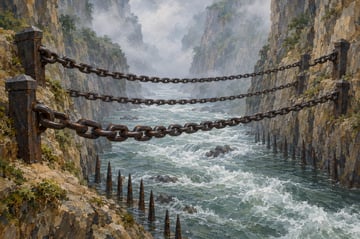
The novel also has Cen Hun offer iron chains and iron spikes to block the Jin forces, after which Wu Chen kills him in anger. Sun Hao ultimately follows the advice of Hu Chong and Xue Ying, binds himself, and surrenders while riding in a carriage with a coffin. The historical account records that palace attendants requested Cen Hun’s execution and that Sun Hao, distraught and confused, consented; it also says that he sent envoys with his seals and ribbons of office to beg for his life. It does not mention the iron-chain and iron-spike stratagem or the specific dramatic scene of his surrender bound beside a coffin. The novel further has him explain his use of torture in Luoyang as punishment for “those who murdered their ruler and those who were treacherous and disloyal,” in a satirical jab at Jia Chong. The Records of the Three Kingdoms, by contrast, says only that Sun Hao was enfeoffed as Marquis Who Surrenders His Fate; it does not record this exchange.
Key Relationships
- Sun He and Lady He: Sun Hao was the son of Sun He and Lady He. After Sun He was sentenced to death, Lady He stayed alive to raise Sun Hao and his three younger brothers, saying, “If we all follow him in death, who will raise the orphans?” After Sun Hao ascended the throne, he posthumously honored Sun He and elevated Lady He to empress dowager.
- Puyang Xing, Zhang Bu, and Wan Yu: Wan Yu was on good terms with Sun Hao and praised his abilities to Puyang Xing and Zhang Bu. The three of them brought about his accession; after Sun Hao became ruler, Puyang Xing and Zhang Bu were executed. The novel likewise presents this episode as the beginning of conflict between ruler and subjects.
- Lu Kai: Sun Hao appointed Lu Kai General Who Guards the West and Governor of Jing Province, later promoting him to Left Chancellor. Lu Kai repeatedly remonstrated with him on matters including military action against Jin, the relations between ruler and subjects, and the hardship caused by moving the capital.
- The Jin forces and Wang Jun: Sun Hao surrendered to the Jin forces, and Wang Jun was the first to arrive and accept his surrender. Sun Hao was later enfeoffed as Marquis Who Surrenders His Fate and moved to Luoyang.
Defining Scenes
- Welcomed to the throne at age twenty-three: With Shu fallen and Jiaozhi in rebellion, the Wu court sought an older ruler. With Empress Dowager Zhu’s approval, Puyang Xing and Zhang Bu welcomed Sun Hao to the throne. He initially governed leniently, but later became harsh and autocratic.
- Lu Kai’s remonstrance and the move of the capital: Sun Hao moved to Wuchang, and the people of Yang Province suffered while transporting supplies upstream. Lu Kai submitted a memorial frankly criticizing failures of government and the depletion of the people’s strength, illustrating the tension between the ruler’s decisions and his subject’s remonstrance.
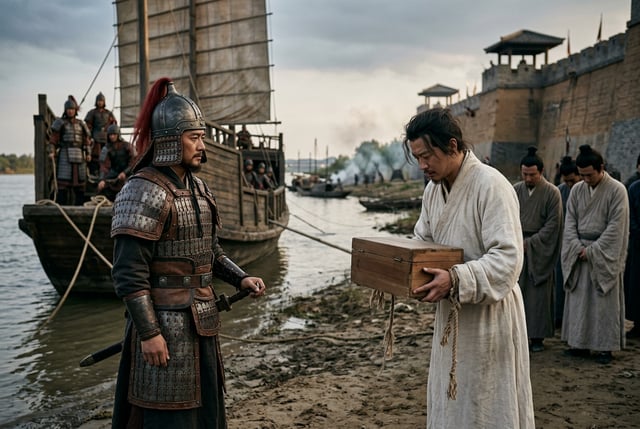
- The Jin forces close in; Wu falls and surrenders: Wu’s armies retreated in defeat and morale collapsed. Sun Hao sent envoys to the Jin forces with a letter surrendering and handing over his seals. Wang Jun accepted the surrender, bringing the Wu regime to an end.
- Iron chains and spikes across the river to block Jin: Cen Hun proposed a plan, and Sun Hao ordered iron chains and spikes to be hastily made. Wang Jun later overcame them with rafts and torches. This battle scene appears only in the novel.
Quotes
11 lines in the books · 3 featured
「臣於南方,亦設此座以待陛下。」
The bravado of a fallen monarch, embodying his defiance and sarcasm.
「昔漢室失統,九州分裂,先人因時,略有江南,遂分阻山川,與魏乖隔。今大晉龍興,德覆四海。闇劣偷安,未喻天命。至於今者,猥煩六軍,衡蓋路次,遠臨江渚,舉國震惶,假息漏刻。敢緣天朝含弘光大,謹遣私署太常張夔等奉所佩印綬,委質請命,惟垂信納,以濟元元。」
The memorial of Sun Hao Surrenders to Jin, marking the end of the Three Kingdoms era.
「量一中貴,何能誤國?」
A muddleheaded ruler's blind self-assurance toward eunuchs abusing power, one of the causes of his kingdom's ruin.
- Family
- Lord & vassal
- Friends
- Enemies
- Other
History vs. novel
7 points · 2 novel-only
| History | Novel |
|---|---|
| Enthronement and EnfeoffmentNovel embellishes | |
After Sun Xiu died, Wu was shaken by the fall of Shu and the rebellion in Jiaozhi. Puyang Xing, Zhang Bu, and others enthroned Sun Hao as emperor. He was twenty-three years old; Sun Xiu had previously enfeoffed him as Marquis of Wucheng. vol. 48 | During Sun Xiu’s reign, Sun Hao was enfeoffed as Marquis of Wucheng. The novel also sets the scene for Sun Hao’s later succession by depicting the political situation: Sun Xiu treated Sun Lin warmly on the surface, but was actually wary of him. ch. 113 |
| Execution of Those Who Enthroned HimNovel embellishes | |
After Sun Hao came to power, he became harsh and arrogant. Puyang Xing and Zhang Bu regretted having enthroned him, and were later executed after others slandered them. vol. 48 | Puyang Xing and Zhang Bu remonstrated with Sun Hao. Enraged, Sun Hao had them beheaded and their three clans exterminated; the novel emphasizes that they met their fate for speaking frankly. ch. 120 |
| Death of Lady ZhuHistory only | |
Sun Hao forced Empress Jing, Lady Zhu, to her death. Her funeral was not held in the main hall, but in a small house in the imperial park. Everyone knew she had not died of illness and grieved bitterly. vol. 48 | — |
| Moving the Capital to WuchangNovel embellishes | |
Sun Hao accepted a memorial from Bu Chan, the commandant of Xiling, and moved the capital to Wuchang, granting a general amnesty. The historical account does not describe the hardships the people endured in providing supplies there. vol. 48 | Sun Hao resided in Wuchang, and the people of Yangzhou had to transport supplies upstream along the river, a heavy burden. The novel also depicts Lu Kai submitting a remonstrance, which displeased Sun Hao. ch. 120 |
| Iron Chains to Repel JinNovel only | |
| — | The Jin army advanced downstream to attack Wu. Following Cen Hun’s plan, Sun Hao had heavy chains linked together and stretched across the river, and also placed iron spikes underwater, hoping to destroy the Jin warships. ch. 120 |
| Surrender Bearing a CoffinNovel embellishes | |
Sun Hao sent an envoy with a letter of surrender to Wang Jun and the others. When Wang Jun arrived first, he accepted the surrender, freed Sun Hao from his bonds, and burned the coffin, treating him with courtesy. vol. 48 | After Jin troops entered Shitou City, Sun Hao briefly considered suicide. Hu Chong and Xue Ying urged him to follow Liu Shan’s example, so he had a coffin carried before him, bound himself, and led the civil and military officials in surrendering to Wang Jun. ch. 120 |
| Exchange in LuoyangNovel only | |
| — | The novel depicts Sun Hao arriving in Luoyang to pay his respects to Sima Yan, and saying that in the south he had also set out a seat to await the Jin emperor. When Jia Chong questioned him about the cruel punishments, Sun Hao replied that they were used to punish regicides and treacherous, disloyal men, leaving Jia Chong speechless. ch. 120 |
- Enthronement and EnfeoffmentNovel embellishes
- History
After Sun Xiu died, Wu was shaken by the fall of Shu and the rebellion in Jiaozhi. Puyang Xing, Zhang Bu, and others enthroned Sun Hao as emperor. He was twenty-three years old; Sun Xiu had previously enfeoffed him as Marquis of Wucheng.
vol. 48
- Novel
During Sun Xiu’s reign, Sun Hao was enfeoffed as Marquis of Wucheng. The novel also sets the scene for Sun Hao’s later succession by depicting the political situation: Sun Xiu treated Sun Lin warmly on the surface, but was actually wary of him.
ch. 113
- Execution of Those Who Enthroned HimNovel embellishes
- History
After Sun Hao came to power, he became harsh and arrogant. Puyang Xing and Zhang Bu regretted having enthroned him, and were later executed after others slandered them.
vol. 48
- Novel
Puyang Xing and Zhang Bu remonstrated with Sun Hao. Enraged, Sun Hao had them beheaded and their three clans exterminated; the novel emphasizes that they met their fate for speaking frankly.
ch. 120
- Death of Lady ZhuHistory only
- History
Sun Hao forced Empress Jing, Lady Zhu, to her death. Her funeral was not held in the main hall, but in a small house in the imperial park. Everyone knew she had not died of illness and grieved bitterly.
vol. 48
- Moving the Capital to WuchangNovel embellishes
- History
Sun Hao accepted a memorial from Bu Chan, the commandant of Xiling, and moved the capital to Wuchang, granting a general amnesty. The historical account does not describe the hardships the people endured in providing supplies there.
vol. 48
- Novel
Sun Hao resided in Wuchang, and the people of Yangzhou had to transport supplies upstream along the river, a heavy burden. The novel also depicts Lu Kai submitting a remonstrance, which displeased Sun Hao.
ch. 120
- Iron Chains to Repel JinNovel only
- Novel
The Jin army advanced downstream to attack Wu. Following Cen Hun’s plan, Sun Hao had heavy chains linked together and stretched across the river, and also placed iron spikes underwater, hoping to destroy the Jin warships.
ch. 120
- Surrender Bearing a CoffinNovel embellishes
- History
Sun Hao sent an envoy with a letter of surrender to Wang Jun and the others. When Wang Jun arrived first, he accepted the surrender, freed Sun Hao from his bonds, and burned the coffin, treating him with courtesy.
vol. 48
- Novel
After Jin troops entered Shitou City, Sun Hao briefly considered suicide. Hu Chong and Xue Ying urged him to follow Liu Shan’s example, so he had a coffin carried before him, bound himself, and led the civil and military officials in surrendering to Wang Jun.
ch. 120
- Exchange in LuoyangNovel only
- Novel
The novel depicts Sun Hao arriving in Luoyang to pay his respects to Sima Yan, and saying that in the south he had also set out a seat to await the Jin emperor. When Jia Chong questioned him about the cruel punishments, Sun Hao replied that they were used to punish regicides and treacherous, disloyal men, leaving Jia Chong speechless.
ch. 120
Combat
On the field
Duels, kills and executions as the texts tell them, counted separately for the Records and the Romance.
- RecordsJuan 46ExecutionSun FengWon「訛言謂奉當立,誅死」
- RecordsJuan 48ExecutionPuyang XingWon「十一月,誅興、布」
- RecordsJuan 48ExecutionZhang BuWon「十一月,誅興、布」
- RecordsJuan 48ExecutionEmpress Dowager ZhuWon「皓逼殺景后朱氏」
- RecordsJuan 48ExecutionChen ShengWon「假他事燒鋸斷聲頭」
- RecordsJuan 48ExecutionCen HunWon「叩頭請皓殺岑昏,皓惶憒從之」
All encounters (16)
Loading…
Battles in command
Battles this person commanded in, with the outcome as each text tells it.
- Records
- 0W 1L 0D 0 undecided
- Romance
- 0W 1L 0D 0 undecided
- Records279Jin's Six-Route Conquest of WuLostvs Jin forcesJuan 48「王濬最先到,於是受皓之降」
- Romance279Jin's Six-Route Conquest of WuLostvs Jin troopsCh. 120「亦輿櫬自縛,率諸文武,詣王濬軍前歸降」
Stratagems
Plans this person devised or saw through, as the texts tell them.
- Records
- 1 carried out · 1 worked · 0 turned down · 0 seen through
- RecordsKill with a Borrowed KnifeDeceptionWorkedagainst Lou XuanJuan 65「使以戰自效,陰別敕奕令殺之」
Events
Events (12)
Battles and events the texts place this person in, by date.
Battles
- 272Battle of XilingWitness
- 279Jin's Six-Route Conquest of WuVictim
Other events
- 258Sun Chen Deposes Sun Liang and Installs Sun Xiu
- 264Sun Hao's Accession and the Decline of WuInstigator
- 264Enthronement of Sun HaoInstigator
- 265Sun Hao's Purge of Loyal MinistersInstigator
- 265Sun Hao Moves the Capital to WuchangInstigator
- 266Lu Kai's Plot to Depose Sun HaoVictim
- 272Bu Chan's Defection from Wu to JinCommander
- 272Lu Kang Defeats Yang Zhao and Recovers XilingWitness
All 10
- 280Reunification of the Three Kingdoms under JinVictim
- 280Sun Hao Surrenders to JinVictim
Famous objects
Places
Continue
Reunification of the Three Kingdoms under Jin
Relationship timeline13 entries ▸
History · vol. 48
Enemy
In the seventh month of autumn of the second year of Ganlu, Hao forced Empress Jing, née Zhu, to her death
History · vol. 59
- Sun Fen§32
Enemy
because of suspicions arising from rumors, executed Fen and his five sons; had Zhang Jun torn apart by chariots
History · vol. 65
- Wang Fan§5
Enemy
At the grand assembly of the officials in the second year of Ganlu, suspecting Wang Fan of feigning drunkenness, he had him beheaded below the palace hall
- Lou Xuan§14
Enemy
Moved Xuan and his son Ju and handed them over to Zhang Yi, a general in Jiaozhi; secretly issued a separate order to Yi to kill them
- He Shao§26
Enemy
suspecting him of feigning illness, had him seized, confined in the wine cellar, and tortured more than a thousand times; he was ultimately killed, and his family was relocated to Linhai
- Wei Zhao§38
Enemy
in the second year of Fenghuang, took Yao into custody and committed him to prison
- Wei Zhao§48
Enemy
refused Hua He's request to spare Yao; consequently executed Yao and relocated a hundred households to Lingling
- Hua He§68
Enemy
In the first year of Tiance, Hua He was dismissed for a minor offense
All 13
Loading…
Inner monologues · AI-generated3 monologues ▸
- The Jin army’s banners had entered Shitou. At last I understood that Jiangdong had not been lost in a single day. In the
- I inherited the rule of my father, He. I posthumously honored him and brought his spirit tablet back to Mingling. I once
- I am Yuan Zong, grandson of Sun Quan and son of Sun He. I was also once known as Pengzu. After Sun Xiu took the throne,