Sima clan · King of Jin/Emperor of Jin
Sima Yan
courtesy name 安世 · 236–290
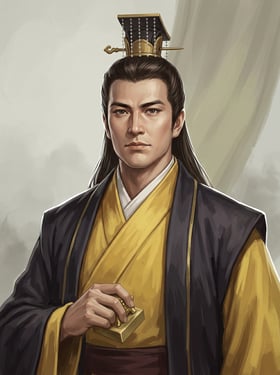
Sima Yan was of imposing stature; when he stood, his hair hung to the ground, and his arms reached below his knees.

Life
In the novel: 3 chapters · In the Records: 8 volumes
Life236–290
249 CE (Jiaping 1)
- The Sima Clan's Seizure of PowerLuoyangInstigator
266 CE (Taishi 1)
- Wei-Jin Dynastic TransitionLuoyangInstigator
269 CE (Taishi 4)
- Yang Hu's Garrison at XiangyangXiangyangInstigator
279 CE (Xianning 5)
- Jin's Six-Route Conquest of WuJianyeInstigator
280 CE (Xianning 6)
Allegiance
- Sima clan
- Hatched: dated by chapter
- Life event
List all 3 stops
- Luoyang249–266The Sima Clan's Seizure of Power+1 more
- Xiangyang269Yang Hu's Garrison at Xiangyang
- Jianye279–280Jin's Six-Route Conquest of Wu+1 more
On the boards
Compare with someone →Where this person ranks on each board.
Who they were
Character profile
- Appearance
- Sima Yan was of imposing stature; when he stood, his hair hung to the ground, and his arms reached below his knees.
- Character
- Sima Yan was intelligent and valiant, of surpassing courage.
- Anecdotes
- Sima Yan was the son of Sima Zhao. After succeeding to the throne of the Prince of Jin, he compelled Cao Huan to abdicate, founded the Great Jin, and changed the era name to Taishi. He was the founding emperor of the Western Jin, who ultimately destroyed Wu and unified the realm. Jia Chong and others, knowing that Sima Zhao's attention rested on his son Sima Yan, therefore ceased to urge him onward. After the house of Jin ascended the throne, he issued an edict commending Wang Ji for his purity and simplicity, and in the first and ninth years of Taishi issued edicts to redress the case of Deng Ai.
Historical Record
Sima Yan, courtesy name Anshi, was the son of Sima Zhao. During the Jingyuan era of Cao Wei, the power of the Sima clan grew steadily stronger. After Shu was pacified, the Wei court appointed Sima Yan, Grand General Who Pacifies the Army and Marquis of Xinchang Township, as heir to the Jin throne. After Sima Zhao’s death, Sima Yan succeeded to the position of King of Jin, took charge of all state affairs, and inherited the political order his father had already established. These accounts show that Sima Yan succeeded to power against the backdrop of the Sima clan’s control of the Wei court, rather than suddenly displacing Cao Wei through his own military achievements.
In the twelfth month of the second year of the Xianxi era of Wei, the Wei court invoked the claim that “the Mandate of Heaven now rests with Jin,” established an altar in the southern suburbs, and presented the imperial seal and credentials, formally commissioning the heir to the Jin throne to receive the abdication. Sima Yan thereby accepted the Wei emperor’s abdication and founded the Jin dynasty. The Wei emperor, Cao Huan, was subsequently moved to Jinyong Fortress and eventually died in Ye. In this account, juan 4 of the Records of the Three Kingdoms records the dynastic transition in formal, institutional terms; it does not describe Sima Yan personally threatening Cao Huan or killing opponents. After ascending the throne, Sima Yan ruled as the new dynasty’s sovereign. In the first year of the Taishi era, an edict discussed the cases of Wang Ling, Deng Ai, and others, affirmed that Deng Ai had submitted to the law when punished, and permitted those without descendants to appoint heirs so that sacrifices could continue. In the ninth year, he also specially appointed Deng Ai’s eldest grandson, Deng Lang, as a Gentleman of the Palace.
Another major outcome of his rule was the conquest of Wu. After Wu fell, Wang Jun first received Sun Hao’s surrender, and the Jin court sent an envoy to escort Sun Hao to Luoyang. Sima Yan issued an edict granting Sun Hao the title “Marquis Who Returns to His Fate,” along with clothing, a carriage, land, and an annual allowance of money, grain, and silk. He also appointed Sun Hao’s sons to official posts. This account illustrates how the new dynasty received the surrender and assigned titles and provisions to the former ruler and his family. Sima Yan’s historical image is thus linked to the Wei-Jin Dynastic Transition, the founding of the Jin dynasty, and Wu’s surrender. The biographical sources provided also record that after ascending the throne he praised Wang Ji for his integrity and appointed and treated Qiao Zhou with respect, showing that after founding the new dynasty he also used edicts to settle former officials and continue the work of government.
In the Novel
Romance of the Three Kingdoms portrays Sima Yan as one of the central figures who inherited his forebears’ legacy and ultimately unified the realm. The novel describes him as tall and powerfully built, intelligent and heroic, and exceptionally bold. It depicts Sima Zhao’s decision to designate an heir as a choice centered on primogeniture and Sima You’s succession: Sima Zhao was initially hesitant, but his ministers urged him to appoint his eldest son, citing ritual norms and popular support, and Sima Yan consequently became heir to the Jin throne. Such descriptions of appearance and character are part of the novel’s characterization and should not be confused with the historical fact, recorded in the Records of the Three Kingdoms, that he was appointed heir.
The novel also gives Sima Zhao’s death a highly dramatic portrayal. After hearing an auspicious report, Sima Zhao suddenly suffered a stroke and lost the power of speech; as he lay dying, he pointed to Sima Yan. He Zeng then immediately proposed making the crown prince King of Jin, and after succeeding to the throne, Sima Yan discussed accepting the abdication from Wei with Jia Chong and Pei Xiu. In the scene of the abdication, Sima Yan enters the palace where Cao Huan is staying with a sword at his side, demands to know who rules the realm, and orders Zhang Jie beaten to death for speaking out against him. At Jia Chong’s suggestion, Cao Huan then presents the imperial seal and abdicates. The Records of the Three Kingdoms does record Wei’s abdication to Jin, but not the palace confrontation, Zhang Jie’s death, or Sima Yan personally forcing the abdication as depicted in the novel; these are dramatic embellishments unique to the Romance.
The novel further portrays Sima Yan’s ambition to unify the realm through long-term planning and decisive action. He appoints Yang Hu to command the garrison at Xiangyang, and after Yang Hu’s death accepts his recommendation of Du Yu. During discussions about the campaign against Wu, Sima Yan initially delays the invasion in response to opposition from Jia Chong and others, but later orders a multi-pronged advance after Zhang Hua’s urgent persuasion. After Wu falls, the novel has Sima Yan grant Sun Hao the title Marquis Who Returns to His Fate and depicts him lamenting that Yang Hu did not live to witness the victory. The ending presents the Reunification of the Three Kingdoms under Jin as the restoration of unity to the realm. The sources from the Records of the Three Kingdoms provided here confirm that Sun Hao surrendered and received the title Marquis Who Returns to His Fate, but they do not include the novel’s specific scenes of discussing military affairs over a game of go, Zhang Hua pushing aside the board, or Sima Yan lamenting Yang Hu’s death.
Key Relationships
- Father and son; succession: Sima Yan was the son of Sima Zhao. The historical biographies record that he was first appointed heir to the Jin throne and succeeded as King of Jin after Sima Zhao’s death. The Romance, by contrast, emphasizes Sima Zhao’s hesitation between Sima You and Sima Yan, and uses the ministers’ remonstrations to explain his decision to appoint his eldest son.
- Relationship with Cao Huan: Sima Yan accepted the Wei emperor’s abdication and founded the Jin dynasty, while Cao Huan was the Wei emperor who abdicated. The Romance additionally depicts the two confronting each other in the palace and Cao Huan being forced to hand over the imperial seal; this is unique to the novel.
- Relationship with Sun Hao: After Wu fell, Sun Hao surrendered, and Sima Yan granted him the title Marquis Who Returns to His Fate and provided for him. The novel adds a scene in which Sun Hao speaks face-to-face with Sima Yan and Jia Chong in Luoyang; this is unique to the Romance.
- Relationship with Yang Hu, Du Yu, and Zhang Hua: The Romance depicts Sima Yan relying on Yang Hu to plan the campaign against Wu and appointing Du Yu on Yang Hu’s recommendation. His acceptance of Zhang Hua’s advice at the crucial moment of the campaign is a major focus in the novel’s portrayal of the decision-making process, and is unique to the Romance.
Signature Scenes
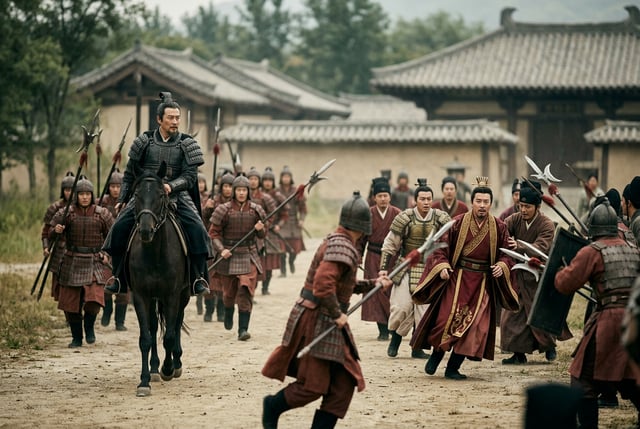
- The Wei-Jin Dynastic Transition: The historical biographies describe the Wei emperor’s abdication through the establishment of an altar in the southern suburbs and the presentation of the formal decree and imperial seal, depicting the official ceremony of the transfer of power. The Romance rewrites the event as a palace confrontation in which Sima Yan threatens Cao Huan with a sword, Zhang Jie is killed, and Cao Huan presents the imperial seal; this version is unique to the novel.
- Succession as King of Jin: The historical biographies briefly record that after Sima Zhao’s death, Sima Yan inherited the title and took charge of all state affairs. The Romance depicts Sima Zhao pointing to Sima Yan on his deathbed and the ministers rallying to support him, heightening the drama.
- The decision to attack Wu and the surrender: The Romance uses Zhang Hua’s pushing aside the go board and urging Sima Yan to seize the moment and advance as a turning point, then concludes the unification story with the Jin forces advancing along several routes and Wu falling to surrender. The game and the debate at the time are unique to the novel. The historical account of the arrangements after the surrender instead states that Sun Hao was escorted to the capital, where Sima Yan granted him the title Marquis Who Returns to His Fate and provided for him.
Quotes
22 lines in the books · 3 featured
「曹丕尚紹漢統,孤豈不可紹魏統耶?」
This line displays Sima Yan's ambition to supplant Wei and found Jin, along with his defense of its legitimacy.
「此社稷乃大漢之社稷也。曹操挾天子以令諸侯,自立魏王,篡奪漢室,吾祖父三世輔魏,得天下者,非曹氏之能,實司馬氏之力也。四海咸知,吾今日豈不堪紹魏之天下乎?」
With these words Sima Yan provided a historical and moral justification for the Sima family's usurpation of Wei.
「朕設此座以待卿久矣。」
This line is Sima Yan's classic remark to Sun Hao after conquering Wu, symbolizing the Reunification of the Three Kingdoms under Jin.
- Family
- Lord & vassal
- Enemies
- Other
Who is Sima Yan connected to?
Pick someone to see how many steps lie between them and Sima Yan.
History vs. novel
6 points · 3 novel-only
| History | Novel |
|---|---|
| Inheriting the Jin王 titleNovel embellishes | |
The Records of the Three Kingdoms states that Sima Yan was appointed General Who Assists the Army and helped manage the Chancellor’s affairs, but gives no details of his succession to the title of King of Jin or his discussions with Jia Chong and Pei Xiu about replacing Wei. vol. 4 | The novel relates that after Sima Zhao’s death, Sima Yan succeeded to the title of King of Jin and asked Jia Chong and Pei Xiu about Cao Cao’s claim to be “King Wen of Zhou,” thereby laying out his intention to replace the Wei house. ch. 119 |
| Forcing Cao Huan to abdicateNovel only | |
| — | Sima Yan entered the palace with a sword and demanded to know from Cao Huan who deserved credit for the realm. He then used force to execute Zhang Jie, who opposed him, compelling Cao Huan to abdicate. ch. 119 |
| Restoring Deng Ai’s descendantsHistory only | |
Sima Yan issued an edict stating that although Deng Ai was guilty, he had submitted to punishment and was unlike those who committed evil in pursuit of survival. He allowed Deng Ai’s descendants to regain their status and continue the family sacrifices. Later, he appointed Deng Ai’s eldest grandson, Deng Lang, as a Gentleman of the Palace. vol. 28 | — |
| Yang Hu recommends Du YuNovel only | |
| — | The novel relates that Sima Yan personally visited the gravely ill Yang Hu and heard him recommend that Du Yu lead the campaign against Wu. After Yang Hu died, Sima Yan wept and posthumously bestowed titles and honors on him. ch. 120 |
| Resolving to attack WuNovel only | |
| — | After Du Yu submitted a memorial and Zhang Hua urged him to act, Sima Yan accepted their advice, appointed Du Yu to command the armies, and sent troops against Wu along several routes. ch. 120 |
| Receiving Sun HaoNovel embellishes | |
Wang Jun arrived first and accepted Sun Hao’s surrender. The Jin court granted Sun Hao the title Marquis Who Surrendered to His Fate and provided him with clothing, a carriage, land, and provisions, while appointing his sons to official posts. vol. 48 | The novel relates that Sun Hao went to Luoyang to pay court to Sima Yan, and the two exchanged pointed remarks about their respective seats. Sima Yan made Sun Hao Marquis Who Surrendered to His Fate and appointed his sons and grandsons to official posts. ch. 120 |
- Inheriting the Jin王 titleNovel embellishes
- History
The Records of the Three Kingdoms states that Sima Yan was appointed General Who Assists the Army and helped manage the Chancellor’s affairs, but gives no details of his succession to the title of King of Jin or his discussions with Jia Chong and Pei Xiu about replacing Wei.
vol. 4
- Novel
The novel relates that after Sima Zhao’s death, Sima Yan succeeded to the title of King of Jin and asked Jia Chong and Pei Xiu about Cao Cao’s claim to be “King Wen of Zhou,” thereby laying out his intention to replace the Wei house.
ch. 119
- Forcing Cao Huan to abdicateNovel only
- Novel
Sima Yan entered the palace with a sword and demanded to know from Cao Huan who deserved credit for the realm. He then used force to execute Zhang Jie, who opposed him, compelling Cao Huan to abdicate.
ch. 119
- Restoring Deng Ai’s descendantsHistory only
- History
Sima Yan issued an edict stating that although Deng Ai was guilty, he had submitted to punishment and was unlike those who committed evil in pursuit of survival. He allowed Deng Ai’s descendants to regain their status and continue the family sacrifices. Later, he appointed Deng Ai’s eldest grandson, Deng Lang, as a Gentleman of the Palace.
vol. 28
- Yang Hu recommends Du YuNovel only
- Novel
The novel relates that Sima Yan personally visited the gravely ill Yang Hu and heard him recommend that Du Yu lead the campaign against Wu. After Yang Hu died, Sima Yan wept and posthumously bestowed titles and honors on him.
ch. 120
- Resolving to attack WuNovel only
- Novel
After Du Yu submitted a memorial and Zhang Hua urged him to act, Sima Yan accepted their advice, appointed Du Yu to command the armies, and sent troops against Wu along several routes.
ch. 120
- Receiving Sun HaoNovel embellishes
- History
Wang Jun arrived first and accepted Sun Hao’s surrender. The Jin court granted Sun Hao the title Marquis Who Surrendered to His Fate and provided him with clothing, a carriage, land, and provisions, while appointing his sons to official posts.
vol. 48
- Novel
The novel relates that Sun Hao went to Luoyang to pay court to Sima Yan, and the two exchanged pointed remarks about their respective seats. Sima Yan made Sun Hao Marquis Who Surrendered to His Fate and appointed his sons and grandsons to official posts.
ch. 120
Combat
On the field
Duels, kills and executions as the texts tell them, counted separately for the Records and the Romance.
- RomanceCh. 119ExecutionZhang JieWon「叱武士將張節亂棍打死於殿下」
Events
Events (5)
Battles and events the texts place this person in, by date.
Battles
- 279Jin's Six-Route Conquest of WuInstigator
Other events
- 249The Sima Clan's Seizure of PowerInstigator
- 266Wei-Jin Dynastic TransitionInstigator
- 269Yang Hu's Garrison at XiangyangInstigator
- 280Reunification of the Three Kingdoms under JinCommander
Continue
The Sima Clan's Seizure of Power
Relationship timeline3 entries ▸
Novel · ch. 119
- Cao Huan§33
Enemy
He entered the palace to rebuke him and force him to abdicate; once it was done, he was enfeoffed as the King of Chenliu
Novel · ch. 120
Inner monologues · AI-generated3 monologues ▸
- Since ascending the throne, I have come to understand that an imperial edict may establish a person’s status, but cannot
- With Jiangdong pacified, the assembled ministers offered their congratulations, yet I could not raise my cup and fully s
- My name is Sima Yan, and my courtesy name is Anshi. If you were to ask now what was on my mind in my early years, I coul