Pei Xiu
224–271
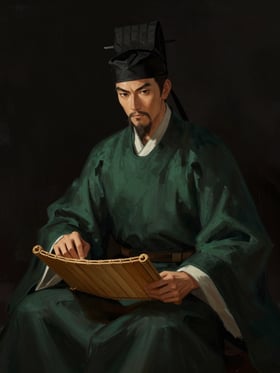
Pei Xiu, a Cao Wei and Western Jin minister, codified the five-rank system and mapped Yu Gong; the novel says he aided Jin's rise over Wei.

Life
In the novel: 2 chapters · In the Records: 3 volumes
Life224–271
266 CE (Taishi 1)
Appearances
By chapter (5)
Novel
- 112
- 119
Records
- 4
- 23
- 29
- Life event
On the boards
Compare with someone →Where this person ranks on each board.
Historical Record
Pei Xiu, courtesy name Jiyan, was the son of Pei Qian. The Account of Literary Works, cited in Pei’s commentary, says that he was renowned from a young age and was once recruited by the Grand General Cao Shuang. After Cao Shuang was executed, Pei Xiu was dismissed from office as a former subordinate. He later served successively as Chancellor of Weiguo, Palace Attendant of the Scattered Cavalry, Director of the Secretariat, and Grand Master of Guanglu. His biographical accounts also state that he served as Director of the Secretariat during the Xianxi era. When Sima Zhao, King Wen of Jin, began establishing the system of five ranks of nobility, he ordered Pei Xiu to oversee the drafting of the system and enfeoffed him as Marquis of Guangchuan. After the Jin dynasty received the abdication, Pei Xiu was promoted to Left Grand Master of Guanglu, received the new title Duke of Julu, and subsequently became Minister over the Masses.
Pei Xiu also took part in the court’s military affairs. The Records of the Three Kingdoms records that when the Lord of Gaogui Township was at Xiang, an edict ordered Pei Xiu, Palace Attendant of the Scattered Cavalry, and Zhong Hui, Gentleman of the Yellow Gate in Regular Attendance, to accompany the Grand General on campaign. The same edict also praised Xuan Long and Qin Jie, who had died during Zhuge Dan's Rebellion after upholding their principles and remonstrating. Pei’s commentary says that Pei Xiu wrote works on the Yi and the “Treatise on Music,” and produced eighteen chapters of the Map of the Regions of the Tribute of Yu, which circulated in the world. He also began, but did not complete, maps of alliances and assemblies and works on administrative systems and official institutions. Pei Xiu died in the seventh year of the Taishi era, aged forty-eight. He was posthumously given the title Duke Yuan and was enshrined in the ancestral temple.
In the Novel
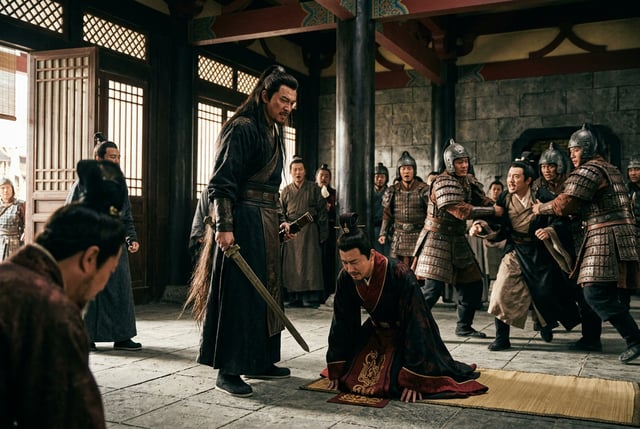
Romance of the Three Kingdoms portrays Pei Xiu as an important adviser to Sima Zhao and his son Sima Yan, focusing on his counsel in military decisions and the transfer of the throne from Wei to Jin. During the fighting in Huainan, after most of the Wu troops had surrendered to the Wei army, the novel has Pei Xiu advocate burying the surrendered soldiers alive to prevent future trouble. Zhong Hui opposes him, arguing that they should be allowed to return to Jiangnan to demonstrate magnanimity, and Sima Zhao accepts Zhong Hui’s proposal. This disagreement highlights Pei Xiu’s cautious yet ruthless side. The Records of the Three Kingdoms does not record this dispute, so it cannot be treated as verifiable history.
The novel also depicts Pei Xiu, along with Jia Chong and He Zeng, urging Sima Zhao to make his eldest son, Sima Yan, heir when Sima Zhao intends to appoint Sima You as crown prince. Sima Zhao ultimately names Yan his heir. After Sima Yan succeeds to the title of King of Jin, Pei Xiu and Jia Chong advise him to follow Cao Pi’s precedent in succeeding to the Han, build the Abdication Platform, and accept Wei’s abdication. In the episode in which Cao Huan is forced to yield the throne, Pei Xiu and Jia Chong urge him to submit to the times and abdicate in imitation of the story of Emperor Xian of Han. Through this, the novel portrays Pei Xiu as an important court official who advanced Jin’s replacement of Wei. None of these specific scenes of urging abdication appears in the Records of the Three Kingdoms.
Key Relationships
Pei Xiu came from the Pei clan and was the son of Pei Qian. His son Pei Wei inherited his title, and Pei’s commentary also records the careers and reputations of Pei Wei and his descendants. His political career, as recorded in historical biographies, saw him serve first the Cao Wei court and then the Sima clan regime. During the Xianxi era, he was commissioned to oversee the establishment of the five-rank system; after the founding of the Jin dynasty, he was promoted to Minister over the Masses. The novel, by contrast, emphasizes his subordination to leading figures of the Sima clan: he takes part in deliberations before Sima Zhao and, together with Jia Chong, influences Sima Yan’s succession and the decision to accept the abdication.
Signature Scenes
The historical account’s clearest example of Pei Xiu’s contribution to institutional affairs is Sima Zhao’s order that he oversee the establishment of the five-rank system. His eighteen chapters of the Map of the Regions of the Tribute of Yu also survived as a written and cartographic work, showing that his reputation rested on more than his official rank. The novel’s most dramatic scene is the dispute over what to do with the Wu soldiers who surrendered: Pei Xiu proposes burying them alive, Zhong Hui argues that they should be allowed to return, and Sima Zhao chooses the latter course. The scene shows how the novel shapes Pei Xiu into a stern adviser. (Exclusive to the novel) Another key scene occurs when Sima Yan asks how he should succeed to Wei’s mandate. Pei Xiu and Jia Chong advise him to build the Abdication Platform and follow Cao Pi’s example, depicting Pei Xiu as a direct participant in the transfer of the throne. (Exclusive to the novel)
Lines
- 演 ch.112 §15→ Sima Zhao
「吳兵老小,盡在東南江、淮之地,今若留之,久必為變,不如坑之。」
Family, lords and rivals
2 relationships
Who is Pei Xiu connected to?
Pick someone to see how many steps lie between them and Pei Xiu.
Events
Events (3)
Battles and events the texts place this person in, by date.
Other events
Continue
Wei-Jin Dynastic Transition
Relationship timeline1 entry ▸
Novel · ch. 112
- Sima Zhao§15
Advised
oversaw the burial of Wu soldiers alive to eliminate future troubles, and argued with Zhong Hui
Inner monologues · AI-generated1 monologue ▸
- I recall that Fu Xuan, discussing Mr. Ma’s ingenuity, mentioned that I, Pei Zi, had once debated him. At the time, I hea