Shu Han · Left General of Chariots and Cavalry; Inspector of Jizhou
Zhang Yi
courtesy name 伯恭 · also called 张冀 · –264
Not to be confused with Zhang Yi (张裔, c. 166–230); Zhang Yi (张怿); Zhang Yi (张祎); Zhang Yi (张𫖮); Zhang Yi (张奕); Zhang Yi (张异); Zhang Yi (张壹)
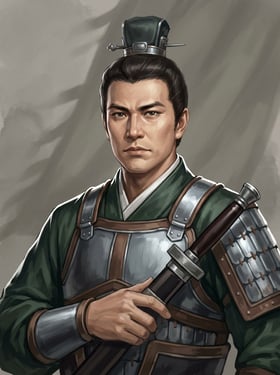
Zhang Yi upheld the law strictly and did not court the favor of alien peoples; upright and outspoken, in court debates he would not fall in with Jiang Wei. He once urged Jiang Wei to withdraw his troops while ahead so as to set the people's minds at ease.

Life
In the novel: 27 chapters · In the Records: 6 volumes
Life?–264
219 CE (Jian'an 24)
- Battle of Han RiverHan RiverWarrior
225 CE (Huangchu 6)
238 CE (Jingchu 2)
2 more events
253 CE (Jiaping 5)
255 CE (Zhengyuan 2)
- Battle of TaoxiTaoxiWarrior
263 CE (Jingyuan 4)
264 CE (Xianxi 1)
- Zhong Hui's RebellionChengduKilled in action
- Liu Bei's faction
- Shu Han
- Hatched: dated by chapter
- Life event
- Death
List all 6 stops
On the boards
Compare with someone →Where this person ranks on each board.
Who they were
Character profile
- Character
- Zhang Yi upheld the law strictly and did not court the favor of alien peoples; upright and outspoken, in court debates he would not fall in with Jiang Wei. He once urged Jiang Wei to withdraw his troops while ahead so as to set the people's minds at ease.
- Manner of speech
- Zhang Yi advocated "holding the strategic points, keeping to one's bounds, and cherishing the army and the people," and once urged Jiang Wei not to "draw legs on a snake" by advancing on Didao.
- Life
- Zhang Yi was a native of Wuyang in Qianwei; both his great-great-grandfather and great-grandfather were men of renown. When the Former Ruler settled Yi Province, Zhang Yi served as a clerk, and afterward held administratorships in several regions. In the ninth year of Jianxing he served as Commander of Laixiang and General of the Household Who Pacifies the South, campaigning against Liu Zhou. When Zhuge Liang marched out to Wugong, Zhang Yi served as Commander of the Front Army with the rank of Administrator of Fufeng. After Zhuge Liang's death he was appointed Leader of the Front Army and granted the title Marquis Within the Passes, later rising to Master of Writing, then Commander at Jianwei with the Staff of Authority, and was advanced to Marquis of Duting and Grand General Who Conquers the West. In the second year of Jingyao he was promoted to Left General of Chariots and Cavalry with the title of Inspector of Jizhou. In the sixth year he surrendered together with Jiang Wei to Zhong Hui at Fu, and in the first month of the following year was killed by mutinous soldiers.
- Anecdotes
- On the wall of Luocheng, Zhang Yi drew his sword, cut down Liu Gui, opened the gates, and surrendered. He was once sent by Kongming, together with Wu Yi and Zhao Yun, to pacify the outer rivers, and is listed among the surrendered officers promoted in that chapter. He had been a subordinate of Zhao Yun, ordered to guard the palisade camp, and later served as Protector-Commandant of the Central Army. As a deputy general he laid an ambush and captured A Huinan, and was ordered to guard the rear and escort Meng You to the tent. He captured Lady Zhurong and Meng Huo's household along with Wang Ping, and served as Commander of the Front Army with the rank of Administrator of Fufeng. He laid an ambush on a key road to intercept and kill Ma Zun, and cut off Jiang Wei's route for seizing grain. He volunteered along with Wang Ping to undertake the ambush, splitting to cut off front and rear in a desperate fight, and exclaimed of himself, "The Prime Minister is truly a divine man!" Together with Ma Zhong he came out by a byway to the right of Mount Qi to strike Cao Zhen's camp jointly, and as a general of Shu Han he held Lucheng. He had been in the rear of the Shu army, and later cut off Sima Yi together with Liao Hua, then pursued Sima Yi and gathered in the rear guard. He was among those Kongming named in his dying words as "loyal and righteous men, fit to be entrusted with responsibility." As Shu Han's right vanguard, he followed Jiang Wei's plan to feign defeat and lure Xu Zhi into an ambush. He served as Shu Han's Grand General Who Conquers the West and one of the vanguard commanders of the Shu army, an ambush general behind the mountains, and also acted as vanguard covering the rear. He proposed dividing the forces to take Mount Qi, and as Left General of Chariots and Cavalry received orders by memorial to guard Yangping Pass and raised troops on his own to support Jiang Wei. He entered Jiange with Jiang Wei, surrendered with Jiang Wei to Zhong Hui, and in the end died amid the mutinous army at Chengdu.
Historical Record
Zhang Yi, courtesy name Bogong, was from Wuyang in Jianwei. After Liu Bei pacified Yi Province, he served as a clerk. At the end of the Jian’an era, he was recommended as a Filial and Incorrupt candidate, and went on to serve as Chief of Jiangyang, Magistrate of Fuling, Administrator of Zitong, and later Administrator of Guanghan and Shu Commandery. In the ninth year of Jianxing, he became Commander of Laixiang and General Who Pacifies the South, responsible for affairs in Nanzhong. His strict enforcement of the law failed to win the favor of the region’s people, who had different customs. When the Nanzhong chieftain Liu Zhou rebelled, Zhang Yi raised troops to campaign against him. Before the rebellion was put down, Zhang Yi received an order to return. He reasoned that his replacement had not yet arrived and that he was still on the battlefield, so he could not abandon public duties merely because he had been dismissed. He therefore continued to organize the troops, transport grain, and build up provisions until his successor arrived, and only then departed. Zhuge Liang praised his handling of the matter. After Ma Zhong took over, he relied on the preparations already in place to put down Liu Zhou. Zhang Yi later accompanied Zhuge Liang on the campaign to Wugong, serving as Commander of the Vanguard and Administrator of Fufeng. After Zhuge Liang’s death, he became former Commander of the Central Army, and was awarded the title of Marquis within the Passes for his role in the campaign against Liu Zhou. He subsequently held posts including Minister of Works, Supervisor of Jianwei, and General Who Conquers the West, and was granted a staff of authority and promoted to Marquis of Duting.
In the eighteenth year of Yanxi, Zhang Yi and Jiang Wei returned to Chengdu together. Jiang Wei advocated launching another campaign, but Zhang Yi alone argued against it at court, maintaining that Shu was small and its people exhausted, and that it should not take up arms lightly. Jiang Wei ignored him and still took him along. At the Battle of Didao, Jiang Wei routed the Wei army, and tens of thousands of Wang Jing’s men died in the Tao River. Zhang Yi believed they should stop while they were ahead and urged Jiang Wei not to advance further, lest he squander their gains. Jiang Wei angrily rebuked him for “adding feet to a snake,” but continued the siege of Didao and ultimately failed to capture it. Although Jiang Wei and Zhang Yi were at odds thereafter, Jiang Wei continued to take him on campaigns. In the second year of Jingyao, Zhang Yi was promoted to General of the Left Chariot and Cavalry and appointed Inspector of Jizhou. When Wei invaded Shu, he joined Jiang Wei, Liao Hua, and others in defending Jianmen Pass. After Shu fell, he accompanied Jiang Wei to Fu to surrender to Zhong Hui. In the first month of the following year, he went with Zhong Hui to Chengdu, where he was killed amid the violence of the mutinying troops.
In the Novel
The Romance of the Three Kingdoms gives Zhang Yi battlefield roles in several different periods, portraying him as a Shu general who repeatedly takes part in military affairs and follows orders. In Chapter 64, Liu Zhang sends him to help defend Luocheng; the novel then has him kill Liu Gui atop the city wall and open the gates to Liu Bei’s forces. Chapter 65 also includes him among the surrendered officials promoted after Liu Bei takes control of Yi Province. This defection is part of the novel’s portrayal and differs from the historical accounts, which describe Zhang Yi serving Shu Han for many years and taking part in the northern campaigns.
The novel later places Zhang Yi in campaigns involving Zhao Yun, Huang Zhong, Zhuge Liang, and others. In the Hanzhong campaign, he is ordered by Zhao Yun to guard the camp; during the southern campaign, he serves as a deputy general, taking part in intercepting enemy troops and capturing a commander in an ambush; and in the northern campaigns, he is named Commander of the Vanguard and takes part in plans to lure the enemy and engage Wei forces. The novel does not portray him solely as a charging general, but often assigns him roles in coordinated operations, covering the rear, or laying ambushes. These military exploits and specific events belong to the novel’s plot and should not be conflated with the historical record.
Key Relationships
- Jiang Wei: In the historical accounts, the two were both Shu Han generals, but disagreed over whether to continue the campaigns. Zhang Yi opposed exhausting the state through warfare and urged Jiang Wei to halt his advance after the victory at Didao. Jiang Wei rejected his advice, and the two fell out, though Zhang Yi was still taken to the front. After Shu fell, they surrendered to Zhong Hui together.
- Zhuge Liang: When Zhang Yi served as Commander of Laixiang, he campaigned against Liu Zhou. Although he received an order to return before completing the campaign, he insisted on preparing provisions and waiting for the handover. According to the historical account, Zhuge Liang heard of this and approved of his conduct; he later appointed Zhang Yi Commander of the Vanguard.
- Liu Bei: The novel depicts Zhang Yi defecting to Liu Bei at Luocheng and then being included among the surrendered officials of Yi Province. This episode appears only in the Romance of the Three Kingdoms.
- Zhong Hui: According to the historical account, after Shu fell, Zhang Yi accompanied Jiang Wei to Fu and surrendered to Zhong Hui. He died amid the violence of the mutinying troops in Chengdu in the first month of the following year.
Notable Scenes
- The handover in Nanzhong: When Zhang Yi was ordered to return, his subordinates believed he should leave at once. He pointed out that his successor had not arrived and that military affairs could not be interrupted, so he continued to direct operations and store up provisions. The scene shows his cautious approach to his duties and his prioritization of public affairs; his preparations later helped Ma Zhong put down Liu Zhou.
- Advice at Didao: After Jiang Wei routed Wang Jing, Zhang Yi urged him to halt his advance, fearing that another attack would jeopardize their gains. Jiang Wei rebuked him with the phrase “adding feet to a snake,” yet continued the siege and failed to capture the city. Their dispute reflects Zhang Yi’s concerns about the state’s strength and the gains already achieved, while also illustrating the strategic divisions in Shu Han’s later years.
- After Jianmen Pass: According to the historical account, when Wei attacked Shu, Zhang Yi and Jiang Wei retreated to defend Jianmen Pass. After the ruler of Shu surrendered, Zhang Yi was ordered to lay down his arms and went with Jiang Wei to meet Zhong Hui at the army’s camp in Fu. The novel separately depicts Zhang Yi opening the gates of Luocheng to welcome Liu Bei; this episode appears only in the Romance of the Three Kingdoms. His early defection in the novel should not be confused with his surrender after Shu fell in the historical account.
Quotes
12 lines in the books · 3 featured
「將軍功績已成,威聲大震,可以止矣;今若前進,倘不如意,正如畫蛇添足也。」
This line, "drawing legs on a snake," has become a classic idiom, widely known and highly recognizable in the culture.
「不然。吾以蠻夷蠢動,不稱職故還耳,然代人未至,吾方臨戰場,當運糧積穀,為滅賊之資,豈可以黜退之故而廢公家之務乎?」
This line shows Zhang Yi's character of putting public duty before private interest and remaining faithful to his post, of historical significance.
「可止矣,不宜復進,進或毀此大功。」
This line is Zhang Yi's remonstrance against Jiang Wei's Northern Expeditions in the official history, reflecting his strategic vision.
- Family
- Lord & vassal
- Friends
- Other
Who is Zhang Yi connected to?
Pick someone to see how many steps lie between them and Zhang Yi.
History vs. novel
7 points · 4 novel-only
| History | Novel |
|---|---|
| Liu Gui and LuochengNovel only | |
| — | When Liu Bei’s forces reached Luocheng, Zhang Yi drew his sword and killed Liu Gui, then opened the city gates and surrendered. The novel presents this as his first act of merit. ch. 64 |
| Zhao Yun’s Empty CampNovel only | |
| — | When Cao Cao pursued Zhao Yun back to camp, Zhang Yi advised closing the gates to defend it. Zhao Yun refused and used an empty-camp stratagem to scare off the pursuers. ch. 71 |
| Holding Firm During the Campaign Against Liu ZhouHistory only | |
While campaigning against Liu Zhou, Zhang Yi received an order recalling him to court, but insisted on transporting grain and preparing for battle. He did not leave until his successor arrived. Ma Zhong later built on his preparations to pacify Liu Zhou, a deed Zhuge Liang praised. vol. 45 | — |
| The Southern Campaign Against Meng HuoNovel only | |
| — | The novel has Zhang Yi accompany Zhuge Liang on the Southern Campaign and take part in several stratagems: he is ordered to escort Meng You, then leads another force to build a camp. Later, he and Wang Ping arrive at the barbarian camp and capture Lady Zhurong and Meng Huo’s family. ch. 89 |
| The Dispute with Jiang Wei over the Tao RiverNovel embellishes | |
After the great victory at the Tao River, Zhang Yi urged Jiang Wei to halt the advance, fearing that pressing deeper would jeopardize their gains. Jiang Wei ignored him and later failed to capture Didao in a siege. vol. 45 | The novel develops Zhang Yi’s remonstrance into a fuller exchange: he invokes “adding legs to a snake” to urge Jiang Wei to halt the troops, but Jiang Wei remains determined to attack Didao. ch. 110 |
| Defending Yangping PassNovel only | |
| — | When the Wei army launched a major offensive, the novel says Jiang Wei ordered Zhang Yi to lead troops to defend Yangping Pass. After learning that the pass had fallen and Jiang Wei was trapped, Zhang Yi independently led troops to his aid, and retreated with Jiang Wei and the others to Jiang Wei Retreats to Defend Jiange Pass. ch. 116 |
| Surrender and Death at the Hands of MutineersNovel embellishes | |
Zhang Yi and Jiang Wei and the others surrendered to Zhong Hui at Fu. The following year, he accompanied Zhong Hui to Chengdu and eventually died at the hands of mutineers. vol. 45 | The novel presents the surrender as a plot to restore Han: Zhang Yi, Jiang Wei, Liao Hua, Dong Jue, and the others feign surrender to Zhong Hui, hoping to seize the opportunity to revive the Han dynasty. This account describes them entering the tent and receiving honors, but does not recount Zhang Yi’s eventual death. ch. 118 |
- Liu Gui and LuochengNovel only
- Novel
When Liu Bei’s forces reached Luocheng, Zhang Yi drew his sword and killed Liu Gui, then opened the city gates and surrendered. The novel presents this as his first act of merit.
ch. 64
- Zhao Yun’s Empty CampNovel only
- Novel
When Cao Cao pursued Zhao Yun back to camp, Zhang Yi advised closing the gates to defend it. Zhao Yun refused and used an empty-camp stratagem to scare off the pursuers.
ch. 71
- Holding Firm During the Campaign Against Liu ZhouHistory only
- History
While campaigning against Liu Zhou, Zhang Yi received an order recalling him to court, but insisted on transporting grain and preparing for battle. He did not leave until his successor arrived. Ma Zhong later built on his preparations to pacify Liu Zhou, a deed Zhuge Liang praised.
vol. 45
- The Southern Campaign Against Meng HuoNovel only
- Novel
The novel has Zhang Yi accompany Zhuge Liang on the Southern Campaign and take part in several stratagems: he is ordered to escort Meng You, then leads another force to build a camp. Later, he and Wang Ping arrive at the barbarian camp and capture Lady Zhurong and Meng Huo’s family.
ch. 89
- The Dispute with Jiang Wei over the Tao RiverNovel embellishes
- History
After the great victory at the Tao River, Zhang Yi urged Jiang Wei to halt the advance, fearing that pressing deeper would jeopardize their gains. Jiang Wei ignored him and later failed to capture Didao in a siege.
vol. 45
- Novel
The novel develops Zhang Yi’s remonstrance into a fuller exchange: he invokes “adding legs to a snake” to urge Jiang Wei to halt the troops, but Jiang Wei remains determined to attack Didao.
ch. 110
- Defending Yangping PassNovel only
- Novel
When the Wei army launched a major offensive, the novel says Jiang Wei ordered Zhang Yi to lead troops to defend Yangping Pass. After learning that the pass had fallen and Jiang Wei was trapped, Zhang Yi independently led troops to his aid, and retreated with Jiang Wei and the others to Jiang Wei Retreats to Defend Jiange Pass.
ch. 116
- Surrender and Death at the Hands of MutineersNovel embellishes
- History
Zhang Yi and Jiang Wei and the others surrendered to Zhong Hui at Fu. The following year, he accompanied Zhong Hui to Chengdu and eventually died at the hands of mutineers.
vol. 45
- Novel
The novel presents the surrender as a plot to restore Han: Zhang Yi, Jiang Wei, Liao Hua, Dong Jue, and the others feign surrender to Zhong Hui, hoping to seize the opportunity to revive the Han dynasty. This account describes them entering the tent and receiving honors, but does not recount Zhang Yi’s eventual death.
ch. 118
Combat
On the field
Duels, kills and executions as the texts tell them, counted separately for the Records and the Romance.
- RomanceCh. 64AssassinationLiu GuiWon「拔劍砍翻劉璝,開門投降」
- RomanceCh. 93DuelJiang WeiWon「維力窮抵敵不住,奪路歸城」
- RomanceCh. 109DuelXu ZhiLost「張翼縱馬挺槍而迎;戰不數合,又敗入陣」
Stratagems
Plans this person devised or saw through, as the texts tell them.
- Romance
- 1 carried out · 0 worked · 0 turned down · 0 seen through
- RomanceRaid Mount QiFeintSeen throughagainst Wei troopsCh. 115「某引一軍取祁山」
Events
Events (22)
Battles and events the texts place this person in, by date.
Battles
- 219Battle of Han RiverWarrior
- 222Battle of Xiaoting
- 228First Northern Expedition
- 228Battle of Jieting
- 228Zhuge Liang's Northern Expeditions
- 230Cao Zhen's Invasion of Shu
- 231Zhuge Liang's Fourth Northern Expedition
- 238Jiang Wei's Northern ExpeditionsWarrior
All 10
- 253Jiang Wei's Later Northern ExpeditionsWarrior
- 255Battle of TaoxiWarrior
Other events
- 225Seven Captures of Meng HuoWarrior
- 227Former Memorial on Sending Out the Troops
- 228Tianshui Revolts
- 231Wooden Ox and Flowing Horse
- 231Zhang He Shot Dead at Mumendao
- 234Fire Attack at Shangfang Valley
- 258Huang Hao's Usurpation of Power
- 261Great Defeat of Deng Ai at Tanshan Valley
All 12
- 263Jiang Wei's Retreat to JiangeWarrior
- 263Conquest of Shu by Wei
- 263Deng Ai's Surprise Attack Through Yinping
- 264Zhong Hui's RebellionKilled in action
Places
- Governed
- MianyangRecords
- ZitongRecords
- Shu CommanderyRecords
- Guanghan CommanderyRecords
- Died at
- ChengduRecords
Continue
Seven Captures of Meng Huo
Relationship timeline15 entries ▸
History · vol. 45
- Zhuge Liang§11
Commands
When Liang campaigned from Wugong, he appointed Yi commander of the vanguard and acting Administrator of Fufeng.
- Liu Zhou§11
Fights
Yi raised troops to attack Zhou
- Jiang Wei§12
Rival
Argued in court against Wei’s campaign; urged him to stop during the Didao campaign; Wei disliked him for it, but often compelled him to accompany him
- Zhong Hui§12
Defected to
with Jiang Wei, both were at Jianmen Pass; together went to surrender to Zhong Hui at Fu
Novel · ch. 89
Commands
was ordered to cover the rear and pursue
- Meng You§6
Fights
Brought Meng You before Zhuge Liang’s tent
Novel · ch. 90
- Zhuge Liang§13
Commands
was ordered to lead another force and build a fortified camp
- Lady Zhurong§18
Fights
Led troops with Wang Ping into the tribal stronghold and captured Lady Zhurong and all the others, young and old, alive
All 15
Loading…
Inner monologues · AI-generated3 monologues ▸
- My name is Zhang Yi, and my courtesy name is Bogong. I am from Wuyang. Not many accounts of my early years have been pas
- At this moment, Jianmen Pass is beyond our power to hold. The court’s order has arrived, and the state’s fortunes have a
- I am Zhang Yi, courtesy name Bogong. When I think back to the time I helped the Former Lord pacify Yi Province, I was no