Cao Wei
Jiang Shu
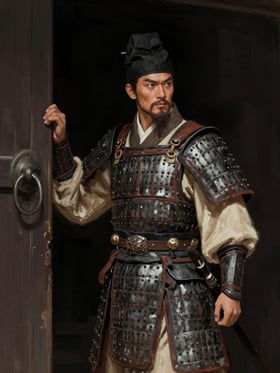
Jiang Shu was a Shu Han general who surrendered to Wei at Yang'an Pass; in the novel, his defection led to Fu Qian's death.

Life
In the novel: 5 chapters · In the Records: 1 volume
Life?–?
253 CE (Jiaping 5)
263 CE (Jingyuan 4)
Appearances
By chapter (6)
Outlined chapters have spoken lines; tap one to read them.
Novel
- 112
- 113
- 114
- 115
- 116
Records
- 44
List all 2 stops
On the boards
Compare with someone →Where this person ranks on each board.
Historical Record
Jiang Shu was a Shu Han general. In the sixth year of Jingyao, Zhong Hui attacked the two cities of Han and Le and sent a separate general to attack Yang'an Pass. Jiang Shu opened the gates and surrendered, while Fu Qian fought to the death. After Yang'an Pass fell, Zhong Hui was able to continue advancing, and the reinforcements led by Zhang Yi, Dong Jue, and others subsequently withdrew to defend Jianmen Pass. Pei Songzhi’s annotations quote the Shu Ji as saying that Jiang Shu had once served as Commandant of Wuxing, “but was undistinguished in office.” After Shu Han appointed someone to replace him, he remained in Hanzhong to help defend it, then opened the gates and surrendered out of resentment. Another account, quoted in Pei Songzhi’s annotations from the Han Jin Chunqiu, says that Jiang Shu led his troops out of the city on the pretext of going into battle. Fu Qian mistakenly thought he was going to meet the enemy, but Jiang Shu instead went to Yinping and surrendered to Hu Lie. Both accounts point to Jiang Shu’s defection while serving in Hanzhong’s defenses, but they describe the specific circumstances of his opening the gates or leaving the city differently.
In the Novel
Romance of the Three Kingdoms portrays Jiang Shu as a brave Shu general whom Jiang Wei relied on. Jiang Wei first selected him in Hanzhong to train troops and horses; later, Jiang Shu joined the campaign and served as commander of the right army. When Jiang Wei farmed in Dazhong and assigned the generals stationed in Hanzhong to defend the cities and passes, the novel has Jiang Shu and Fu Qian defend a pass together. They disagree over how to respond to the Wei army’s attack: Jiang Shu advocates holding the pass, while Fu Qian argues that they should engage the enemy while its troops are exhausted from their long march.
During the fighting before the pass, Fu Qian leads his troops out to attack while Jiang Shu stays on the ramparts. Jiang Shu then raises Wei flags and declares that he has surrendered. Fu Qian rebukes him for “forgetting kindness and betraying righteousness,” but continues fighting until he is killed. The novel thus emphasizes Jiang Shu’s fickleness and betrayal, presenting his opening of the pass to Wei as the crucial turn that leaves Fu Qian in dire straits. Later, Zhong Hui asks whether there is a shrine to a god on Mount Dingjun, and Jiang Shu replies that there is only the tomb of Marquis Wu Zhuge Liang. This scene continues the novel’s practice of using supernatural portents to suggest that Marquis Wu has manifested himself. Historical accounts record Jiang Shu’s surrender to Wei and Fu Qian’s death in battle, but the characters’ dialogue in the novel, the raising of Wei flags on the ramparts, and the specific course of the fighting are literary embellishments and should not be conflated with the historical record.
Key Relationships
- With Shu Han: Historical accounts say Jiang Shu remained in Hanzhong to help defend it before ultimately opening the gates and surrendering to Wei. The Shu Ji, as quoted in Pei Songzhi’s annotations, also explains his surrender as stemming from resentment at being replaced.
- With Fu Qian: Historical accounts describe their opposite fates when Yang'an Pass fell: Jiang Shu surrendered to Wei, while Fu Qian fought to the death. The Romance of the Three Kingdoms further depicts their disagreement as a dispute over whether to defend the pass or go out to fight, and has Fu Qian rebuke Jiang Shu to his face.
- With Jiang Wei: In the Romance of the Three Kingdoms, Jiang Shu is selected by Jiang Wei, joins his campaign, and is later ordered to defend a pass with Fu Qian. The Records of the Three Kingdoms does not record these specific appointments and deployments involving Jiang Wei.
- With Zhong Hui and the Wei army: Historical accounts say Zhong Hui attacked the pass and Jiang Shu opened the gates and surrendered. In the Romance of the Three Kingdoms, Jiang Shu defects on the ramparts, enabling Zhong Hui to take Yangping Pass.
Notable Scenes
- The fall of Yang'an Pass: Historical accounts say Zhong Hui sent a separate general to attack the pass, Jiang Shu opened the gates and surrendered, and Fu Qian fought to the death. The Shu Ji also explains Jiang Shu’s defection as the result of resentment at being replaced.
- Disagreement before the pass and defection (unique to the Romance of the Three Kingdoms): Fu Qian advocates going out through the pass to meet the enemy, while Jiang Shu initially gives no answer. After Fu Qian goes out to fight, Jiang Shu raises Wei flags on the ramparts and openly declares his surrender.
- The exchange about Mount Dingjun (unique to the Romance of the Three Kingdoms): After witnessing the supernatural portent described in the novel, Zhong Hui asks whether there is a shrine to a god on the mountain. Jiang Shu replies that there is only the tomb of Marquis Wu Zhuge Liang. The Records of the Three Kingdoms contains no such exchange.
Quotes
3 lines in the books · 2 featured
「吾已降了魏也!」
This line captures the pivotal moment of Jiang Shu's surrender to Wei, the turning point of his fate.
「並無神廟,惟有諸葛武侯之墓。」
This line reflects the Shu Han people's reverence for Zhuge Liang, carrying strong cultural recognizability.
Family, lords and rivals
1 relationships

Who is Jiang Shu connected to?
Pick someone to see how many steps lie between them and Jiang Shu.
History vs. novel
7 points · 3 novel-only
| History | Novel |
|---|---|
| Early CourageNovel only | |
| — | The novel says that in the first year of Jingyao, Jiang Wei selected Jiang Shu and Fu Qian. Both were notably courageous, and Jiang Wei greatly valued them. ch. 112 |
| Assessment of ServiceHistory only | |
Historical records state that Jiang Shu once served as commander of Wuxing, but achieved no notable results in office. After Shu Han sent someone to replace him, he remained behind to assist in defending Hanzhong. vol. 44 | — |
| Reason for SurrenderHistory only | |
Historical records state that Jiang Shu harbored resentment after being replaced, and therefore opened the gates and surrendered. The novel does not explain this motive. vol. 44 | — |
| Opening the Gates and SurrenderingNovel embellishes | |
Historical records state that Zhong Hui sent a subordinate general to attack the pass; Jiang Shu opened the gates and surrendered, while Fu Qian fought to the death. vol. 44 | The novel depicts Jiang Shu raising Wei banners on the pass and publicly declaring his surrender while Fu Qian was outside the pass engaging the enemy. Fu Qian was consequently surrounded and killed in battle. ch. 116 |
| Strategy for Defense and BattleNovel only | |
| — | The novel depicts Jiang Shu advocating that they shut the pass and hold it, while Fu Qian argues that they should attack while the Wei army is weary from its long journey. The two disagree. ch. 116 |
| Luring Fu Qian Out of the PassNovel embellishes | |
Historical records state that Jiang Shu falsely claimed that shutting the gates and defending was inferior to going out to fight. Fu Qian believed him and led troops out of the pass; Jiang Shu then surrendered to Hu Lie, and the Wei army took advantage of the opening to attack the city. vol. 44 | The novel portrays Jiang Shu’s betrayal as raising Wei banners on the pass and openly declaring his surrender, emphasizing the dramatic moment when Fu Qian returned to the pass and discovered he had been deceived. ch. 116 |
| Exchange at Mount DingjunNovel only | |
| — | The novel depicts Zhong Hui encountering an apparition while patrolling Mount Dingjun at night. He asks the surrendered general Jiang Shu whether there is a shrine on the mountain, and Jiang Shu replies that Zhuge Liang’s tomb is there. ch. 116 |
- Early CourageNovel only
- Novel
The novel says that in the first year of Jingyao, Jiang Wei selected Jiang Shu and Fu Qian. Both were notably courageous, and Jiang Wei greatly valued them.
ch. 112
- Assessment of ServiceHistory only
- History
Historical records state that Jiang Shu once served as commander of Wuxing, but achieved no notable results in office. After Shu Han sent someone to replace him, he remained behind to assist in defending Hanzhong.
vol. 44
- Reason for SurrenderHistory only
- History
Historical records state that Jiang Shu harbored resentment after being replaced, and therefore opened the gates and surrendered. The novel does not explain this motive.
vol. 44
- Opening the Gates and SurrenderingNovel embellishes
- History
Historical records state that Zhong Hui sent a subordinate general to attack the pass; Jiang Shu opened the gates and surrendered, while Fu Qian fought to the death.
vol. 44
- Novel
The novel depicts Jiang Shu raising Wei banners on the pass and publicly declaring his surrender while Fu Qian was outside the pass engaging the enemy. Fu Qian was consequently surrounded and killed in battle.
ch. 116
- Strategy for Defense and BattleNovel only
- Novel
The novel depicts Jiang Shu advocating that they shut the pass and hold it, while Fu Qian argues that they should attack while the Wei army is weary from its long journey. The two disagree.
ch. 116
- Luring Fu Qian Out of the PassNovel embellishes
- History
Historical records state that Jiang Shu falsely claimed that shutting the gates and defending was inferior to going out to fight. Fu Qian believed him and led troops out of the pass; Jiang Shu then surrendered to Hu Lie, and the Wei army took advantage of the opening to attack the city.
vol. 44
- Novel
The novel portrays Jiang Shu’s betrayal as raising Wei banners on the pass and openly declaring his surrender, emphasizing the dramatic moment when Fu Qian returned to the pass and discovered he had been deceived.
ch. 116
- Exchange at Mount DingjunNovel only
- Novel
The novel depicts Zhong Hui encountering an apparition while patrolling Mount Dingjun at night. He asks the surrendered general Jiang Shu whether there is a shrine on the mountain, and Jiang Shu replies that Zhuge Liang’s tomb is there.
ch. 116
Events
Events (4)
Battles and events the texts place this person in, by date.
Battles
Other events
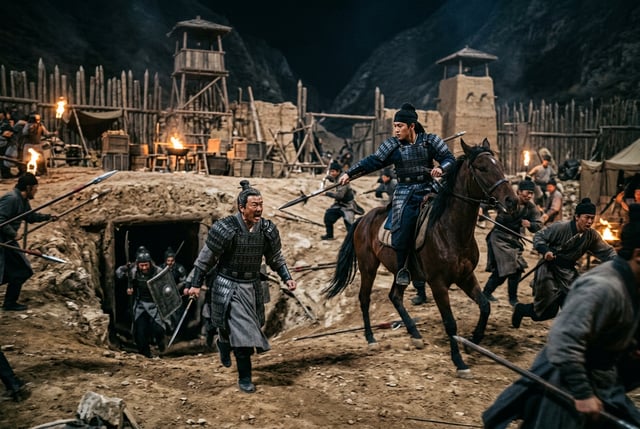
Continue
Jiang Wei's Later Northern Expeditions
Relationship timeline1 entry ▸
Novel · ch. 112
- Jiang Wei§16
Lord
one of the generals of Shu; drilled daily in Hanzhong, and Wei was very fond of him
Inner monologues · AI-generated1 monologue ▸
- I am Jiang Shu; my courtesy name is unknown. Living in the late Han, I was ordered to guard a pass and should have made