Shu Han · Court Eunuch
Huang Hao
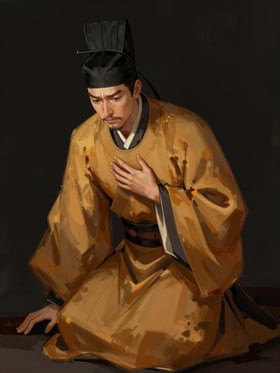
Huang Hao was skilled at slander and fabrication, and once framed Liu Yong. He abused his power and brought ruin upon the state, concealing Jiang Wei's memorial of urgent alarm, and brought a sorceress into the palace to bewitch the Later Ruler. He was afraid of Dong Yun, and only after Dong Yun's death did he manipulate the reins of authority.

Life
In the novel: 7 chapters · In the Records: 6 volumes
Life?–?
253 CE (Jiaping 5)
258 CE (Ganlu 3)
- Huang Hao's Usurpation of PowerChengduInstigator
262 CE (Jingyuan 3)
Allegiance
- Shu Han
- Hatched: dated by chapter
- Life event
On the boards
Compare with someone →Where this person ranks on each board.
Who they were
Character profile
- Character
- Huang Hao was skilled at slander and fabrication, and once framed Liu Yong. He abused his power and brought ruin upon the state, concealing Jiang Wei's memorial of urgent alarm, and brought a sorceress into the palace to bewitch the Later Ruler. He was afraid of Dong Yun, and only after Dong Yun's death did he manipulate the reins of authority.
- Manner of speech
- He once wept and kowtowed with streaming tears, calling himself one who 'merely attends upon His Majesty morning and night,' to beg for pity.
- Anecdotes
- Huang Hao was a eunuch of Shu Han, deeply trusted by the Later Ruler; from the first year of Jingyao he monopolized power, until at last the state was overthrown. He sought to depose Jiang Wei and set up Yan Yu in his place, and, taking bribes, fell for a counter-espionage ploy. In the end, Sima Zhao ordered him put to death by slow slicing.
Historical Record
Huang Hao was a eunuch in the service of Liu Shan, the last ruler of Shu Han. The Records of the Three Kingdoms records that Huang Hao began to monopolize power in the first year of the Jingyao era, when Jiang Wei returned to Chengdu and the court historian used the appearance of a propitious star as the pretext for a general amnesty and a change of era name. While Dong Yun was alive, Liu Shan gradually came to favor Huang Hao. Skilled at ingratiating himself, Huang Hao sought entry into the inner circle of power, but Dong Yun repeatedly corrected Liu Shan to his face and rebuked Huang Hao. Huang Hao consequently feared Dong Yun and kept his conduct in check; his rank rose only to Assistant Director of the Yellow Gate.
After Dong Yun’s death, Chen Zhi succeeded him in office and worked in concert with Huang Hao, who thus began to take part in government affairs. After Chen Zhi died, Huang Hao was promoted from Director of the Yellow Gate to Palace Attendant and Commandant of the Chariots, and wielded power at will. Liu Yong despised Huang Hao, so Huang Hao slandered him to the ruler. Liu Yong was gradually pushed aside and was not granted an audience for more than ten years.
While Jiang Wei spent years campaigning abroad, Huang Hao wielded power at court. Although Dong Jue, Fan Jian, and others jointly assisted in governing, they failed to set matters right. Fan Jian in particular did not cultivate a relationship with Huang Hao. Jiang Wei feared that Huang Hao and Yan Yu had joined forces and intended to depose him and install Yan Yu, so he dared not return to Chengdu. When Wei forces advanced, Jiang Wei submitted a memorial requesting troops to defend the Yang’an Pass and the bridgehead at Yinping. Huang Hao, believing in shamans and divination, urged Liu Shan to set the matter aside, without the court ministers’ knowledge.
The Records of the Three Kingdoms also notes that in the fifth year of the Jingyao era, a great tree in the palace snapped without cause, “as Huang Hao wielded power within.” Qiao Zhou consequently wrote an ominous prophecy; after Shu fell, people regarded it as having come true. After Deng Ai entered Shu, he heard of Huang Hao’s treachery and seized him, intending to execute him. Huang Hao bribed Deng Ai’s attendants lavishly and thereby escaped death.
In the Novel
Romance of the Three Kingdoms portrays Huang Hao as a eunuch who usurps power, curries favor with his superiors, and obstructs military and state affairs. In Chapter 112, through Qiao Zhou, the novel presents the court’s indulgence in wine and women, its trust in Huang Hao, and Jiang Wei’s repeated campaigns together as signs of Shu’s peril. Chapter 113 further dramatizes Huang Hao’s dominance, the officials’ obsequiousness, and the people’s hardship through the observations of the Eastern Wu envoy Xue Xu. The latter two judgments belong to the novel’s narrative and should not be conflated with the Records of the Three Kingdoms.
The novel goes further, making Huang Hao the direct instigator of efforts to obstruct Jiang Wei’s military plans. In Chapter 115, he attaches himself to Yan Yu and prompts the ruler to recall Jiang Wei. When Jiang Wei enters the palace and advises Liu Shan to execute Huang Hao, the ruler says Huang Hao is merely a lowly servant who scurries about on errands. Huang Hao then weeps, bows, and knocks his head on the ground, claiming that he serves only the ruler and does not interfere in state affairs. This plea for mercy and confrontation at court are scenes unique to the novel. The Records of the Three Kingdoms says that Jiang Wei suspected Huang Hao and Yan Yu of joining forces to depose him and install Yan Yu, but does not record this face-to-face confrontation.
Chapters 116 and 117 also depict Huang Hao hiding Jiang Wei’s urgent memorial and bringing in a Shamaness to divine for Liu Shan, predicting that the Wei army would not invade. Even after the military situation worsens, Huang Hao insists that the reports are false. These divinations, the concealment of the memorial, and the related dialogue are all unique to the novel. Chapter 118 depicts Deng Ai, after entering Chengdu, intending to execute Huang Hao, who bribes his attendants with gold and jewels and escapes. This ending accords with the historical account that he “bribed Ai’s attendants lavishly and escaped death,” though the novel specifies the “lavish bribe” as “gold and jewels.”
Key Relationships
Liu Shan: Huang Hao gradually gained a role in government and wielded authority through the ruler’s favor. The historical account says that Liu Shan gradually came to favor Huang Hao, while the novel repeatedly depicts Liu Shan believing what he says and neglecting court affairs. The novel’s specific scenes in which the ruler makes excuses for Huang Hao and orders him to kneel before Jiang Wei to beg forgiveness are unique to the novel.
Dong Yun: Dong Yun was an important early check on Huang Hao. He sternly corrected the ruler and repeatedly rebuked Huang Hao, who feared him and dared not act recklessly. Only after Dong Yun’s death did Huang Hao gradually begin to take part in government. Their relationship is explicitly recorded in the historical account.
Chen Zhi: Chen Zhi and Huang Hao “worked in concert,” and Huang Hao began to take part in government affairs. After Chen Zhi’s death, Huang Hao was promoted to Palace Attendant and Commandant of the Chariots and wielded power at will. The historical account also records that after Chen Zhi gained the ruler’s favor, Huang Hao sowed discord, deepening Liu Shan’s resentment of Dong Yun.
Jiang Wei and Yan Yu: The historical account says that Jiang Wei suspected Huang Hao and Yan Yu of joining forces to depose him and install Yan Yu, and therefore feared for his position. It also records that Huang Hao used claims of shamanic and supernatural guidance to set aside Jiang Wei’s preparations for war. The novel rewrites this conflict as Huang Hao and Yan Yu plotting to seize military power and repeatedly recalling Jiang Wei, and adds a scene in which Jiang Wei directly asks for Huang Hao’s execution. The face-to-face confrontation and specific plot are unique to the novel.
Deng Ai: After Shu fell, Deng Ai seized Huang Hao and intended to kill him, but Huang Hao bribed Deng Ai’s attendants and escaped. Romance of the Three Kingdoms retains this ending and specifies that the bribe was gold and jewels.
Signature Scenes
Dong Yun keeps Huang Hao in check: As the ruler grew older, he began to favor Huang Hao. Huang Hao ingratiated himself with the ruler in hopes of advancement, while Dong Yun corrected his sovereign above and rebuked Huang Hao below. Huang Hao feared Dong Yun and could not significantly overstep his rank until Dong Yun’s death. This scene highlights that Huang Hao’s power was not insurmountable from the outset, and shows that the court once had the means to restrain him.
Setting aside Jiang Wei’s memorial on military preparations: Before Zhong Hui and Deng Ai advanced, Jiang Wei requested that troops be deployed to defend strategic points. Because Huang Hao believed in shamans and divination, he advised Liu Shan to suppress the memorial, without the court ministers’ knowledge. The historical account focuses on the memorial’s rejection and the court being kept in the dark. The novel expands this into a Shamaness entering the palace to divine and reassure the ruler, and Huang Hao concealing the urgent report; these additions are unique to the novel.
Escape after the fall of Chengdu: After Deng Ai entered Shu, he took Huang Hao into custody and intended to kill him. Huang Hao bribed Deng Ai’s attendants lavishly and escaped death. Both the historical account and the novel preserve this outcome; the novel additionally specifies that the bribe consisted of “gold and jewels.”
Quotes
5 lines in the books · 3 featured
「姜維屢戰無功,可命閻宇代之。」
These words embody Huang Hao's core trait of pushing out the loyal and worthy and meddling in state affairs.
「此乃姜維欲立功名,故上此表。陛下寬心,勿生疑慮。臣聞城中有一師婆,供奉一神,能知吉凶,可召來問之。」
This line shows Huang Hao's method of bewitching the sovereign and using superstition to entrench his power.
「某早晚趨侍聖上而已,並不干與國政。將軍休聽外人之言,欲殺某也。某命繫於將軍,惟將軍憐之。」
These words are Huang Hao's cunning plea for mercy when confronted by Jiang Wei, highlighting his treacherous, sycophantic nature.
- Lord & vassal
- Friends
- Enemies
Who is Huang Hao connected to?
Pick someone to see how many steps lie between them and Huang Hao.
History vs. novel
6 points · 2 novel-only
| History | Novel |
|---|---|
| When did his domination begin?Novel embellishes | |
Historical records state that after Jiang Wei returned to Chengdu in the first year of Jingyao, Huang Hao began to monopolize power at court, but do not describe his day-to-day conduct in detail. vol. 33 | The novel says the court indulged in wine and women, trusted Huang Hao, and neglected state affairs; it also uses Qiao Zhou to criticize the court’s political disorder. ch. 112 |
| Sidelining Jiang Wei with Yan YuNovel embellishes | |
Historical records state that Yan Yu and Huang Hao colluded with each other, and that Huang Hao secretly wanted to depose Jiang Wei and install Yan Yu in his place. As a result, Jiang Wei grew suspicious and fearful and did not dare return to Chengdu. vol. 44 | The novel describes in detail how Yan Yu rose to high office by attaching himself to Huang Hao and urged the lord to summon Jiang Wei back; while Jiang Wei was attacking Mount Qi, he received repeated orders to withdraw. ch. 115 |
| Jiang Wei’s face-to-face rebukeNovel embellishes | |
Historical records state that Jiang Wei wanted to ask the lord to execute Huang Hao. Liu Shan said Huang Hao was merely a minor official and had him apologize to Jiang Wei; Jiang Wei then asked to go to Dazhong to grow wheat. vol. 44 | The novel portrays the conflict as Jiang Wei publicly denouncing Huang Hao to his face and asking for his execution. Liu Shan, however, retorts by asking why he cannot tolerate one eunuch, then orders Huang Hao to prostrate himself before Jiang Wei and confess his guilt. ch. 115 |
| A shaman’s false assessment of the military situationNovel embellishes | |
Jiang Wei proposed that Zhang Yi and Liao Hua be sent to defend the Yang’an Pass and the bridgehead at Yinping. Huang Hao believed the claims of spirit mediums and urged Liu Shan to set the proposal aside, without the officials knowing. vol. 44 | The novel says Huang Hao urged the lord to rest easy, claiming Jiang Wei was seeking merit, and brought a spirit medium into the palace to perform rituals, asserting that Wei’s territory would eventually belong to Shu. Liu Shan therefore ignored the warnings. ch. 116 |
| Urgent memorials concealedNovel only | |
| — | The novel says Jiang Wei submitted urgent memorials repeatedly, but Huang Hao hid them all, leaving the lord unable to respond in time to the Wei army’s invasion. ch. 116 |
| Huang Hao bribes his way out of executionNovel only | |
| — | After Chengdu fell, Deng Ai wanted to execute Huang Hao. Huang Hao bribed Deng Ai’s attendants with gold and valuables and thus escaped death. ch. 118 |
- When did his domination begin?Novel embellishes
- History
Historical records state that after Jiang Wei returned to Chengdu in the first year of Jingyao, Huang Hao began to monopolize power at court, but do not describe his day-to-day conduct in detail.
vol. 33
- Novel
The novel says the court indulged in wine and women, trusted Huang Hao, and neglected state affairs; it also uses Qiao Zhou to criticize the court’s political disorder.
ch. 112
- Sidelining Jiang Wei with Yan YuNovel embellishes
- History
Historical records state that Yan Yu and Huang Hao colluded with each other, and that Huang Hao secretly wanted to depose Jiang Wei and install Yan Yu in his place. As a result, Jiang Wei grew suspicious and fearful and did not dare return to Chengdu.
vol. 44
- Novel
The novel describes in detail how Yan Yu rose to high office by attaching himself to Huang Hao and urged the lord to summon Jiang Wei back; while Jiang Wei was attacking Mount Qi, he received repeated orders to withdraw.
ch. 115
- Jiang Wei’s face-to-face rebukeNovel embellishes
- History
Historical records state that Jiang Wei wanted to ask the lord to execute Huang Hao. Liu Shan said Huang Hao was merely a minor official and had him apologize to Jiang Wei; Jiang Wei then asked to go to Dazhong to grow wheat.
vol. 44
- Novel
The novel portrays the conflict as Jiang Wei publicly denouncing Huang Hao to his face and asking for his execution. Liu Shan, however, retorts by asking why he cannot tolerate one eunuch, then orders Huang Hao to prostrate himself before Jiang Wei and confess his guilt.
ch. 115
- A shaman’s false assessment of the military situationNovel embellishes
- History
Jiang Wei proposed that Zhang Yi and Liao Hua be sent to defend the Yang’an Pass and the bridgehead at Yinping. Huang Hao believed the claims of spirit mediums and urged Liu Shan to set the proposal aside, without the officials knowing.
vol. 44
- Novel
The novel says Huang Hao urged the lord to rest easy, claiming Jiang Wei was seeking merit, and brought a spirit medium into the palace to perform rituals, asserting that Wei’s territory would eventually belong to Shu. Liu Shan therefore ignored the warnings.
ch. 116
- Urgent memorials concealedNovel only
- Novel
The novel says Jiang Wei submitted urgent memorials repeatedly, but Huang Hao hid them all, leaving the lord unable to respond in time to the Wei army’s invasion.
ch. 116
Combat
On the field
Duels, kills and executions as the texts tell them, counted separately for the Records and the Romance.
- RomanceCh. 119ExecutionSima ZhaoLost「令武士押出市曹,凌遲處死」
Stratagems
Plans this person devised or saw through, as the texts tell them.
- Records
- 2 carried out · 2 worked · 0 turned down · 0 seen through
- RecordsBribe One's Way Out of ExecutionOtherWorkedagainst WeiJuan 39「而皓厚賂艾左右,得免」
- RecordsSowing DiscordSowing discordWorkedagainst Dong YunJuan 39「由祗媚茲一人,皓構間浸潤故耳」
Events
Events (6)
Battles and events the texts place this person in, by date.
Battles
Other events
Continue
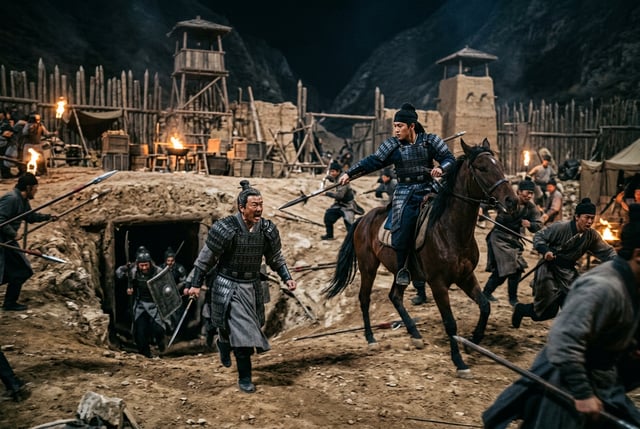
Jiang Wei's Later Northern Expeditions
Relationship timeline4 entries ▸
History · vol. 44
- Jiang Wei§30
Enemy
Wielded power within, colluded with Yan Yu, and secretly sought to depose Jiang Wei and install Yan Yu
Novel · ch. 112
- Liu Shan§16
Lord
A favored court attendant; gained the Later Lord’s trust
Novel · ch. 113
- Liu Shan§10
Advised
The palace attendants held power, and the ministers fawned on them; [he] slandered Jiang Wei and had him recalled
Novel · ch. 115
- Liu Shan§10
Lord
eunuchs monopolized power; received protection from the Later Lord; Jiang Wei wanted to kill him but could not
Inner monologues · AI-generated3 monologues ▸
- After Chengdu surrendered, the Wei forces took control of the city, and in the blink of an eye, the flags above the old
- I am Huang Hao; the historical records consulted do not give my courtesy name. Now that power has gradually passed into
- I am Huang Hao; the records do not give my courtesy name. Looking back on my early years, I find it difficult to recount