Sima clan · Marquis within the Passes; Magistrate of Anyang; Administrator of Baxi Commandery
Xi Zheng
courtesy name 令先 · –278
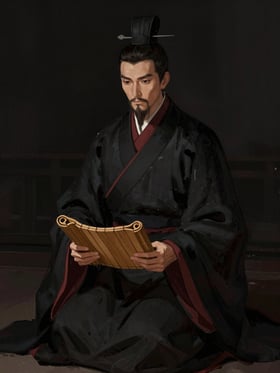
Shu Han official Xi Zheng drafted its surrender and went with Liu Shan to Luoyang; the novel highlights his counsel to Jiang Wei.

Life
In the novel: 5 chapters · In the Records: 3 volumes
Life?–278
262 CE (Jingyuan 3)
264 CE (Xianxi 1)
- Zhong Hui's RebellionChengduWitness
List all 3 stops
On the boards
Compare with someone →Where this person ranks on each board.
Historical Record
Xi Zheng, courtesy name Lingxian, was from Yanshi, Henan. His grandfather, Xi Jian, once served as Inspector of Yi Province and was killed by bandits. His father, Xi Yi, surrendered to Wei alongside Meng Da and served as a Clerk of the Secretariat, so Xi Zheng remained in Shu. His original name was Zuan. His father died when he was young, and his mother remarried, leaving him alone and in hardship. Yet he was content with poverty and devoted to learning, reading widely in the classics. By around the age of twenty, he was already able to compose prose. He later joined Shu Han’s secretariat, serving successively as a Secretariat Clerk, a Secretariat Recorder, and a Gentleman, before rising to Director of the Secretariat. Indifferent to fame and profit, he devoted himself especially to writing and searched widely for works and treatises from past and present. He served in the palace for nearly thirty years, working alongside Huang Hao. Although Huang Hao held power, Xi Zheng was neither favored nor hated by him. Thus, though his rank was not high, he escaped disaster.
Xi Zheng once discussed the crown prince’s studies with Meng Guang. Meng Guang pressed him about the prince’s political skill and intelligence. Xi Zheng, however, believed that a prince should make it his foremost duty to carry out his father’s wishes and bring him joy; as for political skill, it should be exercised when the time came, not prescribed in advance. Meng Guang praised his prudence, and Xi Zheng also agreed with Meng Guang that the prince’s reading should focus on what was most urgently needed. Xi Zheng also wrote a commentary on Jiang Wei, praising his tireless pursuit of learning and his simple, frugal way of life as an example for his generation. Pei Songzhi clarified that this praise concerned Jiang Wei’s love of learning and frugality, and did not endorse his conduct throughout his life.
In the sixth year of Jingyao, the Later Lord followed Qiao Zhou’s advice and sent an envoy to surrender to Deng Ai; Xi Zheng drafted the letter of surrender. The following year, Zhong Hui rebelled in Chengdu, and the Later Lord moved east to Luoyang. Of the Shu ministers, only Xi Zheng and Palace Attendant Director Zhang Tong left their wives and children behind and accompanied him alone. Xi Zheng guided the Later Lord along the way, ensuring that he behaved appropriately. The Later Lord consequently lamented that he regretted not having come to know him sooner. Xi Zheng was enfeoffed as a Marquis within the Passes. After entering Jin service, he became magistrate of Anyang County and was later promoted to Grand Administrator of Baxi. An edict from the Jin court praised him for upholding his principles and remaining loyal when Chengdu was in turmoil, and for devoting himself to his duties and achieving good results in governance after his appointment. Xi Zheng died in the fourth year of Xianning. He wrote nearly a hundred works, including poems, treatises, and rhapsodies.
In the Novel
The Romance of the Three Kingdoms portrays Xi Zheng as a civil official who navigates the Shu Han court for many years and repeatedly offers counsel on state affairs and to Jiang Wei. In Chapter 91, he is listed alongside Fei Shi as a Secretariat official, among those left to handle affairs in Shu before Zhuge Liang's Northern Expeditions. Chapter 109 also depicts him, when Jiang Wei sets out on campaign, carrying gold, pearls, and Shu brocade into Qiang territory to befriend the Qiang king Mi Dang and secure the Qiang troops’ aid. This specific diplomatic mission is a fictional episode; historical accounts contain no corresponding record.
In Chapter 115, Xi Zheng appears especially quick-witted and cautious. When Jiang Wei learns that Huang Hao is obstructing military affairs and angrily wants to kill him, Xi Zheng advises him not to act rashly, lest the emperor refuse to tolerate it. He then suggests that Jiang Wei petition to go and farm at Dazhong, where he can build up military supplies while commanding troops outside the capital and avoiding danger. The novel also has him step forward to speak when Wei forces approach Chengdu, urging the Later Lord to summon Zhuge Zhan to discuss repelling them. These admonitions and strategies enrich Xi Zheng’s dramatic portrayal. Historical accounts do record that he guided the Later Lord during the move east and drafted the letter of surrender, but they do not mention his advice about Dazhong or his urgent appeal to summon Zhuge Zhan.
Chapter 119 expands an anecdote from the historical account, in which Xi Zheng coached the Later Lord on how to respond, into a banquet scene. Sima Zhao asks the Later Lord whether he misses Shu, and the Later Lord first replies, “It is pleasant here; I do not think of Shu.” Xi Zheng privately coaches him to express his longing by citing his homeland and his ancestors’ graves. When the Later Lord repeats this, Sima Zhao realizes that Xi Zheng supplied the words, prompting laughter at the banquet. A corresponding account appears in the Han Jin Chunqiu as quoted in Pei Songzhi’s annotations to the Records of the Three Kingdoms, but the novel elaborates the scene with Xi Zheng giving him the words beneath a covered walkway and the Later Lord wanting to weep but unable to do so.
Key Relationships
Xi Zheng’s relationship with the Later Lord Liu Shan was both that of a Shu Han subject to his ruler and of a guide in a time of crisis. Historical accounts say that he accompanied Liu Shan on the move to Luoyang and helped him behave appropriately; in the banquet episode in Luoyang recorded in the Han Jin Chunqiu, he also coached Liu Shan on how to answer Sima Zhao. The novel extends this familiarity and loyalty into repeated face-to-face admonitions, shaping him as a close attendant who could read the times and knew when to advance or retreat.
His relationship with Jiang Wei is reflected in historical accounts through his written commentary, and in the novel through his role as an adviser. Historical accounts say Xi Zheng praised Jiang Wei’s love of learning and frugality; the Romance of the Three Kingdoms has him undertake a mission to Qiang territory for Jiang Wei, dissuade him from killing Huang Hao, and propose farming at Dazhong. The latter two episodes appear only in the novel. He and Huang Hao worked alongside one another in the palace for many years, but Huang Hao neither especially favored nor disliked him, allowing him to serve for a long time and avoid disaster.
Signature Scenes
The scene that best conveys Xi Zheng’s circumstances in the historical account is the hasty eastward move after Shu fell. Though many ministers did not accompany the Later Lord, Xi Zheng left his wife and children behind with Zhang Tong, went alone with the Later Lord, and cared for and guided him along the way. This was no celebrated military achievement, but it showed his steadfast sense of duty in a time of crisis, and was why the Later Lord later lamented, “I regret that I came to know Zheng so late.”
Another scene is the “missing Shu” exchange at the banquet in Luoyang. As music from Shu played, the Later Lord appeared delighted, and Sima Zhao seized the opportunity to question him. Xi Zheng privately coached him to express his longing for his homeland, but when the Later Lord repeated the words, it was recognized that they came from Xi Zheng. This incident is already recorded in the Han Jin Chunqiu as quoted in Pei Songzhi’s annotations; the novel turns the exchange, the private instruction aside, and the laughter of those present into a more vivid dramatic scene.
Quotes
8 lines in the books · 3 featured
「將軍禍不遠矣。將軍若危,國家隨滅。」
Foretelling the fate of Jiang Wei and Shu Han, deeply tinged with historical tragedy.
「隴西有一去處,名日沓中:此地極其肥壯。將軍何不效武侯屯田之事,奏知天子,前去沓中屯田?一者:得麥熟以助軍實;二者,可以盡圖隴右諸郡;三者,魏人不敢正視漢中;四者,將軍在外掌握兵權,人不能圖,可以避禍:此乃保國安身之策也,宜早行之。」
Proposing the strategy of "garrison-farming at Dazhong," the core of Jiang Wei's later military strategy.
「陛下如何答應不思蜀也?倘彼再問,可泣而答曰:『先人墳墓,遠在蜀地,乃心西悲,無日不思。』晉公必放陛下歸蜀矣。」
The origin of the idiom "so happy as to forget Shu," displaying his political shrewdness.
- Family
- Enemies
- Teacher & student
- Other
Who is Xi Zheng connected to?
Pick someone to see how many steps lie between them and Xi Zheng.
History vs. novel
7 points · 5 novel-only
| History | Novel |
|---|---|
| Qiang AllianceNovel only | |
| — | To launch another campaign against Wei, Jiang Wei sent Xi Zheng to the Qiang lands with gold, pearls, and brocades from Shu to establish friendly relations with Mi Dang, king of the Qiang. Mi Dang subsequently led fifty thousand men to support the campaign. ch. 109 |
| Urging Jiang Wei to ReconsiderNovel only | |
| — | When Jiang Wei learned that Huang Hao wanted to recall him, he flew into a rage and wanted to kill Huang Hao. Xi Zheng advised him that, bearing great responsibilities, he must not act rashly lest he bring misfortune upon himself. ch. 115 |
| Garrison Farming at DazhongNovel only | |
| — | Jiang Wei asked Xi Zheng for advice on how to protect the state and secure his own position. Xi Zheng advised him to farm at Dazhong, thereby securing provisions, preparing for an advance, and avoiding danger. Jiang Wei accepted the advice. ch. 115 |
| Calling on Zhuge Zhan in the CrisisNovel only | |
| — | When Deng Ai drew near Fucheng and urgent dispatches kept arriving in Chengdu, the court officials fell silent. Xi Zheng stepped forward and advised Liu Shan to summon Zhuge Zhan to discuss a plan for repelling the enemy. ch. 117 |
| Advice for the Feast at LuoyangNovel only | |
| — | At a feast in Luoyang, Liu Shan said, “I enjoy myself here and do not think of Shu.” Xi Zheng later instructed him that if he was asked again, he should weep and say he longed for Shu. Liu Shan did so, but then admitted that Xi Zheng had told him what to say. ch. 119 |
| Accompanying Liu Shan on the Eastward RelocationHistory only | |
After Zhong Hui rebelled in Chengdu, Liu Shan hastily relocated east to Luoyang. Xi Zheng and Zhang Tong left their wives and children behind and accompanied him alone, guiding and assisting him along the way so that Liu Shan conducted himself without fault. vol. 42 | — |
| Relations with Huang HaoHistory only | |
Xi Zheng served in an inner-court post alongside Huang Hao for thirty years. After Huang Hao gained power, Xi Zheng neither won his favor nor incurred his resentment. His rank brought him no more than a salary of six hundred shi, but this kept him free from trouble. vol. 42 | — |
- Qiang AllianceNovel only
- Novel
To launch another campaign against Wei, Jiang Wei sent Xi Zheng to the Qiang lands with gold, pearls, and brocades from Shu to establish friendly relations with Mi Dang, king of the Qiang. Mi Dang subsequently led fifty thousand men to support the campaign.
ch. 109
- Urging Jiang Wei to ReconsiderNovel only
- Novel
When Jiang Wei learned that Huang Hao wanted to recall him, he flew into a rage and wanted to kill Huang Hao. Xi Zheng advised him that, bearing great responsibilities, he must not act rashly lest he bring misfortune upon himself.
ch. 115
- Garrison Farming at DazhongNovel only
- Novel
Jiang Wei asked Xi Zheng for advice on how to protect the state and secure his own position. Xi Zheng advised him to farm at Dazhong, thereby securing provisions, preparing for an advance, and avoiding danger. Jiang Wei accepted the advice.
ch. 115
- Calling on Zhuge Zhan in the CrisisNovel only
- Novel
When Deng Ai drew near Fucheng and urgent dispatches kept arriving in Chengdu, the court officials fell silent. Xi Zheng stepped forward and advised Liu Shan to summon Zhuge Zhan to discuss a plan for repelling the enemy.
ch. 117
- Advice for the Feast at LuoyangNovel only
- Novel
At a feast in Luoyang, Liu Shan said, “I enjoy myself here and do not think of Shu.” Xi Zheng later instructed him that if he was asked again, he should weep and say he longed for Shu. Liu Shan did so, but then admitted that Xi Zheng had told him what to say.
ch. 119
- Accompanying Liu Shan on the Eastward RelocationHistory only
- History
After Zhong Hui rebelled in Chengdu, Liu Shan hastily relocated east to Luoyang. Xi Zheng and Zhang Tong left their wives and children behind and accompanied him alone, guiding and assisting him along the way so that Liu Shan conducted himself without fault.
vol. 42
- Relations with Huang HaoHistory only
- History
Xi Zheng served in an inner-court post alongside Huang Hao for thirty years. After Huang Hao gained power, Xi Zheng neither won his favor nor incurred his resentment. His rank brought him no more than a salary of six hundred shi, but this kept him free from trouble.
vol. 42
Combat
On the field
Duels, kills and executions as the texts tell them, counted separately for the Records and the Romance.
Stratagems
Plans this person devised or saw through, as the texts tell them.
- Romance
- 1 carried out · 0 worked · 0 turned down · 0 seen through
- RomanceTeach the Later Lord to Long for ShuDeceptionSeen throughagainst JinCh. 119「何乃似郤正語耶」
Events
Events (6)
Battles and events the texts place this person in, by date.
Places
- Native of
- Henan Commandery (Henan Yin)Records
- Governed
- Baxi CommanderyRecords
- Moved to
- LuoyangRecords
Continue
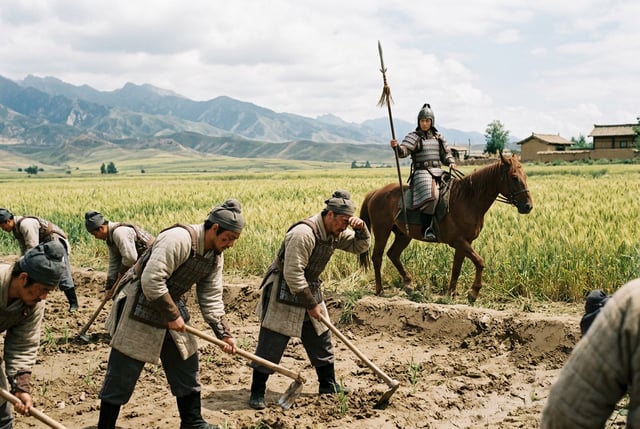
Jiang Wei's Agricultural Garrison at Tazhong to Avoid Trouble
Relationship timeline6 entries ▸
History · vol. 42
- Meng Guang§35
Teacher
Frequently sought advice from Meng Guang
- Huang Hao§82
Rival
Was in constant contact with Hao, living in neighboring houses, for thirty years; Hao neither favored nor disliked him
- Liu Shan§89
Advised
After Shu fell, he accompanied the later lord east to Luoyang; he left his wife and children behind and served him alone, accompanying and guiding him as appropriate
Novel · ch. 109
Advised
was ordered by Jiang Wei to take gold, pearls, and Shu brocade to the Qiang and establish friendly relations with the Qiang king
Novel · ch. 115
- Jiang Wei§11
Advised
Urged Jiang Wei not to rashly kill the eunuch, and proposed the plan of Jiang Wei's Agricultural Garrison at Tazhong to Avoid Trouble
Novel · ch. 117
- Liu Shan§14
Advised
stepped forward to memorialize the throne, asking the son of Marquis Xuanwu to discuss a strategy for withdrawing the troops
Inner monologues · AI-generated1 monologue ▸
- I am Xi Zheng, courtesy name Lingxian, from Yanshi in Henan. My father died when I was young, and my mother remarried. M