Shu Han · Gentleman of the Palace; Director of Credentials; Colonel of the Garrison Cavalry; Lesser Treasurer of Changle; Minister of Agriculture
Meng Guang
courtesy name 孝裕
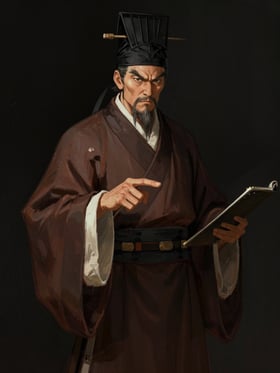
Meng Guang, a Shu Han official, was known for his learning, frank counsel, and ritual duties; the novel depicts him overseeing Liu Bei’s enthronement.
Appearances
In the novel: 2 chapters · In the Records: 2 volumes
- Shu Han· Undated
List all 2 stops
- LuoyangBirthplace
- Wudan Hill221Liu Bei Proclaims Himself Emperor
On the boards
Compare with someone →Where this person ranks on each board.
Historical Record
Meng Guang, courtesy name Xiaoyu, was from Luoyang, Henan, and a kinsman of Meng Yu, Grand Commandant of the Han. Late in Emperor Ling’s reign, he served as a clerk in the Department of Lectures. After Emperor Xian moved the capital to Chang'an, Meng Guang fled to Shu, where Liu Yan and his sons treated him as an honored guest. Broadly learned and widely read, he devoted particular attention to studying the Three Histories and was familiar with the institutions and precedents of the Han. He favored the Gongyang Commentary on the Spring and Autumn Annals, often criticized the Zuo Commentary, and repeatedly argued with Lai Min, their debates growing loud and heated. After Liu Bei pacified Yi Province, he appointed Meng Guang as an Erudite Counselor, and Meng Guang, Xu Ci, and others jointly managed the institutions. After Liu Shan's Accession to the Throne, Meng Guang successively served as Director of Credentials, Colonel of the Garrison Cavalry, and Palace Treasurer of Changle, before being promoted to Grand Minister of Agriculture.
When Liu Bei accepted the ministers’ appeals to assume the imperial title and established his reign, Meng Guang and Erudite Xu Ci jointly drew up the rituals and selected an auspicious day, taking part in this matter of state ritual. In Shu Han’s later years, Meng Guang was known for speaking frankly and daring to remonstrate. He often pointed out the advantages and drawbacks of government policies in public, earning the displeasure of senior officials in power; his rank never rose to a level commensurate with his seniority. In the autumn of the ninth year of Yanxi, during a general amnesty, he publicly challenged Grand General Fei Yi, arguing that granting pardons was a biased measure and should not be lightly employed in an enlightened age. The ruler of Shu was benevolent and worthy, the officials were competent, and there was no imminent crisis; therefore, criminals should not be repeatedly pardoned through extraordinary acts of clemency. He also pointed out that pardoning crimes during the season when hawks and falcons hunted prey went against both the order of Heaven and human reason. Fei Yi merely looked back to offer thanks and responded awkwardly. Meng Guang was later dismissed from office for an unspecified reason and died in his nineties.
Meng Guang also took an interest in the education of the heir. He asked Xi Zheng what books the crown prince read and what his temperament and interests were, making clear that what he truly wanted to know was the prince’s strategic judgment and abilities. Xi Zheng replied that an heir should honor his parents’ wishes and fulfill his filial duties, while keeping strategic judgment within himself and bringing it forth when the time was right. Meng Guang approved of his cautious and appropriate answer, then reminded him that the realm was not yet at peace: the heir’s studies should focus on pressing needs, rather than merely seeking broad learning, preparing for examinations, and pursuing rank.
In the Novel
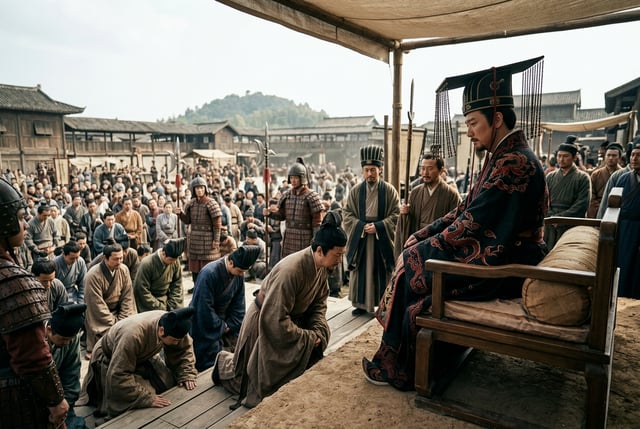
Romance of the Three Kingdoms includes Meng Guang in the ceremonial scene in Chengdu for Liu Bei Proclaims Himself Emperor, and calls him a Gentleman of Remonstrance. After Liu Bei agreed to the ministers’ appeals, Zhuge Liang ordered Erudite Xu Ci and Meng Guang to oversee the rites and build an altar south of Wudan Hill in Chengdu. The ministers prepared the ceremonial guard and escorted Liu Bei to the altar; Qiao Zhou read the sacrificial text, and Zhuge Liang and the others presented the imperial jade seal. After repeatedly declining, Liu Bei accepted it and then changed the era name to Zhangwu. The novel thus makes Meng Guang one of those who carried out the accession ceremony. The historical account records that he and Xu Ci established the rites and selected an auspicious day, but does not describe specific details from the novel, such as building the altar or presenting the seal.
The novel also lists Meng Guang among the court appointments made before Zhuge Liang's Northern Expeditions, saying that he and Lai Min both served as libationers and remained in Shu to take part in domestic administration. This echoes the historical account, which records that Meng Guang held several offices in Shu Han and debated scholarship with Lai Min. However, the specific arrangement of his remaining behind as a libationer before the Northern Expeditions appears only in the novel; the offices listed in the historical account do not include that position.
Key Relationships
Liu Bei and Liu Shan: Meng Guang served within the bureaucratic system first during the establishment of Liu Bei’s state and later under Liu Shan. The historical account records his participation in preparing the rites for Liu Bei and his subsequent service in various offices under Liu Shan. The novel expands the former episode into a dramatic scene of building an altar in Chengdu and Liu Bei ascending the throne and accepting the seal.
Xu Ci: The two took part together in matters concerning ritual institutions. The historical account says that after Liu Bei pacified Yi Province, Meng Guang and Xu Ci, among others, managed the institutions; it also records that, when Liu Bei accepted the ministers’ appeal, Meng Guang and Xu Ci established the rites and selected an auspicious day. The novel further depicts them jointly overseeing the ceremony for Liu Bei’s accession.
Lai Min: The two repeatedly argued over whether to favor the Gongyang Commentary on the Spring and Autumn Annals or the Zuo Commentary, with Meng Guang often defending his views in heated terms. The novel also lists them both as libationers, but this appointment appears only in the novel.
Fei Yi: During a general amnesty, Meng Guang publicly criticized Fei Yi, directly addressing the political and seasonal problems of repeatedly pardoning criminals. Fei Yi did not argue with him directly, but merely offered thanks and withdrew.
Xi Zheng: Xi Zheng had sought Meng Guang’s advice several times. By asking about the prince’s reading and temperament, Meng Guang turned to probing his strategic judgment and abilities. He also urged Xi Zheng to ensure that the heir focused on the truly urgent studies required while the realm remained unsettled.
Notable Scenes
Discussing the rites and choosing an auspicious day: As Liu Bei prepared to accept the ministers’ appeal and assume the imperial title, Meng Guang and Xu Ci took part in establishing the rites and selecting an auspicious day, demonstrating his familiarity with the old Han precedents and his role in institutional affairs. The novel expands this account into the construction of an altar south of Wudan Hill in Chengdu, where Liu Bei was escorted to ascend the altar and accept the seal. The altar and the specific process of accepting the seal appear only in the novel.
Publicly challenging the general amnesty: In the autumn of the ninth year of Yanxi, Meng Guang spoke directly to Grand General Fei Yi about the drawbacks of the amnesty. He did not object to clemency in general terms, but argued point by point, considering whether the situation was truly urgent, whether criminals should repeatedly receive pardons, and whether the season was appropriate, when hawks and falcons hunted. Fei Yi could only offer thanks and respond awkwardly. This episode vividly reveals Meng Guang’s readiness to speak frankly about the effects of government policy, without fear of those in power.
Probing the heir’s strategic judgment: Meng Guang was not satisfied with hearing that the crown prince was respectful, filial, and benevolent toward others. He pressed Xi Zheng about the prince’s judgment and ability to adapt, and advised him that an heir in turbulent times should pursue practical knowledge. This exchange reveals Meng Guang’s concern for political talent and the urgent needs of governing the realm.
Quotes
3 lines in the books · 2 featured
「夫赦者,偏枯之物,非明世所宜有也。衰弊窮極,必不得已,然後乃可權而行之耳。今主上仁賢,百僚稱職,有何旦夕之危,倒懸之急,而數施非常之恩,以惠姦宄之惡乎?又鷹隼始擊,而更原宥有罪,上犯天時,下違人理。老夫耄朽,不達治體,窮謂其法難以經久,豈具瞻之高美,所望於明德哉。」
This remark embodies Meng Guang's sharp critique of the amnesty system, carrying significant political and intellectual value.
「吾好直言,無所迴避,每彈射利病,為世人所譏嫌。疑省君意亦不甚好吾言,然語有次。今天下未定,智意為先,智意雖有自然,然不可力強致也。此儲君讀書,寧當效吾等竭力博識以待訪問,如博士探策講試以求爵位邪!當務其急者。」
This remark shows Meng Guang's outspoken character and his original insights into statecraft.
- Family
- Lord & vassal
- Enemies
- Teacher & student
Who is Meng Guang connected to?
Pick someone to see how many steps lie between them and Meng Guang.
Events
Events (2)
Battles and events the texts place this person in, by date.
Other events
Places
- Native of
- LuoyangRecords
Continue
Liu Bei Proclaims Himself Emperor
Relationship timeline3 entries ▸
History · vol. 42
- Liu Yan§33
Lord
After Emperor Xian moved the capital to Chang'an, fled into Shu; Liu Yan and his son received [him] with the courtesies due a guest
- Lai Min§33
Rival
the two argued noisily over the meanings of the Gongyang and Zuoshi commentaries
- Fei Yi§34
Rival
In Yanxi year 9, during a general amnesty, criticized Fei Yi before the assembled crowd for applying the law improperly
Inner monologues · AI-generated1 monologue ▸
- I am Meng Guang, courtesy name Xiaoyu, from Luoyang in Henan. I belong to the clan of Meng Yu, Grand Commandant of the H