Liu Zhang's faction · Governor of Yi Province
Liu Yan
courtesy name 君郎 · –194
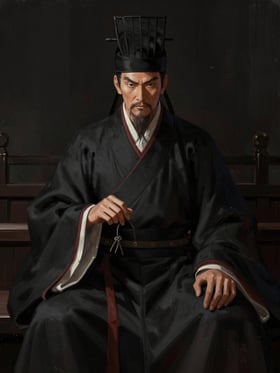
Liu Yan harbored secret schemes and unusual designs; he wished to escape the troubles of the age while also setting his heart on the land of Yi. He was once Governor of Yi Province, and also a kinsman of the Han imperial house.

Life
In the novel: 3 chapters · In the Records: 5 volumes
Life?–194
188 CE (Zhongping 5)
191 CE (Chuping 2)
Appearances
By chapter (8)
Novel
- 1
- 59
- 77
Records
- 8
- 31
- 34
- 38
- 42
- Liu Zhang's faction· Undated
- Life event
List all 5 stops
On the boards
Compare with someone →Where this person ranks on each board.
Who they were
Character profile
- Character
- Liu Yan harbored secret schemes and unusual designs; he wished to escape the troubles of the age while also setting his heart on the land of Yi. He was once Governor of Yi Province, and also a kinsman of the Han imperial house.
- Life
- Liu Yan was a descendant of Prince Gong of Lu of the Han, a native of Jingling in Jiangxia. In his youth he served in the province and commandery, then left office on account of his teacher's death, and dwelt on Mount Yangcheng amassing learning and teaching. He successively held the posts of Prefect of Luoyang, Inspector of Jizhou, Grand Administrator of Nanyang, Director of the Imperial Clan, and Grand Master of Ceremonies. Later he proposed establishing regional shepherds, and himself went out as Supervising Commissioner to serve as Governor of Yi Province, enfeoffed as Marquis of Yangcheng. He finally died in the first year of Xingping from an abscess erupting on his back.
- Anecdotes
- Liu Yan had old ties with the father of Wu Yi; hearing that the Wu family was destined for great nobility, he took the daughter as a wife for his son Mao. Qin Mi once recommended to him the Confucian scholar Ren Dingzu. He once employed Zhang Lu as Major Who Directs Righteousness.
Historical Record
Liu Yan, whose courtesy name was Junlang, was from Jingling, Jiangxia. He was a descendant of King Gong of Lu of the Han imperial house. In his youth, he served in provincial and commandery offices, and was appointed Gentleman Cadet on account of his membership in the imperial clan. Later, he left office when his teacher, Zhu Gong, died, and devoted himself to study and teaching at Yangcheng Mountain. He subsequently served in succession as Magistrate of Luoyang, Inspector of Jizhou, Administrator of Nanyang, Minister of the Imperial Clan, and Grand Master of Ceremonies, advancing from local office to senior posts at court.
During Emperor Ling’s reign, as government declined and the imperial house faced repeated crises, Liu Yan proposed appointing officials of eminent reputation as provincial shepherds to pacify and govern the regions. He initially requested the post of Shepherd of Jiaozhi, claiming that he wished to escape the troubles of the age. Dong Fu privately told him that the celestial region corresponding to Yi Province showed signs of an emperor, and Liu Yan’s ambitions accordingly turned toward Yi Province. At the time, Xi Jian, the Inspector of Yi Province, was imposing onerous levies. Liu Yan was appointed Commissioner with Command of the Army and Shepherd of Yi Province, and enfeoffed as Marquis of Yangcheng.
Ma Xiang and other remnants of the Yellow Turbans in Yi Province rose in revolt. Jia Long, an Aide in the province, recruited troops and defeated the rebels, then welcomed Liu Yan into Shu. Liu Yan moved his administrative seat to Mianzhu. On the surface, he pacified and welcomed those who had defected and governed with leniency and favor; the historical accounts also record that he “secretly plotted an extraordinary scheme.” Taking advantage of the fact that Mother of Zhang Lu had dealings with him, he appointed Zhang Lu as Commandant of Righteousness and sent him to garrison Hanzhong. He then submitted a memorial claiming that the Rice Bandits had blocked the roads, and used this as a pretext to kill powerful local figures such as Wang Xian and Li Quan. Ren Qi and Jia Long later launched a counterattack against Liu Yan, but both were killed.
Liu Yan later had more than a thousand sets of imperial carriage equipment made, and also plotted with Ma Teng to attack Chang'an. After their plan was exposed, his son Liu Fan was executed, and Liu Dan was also arrested and put to death. Later, a fire from the heavens destroyed the carriage equipment in the city and spread to nearby homes. Liu Yan moved his administrative seat to Chengdu. Grief over the loss of his sons, compounded by the shock of the fire, left him with a carbuncle on his back, and he died in the first year of Xingping. Officials in the province installed his son Liu Zhang as his successor.
In the Novel
Romance of the Three Kingdoms places Liu Yan in the Yellow Turban Rebellion at the beginning of the story. Serving as Administrator of You Province, he hears that Zhang Jue’s forces are drawing near and summons Commandant Zou Jing to discuss the matter. He accepts Zou Jing’s suggestion to recruit volunteer troops and immediately posts a recruitment notice. The notice reaches Zhuo County, where the novel introduces Liu Bei, making this an important narrative moment in Liu Bei’s entrance into the story.
This literary portrayal differs in emphasis from the historical accounts of Liu Yan’s service as Shepherd of Yi Province. The surviving material in Records of the Three Kingdoms recounts his official career, his entry into Shu, and his administration of Yi Province, but does not mention his recruiting volunteer troops in You Province or the episode that introduces Liu Bei. The novel, by contrast, uses this scene to portray Liu Yan as a local official rallying volunteer troops amid the turmoil, and makes him part of the opening to Liu Bei’s appearance.
Key Relationships
Zhang Lu was a figure Liu Yan relied on in his administration of Yi Province. Liu Yan appointed Zhang Lu as Commandant of Righteousness and ordered him to garrison Hanzhong. Zhang Lu later took over Zhang Xiu’s followers and occupied Hanzhong. After Liu Yan’s death, Liu Zhang killed Zhang Lu’s mother and family because Zhang Lu would not submit. Zhang Lu then established himself as an independent ruler in Hanzhong. Their relationship thus developed from appointment and control into a conflict between the Liu regime in Yi Province and Zhang Lu in Hanzhong.
Liu Yan and Jia Long first cooperated, then fell out: Jia Long defeated Ma Xiang and welcomed Liu Yan into Shu, but later joined Ren Qi, the Administrator of Jianwei, in a counterattack against Liu Yan, and was ultimately killed by him. Liu Yan and Ma Teng, meanwhile, once plotted to attack Chang'an. After the plan was exposed, Liu Fan was executed and Liu Dan was also put to death. Liu Zhang succeeded Liu Yan; the historical accounts say that senior provincial officials jointly recommended him to succeed as Shepherd of Yi Province because they considered him gentle and benevolent.
Signature Scenes
Liu Yan’s entry into Shu and relocation of his administrative seat to Mianzhu show how he established his power amid local unrest. After Jia Long put down Ma Xiang’s rebellion, Liu Yan entered Yi Province, moved his seat to Mianzhu, and pacified those who had defected. At the same time, he plotted in secret, using Zhang Lu to control Hanzhong and dealing with powerful local figures. This blend of lenient rule and punitive force makes for a striking episode in the historical accounts of Liu Yan’s administration of Yi Province.
Another signature scene in the novel shows Liu Yan responding to an emergency in You Province by accepting Zou Jing’s advice and posting a notice to recruit troops, which brings Liu Bei to his attention. The scene serves as a narrative introduction: Liu Yan is not at the center of the story, but his recruitment drive becomes the gateway through which Liu Bei enters the novel’s main plot. This episode appears only in the novel; the historical accounts contain no corresponding record. (Unique to the novel)
Lines
- 史 ch.31 §4
「刺史、太守,貨賂為官,割剝百姓,以致離叛。可選清名重臣以為牧伯,鎮安方夏。」
- Family
- Lord & vassal
- Friends
- Enemies
- Other
Who is Liu Yan connected to?
Pick someone to see how many steps lie between them and Liu Yan.
Combat
On the field
Duels, kills and executions as the texts tell them, counted separately for the Records and the Romance.
- RecordsJuan 31ExecutionWang XianWon「又託他事殺州中豪強王咸、李權等十馀人」
- RecordsJuan 31ExecutionLi QuanWon「又託他事殺州中豪強王咸、李權等十馀人」
Stratagems
Plans this person devised or saw through, as the texts tell them.
- Records
- 3 carried out · 2 worked · 0 turned down · 0 seen through
- RecordsFalsely Claim Rice Bandits Have Blocked the RoadDeceptionWorkedagainst Han envoyJuan 31「焉上書言米賊斷道,不得複通」
- RecordsUse a Pretext to Kill Local StrongmenDeceptionWorkedagainst local powerful clansJuan 31「又託他事殺州中豪強王咸、李權等十馀人,以立威刑」
- RecordsRaid Chang'anOtherFailedagainst Chang'anJuan 31「範謀洩,奔槐里,騰敗,退還涼州,範應時見殺」
Events
Events (4)
Battles and events the texts place this person in, by date.
Other events
- 184Oath of the Peach Garden
- 188Liu Yan Takes Control of Yi ProvinceInstigator
- 188Ma Xiang's Yellow Turban Uprising in Yi ProvinceCommander
- 191Liu Yan Sends Zhang Lu to Occupy HanzhongInstigator
Places
- Native of
- JiangxiaRecords
- Governed
- Ji ProvinceRecords
- You ProvinceRomance
- LuoyangRecords
- Yi ProvinceRecords
- NanyangRecords
- Died at
- ChengduRecords
Continue
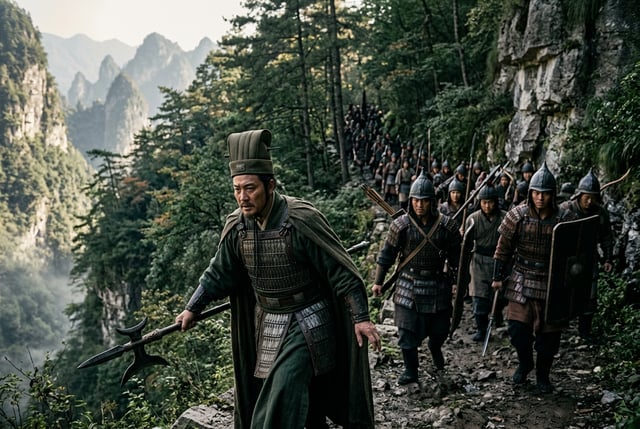
Liu Yan Sends Zhang Lu to Occupy Hanzhong
Relationship timeline7 entries ▸
History · vol. 31
Child
father and son (Liu Zhang was Yan's son)
- Liu Fan§7
Child
father and son (Liu Fan was Yan's son and was then Left Gentleman of the Household for All Purposes)
- Liu Mao§7
Child
father and son (Liu Mao was Yan's son and had long accompanied Yan as a Detached Division Commandant)
- Ma Teng§7
Friend
conspired with Ma Teng to attack Chang'an
- Liu Dan§7
Child
father and son (Liu Dan was Yan's son and a Supervising Censor)
History · vol. 34
- Liu Mao§13
Child
Brought his son Mao along; arranged for Mao to marry Lady Wu
Novel · ch. 59
- Liu Zhang§23
Child
father and son succeeded one another as governor of Yi Province
Inner monologues · AI-generated1 monologue ▸
- I entered service in the commanderies and provinces when I was young. Because I was a member of the imperial clan, I was