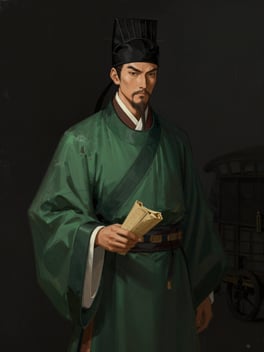
In the first month of 264 (the fifth year of Jingyuan under Wei), after Wei conquered Shu, Zhong Hui occupied Chengdu and plotted a rebellion. He and Jiang Wei planned to raise troops amid turmoil within Wei; Deng Ai was first arrested by Wei Guan under imperial order and sent to Luoyang. Wei generals then counterattacked, and Zhong Hui and Jiang Wei were killed, foiling Jiang Wei’s plan to restore Shu amid the chaos. The upheaval did not alter Wei’s control of Shu, but revealed the suspicions and power struggle among Wei’s commanders after the conquest.
The main narrative of the Records of the Three Kingdoms treats Zhong Hui's Rebellion as a preemptive purge of meritorious officials by the powerful Sima clan. The episode in which Jiang Wei “pretended to serve” appears only in Pei Songzhi’s annotations, quoting the Huayang Record and the Spring and Autumn Annals of Han and Jin, and is regarded as supplementary material based on Shu people’s rumors.
Romance
The novel makes Jiang Wei's voluntary offer of a map, his secret urging of Zhong Hui to declare himself independent, and his secret letter to the Later Lord saying “the sun and moon have been eclipsed and will shine again” into the main storyline. This redefines Zhong Hui's Rebellion as Jiang Wei's final attempt to “restore Han by using the enemy's hand,” making it far more dramatic than the historical account.
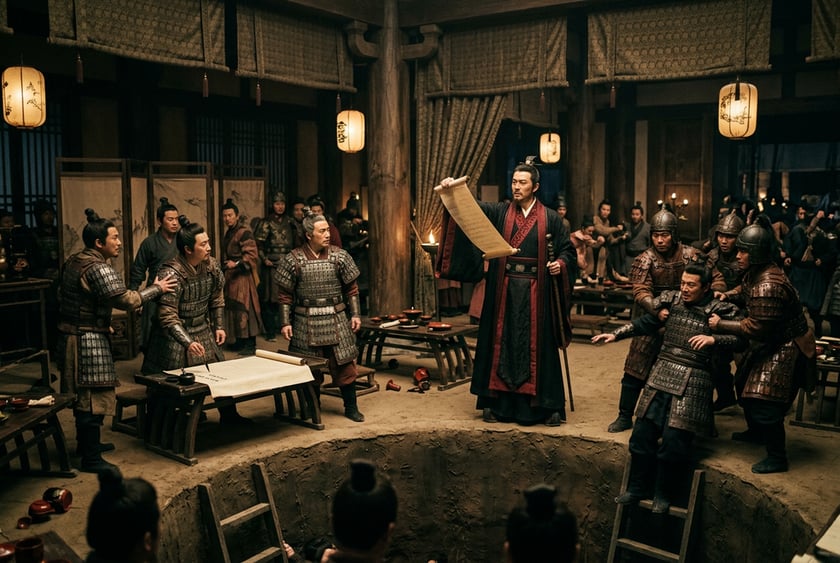
At the Lantern Festival banquet, Zhong Hui holds Empress Dowager Guo’s edict and forces the assembled generals to sign in allegiance. Those who refuse are pushed into a pit by soldiers.
Zhong Hui's Rebellion was not simply a case of “the victor turning traitor”; it arose from the sudden imbalance in the Wei army’s internal power structure after the conquest of Shu. Zhong Hui held the central command in the campaign against Shu, while Deng Ai won independent distinction by making a surprise attack through Yinping and advancing straight to Chengdu. Both were subject to the court’s authority, yet their achievements, reputations, and control over the troops set them in competition with each other. The novel portrays Sima Zhao’s judgment as a premeditated calculation: he believed that Shu had fallen, that the people of Shu would be unlikely to support Zhong Hui, and that the Wei army would want to return home. He therefore judged that although Zhong Hui harbored rebellious intentions, he might not succeed. This was not a judgment that Zhong Hui posed no risk; it was a wager that the rebellion lacked a stable social base and an alliance within the army.
The conflict between Deng Ai and Zhong Hui first took the form of a struggle over command. The novel says that Zhong Hui detained Zhuge Xu and incorporated his troops, emphasizing his authority to deal with fellow generals by claiming to be “acting under an imperial decree.” Deng Ai, meanwhile, believed that after long service on the frontier and great achievements, he should not have to submit to Zhong Hui’s control. After victory, Deng Ai had the greater distinction, while Zhong Hui commanded more troops. Sima Zhao then sent Wei Guan to supervise the army and ordered Zhong Hui to bring Deng Ai under control. Zhong Hui seized the opportunity to falsely accuse Deng Ai of rebellion and even altered his memorial, leading the court to believe that Deng Ai was acting autonomously and disloyally. This shows that the conquest of Shu did not end the war; instead, it transformed cooperation on the battlefield into a struggle over merit, military power, and the security of imperial authority.
The Factions Involved
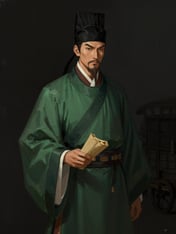
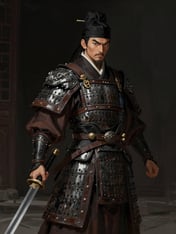
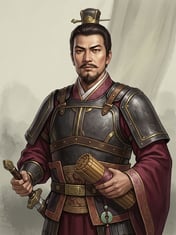
Zhong Hui organized the rebellion and was the person best able to turn personal ambition into military action. He commanded a large army, could arrest Deng Ai and take over his troops, and could use Chengdu as a political and military base. But his advantage rested mainly on his army and official position; it did not necessarily mean that the soldiers had a firm political allegiance to him. Jiang Wei was the most complex participant. As a surrendered Shu Han general, he was close to Zhong Hui and appeared to take part in the plotting. Chen Shou’s main text says Zhong Hui “treated Wei and the others generously,” then “proclaimed himself Shepherd of Yi Province and rebelled.” The Han-Jin Chunqiu and Huayang Guozhi, cited by Pei Songzhi, instead say that Jiang Wei intended to use Zhong Hui’s rebellion to restore Shu. The Jinyang Qiu also records that he “feigned service to Zhong Hui.” Pei Songzhi, however, rejects a simplistic condemnation of Jiang Wei, pointing out that his circumstances and actions are not easy to judge.
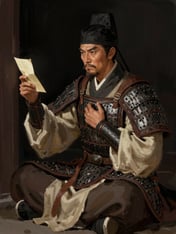
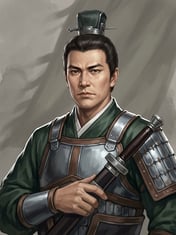
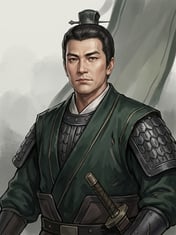
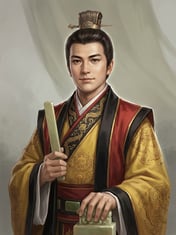
Deng Ai was a rival who was eliminated, not an accomplice in Zhong Hui’s rebellion. In the novel, Wei Guan arrests him under imperial orders, binding his son Deng Zhong as well. Zhong Hui then takes over Deng Ai’s army, showing that the arrests were not merely a personal reckoning, but also a consolidation of forces in preparation for the rebellion. Sima Zhao, meanwhile, was the distant center of power: he issued the decree that brought about the arrests, judged that Zhong Hui might rebel, personally led a large army to Chang'an, and sent Jia Chong into the Xie Valley. Liu Shan and figures from Shu such as Xi Zheng appear in the materials provided mainly as witnesses to the surrender or as people caught up in events. The episode in which Liu Shan receives Jiang Wei’s secret letter in particular points to another political strand in Jiang Wei’s plan to restore Shu, though the plan did not result in any public mobilization by the former Shu Han regime.
Key Turning Points
The first turning point was the arrest of Deng Ai, not Zhong Hui’s immediate uprising. Zhong Hui had already used accusations and the alteration of memorials to persuade the court to remove the threat posed by Deng Ai. Acting under imperial orders, Wei Guan arrested Deng Ai and his son; Zhong Hui then entered Chengdu and took over Deng Ai’s troops. The novel underscores the victors’ triumph through a scene in which Zhong Hui humiliates Deng Ai and Jiang Wei also mocks him. From a military perspective, however, the key point is that Zhong Hui now had more troops, while also making the other Wei generals realize that they might be the next targets of a purge. Deng Ai’s arrest temporarily increased Zhong Hui’s strength, but also deepened the other generals’ suspicions of him.
The second turning point was Sima Zhao’s advance to Chang'an. Zhong Hui had assumed that he could eliminate Deng Ai through false accusations and then control Shu. On learning that Sima Zhao was personally leading an army toward him, he came to see possible punishment by the court as an imminent threat. The novel says that Jiang Wei advised him to fabricate a posthumous edict from Empress Dowager Guo, call for a campaign against Sima Zhao, and use a banquet to control the generals. Chen Shou’s account is briefer, stating that Zhong Hui proclaimed himself Shepherd of Yi Province and rebelled, intending to give Jiang Wei fifty thousand men to serve as the vanguard. The two accounts differ in their details and emphasis, but both show Zhong Hui trying to turn the military power in his hands into political action against the central government, while Jiang Wei may have seen the rebellion as an opportunity to restore Shu. The greatest obstacle was that the army had just fought to conquer Shu, and there was too little trust between former enemies and new rulers, or between commanders and their subordinates, to sustain a prolonged civil war.
Suppression and Outcome
The rebellion ultimately collapsed because Wei generals acted first. Chen Shou’s main text records that Zhong Hui intended to bury all the Wei generals alive, then give Jiang Wei a large force to lead the vanguard. But the soldiers were enraged and killed Zhong Hui and Jiang Wei; Jiang Wei’s wife was also executed. The novel goes further, describing how Zhong Hui confined the generals in a palace and coerced them into signing documents. After Wei Guan freed or contacted the generals, the situation quickly turned against Zhong Hui. The two accounts do not entirely agree on the details, but both point to the same core reason for the failure: the army itself. Although Zhong Hui controlled Chengdu and some of the troops, he had not established a reliable chain of command in time. Instead, he forced the Wei generals, who held the actual military power, to unite in self-preservation.
Deng Ai and his son did not escape danger after Zhong Hui’s defeat. The novel says that they were killed while being taken to Luoyang. The Records of the Three Kingdoms passage provided explicitly states only that Zhong Hui framed Deng Ai and that Deng Ai was summoned in a caged cart; it does not detail his eventual death in the main text. The two accounts therefore cannot be treated as evidence of the same kind. In military terms, Zhong Hui and Jiang Wei’s actions were suppressed, Shu did not regain its independence, and the Wei army remained in control. As for the broader outcome of the events, whether Jiang Wei really could have restored Shu by exploiting the rebellion, and what might have happened if Zhong Hui had first brought the Wei generals under control, are counterfactuals that cannot be verified. Thus, “the outcome is uncertain” applies to the possibilities of the failed plan, not to the rebellion itself.
Historical Resonance
Zhong Hui’s Rebellion reveals the aftermath of a war of conquest: conquerors can defeat a regime quickly, but may not be able to establish a new order of loyalty just as quickly. After Shu fell, Zhong Hui, Deng Ai, Wei Guan, and Sima Zhao each represented a different level of power: frontline commanders competed for military authority, the supervising general carried out the central government’s orders, and the supreme authority prioritized preventing rebellion. For Sima Zhao, both Deng Ai’s outstanding achievements and Zhong Hui’s strong army were potential risks. For Zhong Hui, arresting Deng Ai was merely a way to gain an advantage; it did not solve the problem of how to win the generals’ trust or establish legitimacy outside the Wei court. The rebellion’s collapse was therefore not a chance result of one man’s mistake, but the product of the interaction between military achievements, suspicion, and systems of control.
The differing assessments of Jiang Wei are especially revealing of how the sources can be interpreted. Sun Sheng believed that after the fall of his state, Jiang Wei wavered repeatedly between loyalty and treachery, and that his actions could not succeed. Pei Songzhi, by contrast, pointed out that Jiang Wei had already held Zhong Hui at Jianmen Pass, and that it had been possible to defend all of Shu; the internal and external situation then changed abruptly, so he could not simply be blamed for failing to manage every front. As for his participation in Zhong Hui’s rebellion, surviving accounts offer different interpretations: was it a plan to restore his state by exploiting the rebellion, or was he joining the rebels to seek a new position of power? What can be established is that Jiang Wei did not restore Shu, and Zhong Hui did not turn his military strength after the conquest of Shu into a stable regime. In the end, this brief rebellion left behind not a new state, but a warning about how quickly alliances of power can disintegrate after conquest.