Records
Wei's army won
Vol. 44「維率眾出漢、侯和,為鄧艾所破,還住沓中」
253 CE (Jiaping 5) · Mount Qi
According to chapters one hundred and seven through one hundred and fifteen of the Romance of the San Guo, from the end of the Jianxing era through the Jingao years (approximately 253–262), Jiang Wei used Hanzhong and Dazhong as his bases and repeatedly led Shu forces numbering in the hundreds of thousands northward on campaign: setting out from Yangpingguan, emerging through Qishan, and advancing on Taoyang, he successively deployed Liao Hua and Zhang Yi as vanguard commanders, Wang Han and Jiang Bin as the left army, Jiang Shu and Fu Qian as the right army, and Hu Ji as rear guard, engaging in repeated combat with the Wei commanders Deng Ai, Chen Tai, and Sima Wang. In the early phase he was pressed back by Chen Tai and Guo Huai and forced to flee to Yangpingguan, where he was saved only by the crossbow "continuous-bolt launcher" that Zhuge Liang had fashioned before his death; in the later phase at the nine fortified camps at Qishan, Deng Ai counterattacked by tunneling beneath the positions, and Jiang Wei was also recalled to Chengdu after being ensnared in a disinformation scheme; in his very last offensive he invoked "Sima Zhao's murder of Cao Mao" as justification to launch troops once more, ordering Xiahou Ba to take Taoyang in advance — Ba blundered into an empty city, was ambushed, and perished beneath its walls. This series of late offensives consumed what remained of Shuhan's national strength, and Jiang Wei thereafter withdrew to Dazhongtuntianbihuo, farming to avoid retribution.
 Jiang WeiCommanderTalk to me
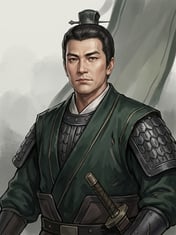 Deng AiCommanderTalk to me
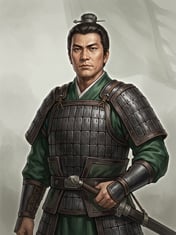 Liao HuaWarriorTalk to me
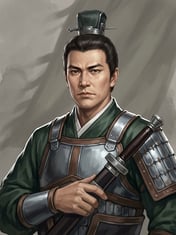 Zhang YiWarriorTalk to me
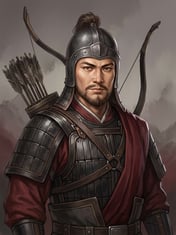 Xiahou BaKilled in actionTalk to me
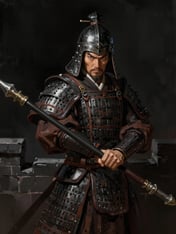 Fu QianWarriorTalk to me
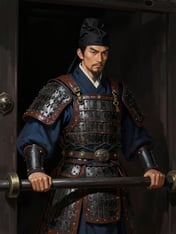 Jiang BinWarriorTalk to me
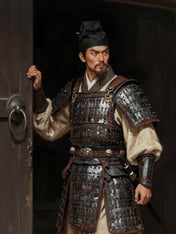 Jiang ShuWarriorTalk to me
Who won, as each book tells it; commanders as the text names them.
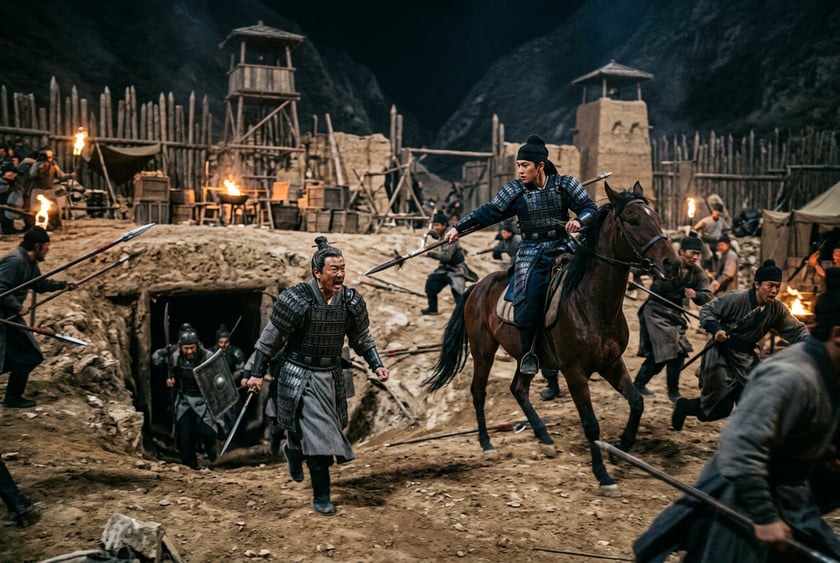
Scene
Among the nine stockades at Mount Qi, Jiang Wei is caught off guard when Deng Ai's troops suddenly burst from a tunnel dug in advance. The Shu army is taken by surprise and its formation falls into disarray.
Continue
Romance of the Three Kingdoms: Dang Jun spread rumors Jiang Wei would defect to Wei; Records of the Three Kingdoms omits him.
2386 people in common
2635 people in common
2554 people in common
2563 people in common
2643 people in common
2492 people in common
2582 people in common
2632 people in common
Compared with Jiang Wei's early northern campaigns (238–253), the "later northern campaigns" refers to the continuous large-scale military operations he launched after the constraints on campaigning were loosened by Fei Yi's assassination (approximately 253–262). Several important shifts in objective conditions had occurred by this period. First, on the Wei side, the transfer of power from Sima Yi and his sons to Sima Shi and then Sima Zhao had been completed; court affairs were entirely in the hands of the Simashi clan, and the political resources available for external warfare were more concentrated than before. Second, the forces within Shuhan opposing the northern campaigns fell briefly silent after Fei Yi's death but quickly resurfaced in the form of Qiao Zhou's "Choukuo Lun," Huang Hao's circle of favorites, and Dang Jun and similar partisans. Third, the frontline adversary shifted progressively from the experienced but steady line commanded by Guo Huai and Chen Tai to the more aggressive Deng Ai, multiplying the tactical difficulty Jiang Wei faced in direct confrontations.
Jiang Wei's deployments in this period took on an "army-group" character: Liao Hua and Zhang Yi as vanguard; Wang Han and Jiang Bin as the left army; Jiang Shu and Fu Qian as the right army; Hu Ji as rear guard; Jiang Wei himself joined the center with Xiahou Ba, commanding a total force of two hundred thousand. This was a scale quite large by Shuhan standards — virtually staking the entire national reserve on a single throw. On the Wei side, deployments became correspondingly more flexible: Chen Tai commanded the main army at Qishan and Guo Huai independently held the Taoxi sector; Deng Ai later took over the Longright defense from Chen Tai and confronted Jiang Wei independently. Notably, Deng Ai no longer responded to Jiang Wei with "passive defense" but actively designed traps — for example, tunneling beneath the Qishan nine-camp positions in advance so that wherever Jiang Wei chose to set up camp, the position could be broken from below by tunnel. This meant that the roles of attacker and defender were quietly reversing.
Several critical decision points in the later northern campaigns all map onto Jiang Wei's strategic predicament. The first was the campaign of 253 — his army reached Niutoushan and was blocked by Chen Tai cutting across his route, while Guo Huai severed the Tao River supply line; the entire force was nearly destroyed. Only when the "linked crossbow" mechanism left as Zhuge Liang's dying bequest — an ambushing battery of crossbow emplacements at Yangpingguan — fired in simultaneous salvos did he narrowly escape. This battle made clear that a conventional frontal offensive could no longer break through the Chen Tai–Guo Huai defensive line. The second was the Qishan nine-camp campaign — convinced that his own deployment was faultless, he chose his own position among the camps of Wang Han and Jiang Bin, which happened precisely to fall on a location where Deng Ai had pre-laid a tunnel. His left camp was raided by night and the entire army dissolved in chaos. This battle exposed Jiang Wei's tactical disadvantage against Deng Ai — the latter was already able to predict from the "topographic veins" the exact point the Shu forces would choose to pitch camp. The third was the counter-intelligence operation — after Jiang Wei had finally managed to seize the Qishan main camp, Liu Chan was influenced by a counter-intelligence operation and issued an edict recalling him; Jiang Wei memorialized the throne that "this must be Deng Ai's counter-intelligence scheme," but the Emperor "fell silent and said nothing". This episode exposed the true fatal weakness of Shuhan's late-period northern campaigns: the outcome at the front was no longer determined by the battlefield but by the court at Chengdu.
The cumulative impact of this series of later offensives was severe. In terms of attrition, Shuhan's finances and manpower were depleted repeatedly. In political terms, the counter-intelligence capabilities of Huang Hao, Dang Jun, and similar favorites were demonstrated again and again; the court's trust in the frontline commanders continued to erode. In strategic terms, when Jiang Wei launched his largest final northern offensive under the banner of "Sima Zhao's assassination of Cao Mao" (260–261), Xiahou Ba stumbled into an ambush in the empty city at Taoyang and was killed, depriving Jiang Wei of his most important adviser. Jiang Wei ultimately chose to station his main forces at Dazhong — nominally as agricultural colonies, in practice to escape political persecution — and this was the single most decisive retreat of the later northern campaign period, and also the structural prelude to the collapse of Shuhan's defenses when Zhong Hui and Deng Ai drove south in force.
Suppose Jiang Wei had changed tactics after the Qishan nine-camp defeat, abandoning large-scale concentration and instead combining "guerrilla harassment" with "strongpoint agricultural colonies." Shuhan's rate of national attrition would have slowed considerably, but abandoning the large-scale offensive would also have meant surrendering strategic pressure on Wei — allowing Wei to consolidate internally at leisure while campaigning against Sunwu. Suppose Liu Chan had not been misled by the counter-intelligence operation and had not recalled Jiang Wei; Jiang Wei might have established a more stable forward position along the Qishan line, but this would only have been a delay — the national power gap between Shu and Wei and Deng Ai's tactical superiority determined that the ultimate outcome would not have changed fundamentally. The sharpest counterfactual concerns Xiahou Ba — had he not been killed in the trap at Taoyang, Jiang Wei's advisory core in the later northern campaigns would not have vanished; decision-making during the Dazhong encampment period might have been steadier, and early warning of Deng Ai's crossing at Yinping might have come sooner. Seen from this angle, the defeat at Taoyang mattered far more than the scale of the battle itself suggested — it took away the last senior adviser Jiang Wei had who was intimately familiar with the geography of Longxi.
Loose the novel's famous arrows, as Romance of the Three Kingdoms tells them
Start game →