Records
No victor stated
- Commanders
- Shu armyJiang Wei
Vol. 44「維本羈旅托國,累年攻戰,功績不立」
238 CE (Jingchu 2) · Mount Qi
According to chapters one hundred and seven through one hundred and sixteen of the Romance of the San Guo, from the Yanxi era through the end of Jingao (238–263), Jiang Wei, the Grand General of Shuhan, launched repeated large-scale campaigns against Wei, concentrating his efforts on the Longright, Yong, and Liang regions. In the early phase he built twin fortresses at Qushan, allied with the Qiang along the Longxi frontier, and scored a major victory over Wang Jing at Taoxi, routing tens of thousands; in the middle phase he lured and slew the Wei general Xu Zhi, then suffered a combined assault by Guo Huai and Deng Ai at the Iron Cage Mountains — despite the defeat he shot Guo Huai dead with an arrow and killed Xu Zhi; in the later phase he clashed repeatedly with Deng Ai at the nine fortified camps at Qishan, at Changcheng, at Taoyang, and at Houhe, and fell back to hold the line between Yangpingguan and Jiange. Throughout this period Fei Yi at court constrained the scale of his campaigns, and following Jiang Wan's death the talent pool for civil governance rapidly thinned; Jiang Wei maintained that he must press forward in pursuit of the Prime Minister's unfinished ambition but was repeatedly forced to withdraw mid-campaign by obstructions from the rear. The cumulative results of this sequence of northern offensives were meager while the drain on Shuhan's resources was enormous; when Deng Ai and Zhong Hui finally advanced southward, Jiang Wei could only fall back on Jiange, and Shuhan soon collapsed.
 Jiang WeiCommanderTalk to me
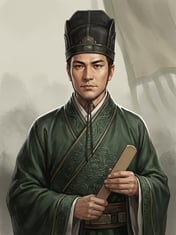 Fei YiAdvisorTalk to me
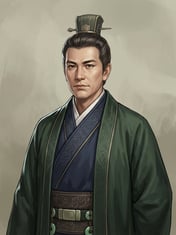 Jiang WanAdvisorTalk to me
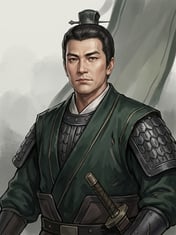 Deng AiCommanderTalk to me
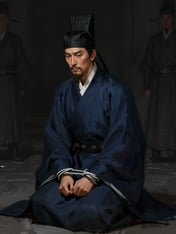 Wang JingCommanderTalk to me
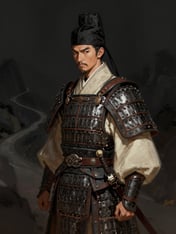 Hu JiWarriorTalk to me
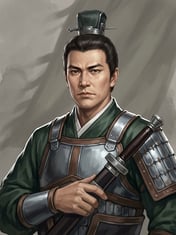 Zhang YiWarriorTalk to me
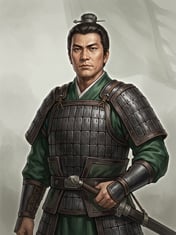 Liao HuaWarriorTalk to me
1 more: Xiahou Ba
Who won, as each book tells it; commanders as the text names them.
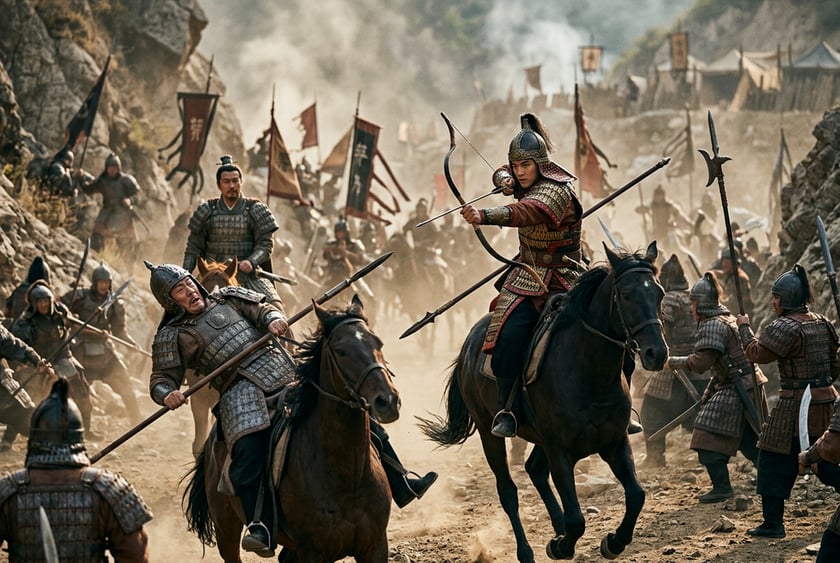
Scene
At Iron Cage Mountain, Jiang Wei is surrounded by the Wei generals Guo Huai and Deng Ai. He draws his bow and shoots an arrow at Guo Huai, who falls at once.
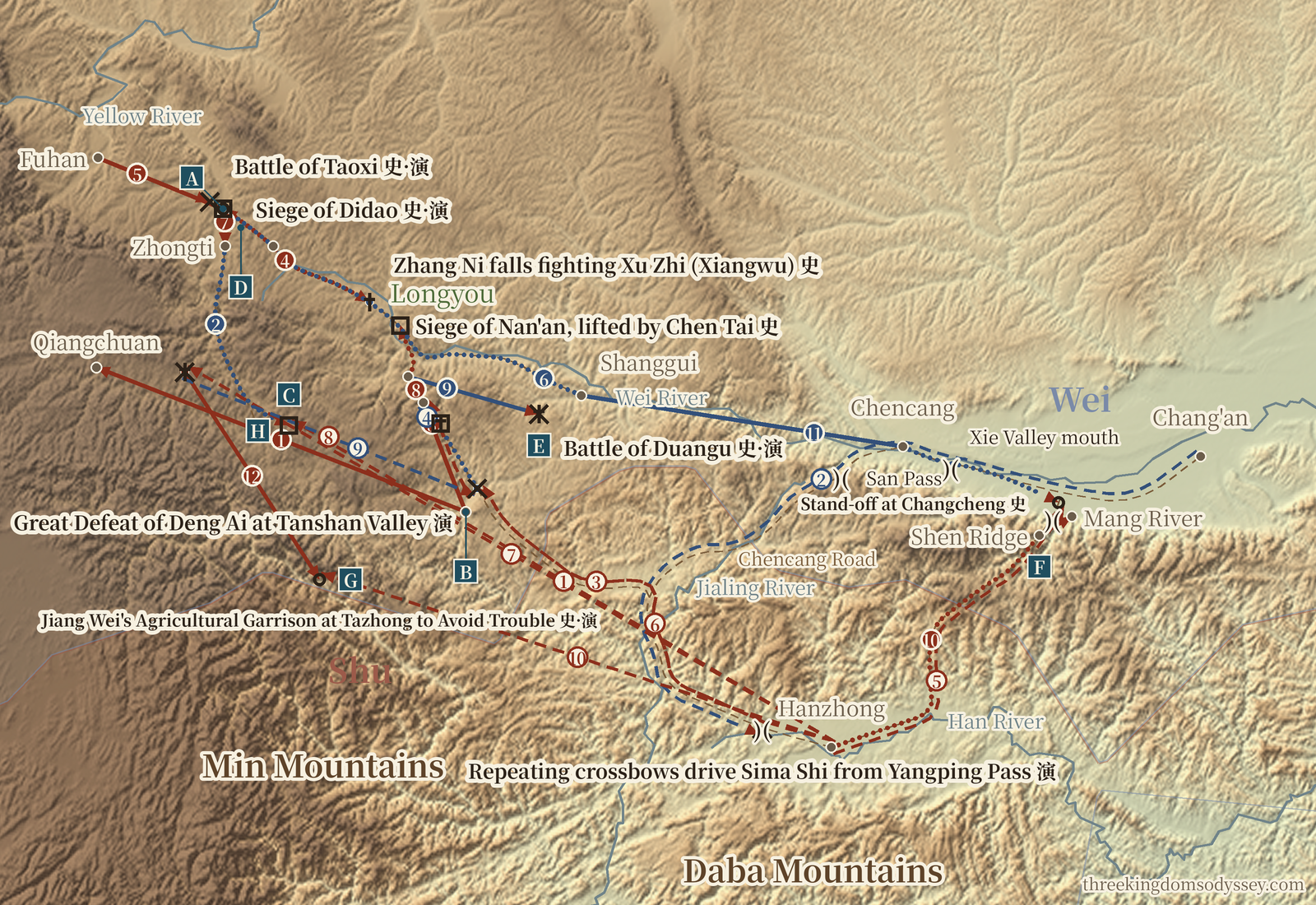
Swipe to see the whole map
The novel adds the battles of Mount Tielong, the formation duel at Qishan and Tanshan Valley, and has Guo Huai and Xiahou Ba die in battle; the Sanguozhi records none of this.
The books mostly say only where an army set out and arrived: a Records line is solid between the places they name and dotted where it follows a reconstructed road between them; an open ring marks an end the books don't give.
Base map: Natural Earth; terrain: AWS Terrain Tiles (SRTM and others). Roads and marches reconstructed from the sources listed; positions approximate.
Continue
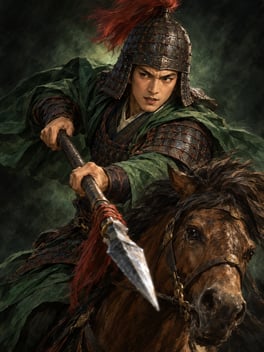
Jiang Wei was a youthful general, leveling his spear and spurring his horse.
2536 people in common
2555 people in common
2613 people in common
2633 people in common
2643 people in common
2342 people in common
2342 people in common
2492 people in common
The Jiangweibeifa should be understood as a strategic cycle spanning more than twenty years, not as a single campaign. After Zhuge Liang died at Wuzhangyuan in 234, Shuhan's successive administrators were Jiang Wan and then Fei Yi. Both leaned toward holding firm and husbanding resources, and neither supported large-scale northern offensives — Fei Yi in particular explicitly capped Jiang Wei's troop deployments "within ten thousand men" so that a single defeat could not drag down the state's strength. After the twelfth year of Yanxi (249), Wei experienced the Gaopinglingzhibian: Sima Yi killed Cao Shuang and seized control of the government. Xiahou Ba, suspected by the Simashi clan, defected from Longxi to Shuhan and became Jiang Wei's adviser. Shuhan judged that Wei's internal instability was an opportunity to strike, and with Fei Yi's assassination removing the internal brake on his activity, Jiang Wei was finally free to prosecute the northern campaigns in earnest.
Jiang Wei's overall strategic direction was to break through from the Longxi–Yongzhou axis, treating "advancing into Longright" as the central axis of carrying on Zhuge Liang's legacy. In the early phase he built two east-west forts below Qushan, attempting to establish a forward base; he also cultivated ties with the Qiang peoples — dispatching Xi Zheng carrying gold, pearls, and Shu brocades into Qiang territory — so that the Qiang commander E Heshaoge would lead fifty thousand men as his vanguard. In the middle phase he lured the Wei general Xu Zhi to his death with a feint-and-ambush, and at Tielushan, when caught between the combined assault of Guo Huai and Deng Ai, he turned and shot back an arrow that killed Guo Huai — one of the rare occasions in the Shuhan northern campaigns where the tactical exchange was on genuinely equal terms. In the later phase he and Deng Ai repeatedly faced each other at the nine camps of Qishan, at Changcheng, at Taoyang, and at Houhe; Deng Ai "first read the topographic veins of the earth," digging tunnels beneath the Qishan positions in advance to neutralize Jiang Wei's deployments at the tactical level.
The Jiangweibeifa had critical decision points at three levels. The first was "when to go out" — he was unable to mobilize large forces while Fei Yi was alive; 254–262 was the period of his most intensive northern campaigns, yet this was also precisely the period of Shuhan's most depleted national strength. The second was "which route to take" — he consistently committed to the Longright route, reasoning that he knew the Qiang situation well and could use the Qiang as allies; but this route had an overextended front and difficult logistics, and each time he was forced to withdraw due to supply problems. The third was "how to allocate forces" — he and Right General of Chariots Hu Ji had agreed to rendezvous at Shanggui, but Hu Ji failed to arrive on time, resulting in the catastrophic defeat at Duangu and the loss of more than ten thousand troops — the single heaviest internal operational failure of Jiang Wei's northern campaigns. In the later phase he finally changed strategy and stationed his main forces at Dazhong to keep out of trouble (escaping the political pressure generated by Huang Hao at court), but this simultaneously meant the Hanzhong defensive line was thinned — the structural reason why Shuhan was ultimately pierced when Deng Ai crossed through Yinping.
Measured in tactical achievements, the Jiangweibeifa was a net draw — a decisive victory over several tens of thousands of Wang Jing's troops at Taoxi, shooting Guo Huai to death, and killing Xu Zhi were all impressive results; but the Duanguzhibai, the inconclusive standoff at Houhe, and the retreats to Yinpingqiao were equally conspicuous failures. Measured in strategic effectiveness, he never genuinely recovered a single commandery of territory. Measured in national attrition, years of continuous campaigning steadily hollowed out Shuhan's population and fiscal base — on the eve of Shuhan's destruction, the ratio of 280,000 households, 90,000 soldiers, and 40,000 officials had reached the point of near-unsustainability. The most consequential impact was that sustained northern campaigning left Hanzhong's defenses thin, with Jiang Wei's main force pinned down at Dazhong and Jiange; when Zhong Hui and Deng Ai drove south on two axes, Shuhan had no mobile reserves to commit. After Jiang Wei fell back to Jiange, Deng Ai crossed through Yinping and drove directly on Chengdu; Liu Chan surrendered — Shuhan's destruction was directly linked to Jiang Wei's strategic choices.
Suppose Jiang Wei abandoned the northern campaign strategy and instead adopted a defensive posture of "rebuilding internal governance and consolidating Hanzhong." Shuhan's national strength might have persisted somewhat longer — but the cost would have been a further erosion of political legitimacy: abandoning the banner of "Han and traitors cannot coexist" would have ideologically undermined Shuhan's very reason for existing. Suppose the northern campaigns continued but under Fei Yi-style restraint — never more than ten thousand men at a time, never driving deep into Longright — there would have been no catastrophic losses like Duangu, but also no strategic pressure on Wei worth speaking of; which is precisely the actual state of Shuhan during Fei Yi's lifetime. The most interesting counterfactual is this: had Hu Ji not missed the rendezvous at Duangu, and had Jiang Wei been able to consolidate real control of even one Longright commandery after his victory at Taoxi, the Shuhan northern campaigns might have upgraded from "harassment strategy" to "territorial conquest strategy" — which is what Zhuge Liang's design had originally envisioned. But Hu Ji's failure to appear, compounded by Huang Hao's interference at court, foreclosed that possibility entirely. In other words, the fundamental cause of Jiang Wei's northern campaigns failing was not on the battlefield but in the inability of Shuhan's mid-to-late political and military system to sustain the high-intensity external strategy Zhuge Liang had designed.