Records
Shu army won
Vol. 44「大破魏雍州刺史王經於洮西,經眾死者數萬人」
255 CE (Zhengyuan 2) · Taoxi
In 255 AD (the second year of Wei’s Zhengyuan era), Shu Han’s General-in-Chief Jiang Wei led an army in an attack. Wang Jing, Wei’s Inspector of Yongzhou, met him in battle at Taoxi. The Wei army was routed, with tens of thousands killed, and Wang Jing retreated to defend Didao. Jiang Wei then laid siege to the city, but Wei generals Chen Tai and Deng Ai led troops to its relief. The Shu army withdrew, and Wei held Didao. The battle inflicted heavy casualties on the Wei army. The Wei court ordered relief for the families of the dead and exempted their households from taxes and corvée labor for one year, reflecting the direct impact of the fighting on the people and military forces along the frontier and on Wei’s defenses.
 Jiang WeiCommanderTalk to me
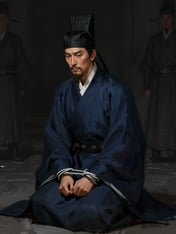 Wang JingCommanderTalk to me
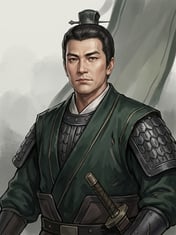 Deng AiCommanderTalk to me
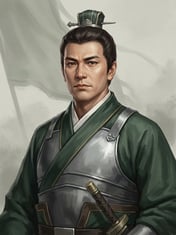 Chen TaiCommanderTalk to me
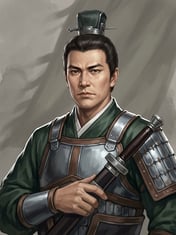 Zhang YiWarriorTalk to me
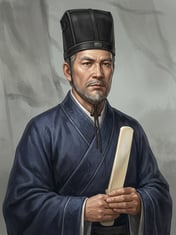 Sima FuCommanderTalk to me
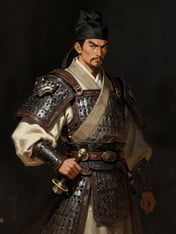 Hu FenWarriorTalk to me
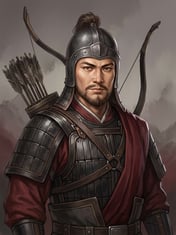 Xiahou BaWarriorTalk to me
Who won, as each book tells it; commanders as the text names them.
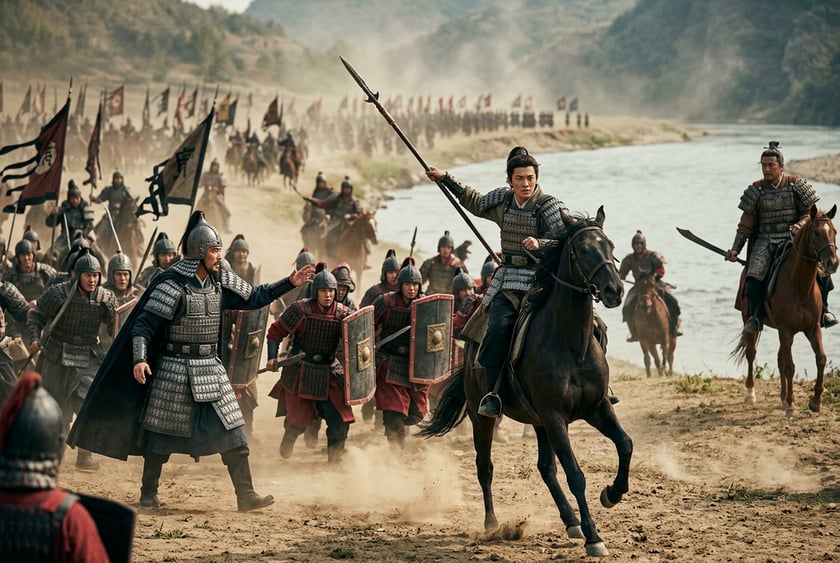
Scene
Jiang Wei leads the Shu Han army into position with its back to the river at Taoxi, luring the Wei forces led by Wang Jing deep in. Zhang Yi and Xiahou Ba stand ready to outflank them on either wing. Dust fills the battlefield and war drums thunder as the two armies prepare for a fierce clash.
The history gives a concise account of the Battle of Taoxi: Jiang Wei won a major victory, then withdrew after failing to capture Didao. The novel expands it into a series of dramatic episodes, including “Jiang Wei shooting Guo Huai dead,” “Sima Shi fleeing in defeat,” and “Deng Ai and Chen Tai deploying a decoy force at Xiangling.”
The Records of the Three Kingdoms records that after Jiang Wei decisively defeated Wang Jing at Taoxi, he besieged Didao, and Chen Tai came south from Shanggui to lift the siege; it includes no details about Deng Ai setting numerous deceptive fires. The novel, by contrast, attributes the enemy’s withdrawal to Deng Ai’s stratagem of setting up “fires and drums at more than twenty places on the hills” to create the illusion of a large force.

Continue
Jiang Wei was a youthful general, leveling his spear and spurring his horse.
2385 people in common
2534 people in common
2493 people in common
2613 people in common
2643 people in common
2562 people in common
2632 people in common
2632 people in common
The Battle of Taoxi took place in 255, the second year of the Wei Zhengyuan era. The surviving historical sources place it within the campaign in which Jiang Wei of Shu Han advanced into Longxi and clashed with Wei forces from Yongzhou: Jiang Wei attacked Didao, and the Yongzhou Inspector Wang Jing met him at Taoxi. After his defeat, Wang Jing withdrew to defend Didao. The battle thus quickly became not only a matter of victory or defeat in the field, but also a siege and a question of relief forces. It should be noted that the sources provided do not fully explain Jiang Wei’s overall strategic objectives or operational plan for this campaign; accounts in novels of revenge or exploiting an opportunity to attack Wei should not be treated directly as historical motives.
The key constraint on the battlefield was that Didao remained in Wei hands after the field battle. Although Shu forces inflicted heavy losses at Taoxi, this did not automatically secure the city for them. To press their advantage, they had to continue the siege and accept the risks posed by Wei reinforcements, supply demands, and the passage of time. Taoxi therefore gave Jiang Wei a brief window of opportunity; it did not predetermine the course of the entire campaign in the Right Long region.
On the Wei side, Wang Jing led the Yongzhou forces against Jiang Wei. Wei accounts briefly record that Wang Jing suffered a major defeat at Taoxi and withdrew to Didao, but give no details about troop numbers, formations, how the river was crossed, or specific tactics. The biography of a Shu general, by contrast, says that tens of thousands of Wei soldiers drowned in the Tao River. The Wei court’s edict mourning the casualties also indicates that losses were severe, but its phrase “numbering in the thousands” refers broadly to soldiers killed, captured, or scattered, and cannot simply be equated with a death toll.
After the battle, the Wei court appointed Deng Ai, Commandant of the Changshui, as Acting General Who Pacifies the West, to join the General Who Conquers the West, Chen Tai, in resisting Jiang Wei. It subsequently ordered Grand Marshal Sima Fu to serve as a supporting force. This shows that Wei’s response shifted from Wang Jing’s local forces to reinforcements and coordination at a higher level. On the Shu side, Zhang Yi’s biography explicitly records that he accompanied Jiang Wei on the campaign and, after Jiang Wei’s great victory over Wang Jing, urged him to halt the advance. As for Xiahou Ba, the specific battlefield actions attributed to him in the materials provided come from the Romance of the Three Kingdoms and cannot be treated as equivalent to the historical record. Although Hu Fen is listed among the participants, the surviving citations provide no information about his deployment or actions in this battle, so none should be supplied.
The first key decision was Wang Jing’s choice to engage Jiang Wei at Taoxi rather than hold out behind the city walls. The result was that the Wei army suffered heavy losses and retreated into Didao, while the Shu army gained a significant advantage in the field. The sources establish the outcome, but do not provide enough evidence to reconstruct why Wang Jing chose that location, whether he was constrained by orders, or how the two sides arranged their formations. There is therefore insufficient evidence to attribute the defeat to any single, definite tactical error.
The second decision came after the victory: Jiang Wei did not end the campaign at once, but continued to besiege Didao. Zhang Yi explicitly opposed advancing further, arguing that victory had already been secured and that continued attacks might jeopardize the gains already made; Jiang Wei did not accept his advice. The official histories record that Didao was not captured, and that Jiang Wei withdrew after Wei reinforcements arrived. This choice reveals the central tension of the campaign: pressing an advantage could bring greater gains, but if the siege dragged on, time and reinforcements could erode the field advantage already won.
The third decision was Wei’s swift organization of a relief effort. Chen Tai and Deng Ai were ordered to cooperate in resisting the enemy, and Sima Fu subsequently followed as a supporting force. The surviving Records of the Three Kingdoms do not describe how the relief forces engaged Jiang Wei; they establish only that Jiang Wei withdrew in the ninth month after the reinforcements were deployed. The novel portrays his withdrawal as the result of Deng Ai setting an ambush and making a show of strength, but this is a fictional account and should not be taken as proof that a single stratagem was solely responsible for the historical retreat.
At the tactical level, the field battle at Taoxi was plainly a major Shu victory: Wang Jing’s forces were routed, and Shu sources say that tens of thousands of Wei soldiers drowned in the Tao River. The Wei court’s edict also acknowledged that many soldiers had been killed, captured, or displaced, and ordered relief for those affected. These accounts corroborate the severity of Wei’s losses. However, Jiang Wei did not capture Didao, and the Shu army ultimately withdrew. If the overall outcome of the “Battle of Taoxi” is assessed by taking into account the field battle, the siege, and the campaign’s objectives, it cannot be summed up solely as a victory in which the enemy was annihilated. The stipulated result of “uncertain” may be understood to mean that the overall strategic outcome is difficult to determine, not that the field battle’s outcome is unrecorded.
In the aftermath, Wei had to strengthen its defenses in the Yongzhou and Liangzhou directions and provide relief to the families of those killed or captured. Meanwhile, Shu’s battlefield gains did not translate into control of Didao. Zhang Yi’s biography records that Jiang Wei failed to capture the city and that Zhang Yi disagreed with him after opposing a continued advance. In this sense, Taoxi did not leave behind a simple case of “victory without gain,” but a classic problem of conversion: how to turn a field advantage into lasting territorial and political benefits.
If Jiang Wei had accepted Zhang Yi’s advice and withdrawn promptly after his great victory at Taoxi, the more likely benefits would have been preserving his forces, reducing the risk of being caught between the city and relief troops during the siege, and turning the victory into a clearly defined border strike. The cost, however, would have been giving up the chance to seize Didao while the Wei army was reeling and further destabilize the defenses of the Right Long region. The Records of the Three Kingdoms do not explain the state of Shu’s supply lines, its remaining troop strength, or the condition of the city’s defenses at the time. It is therefore impossible to say that an early withdrawal would certainly have been better; it can only be said that it would have favored risk control over maximizing gains.
Conversely, if Wei had been unable to mobilize in time the reinforcements represented by Chen Tai, Deng Ai, and Sima Fu, Jiang Wei’s window for besieging the city might have lasted longer, and Wei’s forces in the Right Long region would have faced greater pressure. But that does not mean Didao would inevitably have fallen. The surviving accounts offer too little detail to assess the city’s defenses, Shu’s ability to conduct a siege, or its capacity to sustain the necessary logistics. The most cautious conclusion is that Taoxi showed Jiang Wei could inflict a major defeat on Wei in the field, but also that a single victory was not enough to guarantee success in a siege. Whether the gains could be expanded depended on weighing the risks of time, reinforcements, and logistics together.