Records
Wei's army won
Vol. 28「艾與戰於段谷,大破之」
256 CE (Ganlu 1) · Duangu
In 256 (the nineteenth year of Shu Han’s Yanxi era and the first year of Wei’s Ganlu era), Jiang Wei led an army on a northern campaign. He had agreed to rendezvous with Hu Ji at Shanggui, but Hu Ji missed the appointed time and did not arrive. Jiang Wei was consequently defeated at Duangu by the Wei general Deng Ai. Many Shu soldiers were killed, and the regions west of Long were thrown into unrest. Many officers and soldiers in Shu blamed Jiang Wei. He apologized and asked to be demoted to General of the Rear, while continuing to discharge the duties of General-in-Chief.
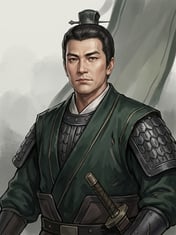 Deng AiCommanderTalk to me
 Jiang WeiCommanderTalk to me
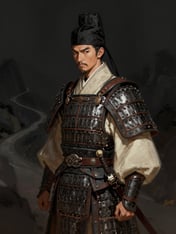 Hu JiCommanderTalk to me
Who won, as each book tells it; commanders as the text names them.
Scene
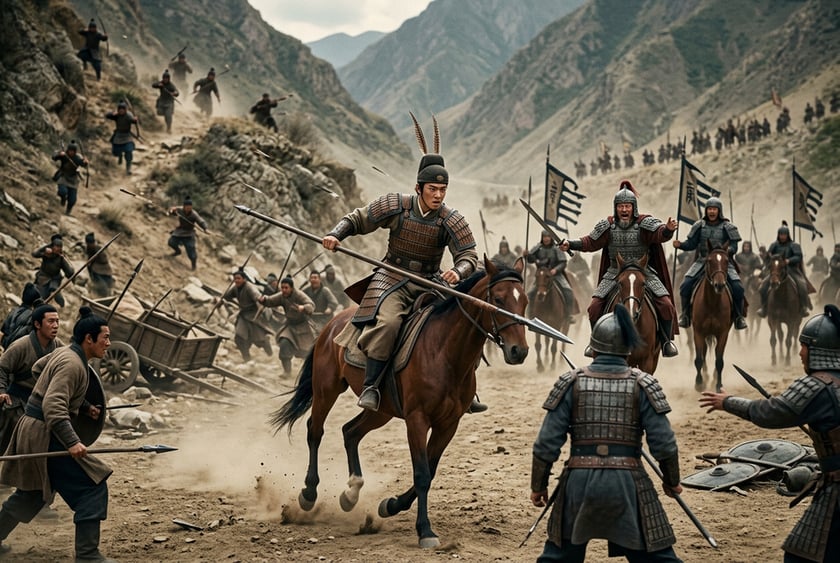
Jiang Wei's Shu army is attacked from three directions by Wei forces in Duangu. Ambushers emerge from behind the mountains, Deng Ai attacks from the front, and Chen Tai's reinforcements circle around from the rear as the Shu formation collapses.
Continue
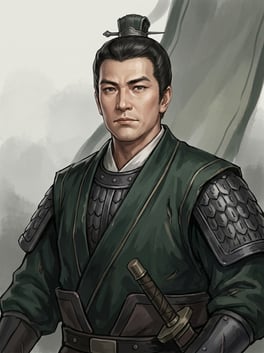
Deng Ai was proud and robust, hasty and hot-tempered, and prone to flout convention and propriety, unable to get on smoothly with his colleagues; yet he was deep and resolute and full of stratagems. Though he stammered, he was quick-witted, from boyhood deeply versed in the art of war and skilled at reading terrain, gauging the enemy as if by divine insight, rich in miraculous calculation and strategy, and able to judge the lay of the land.
2533 people in common
2552 people in common
2612 people in common
2492 people in common
2632 people in common
2642 people in common
2551 person in common
2551 person in common
The Battle of Duangu took place in the nineteenth year of Shu Han’s Yanxi era and the first year of Wei’s Ganlu era (256). Jiang Wei continued to campaign against Wei, still aiming to advance into Wei territory. The Romance of the Three Kingdoms presents this campaign as an offensive in which Jiang Wei first sought to capture Nanan, then turned toward Shanggui. However, these specific routes and battlefield episodes cannot be treated as equivalent to the historical record. The official histories give a relatively concise account of the battle’s essentials: Jiang Wei arranged to rendezvous with Hu Ji, General Who Guards the West, at Shanggui, but Hu Ji failed to arrive on time, and Jiang Wei was defeated at Duangu by the Wei general Deng Ai.
The Battle of Duangu should therefore not be understood merely as a direct clash between two famous generals. The Shu army’s plan included a rendezvous, and Hu Ji’s failure to arrive as scheduled deprived Jiang Wei of the coordination originally planned. Deng Ai, meanwhile, had the opportunity to concentrate his response while the enemy forces remained separated. The Records of the Three Kingdoms does not explain why Hu Ji was late, nor does it provide complete figures for the forces, supplies, or casualties on either side. It is therefore impossible to infer the full scope of Shu’s plan from this account, and Hu Ji’s reason for missing the rendezvous should not be presented as established fact.
The deployment relationship confirmed by the official histories is clear but extremely sparse: Jiang Wei set out with his army and arranged to meet Hu Ji at Shanggui; Hu Ji did not arrive, and Deng Ai defeated Jiang Wei at Duangu. This is enough to show that the Shu army had at least one plan that depended on a rendezvous, but the record does not state the route Hu Ji’s troops took, the scheduled time of the meeting, how he and Jiang Wei communicated, or how Deng Ai deployed his forces. Any reconstruction of the two sides’ deployments should therefore go no further than “the rendezvous plan fell through, leaving Jiang Wei isolated and under attack”; missing information should not be filled in as though it were historical fact.
Volume 111 of the Romance of the Three Kingdoms offers a fuller, dramatized battlefield scene: Deng Ai judges that Jiang Wei may circle toward Nanan, occupies Wucheng Mountain first, and orders Deng Zhong and Shi Zuan to set an ambush at Duangu. After being blocked at Wucheng Mountain, Jiang Wei turns toward Shanggui, but is ambushed while passing through Duangu and then attacked from both sides by the Wei army. The novel also depicts Chen Tai capturing the camp at Mount Qi, Xiahou Ba coming to the rescue, and Zhang Ni dying in battle. These details can be used to analyze how the novel portrays Deng Ai’s assessment of the terrain and Jiang Wei’s dilemma over whether to advance or retreat. However, the extant Records of the Three Kingdoms does not confirm them, so they cannot be used to fill gaps in the official account of the tactics.
The first key point was that the Shu army based its operation on the expectation of meeting up with Hu Ji. According to the official histories, Hu Ji’s failure to keep the rendezvous appears directly in the account of Jiang Wei’s defeat at Duangu, showing at least that the failed rendezvous was a condition the historian specifically cited when explaining the loss. From the perspective of coordinated operations, a failure to meet on schedule would weaken the concentration of forces and mutual support, and might also leave Jiang Wei facing risks that the two forces were supposed to share. But the Records of the Three Kingdoms does not say when Jiang Wei learned that Hu Ji had not arrived, so it is impossible to determine whether he had an opportunity to change his plan in time.
The second key point was how Deng Ai exploited the opportunity created by his opponent’s movements. The Records of the Three Kingdoms only records that Deng Ai defeated Jiang Wei at Duangu; it does not say whether he had set an ambush in advance, nor does it describe his reconnaissance, attempts to lure the enemy, or pursuit. The novel, by contrast, explains the victory as the result of Deng Ai correctly anticipating Jiang Wei’s route, seizing Wucheng Mountain, and positioning ambush forces in advance. Jiang Wei, constrained by the mountain pass and unable to advance or retreat freely, is then attacked from three directions. This version emphasizes the importance of terrain and intelligence, but it is a literary narrative. The more cautious conclusion is that Deng Ai seized on the vulnerability created by the Shu army’s failed rendezvous; there is insufficient evidence to confirm the specific tactics employed.
The third decision point concerned the handling of responsibility after the defeat. The official histories say that Jiang Wei “acknowledged his fault and accepted responsibility,” requested a demotion, and was subsequently reduced from Grand General to General of the Rear, while continuing to exercise the authority of the Grand General. This shows that Shu Han did not attribute the defeat solely to Hu Ji’s failure to arrive on time: Jiang Wei accepted political responsibility as commander. But that does not mean the sources prove that he alone caused the defeat. The novel goes further, depicting Shu soldiers and officers blaming Jiang Wei and portraying him, with Jieting as an example, as requesting his own demotion. This gives the internal accountability process greater dramatic force.
As for the battlefield outcome, the official histories clearly state that Jiang Wei was defeated by Deng Ai and that the Shu army “scattered in all directions, with many dead.” Thus, if the question is limited to the fighting at Duangu itself, the result cannot be described as indecisive: the Wei army achieved a clear tactical victory, and the Shu army suffered serious losses. However, the available sources do not report Wei casualties, the results of any pursuit, the number of prisoners taken, or changes in the line of control afterward. The campaign’s broader strategic consequences cannot be fully determined from this account alone.
The effects of the defeat extended beyond the adjustment to Jiang Wei’s personal military rank. The official histories note that the people of Shu resented the loss and that the Longxi region was also unsettled, indicating that the casualties and military shock affected social and border stability. Jiang Wei requested a demotion and was reassigned as General of the Rear, but continued to exercise the authority of the Grand General. This reflects both accountability after the defeat and the fact that his military duties did not end there. The Records of the Three Kingdoms does not mention the novel’s episodes of Zhang Ni’s death or Jiang Wei honoring Zhang Ni’s descendants for his loyalty and courage; these should not be treated as evidence of the actual casualty list or the measures taken afterward.
If Hu Ji had reached Shanggui on schedule, the Shu army might at least have avoided the dispersal of its forces caused by the failed rendezvous plan, and Jiang Wei might have had more reliable coordination and a safer line of retreat. But this is only a limited inference based on the rendezvous arrangement recorded in the official histories. The Records of the Three Kingdoms gives no figures for the size of either army, the time of the intended meeting, or Deng Ai’s force, so it cannot prove that the Shu army would have won after joining forces, or confirm that Deng Ai would have abandoned the engagement. More precisely, Hu Ji’s timely arrival might have changed the balance of risks, but it is not enough by itself to conclude that the course of the battle would certainly have been reversed.
Conversely, if Jiang Wei had adjusted his plan promptly after discovering that the planned rendezvous could not take place, or had avoided continuing to advance under unfavorable conditions, the Shu army might have reduced the likelihood and severity of a defeat. But the available sources do not record when he learned that Hu Ji was late, so it cannot be asserted that he knowingly went into battle despite the absence of reinforcements. The novel’s account of Jiang Wei being ambushed at Duangu, breaking through, and coming under continued pursuit can serve as a narrative model of how difficult terrain might magnify the consequences of failed coordination, but it should not be treated as a historical premise for counterfactual analysis. The lesson that can genuinely be drawn from the Battle of Duangu is that when a rendezvous plan fails, there must be a mechanism for promptly changing course. This lesson is explanatory, but it cannot replace the missing evidence about the battlefield.