Shu Han
Hu Ji
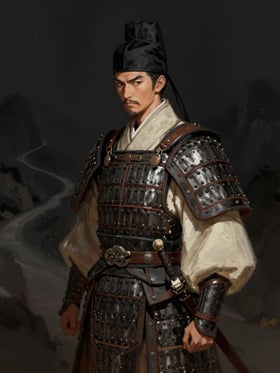
Hu Ji, a Shu Han general, served Zhuge Liang and often remonstrated; history says he missed Shanggui, while the novel has him defend Hanshou.

Life
In the novel: 4 chapters · In the Records: 3 volumes
Life?–?
238 CE (Jingchu 2)
253 CE (Jiaping 5)
256 CE (Ganlu 1)
- Battle of DuanguDuanguCommander
Allegiance
Appearances
By chapter (7)
Novel
- 91
- 113
- 115
- 116
Records
- 33
- 39
- 44
- Shu Han
- Hatched: dated by chapter
- Life event
List all 2 stops
- Mount Qi238–253Jiang Wei's Northern Expeditions+1 more
- Duangu256Battle of Duangu
On the boards
Compare with someone →Where this person ranks on each board.
Historical Record
Hu Ji, a native of Yiyang, once served as Zhuge Liang’s chief clerk and was known for his loyalty, diligence, and conscientiousness. When instructing his subordinates, Zhuge Liang recalled working with Hu Weidu: whenever there was something he ought to be advised against, Hu Ji repeatedly spoke up and urged him to reconsider. Zhuge Liang acknowledged that his own judgment was clouded and that he had not accepted all of Hu Ji’s advice, yet said that the two had always remained on good terms. He cited this to show that he did not become suspicious of his subordinates merely because they spoke frankly. Pei Songzhi’s annotations also record that Hu Ji served as Zhuge Liang’s chief clerk and rendered loyal service. After Zhuge Liang’s death, Hu Ji became Central Army Commander and led various troops. He was enfeoffed as Marquis of Chengyang Ting, later rose through the posts of Central Army Supervisor and General of the Front, and was appointed Inspector of Yanzhou with authority to wield the imperial tally while overseeing Hanzhong. He eventually attained the post of Right Chariot-and-Cavalry General.
In the nineteenth year of the Yanxi era, Jiang Wei was promoted to General-in-Chief and reorganized the army. He arranged to meet Hu Ji, then General Who Pacifies the West, at Shanggui, but Hu Ji failed to arrive as agreed. Jiang Wei was subsequently defeated at Duangu by the Wei general Deng Ai. The Shu army scattered and fled, and many died; the people of Shu consequently grew resentful, while the Longxi region was also thrown into turmoil. Jiang Wei pleaded guilty and blamed himself, asking to be demoted and stripped of rank. He was reassigned as General of the Rear but continued to exercise the authority of General-in-Chief. The historical accounts portray Hu Ji both as a man who had dared to offer remonstrance early in his career and as someone who later failed to keep an appointment, an incident connected with a military defeat. The sources do not explain why he failed to appear.
Another account relates that Dong Yun had arranged an excursion and banquet with Fei Yi, Hu Ji, and others. The carriages were already prepared, but Dong Yun canceled the outing because he was receiving a visitor, Dong Hui; Fei Yi and the others also stopped their carriages and did not go. The episode offers a glimpse of Hu Ji’s relations with Shu Han officials, but does not record anything he said or did at the banquet.
In the Novel
Romance of the Three Kingdoms places Hu Ji within Shu Han’s military system, first depicting him accompanying Zhuge Liang on the Northern Expeditions. In the deployment of forces in Chapter 91, he is listed as an Army Consultant and holds the title of Gentleman General Who Displays Martial Might, taking part in the Northern Expedition’s military affairs under Zhuge Liang. The novel does not develop his personal words or actions in this passage, presenting him instead through a roster of official titles as one of the Shu army’s generals and advisers.
By Chapter 113, when Jiang Wei again proposes a campaign against Wei, the novel assigns Hu Ji to command the rear guard, sending him out alongside Jiang Wei, Xiahou Ba, and the other generals. In Chapter 115, when Jiang Wei goes to Dazhong to cultivate farmland, Hu Ji is ordered to defend Hanshou city and oversee its defenses. In Chapter 116, as Wei forces attack and the situation in Hanzhong grows perilous, the novel says that Hu Ji “could not withstand the enemy and fled back to Chengdu to seek reinforcements,” making him one element in the failure of the Shu defensive line.
The novel portrays Hu Ji mainly through his duties and position in the military campaigns: he goes from serving as an Army Consultant in the Northern Expeditionary force to commanding the rear guard and defending a city during Jiang Wei’s campaign, and finally retreats to Chengdu under the Wei army’s assault. The historical record does say that Hu Ji failed to arrive at Shanggui as agreed and that Jiang Wei was subsequently defeated at Duangu. However, the novel’s specific details about Hu Ji commanding the rear guard, defending Hanshou, and fleeing back to Chengdu belong to its fictional narrative and should not be conflated with the historical accounts.
Key Relationships
- Zhuge Liang: Chief clerk and frank remonstrator. Hu Ji, whose courtesy name was Weidu, served as Zhuge Liang’s chief clerk. Zhuge Liang said that he “often remonstrated and urged him to desist,” citing their consistently good relations as evidence that he could accept frank advice.
- Jiang Wei: The other party to a planned military rendezvous. In the nineteenth year of the Yanxi era, Jiang Wei and Hu Ji arranged to meet at Shanggui, but Hu Ji failed to arrive. Jiang Wei was subsequently defeated by Deng Ai at Duangu. The Records of the Three Kingdoms records the sequence of events but does not explain why Hu Ji missed the appointment.
- Fei Yi and Dong Yun: Fellow officials and social companions. Hu Ji once arranged to attend a banquet with Fei Yi and Dong Yun. Dong Yun canceled the outing to receive Dong Hui, and Fei Yi and the others likewise halted their carriages and stayed behind.
- Generals under Jiang Wei: Military relationships in the novel (unique to the novel). The novel has Hu Ji accompany Zhuge Liang on campaign, then serve under Jiang Wei as commander of the rear guard and defender of Hanshou city. These specific appointments and actions occur in the novel’s narrative.
Key Scenes
- Assisting Zhuge Liang with frank advice: While serving as chief clerk, Hu Ji repeatedly remonstrated with Zhuge Liang. Zhuge Liang recalled how diligently he offered advice, showing that Hu Ji was not merely an official in name but had taken on the role of warning and correcting others in Shu Han’s affairs of state.
- Missing the rendezvous at Shanggui and the defeat at Duangu: In the nineteenth year of the Yanxi era, Hu Ji failed to arrive for his meeting with Jiang Wei. Jiang Wei then suffered defeat at Duangu at the hands of Deng Ai, and the Shu army sustained heavy losses. This is the most notable military episode concerning Hu Ji in the historical accounts. They record the missed appointment and subsequent defeat but do not provide grounds for inventing Hu Ji’s motive.
- Dong Yun cancels the outing: Dong Yun had the horses unharnessed and called off the outing so he could receive Dong Hui. Fei Yi, Hu Ji, and the others who had planned to go with him also halted their carriages and stayed behind. Hu Ji appears here as one of the officials in the group; the narrative focuses on Dong Yun’s gracious treatment of worthy men.
- Defending Hanshou and retreating to Chengdu (unique to the novel): The novel has Hu Ji defend Hanshou city when Jiang Wei goes to Dazhong to cultivate farmland. After Hanzhong falls and Wei forces press in, it also depicts him as unable to withstand the enemy and returning to Chengdu to seek reinforcements, highlighting the desperate circumstances as the Shu defensive line collapses.
Family, lords and rivals
1 relationships

Who is Hu Ji connected to?
Pick someone to see how many steps lie between them and Hu Ji.
History vs. novel
6 points · 3 novel-only
| History | Novel |
|---|---|
| Jiang Wei's MeetingNovel embellishes | |
The historical records state that after reorganizing his troops, Jiang Wei arranged to meet Hu Ji at Shanggui. Hu Ji failed to keep the appointment and did not arrive; the Records of the Three Kingdoms does not explain why he was absent. vol. 44 | The Romance of the Three Kingdoms does not mention the appointment at Shanggui. Instead, it mentions Hu Ji retreating to Chengdu while Jiang Wei was engaging the Wei army at Dazhong. ch. 116 |
| Consequences of the Broken AppointmentNovel embellishes | |
After Hu Ji failed to keep the appointment, Jiang Wei was defeated by Deng Ai at Duangu. The Shu army suffered heavy casualties, and Longxi was thrown into turmoil. vol. 44 | The Romance of the Three Kingdoms places Hu Ji's retreat at the time when Jiang Wei was surrounded and awaiting reinforcements. It relates this alongside news such as the fall of Hanzhong, highlighting Jiang Wei's predicament as an isolated commander. ch. 116 |
| Hu Ji's WhereaboutsNovel only | |
| — | The Romance of the Three Kingdoms says Hu Ji could not withstand the Wei army and fled back to Chengdu to seek aid; the Records of the Three Kingdoms does not record this destination. ch. 116 |
| The Wei Army AdvancesNovel only | |
| — | The Romance of the Three Kingdoms depicts Jiang Wei hearing at Dazhong that the Wei army was launching a major attack. He sent dispatches to Liao Hua, Zhang Yi, and Dong Jue to come to his aid, and divided his forces to meet the enemy. ch. 116 |
| The Fall of HanzhongNovel only | |
| — | The Romance of the Three Kingdoms says Zhong Hui captured Yangping Pass, Jiang Shu surrendered, and Fu Qian died in battle, resulting in the fall of Hanzhong. The commanders defending Lecheng and Hancheng then opened their gates and surrendered as well. ch. 116 |
| Self-Reproach After the Defeat at DuanguHistory only | |
Because of the Defeat at Duangu, Jiang Wei apologized and blamed himself, asking to be demoted. He was later demoted to General of the Rear, while continuing to act in the affairs of the General-in-Chief. vol. 44 | — |
- Jiang Wei's MeetingNovel embellishes
- History
The historical records state that after reorganizing his troops, Jiang Wei arranged to meet Hu Ji at Shanggui. Hu Ji failed to keep the appointment and did not arrive; the Records of the Three Kingdoms does not explain why he was absent.
vol. 44
- Novel
The Romance of the Three Kingdoms does not mention the appointment at Shanggui. Instead, it mentions Hu Ji retreating to Chengdu while Jiang Wei was engaging the Wei army at Dazhong.
ch. 116
- Consequences of the Broken AppointmentNovel embellishes
- History
After Hu Ji failed to keep the appointment, Jiang Wei was defeated by Deng Ai at Duangu. The Shu army suffered heavy casualties, and Longxi was thrown into turmoil.
vol. 44
- Novel
The Romance of the Three Kingdoms places Hu Ji's retreat at the time when Jiang Wei was surrounded and awaiting reinforcements. It relates this alongside news such as the fall of Hanzhong, highlighting Jiang Wei's predicament as an isolated commander.
ch. 116
- Hu Ji's WhereaboutsNovel only
- Novel
The Romance of the Three Kingdoms says Hu Ji could not withstand the Wei army and fled back to Chengdu to seek aid; the Records of the Three Kingdoms does not record this destination.
ch. 116
- The Wei Army AdvancesNovel only
- Novel
The Romance of the Three Kingdoms depicts Jiang Wei hearing at Dazhong that the Wei army was launching a major attack. He sent dispatches to Liao Hua, Zhang Yi, and Dong Jue to come to his aid, and divided his forces to meet the enemy.
ch. 116
Events
Events (5)
Battles and events the texts place this person in, by date.
Battles
- 238Jiang Wei's Northern ExpeditionsWarrior
- 253Jiang Wei's Later Northern ExpeditionsWarrior
- 256Battle of DuanguCommander
Places
Continue
Jiang Wei's Northern Expeditions
Inner monologues · AI-generated1 monologue ▸
- I am Hu Ji; my courtesy name is unknown. The news of defeat has just reached me: Yangping Pass has fallen, Jiang Shu has