
Causes
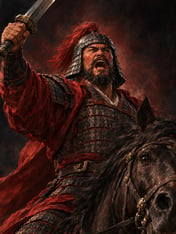
The immediate trigger for the Rebellion of Wei Yan was the question of how the Shu army should withdraw after Zhuge Liang’s death, who should command the entire force, and who had the authority to take over military decision-making. The novel places the dispute amid the retreat from Wuzhang Plains: Fei Yi tells Wei Yan that the chancellor has died and conveys the arrangements to bring up the rear and withdraw slowly. Wei Yan, however, believes that his high rank and distinguished service mean he should not be subordinated to Yang Yi. He further argues that they should continue the offensive while Sima Yi has yet to make a move. The dispute thus becomes not merely a difference of tactical opinion, but a conflict over command, the source of military orders, and personal standing.
Wei Yan’s decision is also driven by an information gap and mutual suspicion. Hearing that Yang Yi has led the army ahead while Jiang Wei commands the rear, he concludes that he has been excluded and immediately breaks camp and marches south, claiming that he has been “deceived.” Meanwhile, Yang Yi interprets Wei Yan’s reaction as the rebellious intent Zhuge Liang had anticipated before his death. Each side treats the other’s actions as proof of hostility, and with no trusted common arbiter, disagreements over command during the retreat quickly become militarized. Wei Yan’s dream omen and Zhao Zhi’s ill-omened interpretation of the character “jiao” heighten the novel’s sense of fatalism, but they cannot serve as historical evidence for the real causes of the events.
Factions Involved
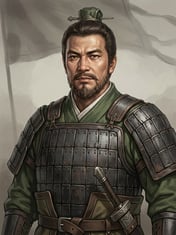
Wei Yan’s chief advantages are his battlefield reputation, earned over many years, his image as a fierce warrior, and the troops under his command that he can still mobilize. He hopes to use these advantages to secure actual command of the army and then continue the northern campaigns or turn toward Hanzhong. Yang Yi’s side, by contrast, controls the organization of the retreat, official memorials, and the interpretation of Zhuge Liang’s final instructions; it also relies on Jiang Wei to command the rear and carry on the chain of command. The key resource both sides are contesting is therefore not simply military strength, but the political legitimacy of deciding “who represents the chancellor’s wishes and who has the authority to issue orders on behalf of Shu Han.”
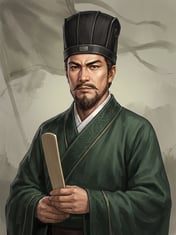
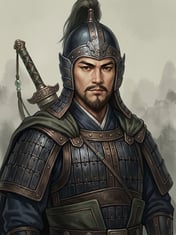
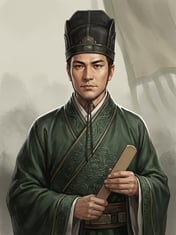
In the earlier part of the novel, Ma Dai is portrayed as an ally of Wei Yan, even accompanying him as they lead troops into action. By the end, however, he carries out Zhuge Liang’s prearranged secret plan and becomes the man who kills Wei Yan. This dual role makes Ma Dai the story’s most important hidden variable and highlights Yang Yi’s side’s ability to control events through secrecy and inducement. Jiang Wei is responsible both for directing the retreat and for responding to Wei Yan’s advance; Fei Yi serves as a messenger and witness. The battlefield figure corresponding to Wang Ping is called “He Ping” in the cited passages from the novel: by persuading Shu soldiers to disperse and stabilizing the forces on his own side, he weakens the base of support among Wei Yan’s troops. The novel’s character names should be distinguished from historical identification; details of identity cannot be confirmed solely on the basis of these passages.
Key Turning Points
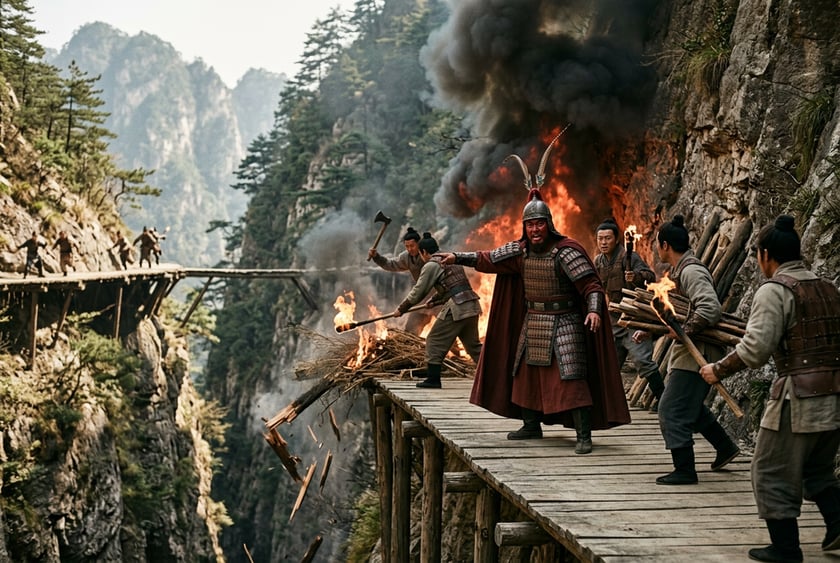
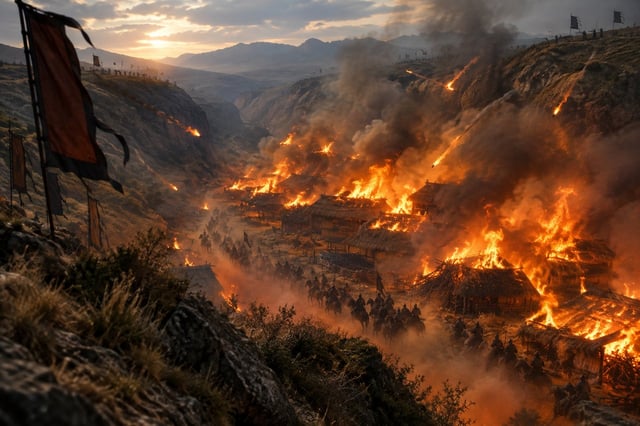
The first turning point comes when Wei Yan shifts from seeking to have command authority transferred to him to using force to block the retreat route. Yang Yi’s party finds the road ahead obstructed and the plank road burned, threatening the army’s line of communication and the safety of its marching formation. Fei Yi judges that Wei Yan may go ahead of them to accuse Yang Yi and the others at court, while Jiang Wei proposes taking a mountain path behind the plank road. This response shows that the Shu army does not seek to settle the dispute through direct combat alone: roads, communications, and the time available to petition the court are all factored into the response. The military effect of destroying the plank road is to turn an internal power struggle into a direct threat to the entire army’s ability to withdraw.
The second turning point occurs in the clash between He Ping and Wei Yan. He Ping does not rely on force alone. Instead, he appeals to the soldiers by invoking the chancellor’s recent death, their families, and their treatment in the army, urging them to leave Wei Yan. The novel says that most of Wei Yan’s troops disperse, leaving only the three hundred men under Ma Dai, who remain steadfast. This passage presents troop morale as decisive: although Wei Yan is brave, he cannot automatically turn personal prestige into lasting organizational obedience. Later, his discussion with Ma Dai about surrendering to Wei shows that the faction’s strategic aims remain unsettled. Ma Dai urges him to pursue a dominion of his own, and Wei Yan then turns his attack toward Nanzheng. The conflict escalates further, from a struggle over command of the retreat to a threat against Shu Han’s cities.
Suppression and Outcome
At the gates of Nanzheng, Jiang Wei defends the city while Yang Yi controls decision-making. Although Wei Yan and Ma Dai take an offensive posture, their numbers and morale have already been weakened by the earlier desertions. Following the stratagem in the brocade bag, Yang Yi lures Wei Yan into shouting on the battlefield, “Who dares kill me?” Ma Dai then suddenly switches sides and kills Wei Yan. In the novel’s account, this is a targeted elimination combining premeditation with psychological manipulation: first, the opponent is made to accept a public challenge; then, while his attention is fixed on Yang Yi, an agent lying in wait strikes. It is not a siege with an extensive course of combat, but a struggle for command brought to an end by a single killing.
However, the outcome specified for this topic is “unclear,” and it must be treated separately from the novel’s plot. The passages above can establish only how Romance of the Three Kingdoms, volumes 104 and 105, portrays the Rebellion of Wei Yan: the novel gives Wei Yan’s death a clear ending, but its literary narrative cannot be taken directly as a verifiable conclusion about military history. In particular, the dream omen, secret plan, deathbed prediction, and killing on the spot all serve the drama of the plot and the portrayal of its characters. On the basis of the materials provided, what can be analyzed with confidence is the novel’s presentation of the command conflict, the retreat crisis, and the suppression—not the full course or outcome of the historical events.
Historical Resonance
The first military lesson of this account is the importance of a succession mechanism. When a commander dies, the absence of a clear, public chain of command that officers at every level recognize can turn disagreements over an advance or withdrawal—disagreements that might otherwise be resolved—into a contest over legitimacy. In the novel, Yang Yi controls the final instructions and the organization of the retreat, while Wei Yan asserts his authority on the basis of seniority, rank, and his advocacy of an offensive. Both invoke “matters of state,” yet no procedure for arbitration can compel one to obey the other. As a result, internal conflict erodes the army’s unity of action, while retreat routes and camps themselves become objects of contention.
Second, the Rebellion of Wei Yan shows that battlefield valor and political control are not the same thing. Wei Yan remains fiercely committed to the offensive, but He Ping gradually diminishes his room to act by influencing the soldiers; Yang Yi does so by controlling information and the retreat route; and Jiang Wei does so through deployment and the defense of the city. The change in Ma Dai’s role also shows that once loyalty and control become entangled in a conspiracy, an apparent public alliance does not guarantee a person’s true allegiance. In modern military-historical analysis, the key point is not to label one figure simply a loyal minister or a rebel, but to examine how an organization loses cohesion under the pressures of a change in command, a contest over the authority to issue orders, and the logistical demands of withdrawal. The novel’s literary resolution still cannot replace a cautious assessment of the historical outcome.