Records
Shu army won
- Commanders
- Wei's armyGuo Huai
Vol. 35「亮自出至建威,淮退還,遂平二郡」
229 CE (Taihe 3) · Wudu
According to chapters ninety-eight through one hundred of San Guo Yanyi, in the spring of the seventh year of Jianxing (229), Zhuge Liang moved out of Hanzhong again, exploiting the setbacks suffered by the Wei commander Cao Zhen. Shu forces under Wei Yan and Jiang Wei launched a surprise assault on Sanguan that succeeded, with the garrison troops on the pass scattering at the sight of the army and Zhang He's relief column also being intercepted and driven back. Zhuge Liang then proceeded to take Jianwei and issued forth once more from Qishan, dispatching Jiang Wei and Wang Ping to seize the Longnan commanderies of Wudou and Yinping. Sima Yi ordered Guo Huai and Sun Li to attempt a flanking strike against the Shu rear by a back road, but Zhuge Liang had already positioned troops in ambush; both commanders abandoned their horses and scrambled up the mountains to escape. Subsequently, within the Shu army itself, Wei Yan and Chen Shi exceeded their orders and pressed into Jigu Valley, losing over four thousand men; Zhuge Liang had Chen Shi executed for insubordination. This campaign resulted in Shuhan's actual occupation of Wudou and Yinping, pushing the forward buffer west of Hanzhong down into southern Long — one of the rare northern expeditions that achieved a genuine territorial gain.
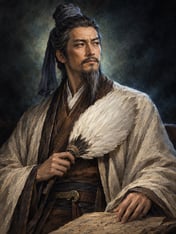 Zhuge LiangLivedCommanderTalk to me
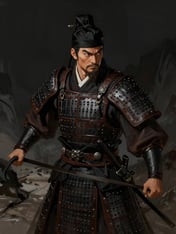 Chen ShiKilled in actionTalk to me
 Jiang WeiWarriorTalk to me
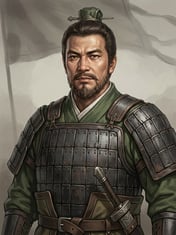 Wang PingWarriorTalk to me
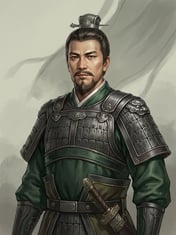 Guo HuaiWarriorTalk to me
 Sun LiWarriorTalk to me
 Zhao YunLivedWarriorTalk to me
Who won, as each book tells it; commanders as the text names them.
Records
Shu army won
Vol. 35「亮自出至建威,淮退還,遂平二郡」
Romance
Shu army won
Ch. 99「司馬懿大敗一陣」
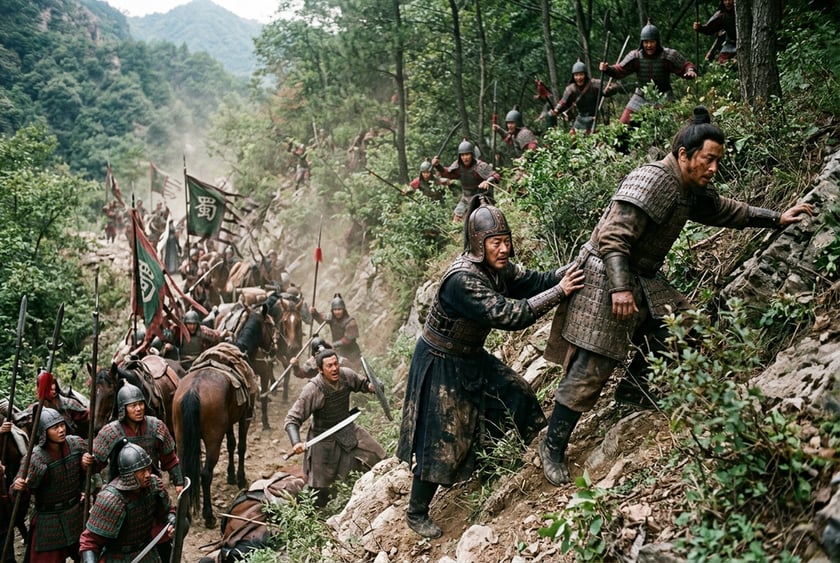
Scene
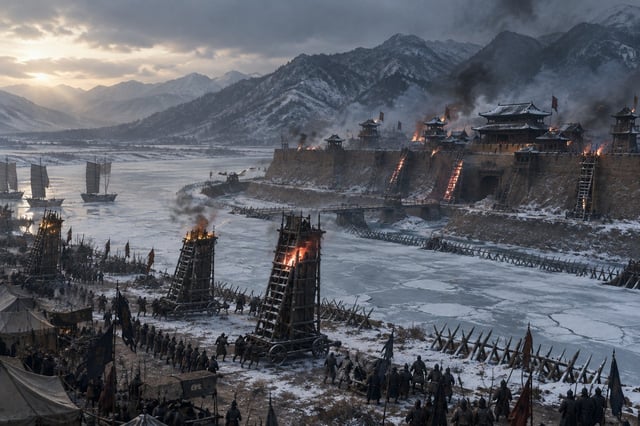
On a rugged mountain road, Sima Yi and Guo Huai abandon their horses and scramble up the slope in disarray, while Shu ambushers emerge from all directions behind them and cut off their retreat.
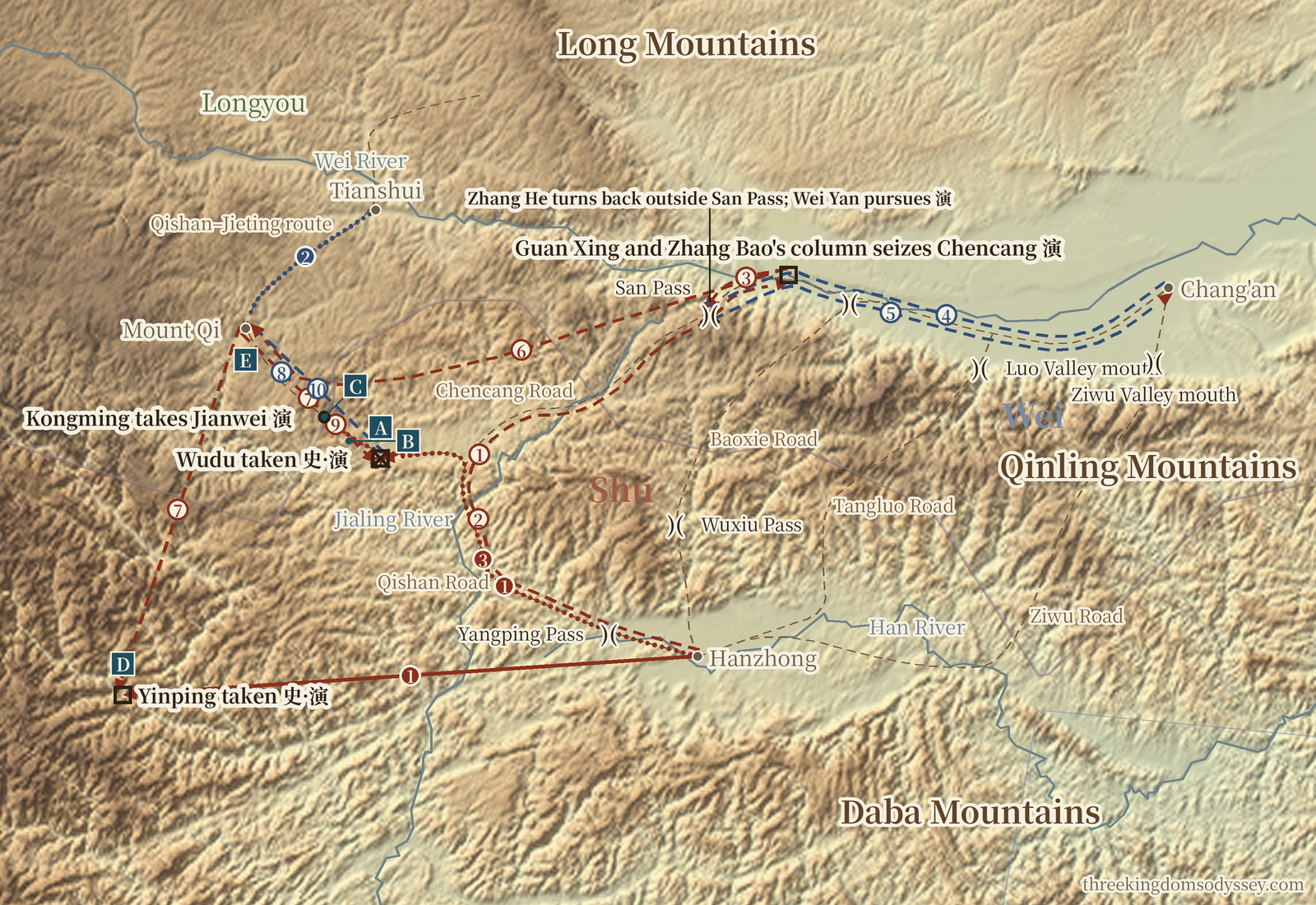
Swipe to see the whole map
History: Chen Shi takes both commanderies. The novel gives them to Jiang Wei and Wang Ping and adds the capture of Chencang and San Pass.
The books mostly say only where an army set out and arrived: a Records line is solid between the places they name and dotted where it follows a reconstructed road between them; an open ring marks an end the books don't give.
Base map: Natural Earth; terrain: AWS Terrain Tiles (SRTM and others). Roads and marches reconstructed from the sources listed; positions approximate.
Continue
Replay the Zhuge Liang's Northern Expeditions phase by phase on real terrain: troop strengths, movements and turning points at a glance, each marked as coming from the Records of the Three Kingdoms or the Romance.
2285 people in common
2315 people in common
2283 people in common
2343 people in common
2282 people in common
2282 people in common
2282 people in common
2252 people in common
As a modern military historian assessing Disancibeifa, it must first be viewed against the shadow of the two preceding failures. The defeat at Jieting in the sixth year of Jianxing and the failed siege of Chencang that same winter had cost the Shuhan army dearly on its primary axes of advance on two consecutive occasions. In the spring of 229 (the seventh year of Jianxing), Zhuge Liang chose not to attempt another frontal breakthrough but instead returned to the strategic flank — Wudou and Yinping in southern Longxi. These two commanderies, wedged between Hanzhong to the west and Longyou to the south, served Shuhan both as a springboard into Longyou and as a natural barrier blocking Wei forces from pushing south along the Yinping trail. This was a clear strategic adjustment, from "aiming at the Guanzhong plain" to "first secure southern Long."
Shuhan's forces this time were noticeably more constrained in scale than in the previous two campaigns; the emphasis was on trading speed for opportunity. Wei Yan and Jiang Wei led the vanguard to seize Sanguan Pass, and the garrison there fled before they could react, leaving the Shuhan army in control of the key defile; by the time Zhang He arrived with his relief force, the pass was already lost and he had no choice but to withdraw. Zhuge Liang then personally led the main force out through the Chencang valley to Jianwei and camped below Qishan once again. On the Wei side, Sima Yi was transferred from Luoyang to the Changan front and appointed Zhang He as his vanguard and Dai Ling as deputy; they established a camp south of the Wei River. Sima Yi also sent Guo Huai and Sun Li with five thousand troops on a flanking march through Longxi back roads to strike the Shuhan rear. The core logic of this deployment was to exploit Shuhan's inability to sustain a prolonged campaign — "split their force, cut off their rear."
The most brilliant decision of the entire campaign was Zhuge Liang's anticipation of the Guo-Sun flanking maneuver. In the standoffs of the first two northern campaigns he had already learned to read Wei's fixed assumption that Shuhan forces, "coming a thousand li, are advantaged by swift battle." So when Jiang Wei and Wang Ping had already taken Wudou and Yinping and were deployed in the open field, Zhuge Liang arranged a counter-trap: he had both armies openly display themselves in a dispersed posture as if the main force were scattered, while secretly positioning Guan Xing, Zhang Bao, Wang Ping, and Jiang Wei in ambush, waiting for Guo Huai and Sun Li to walk into the net. This "appearing loose while actually tight" counter-encirclement was the cleanest tactical execution across all of Zhuge Liang's northern campaigns — the two Wei commanders could only "abandon their horses and scramble up the hillsides to escape."
A contrasting decision was Zhuge Liang's handling of Chen Shi after the battle. Chen Shi had disobeyed orders and entered the valley mouth on his own initiative, resulting in the loss of over four thousand men; although Wei Yan bore some responsibility, Zhuge Liang kept him on with the reasoning that "he will inevitably become a problem later," and executed Chen Shi alone to uphold military law. This choice reveals the pragmatism of Zhuge Liang's command: execute where execution serves as a warning, retain where retention serves readiness — neither emotion nor personal loyalty.
By the campaign's end, Shuhan had won effective control of Wudou and Yinping — the only occasion across Zhuge Liang's five northern campaigns on which he clearly gained and held new territory. The Later Ruler issued an edict restoring his position as Chancellor, acknowledging the achievement of "sweeping away the Qiang and Rong peoples and recovering two commanderies." On a longer view, Wudou and Yinping as the gateway to southern Long remained in Shuhan hands for the long term; this buffer zone doubled the defensive depth north of Hanzhong, and directly influenced the route Deng Ai would take thirty years later in his famous flanking march through Yinping — the trail Deng Ai used was precisely the one left underguarded by Shuhan's thin defenses. Disancibeifa also wore down Cao Zhen's main force; Cao Zhen fell gravely ill not long afterward, foreshadowing the eventual narrative of "Cao Zhen defeated and dying of illness."
Had Zhuge Liang not anticipated the Guo-Sun encirclement, there was a real possibility of the Shuhan main force being caught in a pincer — the first two northern campaigns had seen similar traps spring on Shuhan forces. Once their line of retreat was cut at Qishan, Wudou and Yinping would have been very difficult to hold, and Shuhan would have had to withdraw to Hanzhong again. A second counterfactual: had Zhuge Liang chosen to press forward rather than conclude the campaign with just the two commanderies, could he have opened up Longyou further? The answer is almost certainly no: Shuhan logistics were already at their limit in southern Long; any deeper advance into Longyou would inevitably have encountered Wei's main force, and the Cao Zhen–Sima Yi line had already prepared for a sustained engagement. The reason Disancibeifa was a "limited victory" is precisely because Zhuge Liang understood what kind of victory the operational window permitted — securing what could be held was more important than seizing more than could be defended.