Records
Wei's army won
Vol. 17「郃絶其汲道,擊,大破之」
228 CE (Taihe 2) · Jieting
In the spring of the sixth year of Jianxing (228), Zhuge Liang launched Shuhan's first northern expedition, and the three commanderies of Nan'an, Tianshui, and Anding submitted to Shuhan without a fight, sending tremors of alarm through the Guanzhong region. Emperor Mingdi of Wei made for Changan to stabilize the west in person, and ordered Right General Zhang He to lead the forces of Guanzhong to resist. Zhuge Liang, overruling the views of his generals, passed over the seasoned commanders Wei Yan and Wu Yi and instead assigned his staff officer Ma Su as forward commander, leading the army to garrison Jieting in order to control the throat of the Long corridor. When Ma Su arrived at Jieting, he abandoned the road below and encamped on the hill above water, dismissing Wang Ping's remonstrance that he should camp astride the road; Zhang He cut off the army's water supply and attacked in force, and the Shu troops collapsed without a real fight, scattering in all directions. Only the roughly one thousand men under Wang Ping maintained their formation by beating their drums steadily; Zhang He, suspecting an ambush, dared not press forward, and Wang Ping gathered up the survivors from the scattered camps and withdrew in good order. The loss of Jieting forced Zhuge Liang to retreat to Hanzhong taking more than a thousand households from Xixian with him, the three commanderies were lost as soon as they had been gained, and the first northern expedition thus collapsed. Back in Hanzhong, Zhuge Liang had Ma Su, Zhang Xiu, and Li Sheng executed as an accounting to his men, and submitted a memorial requesting that he himself be demoted three grades to accept responsibility; Wang Ping, for standing firm and preserving his command, was publicly honored and promoted to staff officer. The Romance of the Three Kingdoms, in chapter 95, dramatizes the same episode: Sima Yi is cast as the opposing commander personally supervising the attack at Jieting, Ma Su signs a military pledge before setting out, and Wang Ping's remonstrance is dismissed as "the view of a woman"; the episode then branches into the celebrated set-pieces of the Empty City Stratagem and the tearful execution of Ma Su (Kongchengji and Zhanmasu).
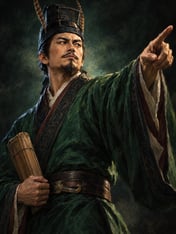 Ma SuCommanderTalk to me
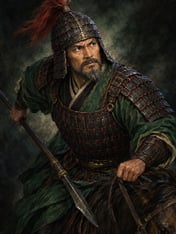 Zhang HeCommanderTalk to me
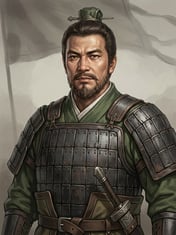 Wang PingWarriorTalk to me
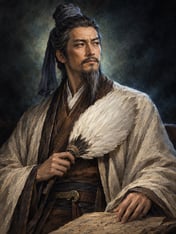 Zhuge LiangLivedCommanderTalk to me
Who won, as each book tells it; commanders as the text names them.
Scene
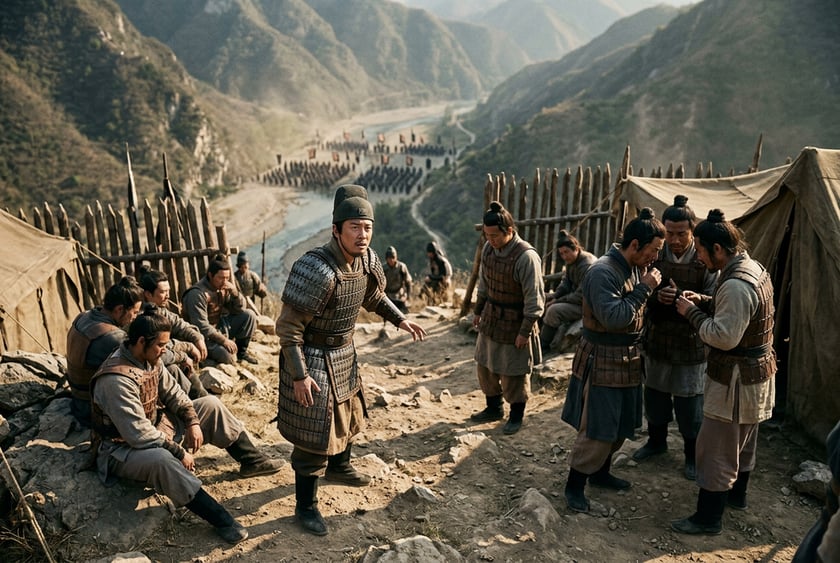
Atop the mountain at Jieting, Ma Su, clad in armor, anxiously watches the water source below, cut off by Wei forces; Shu soldiers beside him are dejected.
Featured people: Ma Su
The history names Zhang He as the Wei commander, with Cao Zhen overseeing military affairs in the Guanyou region; the novel makes Sima Yi the commander who personally goes to Jieting, while Zhang He is only the vanguard.
The history attributes Ma Su’s defeat mainly to the tactical misjudgment of “abandoning the water and going up the mountain, with confused arrangements,” and to his failure to heed Wang Ping’s remonstrance; the novel adds episodes such as his signing a pledge of military discipline, mocking Wang Ping’s advice as “a woman’s opinion,” and two generals killing themselves, to heighten his image of arrogance.
Continue
Replay the Battle of Jieting phase by phase on real terrain: troop strengths, movements and turning points at a glance, each marked as coming from the Records of the Three Kingdoms or the Romance.
2283 people in common
2283 people in common
2253 people in common
2313 people in common
2282 people in common
2292 people in common
2312 people in common
2232 people in common
The First Northern Expedition in the spring of the sixth year of Jianxing (228) was Shu Han’s first offensive campaign since its defeat at Yiling. Zhuge Liang chose to advance from Hanzhong through Mount Qi into Longyou, intending first to seize the five commanderies of Longyou—Longxi, Nan’an, Tianshui, Anding, and Guangwei—as a forward base, and then use the region of Long to threaten Guanzhong. This route avoided the heavy Wei forces deployed along the front in Guanzhong, around Chencang and Chang’an. By making use of the natural defenses of the Long Mountains, it would split Wei’s main force between Guanzhong and Longxi—a carefully calculated strategic plan. The campaign’s opening moves were quite successful: Nan’an, Tianshui, and Anding surrendered at the first sign of the Shu advance, while in Wei, “the court officials did not know what course to take” and “the court and countryside were terrified, especially in Longyou and around Mount Qi”. Emperor Ming of Wei personally went to Chang’an to oversee the fighting. But the entire strategic framework rested on one particular place: Jieting. Located on the eastern foothills of the Long Mountains, Jieting was the narrow passage connecting Longyou and Guanzhong. As long as this pass remained in Shu hands, Wei’s reinforcements from Guanzhong could not get through, giving the commanderies of Longyou time to consolidate their allegiance. If Jieting fell, however, Longyou would once again be connected to Guanzhong, and the three commanderies that had surrendered would collapse with their escape route cut off. Zhuge Liang’s overall strategy was sound, but all its soundness rested on a single point.
On Wei’s side, Zhang He was the actual commander. The Records of the Three Kingdoms explicitly states, “Right General Zhang He attacked Liang at Jieting and routed him utterly”, and “He resisted Liang’s general Ma Su at Jieting. Su relied on the southern mountain’s rugged terrain and did not descend to occupy the walled town. He cut off Su’s water supply, attacked, and routed him utterly”. At the time, Zhang He was one of the few veteran Cao Wei generals still alive. He had held independent command since the Huangchu era and knew the terrain of the Long Mountains and the northwestern frontier forces well. Cao Zhen overseeing the region west of the passes, with Zhang He responsible for the front line, was the strongest combination Wei could field. On Shu’s side, the most contentious issue was the choice of vanguard commander. “At the time, veteran generals Wei Yan and Wu Yi, among others, were available, and all those who offered opinions said they should be appointed to lead the vanguard”, but Zhuge Liang went against the consensus and chose Ma Su. Ma Su was exceptionally talented and skilled in strategic discussion. Before the southern campaign, he had proposed the famous counsel that “winning hearts is paramount”, but he had never independently commanded a large field army. Before his death, Liu Bei had warned Zhuge Liang, “Ma Su’s words exceed his abilities; he must not be entrusted with major responsibilities”—a final admonition that Zhuge Liang was not convinced by at the time. Wang Ping accompanied Ma Su as deputy, serving to check his decisions and offer an alternative assessment. Gao Xiang was stationed at Liucheng to provide flank support, while Wei Yan was stationed behind Jieting to reinforce them, forming a fairly secure three-tier arrangement (as recorded in the Romance). The problem lay at the front: after reaching Jieting, Ma Su abandoned the road and set up on the southern mountain, rejecting Wang Ping’s suggestion to establish a camp beside the road.
The outcome of the entire campaign hinged on a single decision: Ma Su left the water and went up the mountain. From the standpoint of military geography, Jieting’s vital function was to “block the road and prevent Wei’s army from passing through,” so the correct tactic was to establish a camp beside the road, build fortifications, and block the route along the eastern foothills of the Long Mountains. Ma Su chose instead to “look down from a commanding height” and camp on the mountain. His reasoning was to redefine Jieting from a “strongpoint controlling the road” into a “field of ambush,” hoping to use the high ground to strike and defeat the enemy. This was a classic error of substituting one’s own strengths for the task’s actual requirements: he applied his strength in “unorthodox stratagems” to a position that called for “systematic defensive engineering.” Zhang He’s response, once he saw what Ma Su had done, was remarkably precise: rather than assaulting the mountain, he cut off the water supply. Once the water on the mountain was cut off, the Shu army soon “had no food, and great disorder broke out in the camp”; morale collapsed faster than the army suffered casualties in combat. This is a hard rule that applies to any force camping on a mountain: the summit offers the advantage of high ground, but also the disadvantage of poor supply. As long as time is on the besieging side, the troops on the mountain are trapped. Ma Su’s miscalculation was not in the tactical details, but in failing to understand the strategic task Jieting was meant to perform: it needed to “hold,” not to “win.” Wang Ping’s actions showed a different level of command. After Ma Su’s defeat, he led the thousand men under his command, beat drums and held his position, then slowly gathered the scattered remnants of the various camps. Zhang He suspected an ambush and did not dare approach. Given the same terrain and the same balance of forces, a capable commander could turn a “retreat” into an orderly withdrawal with his forces intact.
The fall of Jieting immediately brought the entire First Northern Expedition crashing down. Zhuge Liang was forced to evacuate more than a thousand households from Xixian and retreat to Hanzhong, and the three commanderies were lost again: “The commanderies of Nan’an, Tianshui, and Anding rebelled against Liang, and He defeated and pacified them all”. After returning to Hanzhong, Zhuge Liang took three actions. First, he had Ma Su, Zhang Xiu, and Li Sheng executed, and took command of the troops of Huang Xi and the others. He had to apply the strictest laws to those he himself had chosen, in order to accept responsibility for having “gone against the consensus in appointing him.” Before his death, Ma Su wrote, “I regard Your Excellency as a father; I hope you will reflect deeply on the principle of Gun’s execution and Yu’s rise”. Zhuge Liang personally attended the funeral rites and treated Ma Su’s orphaned family as he had in life, but the law was applied without mercy. Second, Zhuge Liang submitted a memorial requesting that he be demoted three ranks to take responsibility for his error. By taking responsibility for having “gone against the consensus in appointing Su,” he prevented a culture of blame from spreading to lower-level commanders. Third, he promoted those subordinates who had performed well: Wang Ping received special recognition and honor, was appointed an Army Advisor, given command of five units and responsibility for camp affairs, promoted to General Who Attacks Bandits, and enfeoffed as a Marquis of a Village. This combination of measures stabilized army morale: “Thus he examined minor achievements, selected the valiant and strong, acknowledged blame and held himself accountable, made public to all under Heaven what had gone wrong, trained the troops and studied military affairs in preparation for future plans. The soldiers were well drilled, and the people forgot their defeat”. But the strategic losses could not be undone. From then on, Wei was fully forewarned about Shu Han’s northern campaigns. Afterward, Emperor Ming of Wei issued a proclamation throughout the realm, declaring, “Liang is but a boy, yet he has shaken my army”. Within six years, Wei had also rebuilt its defenses in Longyou, making it difficult for Zhuge Liang’s Second, Third, Fourth, and Fifth Northern Expeditions to reproduce the striking success of the three commanderies surrendering at the first sign of his advance.
Two counterfactual scenarios are especially worth exploring. First: what might have happened if Zhuge Liang had followed the majority’s advice and appointed Wei Yan or Wu Yi to lead the vanguard? Wei Yan held an important post in Hanzhong at the time and was the Shu Han army’s best general in hard-fought battles. Had he gone to Jieting, he would almost certainly have chosen to establish a camp beside the road—Wei Yan’s usual style was to hold key positions securely and avoid rash moves. Even if Zhang He had tried to bypass him, he could not have cut off the route through the Long Mountains. The worst outcome of the First Northern Expedition would then have been “failing to take Longyou, but holding Jieting.” Whether the three commanderies would have joined Shu could still be debated, but the overall strategy would not have collapsed. Zhuge Liang’s real motive in going against the consensus and appointing Ma Su was to cultivate a “strategist who could command independently” as a successor. The motive itself was not wrong, but he chose the wrong proving ground. Second: what if Ma Su had listened to Wang Ping at Jieting and established a camp beside the road? What would have happened if the Wei army had taken a detour? In fact, Zhang He would not have gone around Jieting: bypassing it would have meant leaving the supply route in Shu hands, a risk he would not have taken. The likeliest outcome is that Zhang He and Ma Su would have faced off along the Jieting line for more than ten days, giving Zhuge Liang’s main force at Mount Qi time to consolidate its hold on Longyou and push the front line to the Long Pass. At the very least, the First Northern Expedition could have captured Longxi Commandery as a permanent base. Both counterfactuals point to the same conclusion: the defeat at the Battle of Jieting was not caused by inferior strength, but by a structural mismatch in Zhuge Liang’s choice of personnel—he assigned someone whose “actions were troublesome and convoluted” to a position where “actions should be straightforward.” Only by understanding this can we understand why he later carried out such severe measures in the aftermath: not to punish Ma Su personally, but to declare to the entire military and political system of Shu Han that “the commander bears responsibility for the cost of appointing someone against the consensus, but the person directly involved bears responsibility for the cost of failure in execution.” This was a defining moment in Zhuge Liang’s governance by law, and the heaviest act of “self-correction” in his political career.