Shu Han · General
Ma Su
courtesy name 幼常 · 190–228
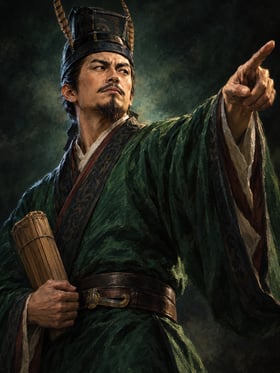
Ma Su was of exceptional talent and capacity, fond of discussing military strategy, yet his words outran his substance; conceited and rashly headstrong, he would not heed his colleagues' counsel. Skilled in stratagem, he once offered a plan of sowing discord that made Cao Rui distrust Sima Yi, and he regarded Zhuge Liang as a father.

Life
In the novel: 10 chapters · In the Records: 9 volumes
Life190–228
223 CE (Huangchu 4)
225 CE (Huangchu 6)
228 CE (Taihe 2)
- Execution of Ma SuHanzhongKilled in action
- First Northern ExpeditionMount QiWarrior
- Battle of JietingJietingCommander
Allegiance
- Shu Han
- Hatched: dated by chapter
- Life event
- Death
On the boards
Compare with someone →Where this person ranks on each board.
11 more boards
- Saw Through the Most: #23of 58Romance
- Most Advisors: #31of 98Records
- Died Youngest: #40of 182Records
- Most Battles: #51of 230Both
- Plans That Worked: #55of 159Romance
- Novel Embellished: #65of 2139Both
- Most Talkative: #74of 607Romance
- Master Strategists: #79of 220Romance
- Longest Lived: #140of 182Records
- Best Connected: #172of 1005Romance
- Overlooked by the Novel: #804of 2139Both
Who they were
Character profile
- Character
- Ma Su was of exceptional talent and capacity, fond of discussing military strategy, yet his words outran his substance; conceited and rashly headstrong, he would not heed his colleagues' counsel. Skilled in stratagem, he once offered a plan of sowing discord that made Cao Rui distrust Sima Yi, and he regarded Zhuge Liang as a father.
- Manner of speech
- He loved to discourse on military strategy from dawn till dusk, fond of quoting maxims of the art of war, such as "Subduing the heart is best, assaulting the city is inferior" and "Cast troops into a place of death and they will fight to live."
- Life
- Ma Su was the younger brother of Ma Liang. As a Jing Province administrator he followed the Former Lord into Shu, and served as Prefect of Mianzhu and Chengdu and Grand Administrator of Yuexi. Esteemed by Zhuge Liang, he was made an Army Adviser. In the sixth year of Jianxing, Zhuge Liang marched his army to Mount Qi and, against the general opinion, promoted Ma Su to command the vanguard host. He fought the Wei general Zhang He at Jieting and was routed by him; his soldiers scattered, and Zhuge Liang withdrew his army back to Hanzhong. Ma Su died in prison, aged thirty-nine.
- Anecdotes
- On his deathbed, Liu Bei warned Zhuge Liang that Ma Su's words exceeded his substance and that he should not be given great responsibility, but Zhuge Liang did not agree. At the Battle of Jieting, Ma Su fled in rout at the mere sight of the enemy's banners, causing the loss of Jieting.
Historical Record
Ma Su, courtesy name Youchang, was from Xiangyang and was the younger brother of Ma Liang. When Liu Bei entered Shu, Ma Su accompanied him from Jing Province as an aide. He later served as magistrate of Mianzhu and Chengdu, and as Administrator of Yuejun. Gifted and capable, he enjoyed discussing military strategy. Zhuge Liang valued him and appointed him as an army adviser, often talking with him through the night. Before Liu Bei died, he once warned Zhuge Liang: “Ma Su’s words exceed his actual abilities; he must not be given major responsibility.” Zhuge Liang nevertheless believed otherwise and continued to employ him.
In the sixth year of the Jianxing era, Zhuge Liang sent troops to Mount Qi and ordered Ma Su to lead the vanguard and meet the Wei general Zhang He at Jieting. Ma Su disregarded Zhuge Liang’s deployment and made poor decisions; Zhang He defeated him, his troops scattered, and Zhuge Liang consequently withdrew to Hanzhong. Wang Ping’s biography adds that Ma Su abandoned the water source and set up camp on a mountain. Wang Ping repeatedly urged him to reconsider, but Ma Su would not listen. During the defeat, Wang Ping’s own troops continued beating drums and held their ground, then gathered the scattered soldiers and led them back.
After the defeat at Jieting, Ma Su died in prison at the age of thirty-nine. Zhuge Liang wept for him, but had him executed to answer to the others. Zhuge Liang then submitted a memorial blaming himself, saying that he had made a mistake in appointing people, and voluntarily asked to be demoted. The accounts also preserve Zhuge Liang’s explanation that he was upholding the law, as well as later debate over whether his actions showed a failure to cherish talent.
In the Novel
Romance of the Three Kingdoms portrays Ma Su as an army adviser skilled at offering strategies and well versed in military texts, yet arrogant and unwilling to heed advice once in the field. The novel first has him propose the southern campaign strategy of “winning hearts as the highest priority,” then depicts him seeing through Meng You’s feigned surrender, showcasing his strategic talent. These specific conversations and the episode of exposing the ruse belong to the novel; the Records of the Three Kingdoms merely records that Zhuge Liang adopted his strategy for the southern campaign, and does not describe these scenes.
The novel presents the defeat at Jieting as a clash between character and military judgment: Ma Su repeatedly asks to defend Jieting and signs a pledge accepting military punishment. On arriving, he ignores Wang Ping’s advice, abandons the strategic pass, and camps on the mountain. The Wei army then surrounds the mountain and cuts off the water, causing the Shu army to collapse. The historical accounts do record that he disobeyed orders and was defeated by Zhang He; the details of camping on the mountain and cutting off the water are the novel’s dramatic elaborations.
The novel also depicts Ma Su binding himself and pleading guilty. Before his execution, he invokes “Emperor Shun’s execution of Gun and appointment of Yu” to ask Zhuge Liang to consider those who would come after him. Zhuge Liang weeps, yet has him executed according to military law, then weeps bitterly and provides for his family. The historical accounts record Ma Su’s death in prison, Zhuge Liang’s tears, and his execution of Ma Su to answer to the others, but the dialogue before execution and the beheading at the camp gate are specific elements of the novel.
Key Relationships
Ma Liang was Ma Su’s elder brother; both were among the brothers known as the “Five Ma Brothers.” Zhuge Liang was the man who appointed Ma Su, and also the one who dealt with him after the defeat at Jieting and wept for him. Liu Bei was an important voice of warning: the historical account says that, before his death, he cautioned Zhuge Liang against giving Ma Su major responsibility. The novel also places this remark in the scene at Baidicheng where Liu Bei entrusts his heirs to Zhuge Liang.
Zhang He was the Wei general at Jieting who defeated Ma Su. Wang Ping had urged Ma Su to reconsider and, after the defeat, led his own troops in gathering the scattered soldiers. Xiang Lang was on friendly terms with Ma Su. When Ma Su fled, Xiang Lang knew of it but failed to report it, and Zhuge Liang therefore removed him from office.
Signature Scenes
Disobeying orders at Jieting and retreating: The historical account centers on Ma Su’s disobeying Zhuge Liang’s orders and being defeated by Zhang He, after which the Shu army withdrew to Hanzhong. Wang Ping’s biography adds that Ma Su left the water source and went up the mountain, refused advice, and that Wang Ping gathered the troops after the defeat. The novel makes the disagreement concrete: Wang Ping advocates camping along the road, while Ma Su insists on holding the mountain, and the encirclement and water shortage dramatize his poor judgment.
Weeping while upholding the law: The historical accounts sum up Zhuge Liang’s response to the defeat as “executing Su to answer to the others,” and also record that he wept for Ma Su and blamed himself for appointing the wrong person. The novel turns this choice into a scene of farewell before execution, Jiang Wan pleading for clemency, and Zhuge Liang weeping bitterly, highlighting the tension between enforcing the law and cherishing talent. The dialogue before execution appears only in the novel.
The strategy of winning hearts: The Xiangyang Record, as cited in the historical account, says that Ma Su advised making the winning of hearts the highest priority. Zhuge Liang adopted the advice, and Nanzhong did not rebel again afterward. The novel dramatizes this with Ma Su wearing mourning clothes as he offers his strategy and Zhuge Liang praising him as a kindred spirit.
Quotes
20 lines in the books · 3 featured
「愚有片言,望丞相察之;南蠻恃其地遠山險,不服久矣;雖今日破之,明日復叛。丞相大軍到彼,必然平服;但班師之日,必用北伐曹丕;蠻兵若知內虛,其反必速。夫用兵之道:『攻心為上,攻城為下;心戰為上,兵戰為下。』願丞相但服其心足矣。」
This line puts forward the principle that 'winning hearts is paramount, assaulting cities is secondary,' which became a piece of military thought handed down through the ages.
「某自幼熟讀兵書,頗知兵法。豈一街亭不能守耶?」
Ma Su's pride in his mastery of the military classics is a textbook instance of his arrogant self-regard and detachment from reality.
「汝莫亂道!孫子云:『置之死地而後生。』若魏兵絕我汲水之道,蜀兵豈不死戰?以一可當百也。吾素讀兵書,丞相諸事尚問於我,汝奈何相阻耶?」
His distortion of the maxim 'place them in a desperate spot and they will fight to survive' is a portrait of his armchair theorizing and obstinate self-will.
- Family
- Lord & vassal
- Friends
- Enemies
- Other
Who is Ma Su connected to?
Pick someone to see how many steps lie between them and Ma Su.
History vs. novel
8 points · 3 novel-only
| History | Novel |
|---|---|
| The Southern Campaign’s Strategy of Winning HeartsNovel embellishes | |
During the southern campaign, Ma Su accompanied Zhuge Liang for several dozen li and proposed that winning hearts was better than taking cities, with the aim of winning over the south. Zhuge Liang adopted the strategy and pardoned Meng Huo. vol. 39 | The novel presents the advice as Ma Su’s first display of talent in the southern campaign. Zhuge Liang says that Ma Su understands his intentions well, then appoints him as an aide. ch. 87 |
| Meng You’s Feigned SurrenderNovel only | |
| — | Meng Huo sends his younger brother, Meng You, to the camp on the pretext of presenting treasures. Ma Su secretly writes down his suspicions, which match Zhuge Liang’s, helping them see through the ruse. ch. 88 |
| Driving a Wedge Between Zhuge Liang and Sima YiNovel only | |
| — | Ma Su suggests spreading rumors that Sima Yi is plotting rebellion and forging a notice to exploit Cao Rui’s suspicions and get rid of Sima Yi. Zhuge Liang adopts the plan. ch. 91 |
| Warning Meng DaNovel only | |
| — | After learning that Sima Yi will lead troops against Meng Da, Ma Su advises Zhuge Liang to send Meng Da an urgent letter warning him to prepare. Zhuge Liang does so, but the novel later relates that Meng Da is still defeated by Sima Yi. ch. 94 |
| Appointing a Commander at JietingNovel embellishes | |
Ignoring the recommendations of others, who proposed veteran commanders such as Wei Yan and Wu Yi, Zhuge Liang appoints Ma Su to lead a large force in the vanguard and engage Zhang He at Jieting. vol. 39 | Ma Su volunteers to defend Jieting. Despite Zhuge Liang’s warnings about Sima Yi and Zhang He, he boasts that he can hold it and gives a pledge of military obedience. ch. 95 |
| The Fall of JietingNovel embellishes | |
Ma Su disobeys Zhuge Liang’s orders and acts unwisely. Defeated by Zhang He, his soldiers scatter, and the Shu army retreats to Hanzhong for lack of a foothold. vol. 39 | The novel gives a detailed account of Ma Su ignoring Wang Ping’s advice and insisting on encamping on a hill. After Sima Yi cuts off the water supply, the Shu army falls into disarray and Jieting is lost. ch. 95 |
| The Final LetterNovel embellishes | |
The historical account says that, near death, Ma Su wrote to Zhuge Liang, invoking their father-son bond and asking him not to let Ma Su’s death damage the friendship they had shared throughout their lives. vol. 39 | The novel recasts the scene: Ma Su binds himself and kneels before Zhuge Liang’s tent, asking him in person to remember their father-son bond and citing the principle of executing Gun but employing Yu. ch. 96 |
| Executing Ma Su and Taking ResponsibilityNovel embellishes | |
After the defeat at Jieting, Ma Su dies in prison. Zhuge Liang weeps over this and submits a memorial requesting demotion by three ranks, accepting responsibility for making an improper appointment. vol. 35 | The novel depicts Zhuge Liang executing Ma Su before the tent and parting with him in tears. He also promises to care for Ma Su’s family, highlighting the conflict between enforcing the law and cherishing talent. ch. 96 |
- The Southern Campaign’s Strategy of Winning HeartsNovel embellishes
- History
During the southern campaign, Ma Su accompanied Zhuge Liang for several dozen li and proposed that winning hearts was better than taking cities, with the aim of winning over the south. Zhuge Liang adopted the strategy and pardoned Meng Huo.
vol. 39
- Novel
The novel presents the advice as Ma Su’s first display of talent in the southern campaign. Zhuge Liang says that Ma Su understands his intentions well, then appoints him as an aide.
ch. 87
- Meng You’s Feigned SurrenderNovel only
- Novel
Meng Huo sends his younger brother, Meng You, to the camp on the pretext of presenting treasures. Ma Su secretly writes down his suspicions, which match Zhuge Liang’s, helping them see through the ruse.
ch. 88
- Driving a Wedge Between Zhuge Liang and Sima YiNovel only
- Novel
Ma Su suggests spreading rumors that Sima Yi is plotting rebellion and forging a notice to exploit Cao Rui’s suspicions and get rid of Sima Yi. Zhuge Liang adopts the plan.
ch. 91
- Warning Meng DaNovel only
- Novel
After learning that Sima Yi will lead troops against Meng Da, Ma Su advises Zhuge Liang to send Meng Da an urgent letter warning him to prepare. Zhuge Liang does so, but the novel later relates that Meng Da is still defeated by Sima Yi.
ch. 94
- Appointing a Commander at JietingNovel embellishes
- History
Ignoring the recommendations of others, who proposed veteran commanders such as Wei Yan and Wu Yi, Zhuge Liang appoints Ma Su to lead a large force in the vanguard and engage Zhang He at Jieting.
vol. 39
- Novel
Ma Su volunteers to defend Jieting. Despite Zhuge Liang’s warnings about Sima Yi and Zhang He, he boasts that he can hold it and gives a pledge of military obedience.
ch. 95
- The Fall of JietingNovel embellishes
- History
Ma Su disobeys Zhuge Liang’s orders and acts unwisely. Defeated by Zhang He, his soldiers scatter, and the Shu army retreats to Hanzhong for lack of a foothold.
vol. 39
- Novel
The novel gives a detailed account of Ma Su ignoring Wang Ping’s advice and insisting on encamping on a hill. After Sima Yi cuts off the water supply, the Shu army falls into disarray and Jieting is lost.
ch. 95
- The Final LetterNovel embellishes
- History
The historical account says that, near death, Ma Su wrote to Zhuge Liang, invoking their father-son bond and asking him not to let Ma Su’s death damage the friendship they had shared throughout their lives.
vol. 39
- Novel
The novel recasts the scene: Ma Su binds himself and kneels before Zhuge Liang’s tent, asking him in person to remember their father-son bond and citing the principle of executing Gun but employing Yu.
ch. 96
- Executing Ma Su and Taking ResponsibilityNovel embellishes
- History
After the defeat at Jieting, Ma Su dies in prison. Zhuge Liang weeps over this and submits a memorial requesting demotion by three ranks, accepting responsibility for making an improper appointment.
vol. 35
- Novel
The novel depicts Zhuge Liang executing Ma Su before the tent and parting with him in tears. He also promises to care for Ma Su’s family, highlighting the conflict between enforcing the law and cherishing talent.
ch. 96
Combat
On the field
Duels, kills and executions as the texts tell them, counted separately for the Records and the Romance.
Records
- Duels
- 0W 0L 0D
DeathKilled by Zhuge LiangExecution · Juan 35
Romance
- Duels
- 0W 0L 0D
DeathKilled by Zhuge LiangExecution · Ch. 96
- RecordsJuan 35ExecutionZhuge LiangLost「戮謖以謝眾」
- RomanceCh. 96ExecutionZhuge LiangLost「須臾,武士獻馬謖首級於階下」
Battles in command
Battles this person commanded in, with the outcome as each text tells it.
- Records
- 0W 1L 0D 0 undecided
- Romance
- 0W 1L 0D 0 undecided
- Records228Battle of JietingLostvs Wei's armyJuan 17「郃絶其汲道,擊,大破之」
- Romance228Battle of JietingLostvs Wei troopsCh. 95「馬謖料守不住,只得驅殘兵殺下山西逃奔」
Stratagems
Plans this person devised or saw through, as the texts tell them.
- Romance
- 1 carried out · 1 worked · 0 turned down · 1 seen through
- RomanceFeign SurrenderFalse surrenderSaw throughagainst Shu campCh. 88「汝先令汝弟以禮詐降,如何瞞得過吾」
- RomanceDouble Agent StratagemSowing discordWorkedagainst WeiCh. 91「叡依言,將司馬懿削職回鄉,命曹休總督雍、涼軍馬」
Events
Events (6)
Battles and events the texts place this person in, by date.
Battles
- 228First Northern ExpeditionWarrior
- 228Battle of JietingCommander
- 228Zhuge Liang's Northern Expeditions
Other events
- 223Liu Bei's Deathbed Entrustment at BaidiWitness
- 225Seven Captures of Meng HuoAdvisor
- 228Execution of Ma SuKilled in action
Places
- Was at
- JietingRomance
Continue
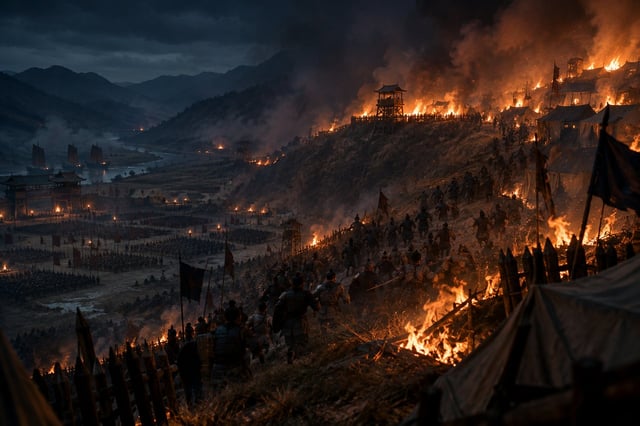
The Battle of Jieting in 3D
Replay the Battle of Jieting phase by phase on real terrain: troop strengths, movements and turning points at a glance, each marked as coming from the Records of the Three Kingdoms or the Romance.
Relationship timeline6 entries ▸
History · vol. 39
- Zhang He§16
Enemy
fought Zhang He of Wei at Jieting and was defeated by Zhang He
Novel · ch. 87
- Ma Liang§12
Sibling
Ma Liang’s younger brother; wore plain robes and entered mourning for his elder brother, who had recently died
Novel · ch. 88
- Zhuge Liang§13
Advised
Secretly wrote down what he had seen and presented it; his plan matched Kongming's
Novel · ch. 91
- Zhuge Liang§12
Advised
Proposed a sowing-dissension stratagem to divide the Wei ruler and his ministers
Novel · ch. 95
Lord
volunteered to defend Jieting and signed a military pledge
- Ma Liang§7
Sibling
brothers ("He was Ma Liang's younger brother, Ma Su.")
Inner monologues · AI-generated3 monologues ▸
- From childhood, I was fond of discussing military strategy. The Chancellor thought highly of me and often drew me into d
- From childhood, I had read the military classics closely and often prided myself on my strategic insight. When the Chanc
- My courtesy name was Youchang. In my youth, I could not always recall every detail of what I had heard and seen; now, wh