Liu Bei's faction · Assistant
Ma Liang
courtesy name 季常 · 187–222
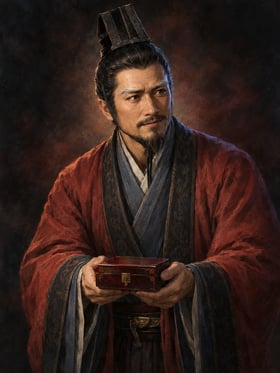
Ma Liang of Shu Han was known for missions to Eastern Wu and recruiting Wuxi; the novel also shows him repeatedly advising Liu Bei.

Life
In the novel: 14 chapters · In the Records: 5 volumes
Life187–222
208 CE (Jian'an 13)
221 CE (Huangchu 2)
- Liu Bei's faction
- Shu Han
- Hatched: dated by chapter
- Life event
List all 3 stops
On the boards
Compare with someone →Where this person ranks on each board.
Historical Record
Ma Liang, whose courtesy name was Jichang, was from Yicheng, Yicheng County, Xiangyang. All five brothers were renowned for their talent, and people in their hometown praised them with the saying, “Of the Ma family’s five constants, the white-browed one is the finest.” Ma Liang had a white streak in his eyebrows, which earned him the name “White Brow.” When Liu Bei governed Jing Province, he recruited Ma Liang to serve as an attendant. After Liu Bei entered Shu, Zhuge Liang also went there, while Ma Liang remained in Jing Province. He once wrote to Zhuge Liang, discussing the current situation, the selection of officials, and matters of governance and public instruction. Later, Liu Bei appointed him as an aide to the General of the Left.
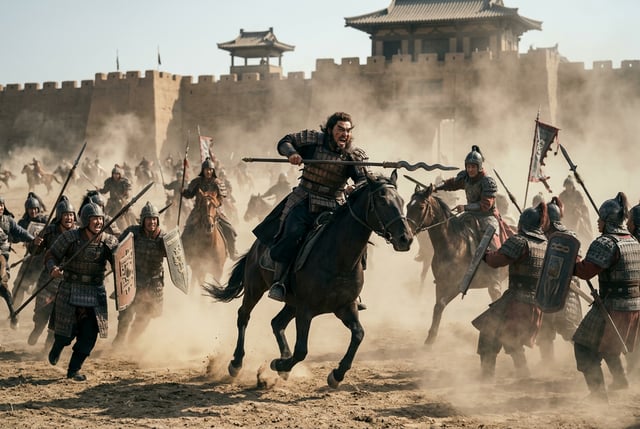
Ma Liang was once ordered to go on a diplomatic mission to Eastern Wu. After consulting with Zhuge Liang, he personally drafted a letter of amity, praising Sun Quan as “the foremost ruler of Jing and Chu.” Sun Quan treated him with great courtesy. After Liu Bei Proclaims Himself Emperor, he appointed Ma Liang as an Attendant-in-Ordinary. When Liu Bei launched Liu Bei's Eastern Campaign (Battle of Xiaoting) against Wu, he sent Ma Liang into Wuling to win over the Wuxi tribes. The chiefs of all the groups accepted official seals and titles, and their actions accorded with Liu Bei’s intentions. When the army was defeated at Yiling, Ma Liang was killed at the age of thirty-six. Liu Bei appointed his son, Ma Bing, as a Cavalry Commandant. Another account of the same campaign says that as Liu Bei advanced toward Yiling, he sent the Attendant-in-Ordinary Ma Liang to pacify the Wuxi tribes, and they all responded in concert.
Ma Liang’s talent and discernment also earned Zhuge Liang’s regard. When assessing Jiang Wei, Zhuge Liang compared him with “Yongnan, Jichang, and the others,” judging Jiang Wei inferior to them. This indicates that Zhuge Liang considered Ma Liang a commendable talent. The Records of the Three Kingdoms also records that Liao Li once mocked Xiang Lang for having formerly regarded Ma Liang and his brothers as “sages.” This shows that the Ma brothers’ reputation was known to their contemporaries; since the remark was made in criticism by someone else, it should not be taken as a definitive judgment of Ma Liang’s virtue.
In the Novel
The Romance of the Three Kingdoms carries over Ma Liang’s title, “The white-browed one is the finest,” and portrays him as a capable, prudent minister in Liu Bei's faction who is also bold enough to speak frankly. The novel depicts Yi Ji recommending the Ma brothers to Liu Bei, who then asks Ma Liang to devise a long-term plan for Jing Province. Ma Liang points out that Jing and Xiang are exposed to attack from all sides, and advises that Liu Qi be placed in charge of defending Jing Province and that the four commanderies south of Jing be taken as the foundation of their position. He then lays out the order of conquest: first Lingling, followed by Wuling, Guiyang, and Changsha. In this way, the novel expands the historical record of Ma Liang serving as an attendant in Jing Province, turning him into a key strategist in Liu Bei’s efforts to establish control there. These specific proposals and the order in which the commanderies are taken do not appear in the Records of the Three Kingdoms.
The novel later has Ma Liang repeatedly serve as an adviser to Guan Yu and Liu Bei. Before Guan Yu goes to meet Lu Su at his invitation, Ma Liang warns him against going lightly and urges him to prepare a naval force in advance; when Guan Yu sets out on campaign, Ma Liang is named as one of his staff officers. After Guan Yu is struck by an arrow, Ma Liang plays go with him, becoming a witness to the “Scraping the Bone to Cure the Poison” scene. After Jing Province falls, he and Yi Ji are ordered to go to Chengdu to seek help. These specific episodes involving Ma Liang alongside Guan Yu are inventions of the novel and do not appear in the Records of the Three Kingdoms.
During Liu Bei’s campaign against Wu, the novel further emphasizes Ma Liang’s remonstrance and strategic judgment. He warns Liu Bei that Lu Xun is highly resourceful and should not be underestimated. After Liu Bei moves his camps into the forested hills, Ma Liang cites the saying, “Listening to all sides brings clarity; listening to one side alone brings blindness,” and suggests that a map of the camps be sent to Zhuge Liang for review. After studying it, Zhuge Liang predicts that the connected camps are in danger. Ma Liang is ordered to carry back the warning, but arrives too late to change the course of the battle. The novel also has him reach Baidicheng after the defeat at Yiling and relay Zhuge Liang’s warning to Liu Bei. Compared with the historical account of Ma Liang’s mission to win over the Wuxi tribes and his death at Yiling, these journeys to deliver messages, his remonstrances, and the map of the camps are all literary elaborations. In particular, the novel’s portrayal of him reaching Baidicheng after the defeat differs from the historical account that “Ma Liang too was killed.”
Key Relationships
- Liu Bei: The historical record says that Liu Bei first recruited Ma Liang as an attendant, then appointed him as an aide to the General of the Left, and made him an Attendant-in-Ordinary after proclaiming himself emperor. During the eastern campaign, he also entrusted Ma Liang with winning over the Wuxi tribes. The novel additionally depicts Ma Liang devising plans for Liu Bei in Jing Province and remonstrating with him during the campaign against Wu, strengthening the portrayal of their relationship as one of strategic counsel between ruler and minister.
- Zhuge Liang: While remaining in Jing Province, Ma Liang once wrote to Zhuge Liang. Before his mission to Eastern Wu, he asked Zhuge Liang to introduce him, and Zhuge Liang told him to draft the letter himself. Zhuge Liang also affirmed Ma Liang’s talent and discernment.
- Ma Su: Ma Liang was Ma Su’s older brother. The historical biography states that Ma Su’s courtesy name was Youchang, making their relationship clear. The novel also repeatedly calls Ma Su “Ma Liang’s younger brother” and explains Ma Su’s mourning attire by noting that his elder brother had recently died.
- The Wuxi chiefs and Sun Quan: The historical record says that Ma Liang won over the Wuxi chiefs and that they accepted official seals and titles; on his mission to Eastern Wu, Sun Quan treated Ma Liang with respect.
- Guan Yu: Ma Liang’s warning to Guan Yu against attending Lu Su’s meeting lightly, his game of go with Guan Yu, and his service on the campaign are all unique to the novel.
Signature Scenes
- “The white-browed one is the finest”: The historical biography explains the saying by noting that all five brothers were talented and that Ma Liang had a white streak in his eyebrows. The novel makes the proverb the pretext for Yi Ji to recommend him to Liu Bei, turning it into the defining moment of Ma Liang’s introduction.
- Mission to Eastern Wu: Ma Liang asks Zhuge Liang to introduce him, then personally drafts a letter of amity, and Sun Quan treats him with respect. The scene shows that he was not only entrusted with a diplomatic mission but was also capable of composing the diplomatic letter himself.
- Winning over the Wuxi tribes: During Liu Bei's Eastern Campaign (Battle of Xiaoting), Ma Liang goes to Wuling to win over the Wuxi tribes, whose chiefs accept official seals and titles. This is the action in the historical record that best demonstrates his ability to pacify and establish ties with them.
- Remonstrating with a map of the connected camps: The novel has Ma Liang propose drawing a map of Liu Bei’s arrangements after he moves camp and sending it to Zhuge Liang for review; Ma Liang personally travels into Shu to present the map. This episode portrays him as cautious and as someone willing to remind his ruler of possible danger, and is unique to the novel.
- The outcome at Yiling: The historical record says that Ma Liang was killed when Liu Bei was defeated at Yiling; the novel instead has him reach Baidicheng after the battle and relay Zhuge Liang’s warning. The two accounts differ in their endings, and the historical account of his death should be followed when recounting the historical record.
Quotes
17 lines in the books · 3 featured
「荊襄四面受敵之地,恐不可久守。可令公子劉琦於此養病,招諭舊人以守之,就表奏公子為荊州刺史,以安民心;然後南征武陵、長沙、桂陽、零陵四郡,積收錢糧,以為根本。此久遠之計也。」
This stratagem laid down the Jing Province development strategy for Liu Bei's faction, with far-reaching influence.
「陸遜之才,不亞周郎,未可輕敵。」
This remark accurately appraises Lu Xun's talent, foreshadowing the outcome of the Battle of Xiaoting.
「古云:『兼聽則明,偏聽則蔽。』望陛下察之。」
This line admonishes Liu Bei, embodying Ma Liang's loyal candor, and is also a proverb still current today.
- Family
- Lord & vassal
- Friends
Who is Ma Liang connected to?
Pick someone to see how many steps lie between them and Ma Liang.
History vs. novel
8 points · 5 novel-only
| History | Novel |
|---|---|
| The Epithet “White-Browed”Novel embellishes | |
Historical accounts state that all five of the Ma brothers were renowned for their talent. People in their home region said, “The white-browed one is the finest,” and explained that Ma Liang got his name because he had a white streak in his eyebrows. vol. 39 | The novel has Yi Ji recommend the Ma brothers to Liu Bei, highlighting Ma Liang’s reputation with his white brows and a local saying. ch. 52 |
| Plans for Jing ProvinceNovel embellishes | |
When Liu Bei took charge of Jing Province, he appointed Ma Liang as an aide; the Records of the Three Kingdoms does not record him offering advice on long-term plans for Jing Province. vol. 39 | Ma Liang advises that Liu Qi remain in Jing Province to keep watch and pacify the people, then that they seize the four commanderies of southern Jing as their base. Liu Bei adopts his plan and appoints him as an aide. ch. 52 |
| Remaining Behind During the Campaign into ShuNovel only | |
| — | The novel relates that when Zhuge Liang entered Yi Province, Ma Liang was ordered to carry a letter to Fu Pass and warn Liu Bei about the fighting at Luocheng. ch. 63 |
| Advising Against the Single-Sword MeetingNovel only | |
| — | When Guan Yu prepares to attend Lu Su’s invitation, Ma Liang advises him not to go lightly and suggests taking precautions; the Records of the Three Kingdoms does not record this incident. ch. 66 |
| Assisting Guan Yu's Northern CampaignNovel only | |
| — | The novel has Ma Liang and Yi Ji serve as military aides and accompany Guan Yu on campaign; the Records of the Three Kingdoms does not record Ma Liang assisting Guan Yu's Northern Campaign. ch. 73 |
| Admonitions at YilingNovel only | |
| — | In the novel, Ma Liang first warns Liu Bei not to underestimate Lu Xun, then urges him to watch for a surprise attack by the Wu forces, and suggests sending a plan of the camps to Zhuge Liang for review. ch. 83 |
| Warning Based on the Camp PlanNovel only | |
| — | Ma Liang sends the camp plan to Zhuge Liang, who points out that the camps stretch along a stream and are set up on dangerous ground, making them vulnerable to fire attacks. He urges Ma Liang to hurry back and persuade Liu Bei to move the camps. ch. 84 |
| The Outcome at YilingSources disagree | |
Historical accounts state that Ma Liang was ordered to Wuling to win over the Wuxi tribes, whose leaders accepted official seals and titles. Ma Liang was also killed when Liu Bei was defeated at Yiling; he was thirty-six years old. vol. 39 | The novel has Ma Liang reach Baidicheng after the defeat at Yiling and relay Zhuge Liang’s warning to Liu Bei; it does not say that he was killed. ch. 85 |
- The Epithet “White-Browed”Novel embellishes
- History
Historical accounts state that all five of the Ma brothers were renowned for their talent. People in their home region said, “The white-browed one is the finest,” and explained that Ma Liang got his name because he had a white streak in his eyebrows.
vol. 39
- Novel
The novel has Yi Ji recommend the Ma brothers to Liu Bei, highlighting Ma Liang’s reputation with his white brows and a local saying.
ch. 52
- Plans for Jing ProvinceNovel embellishes
- History
When Liu Bei took charge of Jing Province, he appointed Ma Liang as an aide; the Records of the Three Kingdoms does not record him offering advice on long-term plans for Jing Province.
vol. 39
- Novel
Ma Liang advises that Liu Qi remain in Jing Province to keep watch and pacify the people, then that they seize the four commanderies of southern Jing as their base. Liu Bei adopts his plan and appoints him as an aide.
ch. 52
- Remaining Behind During the Campaign into ShuNovel only
- Novel
The novel relates that when Zhuge Liang entered Yi Province, Ma Liang was ordered to carry a letter to Fu Pass and warn Liu Bei about the fighting at Luocheng.
ch. 63
- Advising Against the Single-Sword MeetingNovel only
- Novel
When Guan Yu prepares to attend Lu Su’s invitation, Ma Liang advises him not to go lightly and suggests taking precautions; the Records of the Three Kingdoms does not record this incident.
ch. 66
- Assisting Guan Yu's Northern CampaignNovel only
- Novel
The novel has Ma Liang and Yi Ji serve as military aides and accompany Guan Yu on campaign; the Records of the Three Kingdoms does not record Ma Liang assisting Guan Yu's Northern Campaign.
ch. 73
- Admonitions at YilingNovel only
- Novel
In the novel, Ma Liang first warns Liu Bei not to underestimate Lu Xun, then urges him to watch for a surprise attack by the Wu forces, and suggests sending a plan of the camps to Zhuge Liang for review.
ch. 83
- Warning Based on the Camp PlanNovel only
- Novel
Ma Liang sends the camp plan to Zhuge Liang, who points out that the camps stretch along a stream and are set up on dangerous ground, making them vulnerable to fire attacks. He urges Ma Liang to hurry back and persuade Liu Bei to move the camps.
ch. 84
- The Outcome at YilingSources disagree
- History
Historical accounts state that Ma Liang was ordered to Wuling to win over the Wuxi tribes, whose leaders accepted official seals and titles. Ma Liang was also killed when Liu Bei was defeated at Yiling; he was thirty-six years old.
vol. 39
- Novel
The novel has Ma Liang reach Baidicheng after the defeat at Yiling and relay Zhuge Liang’s warning to Liu Bei; it does not say that he was killed.
ch. 85
Events
Events (6)
Battles and events the texts place this person in, by date.
Battles
Places
- Native of
- XiangyangRecords
Continue
Liu Bei's Seizure of the Four Southern Jing Commanderies
Relationship timeline13 entries ▸
History · vol. 39
- Ma Su§14
Sibling
brothers; all five brothers were renowned for their talent
- Zhuge Liang§14
Friend
in a letter to Liang, addressed him as "respected elder brother"; they were probably sworn brothers
- Sun Quan§15
Friend
Liang served as an envoy to Wu; Quan treated him with respect
- Ma Bing§16
Child
Ma Liang’s son; the Former Lord appointed Bing Cavalry Commandant
Novel · ch. 52
- Liu Bei§6
Advised
On being recruited, presented a plan: defend Jing and Xiang, memorialize to appoint Liu Qi Inspector of Jing Province, and campaign south against the four commanderies to amass grain
- Ma Su§6
Sibling
older brother; among the Ma family's five brothers, Liang was the most virtuous and Su was the youngest
Novel · ch. 63
Lord
Was sent by Kongming to carry a letter to Fuguan and report the ill omens of Gangxing and Taibai
Novel · ch. 66
- Guan Yu§6
Advised
At Duan 6, advised against going rashly; also requested preparations
All 13
Loading…
Inner monologues · AI-generated3 monologues ▸
- I am Ma Liang, courtesy name Jichang. The news of defeat is now settled. The grand sight of banners blotting out the sun
- I am Ma Liang, courtesy name Jichang, from Yicheng in Xiangyang. In our home district, my four brothers and I were known
- I am Ma Liang, courtesy name Jichang. As for my early years, many details are not found in the records that survive toda