Background
Zhang He Shot Dead at Mumendao is set within the narrative of Zhuge Liang's Fourth Northern Expedition and the Shu army’s retreat. In the material provided, the episode is not an isolated ambush but the culmination of a series of contests in which the two sides judged when to advance or withdraw, and pursued or countered one another. Volume 99 recounts how Zhuge Liang trapped Zhang He and Dai Ling with an ambush, but Zhang He still broke through the encirclement and rescued Dai Ling. This both demonstrates his bravery and shows that Shu already regarded him as a military threat that could not be ignored. Zhuge Liang judged at the time that “if this man is left alive, he will surely become a scourge to Shu,” giving the later plan a clear strategic purpose.
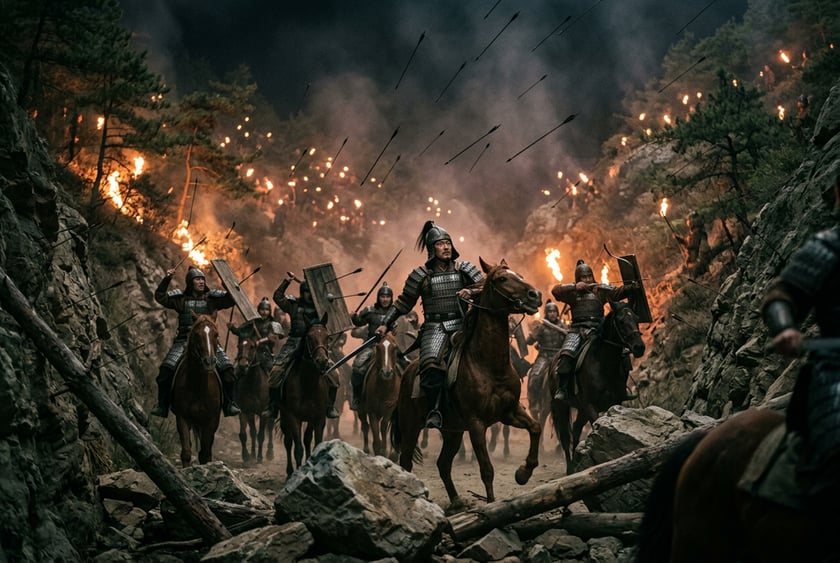
The Mumen Road passage in Volume 101 casts the retreat as a planned operation to lure the enemy in. Zhuge Liang ordered Ma Zhong and Yang Yi to position crossbowmen in ambush, while Wei Yan and Guan Xing brought up the rear. Banners were left standing in the city and smoke was raised, creating the impression that defenders remained. Sima Yi saw through the empty city, but did not retain full control over the decision to pursue. Zhang He volunteered to fight and ultimately led his troops forward. The key to the ambush, then, lay not only in the terrain, but also in the false intelligence Shu created and in the different judgments within the Wei army about the “opportunity to win merit” and “control of risk.”
Key Figures
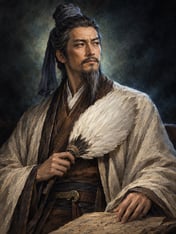
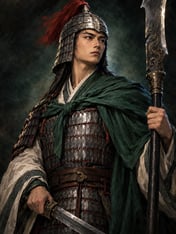
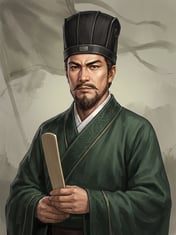
In this account, Zhuge Liang is the architect of an operation that combines retreat, luring the enemy, covering the rear, and ambush. He first assigned forces to Ma Zhong, Yang Yi, Wei Yan, and Guan Xing, then used Wei Yan and Guan Xing to repeatedly draw Zhang He deeper in, before blocking the road with timber and rocks and completing the encirclement with a volley of crossbow bolts. His “strategy” does not consist merely of anticipating the enemy’s actions; by setting out clues that the enemy could interpret, he prompts them to make choices that benefit Shu.
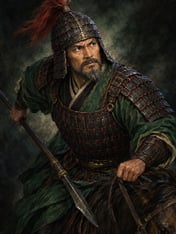
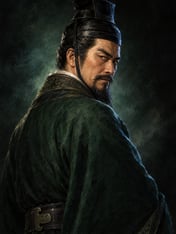
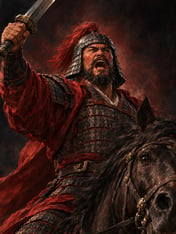
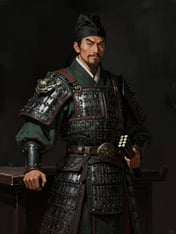
Zhang He is portrayed as an experienced and enterprising commander. In Volume 99, he recognizes that a cart blocking the road with grass may conceal an ambush, and after breaking through he rescues Dai Ling. In Volume 101, although he knows Sima Yi has warned that the dangerous terrain may conceal an ambush, he insists on pursuing the enemy and continues deeper into the pass as Wei Yan and Guan Xing take turns luring him onward. Wei Yan and Guan Xing serve as lures, using combat to draw him forward; Ma Zhong and Yang Yi carry out the ambush plan. Sima Yi is both a participant in the decision and a witness who accepts responsibility afterward. Together, these roles form a complete chain of command: planning, luring, laying an ambush, pursuit, and accountability.
Core Themes
The first central theme is the tension between a commander’s autonomy and a superior’s need to control risk. Sima Yi initially argues against pursuit on the grounds that Shu is full of stratagems and may have laid an ambush in the dangerous terrain. Zhang He insists on going out to fight, citing his earlier orders to serve as vanguard and the opportunity before him to win merit. Sima Yi ultimately does not cancel the operation, but limits Zhang He to an advance force of five thousand, arranges for Wei Ping to bring up reinforcements, and follows behind with his own troops. This compromise shows an attempt to balance respect for a subordinate’s wishes with control of battlefield risk; the novel’s ending, however, presents it as a command failure that could not be undone.
The second theme is how the tactical environment can turn military courage into vulnerability. Zhang He’s ability to pursue and his courage in battle do not fail him. Rather, it is precisely because he repeatedly drives back or chases Wei Yan and Guan Xing that he is drawn farther from his rear guard and into constricted terrain. The Shu army’s abandonment of armor, clothing, and equipment creates disorder that the Wei army can exploit, diverting the pursuers’ attention from their formation and the safety of the route to the spoils before them. Mumen Road thus becomes a trap built into the terrain: sheer cliffs, a road blocked with timber and rocks, and crossfire from crossbows compress individual valor and mobility into a situation from which there is no escape.
The third theme is how the narrative shapes judgments of responsibility. Zhang He’s death is presented both as the success of Zhuge Liang’s plan and as the price of Sima Yi’s failure to restrain his subordinate. After the battle, Sima Yi says, “It was my fault,” making the loss not merely a battlefield casualty but a public admission of a commander’s responsibility. On the Shu side, Zhuge Liang’s mockery of the pursuing force turns a local ambush into a psychological blow against Wei’s command structure. These judgments, however, first and foremost reflect the dramatic design of Romance of the Three Kingdoms; the novel’s passage alone cannot be treated as proof of the historical events on the ground.
Political Consequences
Within the novel’s narrative, the most immediate consequence is that the Wei army loses Zhang He and more than a hundred officers. The pursuers promptly retreat, and Sima Yi withdraws his forces. Zhang He was not merely a tactical asset but a commander of standing and experience who could make independent judgments. His death may therefore have weakened Wei confidence in pursuing Shu and increased the pressure on Sima Yi’s command. The text also says that when the Wei ruler received the news, he wept and gave Zhang He a lavish burial, transforming a battlefield loss into an act of mourning and remembrance at court and making him a celebrated embodiment of loyal and courageous sacrifice within the political community.
For Shu, the successful ambush strengthens the image of Zhuge Liang using precise planning to make up for limitations in manpower and logistics. It also brings the contributions of Wei Yan and Guan Xing in combat, along with the operational roles of Ma Zhong and Yang Yi, into the narrative of victory. This does not mean, however, that Shu thereby gained a decisive strategic advantage. The material provided describes only an ambush during a retreat and the Wei army’s withdrawal; it does not discuss the campaign as a whole, subsequent territorial changes, or the long-term political order. In particular, since the outcome of the event is marked “unclear” in the prompt, the more cautious conclusion is that the novel depicts a clear tactical victory, but does not establish that it had corresponding historical and political consequences.
Counterfactual Analysis
Had Zhang He accepted Sima Yi’s advice, the Wei army might have avoided the ambush at Mumen Road, but at the cost of abandoning the chance to pursue Shu and perhaps allowing Zhuge Liang to withdraw with less difficulty. In terms of command and reputation, obedience might have reduced Zhang He’s personal risk, but his fellow officers might also have viewed it as a missed opportunity to win merit. The novel expresses this pressure of reputation through his insistence that he would “lay down his life in service of the state.” The issue, then, cannot be reduced to Zhang He’s recklessness; it also requires recognizing the choices commanders face amid competition for military merit, the authority of their superiors, and uncertainty on the battlefield.
Had Sima Yi issued a more forceful order, or made reconnaissance, formation, and the pursuit route non-negotiable conditions, Shu’s chain of lures might have been less effective. Had the Wei vanguard not been distracted by the supplies abandoned along the road, it might have recognized the danger of the blockade at Mumen Road sooner. Yet none of these possibilities guarantees a Wei victory, since the text describes a Shu plan involving several layers of deception and ambushes firing from both sides, and Zhang He had already been drawn into the narrow terrain. The value of counterfactual analysis lies not in claiming that any one choice would certainly have changed history, but in showing that tactical outcomes are shaped by intelligence, discipline, personal reputation, and terrain together.