Background
In this narrative, the Wooden Ox and Flowing Horse is not merely a transport device, but part of Zhuge Liang’s efforts to manage the front line, organize intelligence, and lure the enemy into battle. The user-defined period for these events is the ninth through twelfth years of Jianxing (231–234), which are classified as Zhuge Liang's Fourth Northern Expedition; however, the cited passages provide no basis for independently verifying these dates or the campaign chronology. The analysis below therefore focuses on the political and military logic presented in chapters 102 and 103 of Romance of the Three Kingdoms, without treating the novel’s events as historical fact.
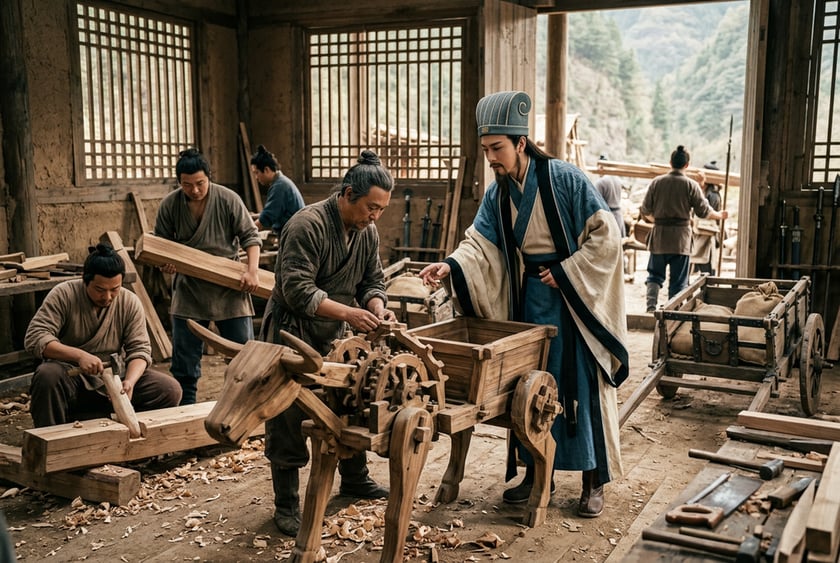
Chapter 102 describes Zhuge Liang surveying the terrain around the Wei River and discovering that Shangfang Valley is suitable for an ambush. He then orders men to enter the valley and build Wooden Ox and Flowing Horse devices, and sends Ma Dai with troops to seal the entrance, forbidding anyone to enter or leave. He inspects the work repeatedly himself and links it to a “plan to capture Sima Yi.” The devices are thus built in a tightly controlled space: this is both logistical preparation and a covert operation. The terrain, craftsmen, guards, and commander together form an organized system for the battlefield.
Key Figures
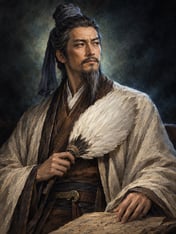
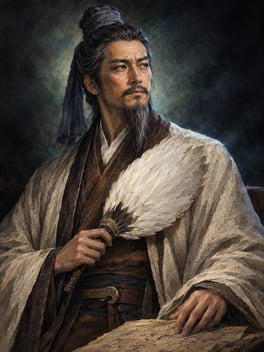
In the narrative, Zhuge Liang is at once commander, organizer of engineering work, and controller of intelligence. He does not merely order the devices built: he chooses the site, assigns supervisors, regulates access, inspects the work personally, and incorporates the transport capacity into a plan to lure Sima Yi. This portrayal emphasizes centralized decision-making. Technology is not separate from politics and military affairs; it must serve the commander’s overall management of risk, secrecy, and timing. At the same time, this means the plan depends heavily on Zhuge Liang’s own judgment and coordination.
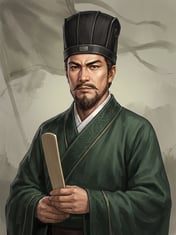
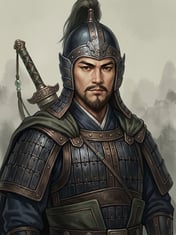
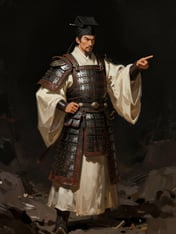
Ma Dai is responsible for sealing the valley entrance and ensuring its security; Du Rui and Hu Zhong supervise the craftsmen, while the craftsmen provide the practical manufacturing skills. Yang Yi is listed among those involved, but the cited passage does not specify his role in the Wooden Ox and Flowing Horse operation, so it would be unwarranted to attribute any particular deployment or decision to him on this basis. Similarly, although the material explicitly assigns the manufacturing effort to the figures named above, it does not provide a complete account of the devices’ design, production scale, or routine transport system.
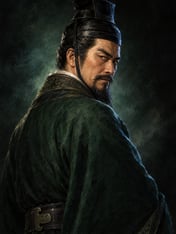
In this arrangement, Sima Yi is first and foremost Zhuge Liang’s intended opponent, as well as the Wei commander who must assess the Shu army’s deployments and intentions. In chapter 103, when Xiahou Hui and Xiahou He suggest launching an attack, Sima Yi replies, “This must be another of Kongming’s schemes.” The novel thus portrays him as chiefly suspicious and cautious. Calling him a “witness” can only be understood in a broad sense; the passage does not say that he personally saw the Wooden Ox and Flowing Horse being made.
Key Issues
The first issue is how logistics can be turned into tactical capability. Chapter 102 places the Wooden Ox and Flowing Horse in the context of grain transport, movement along roads, and the terrain chosen for an ambush. Another episode describes the Wei general Cen Wei driving the devices, loaded with grain, while Wang Ping leads Shu troops in an attack and captures them. The Wei troops try to drive off the abandoned devices, but are thwarted because they do not know how to operate them. The narrative therefore focuses not only on what is built, but also on who knows the operating rules, who can control the pace of transport, and how logistical supplies become objects of battlefield contest.
The second issue is information asymmetry. The Shu army limits the risk of leaks by keeping the manufacturing secret and sealing the valley entrance. On the battlefield, it also changes the devices’ state by turning the oxen and horses’ “tongues,” leaving the Wei troops unable to operate them as before. The novel presents this technical barrier as a practical advantage: those who know how to use the devices can put them to work for transport or withdrawal, while those who lack the know-how may be unable to make effective use of them even after capturing them. This reflects the control of knowledge within a military organization, not a technical description that can establish the devices’ actual construction.
The third issue is credibility and fear. Wang Ping and the others first defeat Guo Huai through an ambush and coordinated attack. The text then describes “divine soldiers” appearing behind the mountain, leading the Wei troops to believe that the Shu army has supernatural aid. In the novel’s structure, the supernatural episode amplifies the psychological shock caused by Shu military action while obscuring the tactical organization behind it. In modern political-historical analysis, it should be read as a narrative device for creating deterrence and bolstering morale, not as historical evidence of a supernatural event.
Political Consequences
Within the narrative, the Wooden Ox and Flowing Horse enhances the Shu army’s ability to contest supply routes, lure the enemy, and create confusion on the battlefield. It also leaves the Wei army in the awkward position of having captured devices it cannot use. The devices therefore symbolize the state’s organizational capacity: frontline strength comes not only from the bravery of generals, but also from the coordination of craftsmen, guards, transport, and command. However, the passages available do not explain how this operation ultimately affected the Northern Expedition as a whole, the two sides’ long-term supply situations, or the decisions of either regime. Its local tactical effects should not be exaggerated into a definite strategic victory.
On the Wei side, Sima Yi’s refusal in chapter 103 to trust the Xiahou brothers’ eagerness to attack suggests that the Wei army’s decisions are constrained by its expectations of Zhuge Liang’s stratagems. Such caution may help prevent a rash move into a trap, but it may also allow the enemy to continue developing farmland and camps. On the Shu side, tight secrecy and centralized command may yield short-term advantages, but they also increase reliance on a small number of key figures. The risks of rash action versus excessive hesitation, and centralized coordination versus dependence on individuals, form the political significance of this confrontation. The material does not provide enough information to determine their actual consequences in history.
Counterfactual Scenarios
If the Shu army had not sealed off the manufacturing operation in Shangfang Valley and the information had leaked, the Wei side might have strengthened reconnaissance along its supply routes, changed its marching arrangements, or avoided approaching the ambush site at the pace Shu had anticipated. This would have reduced the element of surprise afforded by the devices. But this is only a projection based on the novel’s references to “forbidding entry and exit” and the “plan to capture Sima Yi.” The text does not describe any leak or show the Wei army taking measures against the manufacturing site.
Conversely, if the Wei army had learned how to operate the devices after capturing them, Wang Ping’s tactic of turning their “tongues” to prevent the Wei troops from driving them might have failed. It would also have become harder for the Shu army to recover the devices or continue using them to create confusion. If Sima Yi had responded more aggressively to Xiahou Hui and Xiahou He’s proposals to attack, hostilities might have shifted to open battle sooner. But the novel explicitly says that he suspected this was one of Kongming’s schemes, so it cannot be concluded that a more aggressive attack would necessarily have changed the outcome. Taken together, the Wooden Ox and Flowing Horse’s effectiveness depended on the interplay of technology, secrecy, command, and the opponent’s judgment. On the evidence available, the event’s ultimate historical outcome remains unknown.