Cao Wei · Commandant Who Attends the Chariot; Marquis of the Township
Liu Yong
courtesy name 公寿
Not to be confused with Liu Yong (刘邕) — Liu Yong was a Shu Han official who accompanied Liu Bei into Shu and served as Administrator of Jiangyang and Supervising Army General.
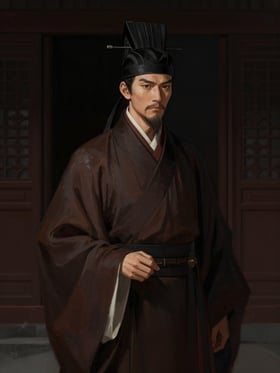
Liu Yong, courtesy name Gongshou, was Liu Bei’s son and Liu Shan’s half-brother; Huang Hao’s slander led to his long estrangement.
Life
In the novel: 3 chapters · In the Records: 3 volumes
Allegiance
Appearances
By chapter (6)
Novel
- 77
- 80
- 85
Records
- 32
- 33
- 34
On the boards
Compare with someone →Where this person ranks on each board.
Historical Record
Liu Yong, courtesy name Gongshou, was a son of Liu Bei, a half-brother of Liu Shan, and a member of the Shu Han imperial clan. In the sixth month of Zhangwu 1 (221), Liu Bei ordered Xu Jing to invest Liu Yong as King of Lu. The patent of investiture stated that his fief lay in the eastern lands and charged him to govern according to ritual, comfort the officials and people, and serve as a supporting branch of the Han house. That same year, Liu Bei made Liu Shan crown prince and invested Liu Yong as King of Lu and Liu Li as King of Liang.
In Jianxing 8 (230), because the kingdoms of Lu and Liang lay within Wu’s sphere of influence, Liu Yong was re-invested as King of Ganling; Liu Li was likewise re-invested as King of Anping. Liu Yong detested the eunuch Huang Hao. After Huang Hao won the trust of the Later Lord and seized power, he slandered Liu Yong to Liu Shan and framed him. Liu Shan gradually grew distant from Liu Yong, who consequently was unable to attend court and see the Later Lord for more than ten years. This account shows that although Liu Yong was the Former Lord’s son and a prince of the imperial clan, changes in court power left him excluded from the court for a long period. In Xianxi 1 (264), Liu Yong moved east to Luoyang, was appointed Commandant of the Chariot, and was enfeoffed as a Marquis of the Township.
In the Novel
Romance of the Three Kingdoms incorporates Liu Yong into its account of Liu Bei’s family and Shu Han’s succession. The novel says that after Liu Bei married Lady Wu, she gave birth to their eldest son, Liu Yong, courtesy name Gongshou, and then their second son, Liu Li; when Liu Bei Proclaims Himself Emperor and changes the era name to Zhangwu, Liu Yong is invested as King of Lu. These episodes broadly accord with historical accounts regarding Liu Yong’s name, parentage, sibling relationship, and princely title. The novel, however, adds a family narrative in which Lady Wu gives birth to Liu Yong, a matter on which the historical accounts are silent.
The novel also has Liu Yong and Liu Li go together to Yongan Palace when Liu Bei is gravely ill, where they receive his final instructions alongside Zhuge Liang and others. As he lies dying, Liu Bei tells the two princes that after his death they should serve Zhuge Liang as they would their own father, then orders the two princes to pay their respects to the chancellor. This makes Liu Yong a witness to the entrusting of the orphaned heir and highlights the novel’s themes of trust between ruler and subject and of brothers receiving their charge together. The Records of the Three Kingdoms records that Liu Yong was later slandered by Huang Hao and alienated by the Later Lord, but does not mention this scene at Yongan Palace; the deathbed injunction in the novel is therefore a literary creation.
Key Relationships
- Liu Bei: Father and son. Historical accounts identify Liu Yong as the Former Lord’s son; the novel provides further detail about his family background, portraying him as the son of Liu Bei and Lady Wu.
- Liu Shan: Brothers. Liu Yong was the Later Lord Liu Shan’s half-brother. Historical accounts say that after Huang Hao slandered him, Liu Shan gradually grew distant from him, and Liu Yong was unable to attend court for more than ten years.
- Huang Hao: Antagonists. Liu Yong detested Huang Hao. After Huang Hao seized power, he slandered and framed Liu Yong, leading to Liu Yong’s long exclusion from court.
- Liu Li: Brothers and fellow princes. In Zhangwu 1, the two were respectively invested as King of Lu and King of Liang; in Jianxing 8, they were re-invested as King of Ganling and King of Anping.
- Zhuge Liang: The recipient of Liu Bei’s charge in the novel. As he lay dying, Liu Bei ordered Liu Yong and Liu Li to serve Zhuge Liang with the respect due a father. This episode appears only in the novel.
Key Scenes
Investiture as King of Lu: In the sixth month of Zhangwu 1, Liu Yong was invested as King of Lu. The patent of investiture charged him to “keep his heart steadfast and follow ritual, and bring comfort to your officials and people,” requiring him to uphold ritual and pacify the people, and assigning him the role of a supporting branch of the Han house. This is the clearest historical account of Liu Yong’s early status.
Slandered and long kept at a distance: After Huang Hao seized power, he slandered and framed Liu Yong, and the Later Lord gradually grew distant from him. Liu Yong was unable to attend court for more than ten years. This account describes his situation after coming into conflict with those holding power at court and marks a key turning point in his recorded life.
Receiving Liu Bei’s final instructions at Yongan Palace (exclusive to the novel): The novel has Liu Yong go with Liu Li, Zhuge Liang, and others to Yongan Palace to hear Liu Bei’s arrangements for what would follow. Liu Bei orders the two brothers to pay their respects to Zhuge Liang and tells them to treat him as a father thereafter. This scene places Liu Yong within the narrative of entrusting the orphaned heir, but the Records of the Three Kingdoms cited here does not record the event.
Moving east to Luoyang: In Xianxi 1, after the Conquest of Shu by Wei, Liu Yong moved east to Luoyang, was appointed Commandant of the Chariot, and was enfeoffed as a Marquis of the Township. The historical account records these as his final appointment and enfeoffment after leaving Shu.
- Family
- Enemies
- Other
Who is Liu Yong connected to?
Pick someone to see how many steps lie between them and Liu Yong.
History vs. novel
7 points · 1 novel-only
| History | Novel |
|---|---|
| Liu Yong’s backgroundSources disagree | |
The Records of the Three Kingdoms only states that Liu Yong was Liu Bei’s son and Liu Shan’s half-brother, without recording who his mother was. vol. 34 | The novel says that Liu Yong was the eldest son of Liu Bei and Lady Wu, and records that his courtesy name was Gongshou. ch. 77 |
| Date of investitureNovel embellishes | |
Liu Yong was invested as King of Lu in the sixth month of the first year of Zhangwu. vol. 34 | The novel also says that Liu Yong was invested as King of Lu, and places the investiture amid events including Liu Bei’s accession and the investiture of the empress and crown prince. ch. 80 |
| Investiture edictHistory only | |
Xu Jing was ordered to invest Liu Yong as King of Lu. The edict instructed him to observe proper rites and pacify the people, and expressed the hope that the state of Lu would become a land of moral instruction. vol. 34 | — |
| Reinvestiture as King of GanlingHistory only | |
In the eighth year of Jianxing, Liu Yong was reinvested as King of Ganling, having previously been King of Lu. vol. 34 | — |
| Huang Hao’s slanderHistory only | |
Liu Yong despised Huang Hao. After Huang Hao gained influence, he slandered Liu Yong to Liu Shan, who gradually distanced himself from Liu Yong and prevented him from attending court for more than ten years. vol. 34 | — |
| Liu Bei's Deathbed Entrustment at BaidiNovel only | |
| — | The novel says that, near death, Liu Bei summoned Liu Yong and Liu Li, instructing the three brothers to serve Zhuge Liang with the respect due a father and having the two princes pay their respects to the chancellor. ch. 85 |
| Move to LuoyangHistory only | |
After Shu fell, Liu Yong moved to Luoyang in the first year of Xianxi, where he served as Commandant of the Chariot and was made a village marquis. vol. 34 | — |
- Liu Yong’s backgroundSources disagree
- History
The Records of the Three Kingdoms only states that Liu Yong was Liu Bei’s son and Liu Shan’s half-brother, without recording who his mother was.
vol. 34
- Novel
The novel says that Liu Yong was the eldest son of Liu Bei and Lady Wu, and records that his courtesy name was Gongshou.
ch. 77
- Date of investitureNovel embellishes
- History
Liu Yong was invested as King of Lu in the sixth month of the first year of Zhangwu.
vol. 34
- Novel
The novel also says that Liu Yong was invested as King of Lu, and places the investiture amid events including Liu Bei’s accession and the investiture of the empress and crown prince.
ch. 80
- Investiture edictHistory only
- History
Xu Jing was ordered to invest Liu Yong as King of Lu. The edict instructed him to observe proper rites and pacify the people, and expressed the hope that the state of Lu would become a land of moral instruction.
vol. 34
- Reinvestiture as King of GanlingHistory only
- History
In the eighth year of Jianxing, Liu Yong was reinvested as King of Ganling, having previously been King of Lu.
vol. 34
- Huang Hao’s slanderHistory only
- History
Liu Yong despised Huang Hao. After Huang Hao gained influence, he slandered Liu Yong to Liu Shan, who gradually distanced himself from Liu Yong and prevented him from attending court for more than ten years.
vol. 34
- Liu Bei's Deathbed Entrustment at BaidiNovel only
- Novel
The novel says that, near death, Liu Bei summoned Liu Yong and Liu Li, instructing the three brothers to serve Zhuge Liang with the respect due a father and having the two princes pay their respects to the chancellor.
ch. 85
- Move to LuoyangHistory only
- History
After Shu fell, Liu Yong moved to Luoyang in the first year of Xianxi, where he served as Commandant of the Chariot and was made a village marquis.
vol. 34
Places
- Moved to
- LuoyangRecords
Continue
Liu Bei
Parent
Relationship timeline6 entries ▸
History · vol. 34
Novel · ch. 77
Novel · ch. 80
- Liu Bei§30
Kin
Second son; enfeoffed as Prince of Lu
Novel · ch. 85
- Zhuge Liang§11
Witnessed
was appointed
Inner monologues · AI-generated1 monologue ▸
- I was invested as Prince of Lu. When I heard that the Minister over the Masses, Xu Jing, had come bearing the imperial d