Meng Huo
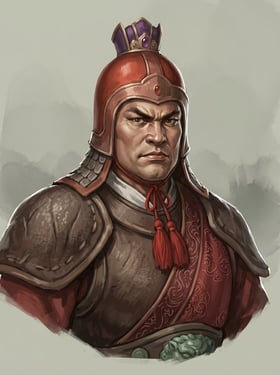
On his head a purple-gold coronet set with gems, his body clad in a red brocade robe hung with tassels and beads, a jade-worked lion belt about his waist, hawk-beak green-trimmed boots on his feet, riding a curly-maned Red Hare horse; wearing rhinoceros-hide armor, a vermilion helmet on his head, a shield gripped in his left hand and a blade held in his right, riding a red-haired ox.

Life
In the novel: 7 chapters · In the Records: 1 volume
Life?–?
223 CE (Huangchu 4)
- Five-Route Invasion of ShuChengduWarrior
- Nanzhong RebellionNanzhongCommander
225 CE (Huangchu 6)
- Life event
List all 3 stops
- NanzhongBirthplace
- Chengdu223Five-Route Invasion of Shu
- Nanzhong223–225Nanzhong Rebellion+1 more
On the boards
Compare with someone →Where this person ranks on each board.
Who they were
Character profile
- Appearance
- On his head a purple-gold coronet set with gems, his body clad in a red brocade robe hung with tassels and beads, a jade-worked lion belt about his waist, hawk-beak green-trimmed boots on his feet, riding a curly-maned Red Hare horse; wearing rhinoceros-hide armor, a vermilion helmet on his head, a shield gripped in his left hand and a blade held in his right, riding a red-haired ox.
- Character
- Conceited and contemptuous of the enemy, he refused to submit when captured and demanded another battle; stubborn and unyielding, presuming upon his knowledge of strategy, he remained unresigned even when taken prisoner; defeated again and again, he still argued his case and kept borrowing troops; in the end he stripped to the waist to beg forgiveness and swore never to rebel again.
- Life
- He urged Kongming to follow the old custom and offer forty-nine human heads to the ferocious spirit of the Lu River; Kongming refused. He then went to Chengdu, and, weeping, bowed his farewell and returned to the south, obeying Kongming's charge to "govern diligently and rule his subordinates well."
- Anecdotes
- In this chapter he is captured for the second and third time; by the chapter's end the "seven captures and seven releases" are completed; he was the one to whom the Yi and Han peoples of Nanzhong submitted; the King of the Southern Man, one of the five routes, who raised troops to invade the four commanderies of Yi Province.
Historical Record
The Chunqiu of Han and Jin, quoted in Pei Songzhi’s annotations to the Records of the Three Kingdoms, records that in the spring of the third year of Jianxing under Shu Han, Zhuge Liang led an army on a southern campaign and pacified Nanzhong in the autumn. Meng Huo was a man “respected by the Yi and Han.” Zhuge Liang recruited men to capture him alive, then had him inspect the Shu army’s camps and formations and asked what he thought of their military appearance. Meng Huo replied that he had been defeated before because he did not know the army’s true strength; now that he had seen its formations, if that was all there was to them, they would still be easy to defeat. Zhuge Liang therefore released him to fight again, capturing and releasing him repeatedly. Meng Huo eventually declared that Zhuge Liang’s might was enough to ensure the people of the south would no longer rebel. Zhuge Liang then reached Dian Lake and appointed local chieftains to govern Nanzhong, leaving no outside troops behind. He explained that this would avoid problems such as keeping troops there without enough provisions, deepening local wounds, and mistrust between the Yi and Han. After Nanzhong was pacified, military supplies were provided to Shu Han, and the state grew prosperous. The sources do not give a detailed account of Meng Huo’s official position, ethnic affiliation, or the specific course of the campaigns; the account of capturing and releasing him seven times, among other details, appears in the Chunqiu of Han and Jin quoted in Pei’s annotations, not as an independent, detailed account in the main text of the Records of the Three Kingdoms.
In the Novel
The Romance of the Three Kingdoms portrays Meng Huo as a leader of the southern tribes and a repeatedly defeated but unyielding opponent. The story begins with him joining forces with Yong Kai and others to rebel and harass the four southern commanderies of Shu Han. The novel has him dispatch the three cave marshals Jinhuansanjie, Dongtuna, and A Huinan to engage the enemy on separate routes, while he personally leads troops into battle. Seeing the Shu army’s formation, he underestimates his opponents; while pursuing them, he is surrounded by ambushers and is eventually captured by Wei Yan at Jindai Mountain.
After being captured, Meng Huo insists that he lost only because of the terrain and refuses to admit defeat. Zhuge Liang releases him to fight again. Meng Huo is captured and released repeatedly. The story also relates how he uses the Lu River as a defensive line, declaring that the Shu army cannot cross it, only to be cornered when the Shu troops cross by night and cut off his supply route. He also sends his younger brother Meng You to feign a surrender and offer tribute, hoping to coordinate an attack from within. Zhuge Liang sees through the ploy, and ambushers on three routes, along with Ma Dai’s forces, capture Meng Huo once more. Meng Huo continues to blame others or fate for his defeats and repeatedly asks to fight again. Through these repeated contests, the novel emphasizes his stubbornness, pride, and refusal to submit, contrasting them with Zhuge Liang’s benevolence and strategic skill in repeatedly releasing him in the hope of winning his allegiance.
The novel goes on to depict Meng Huo commanding a large force of tribal troops and, when going into battle, wearing rhinoceros-hide armor and riding a red-haired ox. Even after defeat, he continues to seek opportunities to fight again. Details such as his attire and battle formations, his feigned surrender with Meng You, and the full sequence of his repeated captures are all inventions of the novel. The Records of the Three Kingdoms only records that Zhuge Liang repeatedly captured and released Meng Huo, who ultimately declared that he would no longer rebel; it does not record these episodes from the novel.
Key Relationships
- Zhuge Liang: Historical sources say Zhuge Liang recruited men to capture Meng Huo and repeatedly released him to fight again, until Meng Huo finally acknowledged his might. The novel portrays the two as opponents locked in an ongoing struggle, with Zhuge Liang’s repeated acts of clemency eventually winning Meng Huo’s submission.
- Yong Kai: The novel says Meng Huo joined forces with Yong Kai, a local notable of Yi Province, to rebel; this was one of the reasons for Shu Han’s southern campaign. This specific alliance is not recorded in the provided Records of the Three Kingdoms. (Novel only)
- Meng You: The novel identifies Meng You as Meng Huo’s younger brother and says he once acted on his brother’s orders, pretending to offer treasure and surrender to Shu, as part of a ruse. Both this kinship and the scheme are fictional episodes. (Novel only)
- Dongtuna and A Huinan: In the novel, the two are cave chieftains under Meng Huo. They first go into battle at his command, but later, dissatisfied with the fighting and Meng Huo’s treatment of them, turn to Zhuge Liang’s side. This relationship and change of allegiance are novel inventions. (Novel only)
Signature Scenes
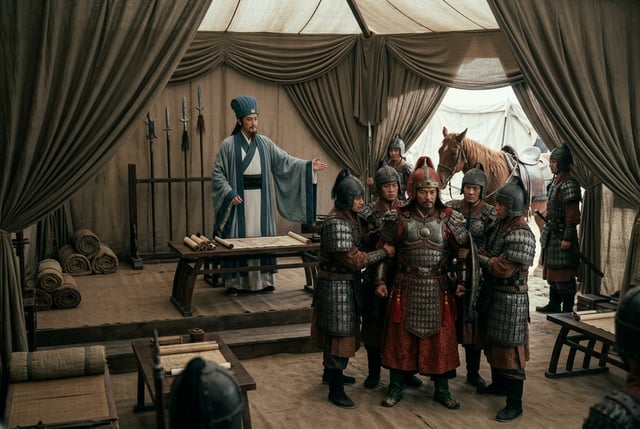
- Inspecting the camp, then fighting again: The best-known episode about Meng Huo in the historical account is that, after being captured, he inspected the Shu army’s camps and formations and still claimed he could easily defeat them. Zhuge Liang did not kill him, but instead let him fight again. After repeated captures and releases, Meng Huo said, “The people of the south will not rebel again.” This outcome is linked to Zhuge Liang’s subsequent policy of appointing local chieftains and withdrawing the troops stationed there.
- Captured at Jindai Mountain: The novel says Meng Huo pursues the forces of Wang Ping and Guan Suo, only to have Zhang Ni and Zhang Yi cut off his retreat. He then encounters Zhao Yun’s charge and finally flees into a mountain ravine, where Wei Yan’s ambushers capture him alive. The layered ambushes show Meng Huo’s underestimation of his enemy and launch the novel’s cycle of repeated captures and releases. (Novel only)
- Refusing to submit, then freed again: When first brought before Zhuge Liang in captivity, Meng Huo argues that he was merely caught by surprise. Zhuge Liang then unties him, provides him with food, wine, and a horse with saddle, and lets him return. Later, Meng Huo repeatedly asks to be released, saying he will submit only after another battle. The novel uses this to highlight his obstinacy and Zhuge Liang’s priority of winning hearts and minds. (Novel only)
- Night raid across the Lu River and recapture: The novel says Meng Huo relies on the terrain to defend himself, but loses the upper hand when the Shu army crosses the Lu River by night and cuts off his supply route. He orders Meng You to feign surrender; after the Shu army sees through the ruse, it lays an ambush and captures Meng Huo again. This sequence intertwines his schemes and pride with Zhuge Liang’s foresight. (Novel only)
Quotes
49 lines in the books · 3 featured
「汝第七次擒住,吾方傾心歸服,誓不反矣。」
The heart of the 'captured and released seven times' allusion, showing Meng Huo's unwillingness to admit defeat.
「七擒七縱,自古未嘗有也。吾雖化外之人,頗知禮義,直如此無羞恥乎?」
Meng Huo's appraisal of Zhuge Liang's 'captured and released seven times,' reflecting his understanding of propriety and righteousness.
「丞相天威,南人不復反矣!」
Meng Huo's iconic line of final submission, the conclusion of the 'captured and released seven times.'
- Family
- Lord & vassal
- Friends
- Enemies
- Other
Who is Meng Huo connected to?
Pick someone to see how many steps lie between them and Meng Huo.
History vs. novel
8 points · 3 novel-only
| History | Novel |
|---|---|
| Seven Captures and ReleasesNovel embellishes | |
Pei Songzhi’s annotation cites the Spring and Autumn Annals of Han and Jin, which records that after capturing Meng Huo, Zhuge Liang showed him the army’s formations, then released him to fight again, capturing and releasing him seven times. Meng Huo finally declared that the southerners would not rebel again. vol. 35 | The novel expands the seven captures and releases into a series of encounters: Meng Huo is captured repeatedly but keeps finding excuses to refuse submission, until he finally bares his upper body and begs forgiveness on the seventh occasion, promising that the southerners will not rebel again. ch. 90 |
| Background to the Southern CampaignNovel embellishes | |
The Records of the Three Kingdoms records that Zhuge Liang led an army south in the spring of the third year, and that Nanzhong was pacified that autumn. An annotation citing the Spring and Autumn Annals of Han and Jin adds that Meng Huo was respected by both the Yi and Han peoples, and that Zhuge Liang recruited men to capture him alive. vol. 35 | The novel portrays the Southern Campaign as having been sparked by Meng Huo and Yong Kai and others taking up arms. Meng Huo raised a great force of 100,000 tribal troops to raid the four commanderies and attack Yongchang, whereupon Zhuge Liang personally led an army to suppress them. ch. 87 |
| Meng Huo CapturedNovel embellishes | |
The historical annotation records that after Meng Huo was captured alive, Zhuge Liang showed him the army camp’s formations. Meng Huo said that if this was all there was to it, victory would still be easy; Zhuge Liang then released him to fight again. vol. 35 | The novel says that Wei Yan captured Meng Huo alive in a mountain valley. Zhuge Liang released the tribal soldiers and entertained Meng Huo, who refused to submit, claiming that he had been captured by mistake because the mountain path was narrow, and demanded to be allowed to return and fight again. ch. 87 |
| Treatment After SubmissionNovel embellishes | |
After Nanzhong was pacified, Zhuge Liang appointed local leaders to govern, taking into account the difficulties of leaving officials from outside the region and garrison troops there, including the burden on food supplies and the challenge of winning trust. vol. 35 | After Meng Huo submitted, the novel says Zhuge Liang let him remain chief of his cave community and returned all the land that had been seized. Meng Huo and the various tribes departed rejoicing. ch. 90 |
| Another Battle at Yinkeng MountainNovel only | |
| — | After being captured, Meng Huo said that if he were captured in the mountains of Yinkeng, where his ancestors had lived, he would serve wholeheartedly for generations to come. Zhuge Liang agreed to let him return and fight again. ch. 89 |
| Ambush at the Poison SpringsNovel only | |
| — | In the novel, Meng Huo seeks refuge with King Duosi, using the poisonous springs and treacherous paths to impede the Shu army. He believes the four springs are enough to avenge the defeat of his troops. ch. 89 |
| Lady ZhurongNovel only | |
| — | The novel says Meng Huo’s wife, Lady Zhurong, is skilled with flying knives and captures Zhang Ni and Ma Zhong in battle. Meng Huo stops her from killing the captives, saying that Zhuge Liang once spared him. ch. 90 |
| Meng Huo Begs ForgivenessNovel embellishes | |
The historical annotation records that even after capturing and releasing Meng Huo seven times, Zhuge Liang still sent him away. Meng Huo did not leave, saying that given Zhuge Liang’s might, the southerners would not rebel again. vol. 35 | The novel portrays the final submission as Meng Huo, his wife, brothers, and clan members all kneeling to beg forgiveness. Meng Huo promises that his descendants will remember Zhuge Liang’s kindness and that the southerners will not rebel again. ch. 90 |
- Seven Captures and ReleasesNovel embellishes
- History
Pei Songzhi’s annotation cites the Spring and Autumn Annals of Han and Jin, which records that after capturing Meng Huo, Zhuge Liang showed him the army’s formations, then released him to fight again, capturing and releasing him seven times. Meng Huo finally declared that the southerners would not rebel again.
vol. 35
- Novel
The novel expands the seven captures and releases into a series of encounters: Meng Huo is captured repeatedly but keeps finding excuses to refuse submission, until he finally bares his upper body and begs forgiveness on the seventh occasion, promising that the southerners will not rebel again.
ch. 90
- Background to the Southern CampaignNovel embellishes
- History
The Records of the Three Kingdoms records that Zhuge Liang led an army south in the spring of the third year, and that Nanzhong was pacified that autumn. An annotation citing the Spring and Autumn Annals of Han and Jin adds that Meng Huo was respected by both the Yi and Han peoples, and that Zhuge Liang recruited men to capture him alive.
vol. 35
- Novel
The novel portrays the Southern Campaign as having been sparked by Meng Huo and Yong Kai and others taking up arms. Meng Huo raised a great force of 100,000 tribal troops to raid the four commanderies and attack Yongchang, whereupon Zhuge Liang personally led an army to suppress them.
ch. 87
- Meng Huo CapturedNovel embellishes
- History
The historical annotation records that after Meng Huo was captured alive, Zhuge Liang showed him the army camp’s formations. Meng Huo said that if this was all there was to it, victory would still be easy; Zhuge Liang then released him to fight again.
vol. 35
- Novel
The novel says that Wei Yan captured Meng Huo alive in a mountain valley. Zhuge Liang released the tribal soldiers and entertained Meng Huo, who refused to submit, claiming that he had been captured by mistake because the mountain path was narrow, and demanded to be allowed to return and fight again.
ch. 87
- Treatment After SubmissionNovel embellishes
- History
After Nanzhong was pacified, Zhuge Liang appointed local leaders to govern, taking into account the difficulties of leaving officials from outside the region and garrison troops there, including the burden on food supplies and the challenge of winning trust.
vol. 35
- Novel
After Meng Huo submitted, the novel says Zhuge Liang let him remain chief of his cave community and returned all the land that had been seized. Meng Huo and the various tribes departed rejoicing.
ch. 90
- Another Battle at Yinkeng MountainNovel only
- Novel
After being captured, Meng Huo said that if he were captured in the mountains of Yinkeng, where his ancestors had lived, he would serve wholeheartedly for generations to come. Zhuge Liang agreed to let him return and fight again.
ch. 89
- Ambush at the Poison SpringsNovel only
- Novel
In the novel, Meng Huo seeks refuge with King Duosi, using the poisonous springs and treacherous paths to impede the Shu army. He believes the four springs are enough to avenge the defeat of his troops.
ch. 89
- Lady ZhurongNovel only
- Novel
The novel says Meng Huo’s wife, Lady Zhurong, is skilled with flying knives and captures Zhang Ni and Ma Zhong in battle. Meng Huo stops her from killing the captives, saying that Zhuge Liang once spared him.
ch. 90
- Meng Huo Begs ForgivenessNovel embellishes
- History
The historical annotation records that even after capturing and releasing Meng Huo seven times, Zhuge Liang still sent him away. Meng Huo did not leave, saying that given Zhuge Liang’s might, the southerners would not rebel again.
vol. 35
- Novel
The novel portrays the final submission as Meng Huo, his wife, brothers, and clan members all kneeling to beg forgiveness. Meng Huo promises that his descendants will remember Zhuge Liang’s kindness and that the southerners will not rebel again.
ch. 90
Combat
On the field
Duels, kills and executions as the texts tell them, counted separately for the Records and the Romance.
Battles in command
Battles this person commanded in, with the outcome as each text tells it.
- Romance
- 0W 2L 0D 0 undecided
- Romance223Five-Route Invasion of ShuLostvs Shu armyCh. 86「曹真屯兵於斜谷道,不能取勝而回」
- Romance223Zhuge Liang Repels the Five ArmiesLostvs Shu armyCh. 86「見了馬超,不戰自退;南蠻孟獲起兵攻四郡,皆被魏延用疑兵計殺退回洞去了」
Stratagems
Plans this person devised or saw through, as the texts tell them.
- Romance
- 3 carried out · 1 worked · 0 turned down · 0 seen through
- RomanceUse a Ruse to Lure and KillDeceptionWorkedagainst Dongtuna and A Huinan's strongholdsCh. 88「只推孔明有使命至,將二人賺到大寨帳下,盡皆殺之」
- RomanceFeign SurrenderFalse surrenderSeen throughagainst Shu campCh. 88「汝先令汝弟以禮詐降,如何瞞得過吾」
- RomanceFeign SurrenderFalse surrenderSeen throughagainst Shu troopsCh. 90「汝只道吾深信,故來詐降,欲就洞中殺吾」
Events
Events (3)
Battles and events the texts place this person in, by date.
Battles
- 223Five-Route Invasion of ShuWarrior
Other events
- 223Nanzhong RebellionCommander
- 225Seven Captures of Meng HuoWarrior
Places
- Native of
- NanzhongRecords
Continue
Seven Captures of Meng Huo
Relationship timeline5 entries ▸
Novel · ch. 88
- Dongtuna§9
Betrayer
Led more than a hundred men to capture Meng Huo and present him to Kongming
Novel · ch. 89
- Yang Feng§33
Betrayer
captured Meng Huo and Meng You at the banquet and escorted them to Kongming
Novel · ch. 90
Betrayer
captured Meng Huo and Lady Zhurong with members of his clan and presented them to Kongming (in fact, this was part of Meng Huo's feigned-surrender plan)
- Zhuge Liang§20
Lord
after being captured seven times, bared his upper body to apologize and swore never to rebel again; Kongming ordered him to remain chief of the cave people forever and returned all the land he had seized
Novel · ch. 91
Lord
led the chiefs and headmen of the various tribal communities in bowing in rows to see him off; wept as they bowed farewell
Inner monologues · AI-generated3 monologues ▸
- I am Meng Huo; this account does not give my courtesy name. Now that I have been defeated in battle, this is the seventh
- I stood in the camp, still seeming to hear the clash of weapons in my ears, while before me stretched row upon row of pa
- I am Meng Huo. I was born in Nanzhong, and my family has lived there for generations. I have often reflected that this l