Records
No victor stated
- Commanders
- Shu armyZhuge Liang
- Wei's armyZhang He
Vol. 35「糧盡退軍,與魏將張郃交戰,射殺郃。」
231 CE (Taihe 5) · Mount Qi
In the spring of 231, the ninth year of Jianxing, Zhuge Liang led the Shu army on Zhuge Liang's Fourth Northern Expedition, advancing to the Mount Qi area. The Wei army was commanded by Sima Yi, with Zhang He, Guo Huai, and others taking part in the defense. The two sides clashed in Longyou. The Shu army won an early victory but later withdrew because of difficulties transporting supplies; Zhang He was killed after pursuing them into an ambush. The campaign did not alter the stalemate between Wei and Shu. It showed that although the Shu army could maintain pressure, it still could not achieve a decisive breakthrough in the Guanzhong-Longyou region.
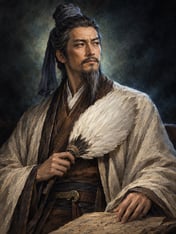 Zhuge LiangLivedCommanderTalk to me
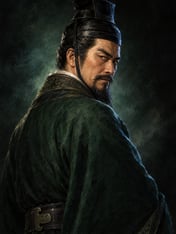 Sima YiCommanderTalk to me
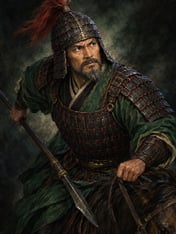 Zhang HeKilled in actionTalk to me
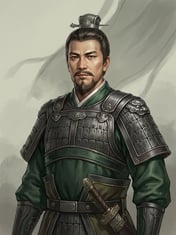 Guo HuaiWarriorTalk to me
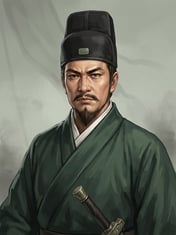 Sun LiWarriorTalk to me
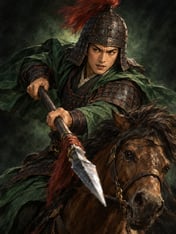 Jiang WeiWarriorTalk to me
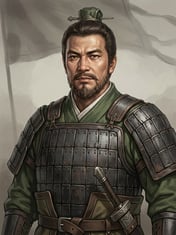 Wang PingWarriorTalk to me
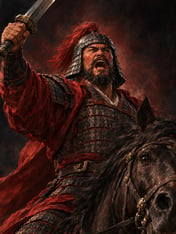 Wei YanWarriorTalk to me
Who won, as each book tells it; commanders as the text names them.
Records
No victor stated
Vol. 35「糧盡退軍,與魏將張郃交戰,射殺郃。」
Romance
Shu troops won
Ch. 101「將張郃並百餘個部將皆射死於木門道中」
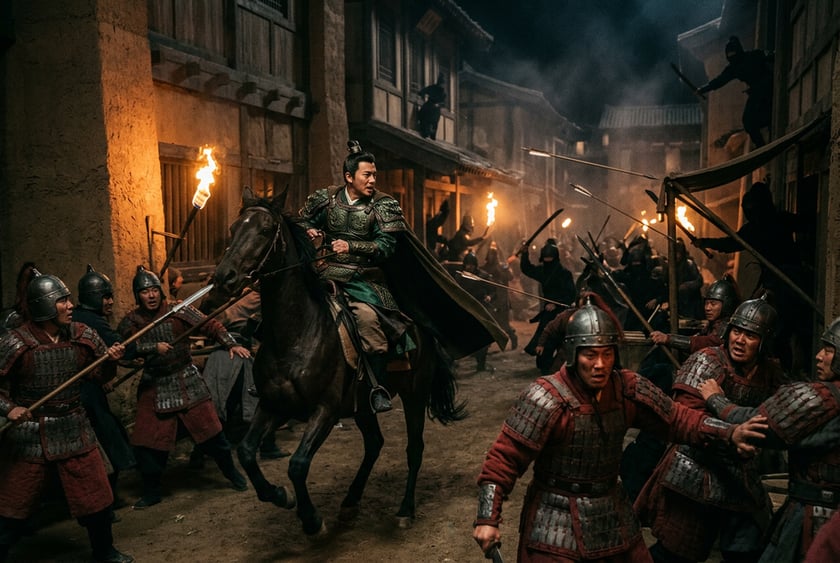
Scene
Under cover of night at Lucheng, Wei soldiers inside the city are attacked by ambushers from every direction and fall into confusion, while Sima Yi rides hard to break out of the encirclement.
Featured people: Sima Yi
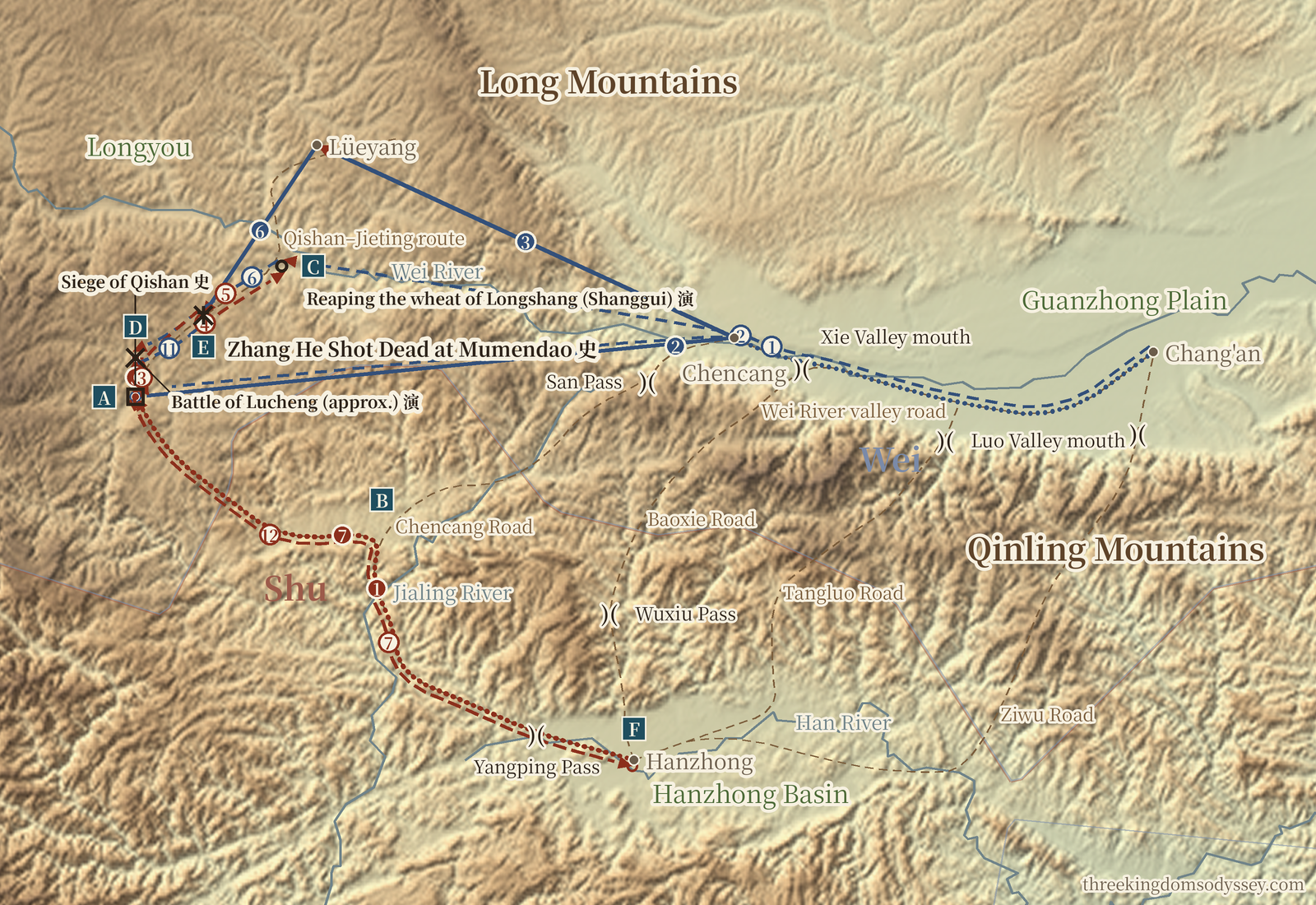
Swipe to see the whole map
The Sanguozhi main text records the march to Qishan, grain by wooden ox, Sima Yi and Zhang He relieving Qishan, Shu coming out at Lucheng, Li Ping's recall and the withdrawal, and Zhang He shot dead; the wheat reaping and the fighting at Lucheng come from material in Pei Songzhi's notes (see notes C and D). The novel adds the four-wheeled-carriage decoy and a night battle at Lucheng, turns the recall into Li Yan's false report of a Wu attack, and puts Zhang He's death on a 'Mumen Road at Jiange', which does not match the historical Mumen.
The books mostly say only where an army set out and arrived: a Records line is solid between the places they name and dotted where it follows a reconstructed road between them; an open ring marks an end the books don't give.
Base map: Natural Earth; terrain: AWS Terrain Tiles (SRTM and others). Roads and marches reconstructed from the sources listed; positions approximate.
Continue
Replay the Zhuge Liang's Northern Expeditions phase by phase on real terrain: troop strengths, movements and turning points at a glance, each marked as coming from the Records of the Three Kingdoms or the Romance.
2347 people in common
2286 people in common
2295 people in common
2285 people in common
2345 people in common
2344 people in common
2284 people in common
2283 people in common
The central challenge of Zhuge Liang's Fourth Northern Expedition was not simply how to break through the Wei army’s defenses, but whether the Shu army could sustain its supplies on a battlefield far from home, force the Wei army to divide its forces, and turn local gains into a lasting advantage. Romance of the Three Kingdoms places Zhuge Liang’s renewed advance on Mount Qi in the spring of the ninth year of Jianxing after the death of the Wei general Cao Zhen and Sima Yi’s appointment to command the army. The Wei side anticipated that the Shu army would hurry to harvest the wheat in Longxi, and thus kept watch on both the Mount Qi defenses and the various commanderies of Tianshui. This judgment reveals the campaign’s underlying logic of resources: the harvest season was both an opportunity for Shu to replenish its supplies and a window of time that Wei had to contest.
The geographic constraints of the northern expeditions magnified the logistical difficulties. The Shu army had to enter the right bank of the Long River by mountain and valley roads, while the Wei army could respond by relying on passes, fortified strongholds, and interior lines of communication to move troops. In the novel’s subsequent account, the Shu army threshes and dries wheat at Lucheng, while Zhuge Liang anticipates a night raid by the Wei army. This shows that obtaining food and defending the camp were inseparable: every advance on the battlefield could bring both greater supplies and a greater risk of having the retreat route cut off.
The Wei army adopted a layered deployment. Sima Yi rejected Zhang He’s proposal to divide the forces and proactively guard Yong and Mei. Instead, he decided to move the main force toward Mount Qi, leave troops to defend Shanggui, appoint Zhang He as the vanguard, and send Guo Huai to patrol the various commanderies of Longxi. This arrangement sought a balance between concentrating forces and protecting the flanks: Zhang He was responsible for engaging the enemy at the front, Guo Huai for regional vigilance, and Sima Yi retained room to maneuver the main force.
The Shu army, by contrast, acted with multiple forces coordinating their movements. The text records Wang Ping and Zhang Ni in the vanguard, with Zhuge Liang leading the army into the theater. At Lucheng, Jiang Wei, Wei Yan, Ma Dai, and Ma Zhong each lay in ambush at one of the four corners of the wheat fields, ready to strike together when the Wei army attacked the city. The plan was not simply to hold the city: its defenses would pin down the attackers, while concealed forces struck at their flanks and rear, turning the terrain and the enemy’s nighttime movements to tactical advantage.
The first key decision was whether the Wei army should attack. Sima Yi chose to assault Lucheng at night, intending to take advantage of the city’s low walls and shallow moats, and the possibility that the Shu army was unprepared. But Zhuge Liang had already positioned troops in ambush in the wheat fields. After encountering crossbow bolts from the city walls, the Wei army was attacked from all sides and forced to retreat in defeat. Tactically, the Shu army successfully turned its prediction into coordinated forces and firepower from multiple directions. At the level of command, the Wei army’s night raid revealed shortcomings in intelligence assessment and reconnaissance before battle.
Another key question was whether victory could be converted into lasting campaign gains. The text says that after the Wei army’s defeat, the Shu army entered the city and established camp defenses; it then recounts the Shu army pursuing troops from Yong and Liang and winning further successes. In the meantime, however, Zhuge Liang received an urgent letter from Li Yan at Yongan, and the narrative immediately shifts its focus. This external pressure thus became a variable in the front-line campaign: even with a favorable battlefield situation, affairs in the rear could change the commander’s available time, forces, and tolerance for risk.
In the passage provided, Zhang He is appointed vanguard by Sima Yi and ordered to lead troops in a night raid on the Shu army’s rear. This indicates that Wei still regarded him as an important mobile commander. However, the cited passage does not recount the circumstances of his death on Mumen Road, so it cannot be used to reconstruct the tactical details of that event, nor should his fate be directly joined to the fighting at Lucheng as though they were part of the same battle.
On the evidence provided, the tactical outcome is relatively clear: in the battle at Lucheng, the Wei army was ambushed, and Sima Yi and Guo Huai each led their defeated troops away; the Shu army took control of the city and established camp defenses. But a tactical victory did not mean that the northern expedition had achieved its strategic objectives. The cited passages do not fully explain how Zhuge Liang later withdrew, whether the final boundary between Wei and Shu changed, or provide enough material to assess casualties, food reserves, or the long-term impact on Wei’s deployments. Therefore, given the question’s framing, it is more prudent to judge the campaign’s overall outcome as “unclear” than to infer the result of the entire campaign from the outcome of a single battle.
The narrative also points to two distinct legacies of the campaign. First, Zhuge Liang was skilled at gaining the local initiative through intelligence assessment, ambushes, and coordinated operations. Second, even in victory, the Shu army still faced the pressures of long-distance supply and coordination with the rear. As for the Wooden Ox and Flowing Horse and “Zhang He Shot Dead at Mumendao,” although the question lists them as sub-events, the cited passages provide no account of the Wooden Ox and Flowing Horse in use and do not directly depict Zhang He Shot Dead at Mumendao. These gaps in the material can only be noted; they cannot be filled in as facts established by these passages.
If the Wei army had strengthened its reconnaissance before the battle at Lucheng, or chosen a more cautious siege or containment strategy instead of a hurried night raid, the Shu ambush might have had less opportunity to succeed. But Wei might also have missed the chance to apply pressure while the Shu army was gathering grain. Conversely, if the Shu army had pursued further after its victory, the potential benefit would have been to worsen the Wei army’s retreat and supply difficulties; the risk would have been that its troops left the city’s defenses and ventured into unfamiliar terrain, increasing the possibility of a counterattack or running out of food. Neither course can be assessed apart from the conditions of food supply and the roads.
A more strategically significant counterfactual is whether the urgent situation in the rear changed the amount of time Zhuge Liang had available to act. If the rear had been stable and supplies could have continued, the Shu army might have made fuller use of its victory at Lucheng. If problems in the rear forced it to redeploy troops or halt its operations, its advantage at the front was more likely to remain short-lived. The cited passages record only the arrival of the urgent letter and do not detail the decisions that followed, so this can only be considered as a conditional scenario, not an assertion about what actually happened. Since the material shows a tactical victory but does not fully depict how the campaign concluded, the overall outcome of Zhuge Liang's Fourth Northern Expedition should remain open to judgment.