
Background
The execution of Sun Quan’s envoys by Gongsun Yuan took place against a backdrop in which the Gongsun clan controlled the Northeast while Eastern Wu sought to extend its diplomatic influence into Liaodong. According to the year given in the prompt, the incident occurred in 233, the first year of the Wei reign era Qinglong. The key action recorded in juan 8 of the Records of the Three Kingdoms is that Sun Quan sent Zhang Mi, Xu Yan, and others to Liaodong bearing gold, jade, and other treasures, intending to invest Gongsun Yuan as King of Yan. This was not a simple gift: the investiture meant Sun Quan was seeking to establish a political relationship through titles and gifts, while the Liaodong side had to weigh the benefits and risks of accepting such an arrangement.
This account particularly shows that relations between Wu and Liaodong were not merely an abstract “alliance” between two regimes. The mission carried treasures, and the investiture concerned Gongsun Yuan’s political status. Sun Quan hoped to exchange recognition and material resources for a response, while Gongsun Yuan is recorded as fearing that Sun Quan, being far away in Jiangdong, could not be relied upon, and as coveting the goods; he therefore lured the envoys to him and killed them. What emerges here is an opportunistic diplomacy shaped by an imbalance of power: a distant great power proposes cooperation, while a local force assesses its ability to deliver, the immediate rewards, and the cost of being constrained.
It is important to distinguish the account’s statements of fact from the historian’s explanation of motives. This passage in the Records of the Three Kingdoms explicitly records that Sun Quan sent envoys, intended to make Gongsun Yuan King of Yan, and that Zhang Mi, Xu Yan, and the others were lured and killed, with their heads sent away. The phrase “fearing that Quan, so far away, could not be relied upon, and coveting the goods” is a summary of Gongsun Yuan’s calculations. It offers a line of analysis, but does not give us direct access to the participants’ inner thoughts, nor is it sufficient on its own to reconstruct the entire course of negotiations between the two sides.
Major Figures
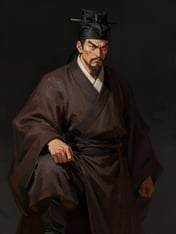
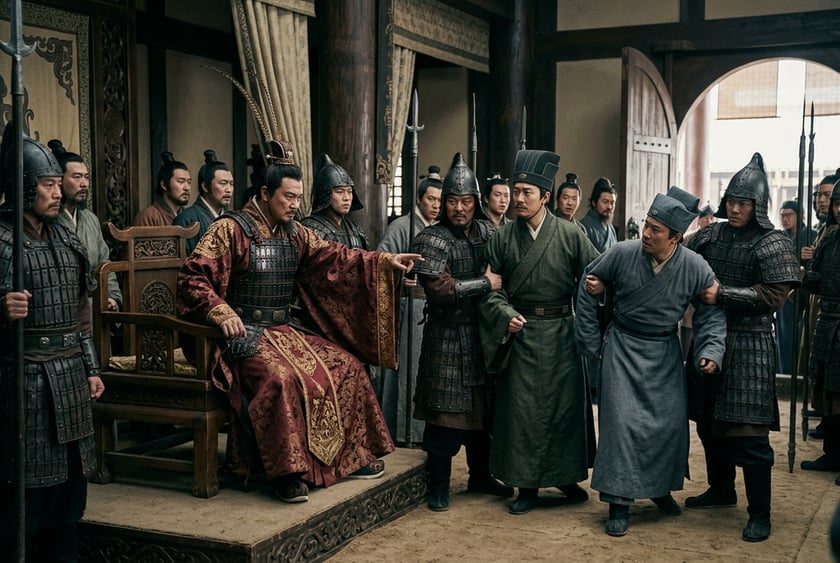
Gongsun Yuan was the decision-making center of this diplomatic crisis. As the account presents him, he neither simply accepted Sun Quan’s investiture nor chose to reject it openly. Instead, he first brought the Wu mission within his control and then killed its members. This approach separated “taking the gifts” from “recognizing the relationship”: he could gain immediate material benefits without becoming Sun Quan’s political partner in the manner Sun Quan expected. This made the short-term gains clear, but also transformed a diplomatic encounter that might have allowed further bargaining into a violent rupture that could not easily be undone.
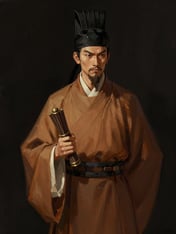
Sun Quan, by contrast, initiated the action. He sent Zhang Mi, Xu Yan, and others to Liaodong with treasures and prepared to confer on Gongsun Yuan the title “King of Yan,” indicating that Eastern Wu was trying to build ties across regions through envoys, wealth, and status. However, the source does not set out Sun Quan’s full strategic plans for Liaodong, nor does it say whether he anticipated that the mission might face danger. The more cautious conclusion, therefore, is that the mission reflects Wu’s proactive efforts to cultivate relations, but this passage alone cannot establish that its ultimate aim was necessarily a military alliance or a joint campaign against Wei.
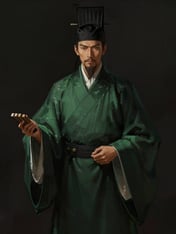
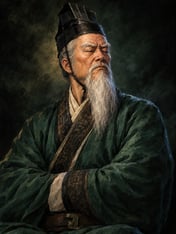
Zhang Mi and Xu Yan were the envoys who were sent, and the direct victims of the violent decision. As members of the mission, they were tasked with conveying Sun Quan’s gifts and intentions regarding the investiture to Liaodong. After Gongsun Yuan “lured them to him,” they lost the protection normally afforded by their diplomatic status. The Records of the Three Kingdoms also records that their heads were sent away, but the excerpt cited does not explain what happened to the other members of the mission or how news reached Eastern Wu. Zhang Zhao is listed among the participants as an adviser, but this passage does not describe his views on the mission or his actual role; it does not justify adding details about any attempts he made to dissuade Sun Quan.
Core Issues
The first issue is whether rank and title could be turned into a reliable political relationship. Sun Quan intended to make Gongsun Yuan King of Yan, seeking to confer status through investiture. Yet the value of a title depended on whether Gongsun Yuan believed the one granting it could support him over the long term. The phrase “Quan, so far away, could not be relied upon” in the source highlights the problem of credibility created by distance: Sun Quan could send envoys and treasures, but might not be able to provide timely protection if a crisis arose in Liaodong. For Gongsun Yuan, nominal honor might be useful, but it might also mark the beginning of a dependent relationship.
The second issue is the tension between gifts and political commitments. Treasures could serve as a means of goodwill and relationship-building, but they could also be viewed as resources to seize on their own. By linking Gongsun Yuan’s “coveting the goods” with the killing of the envoys, the account suggests that he detached Wu’s gifts from the political exchange: he took the wealth while destroying the relationship represented by the envoys. This strategy did not mean there was no diplomatic calculation at all; rather, it reflects a decision to use violence to maximize short-term gain. But it sacrificed room for further bargaining and gave the other side reason to regard the incident as a grave act of hostility.
The third issue is the safety of diplomatic envoys and the credibility of a regime. Envoys served as channels for conveying intentions and gauging positions; if they were lured and killed, any side sending representatives in the future would face greater risks. For Gongsun Yuan, eliminating the envoys may have reduced Wu’s influence in Liaodong, but it also warned other potential interlocutors that he might not observe ordinary diplomatic expectations. For Sun Quan, the mission’s deaths meant that the plan to exchange gifts for a relationship had been fundamentally rejected. The incident cannot be viewed simply as a seizure of property; it also concerned whether a ruler could be trusted.
Political Consequences
The immediate consequence that can be established is that the envoys sent by Sun Quan were killed, and Gongsun Yuan sent away the heads of Zhang Mi, Xu Yan, and the others. This turned an encounter originally mediated by investiture and gifts into a political incident marked by public humiliation and intense hostility. For Wu, the loss involved not only personnel and property but also the setback of an attempt to establish relations with Liaodong. For Gongsun Yuan, the action showed that he was unwilling to accept a political relationship on the terms offered by Sun Quan; at least in this negotiation, he placed his short-term interests above the protection of envoys.
However, “the outcome of the incident is unclear” must remain a limit on the analysis. The excerpt available does not say what measures Sun Quan took afterward, nor how relations between Gongsun Yuan and Sun Quan developed thereafter. It cannot establish whether Wu retaliated, whether the two sides resumed contact, or how much practical effect the incident had on the conflict in Liaodong. The envoys’ deaths therefore cannot automatically be presented as the outbreak of war, the complete collapse of an alliance, or a strategic victory for either side. The source supports the conclusion that a serious act of diplomatic violence took place and indicates its immediate significance, but it does not provide a complete chain of subsequent consequences.
From the perspective of modern political history, the incident is significant because it reveals how local rulers could exploit competition among great powers to expand their own room for maneuver. Faced with Sun Quan’s overture from afar, Gongsun Yuan did not passively accept the investiture: he had the power to control the mission, seize its goods, and bear the risk of damaging relations. At the same time, this autonomy did not amount to a stable strategic advantage. Being able to reject a distant regime did not mean he could eliminate surrounding threats or secure new and dependable guarantees. The source’s phrase “could not be relied upon” as a summary of Gongsun Yuan’s misgivings also suggests that distant diplomatic promises easily fail when credible support is lacking.
Counterfactual Analysis
Had Gongsun Yuan chosen to receive the envoys and postpone his reply instead of luring and killing them, he might have preserved room for further negotiations. He could have asked Sun Quan to increase his aid, clarify the conditions of the investiture, or used the Wu mission to demonstrate to other powers that he had external connections. This path would not have guaranteed that Gongsun Yuan accepted Sun Quan’s offer, nor would it have meant that Liaodong and Eastern Wu were bound to form an alliance. It would simply have avoided immediately destroying the channel of communication, leaving status, wealth, and security guarantees open to separate discussion. The Records of the Three Kingdoms provides no details about what options were feasible at the time, so this can only serve as a limited strategic comparison.
If Sun Quan had given greater consideration before dispatching the mission to the envoys’ safety and to his ability to deliver on his promises, he might also have reduced the risk of staking the relationship on a single negotiation in distant Liaodong. For example, if the diplomatic arrangement had allowed the gifts, investiture, and subsequent support to be put in place gradually, it might have addressed Gongsun Yuan’s concern that Sun Quan, being “far away, could not be relied upon.” But this would not have guaranteed the envoys’ safety: Gongsun Yuan might still have rejected Wu’s overture in his own interests or even taken forceful action. The value of a counterfactual lies not in claiming that a particular arrangement would necessarily have succeeded, but in showing that the key challenge of long-distance diplomacy was not only making an offer, but also convincing the other party that it could be honored over time.
Taken together, Gongsun Yuan’s execution of Sun Quan’s envoys cannot be reduced to a simple story of “greed” or “betrayal of an alliance.” The motives given in the source combine distrust of support from afar with covetousness for the treasures; his actions carried this calculation into irreversible violence. We can use the account to analyze the tension between diplomatic credibility, local autonomy, and short-term gain, but should remain cautious about subsequent effects. Within the limits of the surviving material, what is certain is that the mission was killed and relations suffered a serious shock; what remains uncertain is how the policies of the two sides changed afterward and how much the incident ultimately altered the regional balance of power.