


Background
The Death of Cui Yan is set at the political turning point when Cao Cao was enfeoffed as King of Wei. The stipulated date is the twenty-first year of Jian’an (216). In Chapter 68 of Romance of the Three Kingdoms, after Cao Cao returned from Hefei, civil and military officials proposed making him King of Wei, while Cui Yan alone objected. This narrative links an individual’s life and death to the legitimacy of the regime: the focus is not merely the punishment of an official, but whether a subject could openly challenge the expansion of power.
The story’s account must be distinguished from verifiable historical conclusions. The cited passage comes from Romance of the Three Kingdoms and presents the novel’s dramatized telling of events; it cannot, on its own, confirm the actual circumstances of the case, the judicial procedure, or how Cui Yan died. The prompt’s label “outcome unknown” is also a reminder that, although the novel explicitly says Cui Yan was beaten to death in prison, this depiction should be treated as an account to be checked against other historical sources, not as an uncontested conclusion.
Main Figures
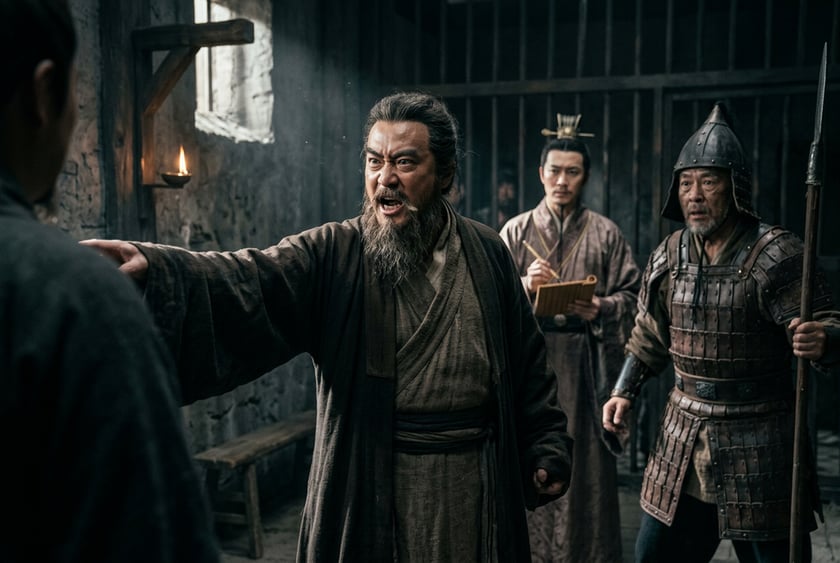
In this account, Cui Yan is the speaker who opposes the establishment of Wei and the direct victim of the ensuing punishment. His opposition is no vague private opinion: when the assembled officials invoke Xun Wenruo as a warning, he replies, “The time has come! The time has come!” and says, “Do as you will.” Through descriptions of his fierce eyes and curling beard, as well as his furious denunciations in prison, the novel portrays him as a man who speaks plainly and refuses to yield. This rhetoric also heightens the tragedy and should not be treated as an independently verifiable record of what happened.
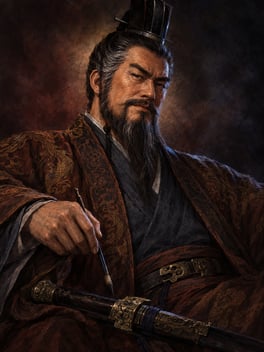
Cao Cao is the center of power in the episode. In the story, he is both the proposed recipient of the title King of Wei and the man who, after hearing Cui Yan’s remarks, orders his detention and ultimately commands that he be beaten to death. The novel thus concentrates the political issue and personal ruling authority in a single figure: the opponent faces not an abstract system, but a ruler able to advance the proposal, control judicial measures, and determine the punishment. As for Ding Yi, who is named in the prompt, he is not mentioned in the cited passage, nor does it explain whether he took part in the accusation, interrogation, or execution. His specific role therefore cannot be asserted on this basis.
Core Issues
The first issue is the political significance of the title King of Wei. By placing “the assembled officials all proposed making Cao Cao King of Wei” alongside Cui Yan’s objection, the novel makes the enfeoffment more than a ceremonial arrangement: it becomes a test of whether subjects accept a realignment of power. Cui Yan’s words do not develop an institutional argument in the cited passage; instead, his warning that “there will surely be upheaval” expresses his concern about the situation. This may be read as anxiety over a change in political legitimacy, or the ruling side may construe it as disobedience or a prediction of unrest. The text gives no details of a debate between the two sides, so the tension should not be reduced to a policy dispute supported by fully developed arguments.
The second issue is the limits of remonstrance. The assembled officials cite Xun Wenruo to dissuade Cui Yan, implying that precedent has made open opposition dangerous; Cui Yan, however, refuses to be silenced by what happened to someone else. The next line, “Someone who was at odds with Yan informed Cao Cao,” shows political expression reaching the ruler through personal relationships and denunciation. The novel does not identify the accuser, recount the exact words, or explain the motive for the accusation. This silence shifts the focus to a vulnerable environment for speaking out: whether an opinion is treated as loyal counsel seems to depend on how the ruler interprets it and is also shaped by relationships among officials.
The third issue is the boundary between justice and political punishment. The passage describes, in sequence, Cui Yan’s detention, a report from the Minister of Justice, and Cao Cao’s order that he be beaten to death. A judicial institution appears in the process, but the final decision is explicitly Cao Cao’s. The novel thus creates the impression that judicial procedure may be subsumed by political power. Yet it does not show the hearing, the grounds for the charge, or the substance of the Minister of Justice’s opinion, so it cannot be used to reconstruct actual legal procedure. A more cautious interpretation is that, in the novel’s political imagination, procedure offers no effective barrier to a ruler punishing a political opponent.
Political Consequences
At the level of the narrative, the Death of Cui Yan pushes the cost of opposing the establishment of Wei to its extreme: from open dissent to detention and then death in prison, the story shows how speech can quickly become a threat to personal safety. For court officials, such a story could have a chilling effect, making them more likely to submit, remain silent, or express their views through private channels when questions of political legitimacy arose. This, however, is an analysis of the political dynamics suggested by the novel’s plot and does not prove how officials in fact responded at the time.
The broader consequence is that the novel depicts the expansion of Cao Cao’s authority as a process combining legitimacy and coercion: the proposal to establish Wei receives support in the officials’ deliberations, while the opponent is punished, so the advance of power appears to involve both bureaucratic participation and the shadow of suppressed dissent. Cui Yan’s character serves as a moral counterpoint, leading readers to distinguish political success from political legitimacy. The cited text offers no evidence about whether the episode actually changed court decisions, officials’ appointments and promotions, or the process of Cao Cao’s enfeoffment as King of Wei; no definite judgment can therefore be made on those questions.
Counterfactual Analysis
If Cui Yan’s objection had been heard through a formal, reviewable process of deliberation, and the court had been required to respond to his reasons for opposing the establishment of Wei, the outcome might not have moved immediately to detention and execution. At the very least, the dispute might have shifted from a question of personal attitude to an open discussion of political legitimacy, institutions, and the limits of power. This speculation depends, however, on conditions the novel does not provide—for example, whether effective constraints on deliberation existed, whether other officials were willing to speak alongside him, and whether Cao Cao would accept institutional limits. It can therefore only illustrate how different political arrangements might have changed the course of the conflict; it cannot establish that Cui Yan would have escaped disaster.
Conversely, even without Cui Yan’s public opposition, the proposal to establish Wei would not necessarily have been more secure. If officials fell silent out of fear, apparent unanimity might conceal doubts about its legitimacy; if Cao Cao chose to tolerate dissent, he might have had less need to establish his authority through punishment. The novel instead chooses the most tragic course, using the Death of Cui Yan to dramatize power overcoming remonstrance. Historical counterfactuals must not go beyond what the sources show. In particular, Ding Yi is absent from the cited passage, so any supposed role in plotting or advancing the affair cannot be incorporated into a reliable reconstruction. The conclusion should therefore remain twofold: the novel clearly depicts Cui Yan being beaten to death, while the details of the historical event and the chain of responsibility still require confirmation from other sources.