Overview
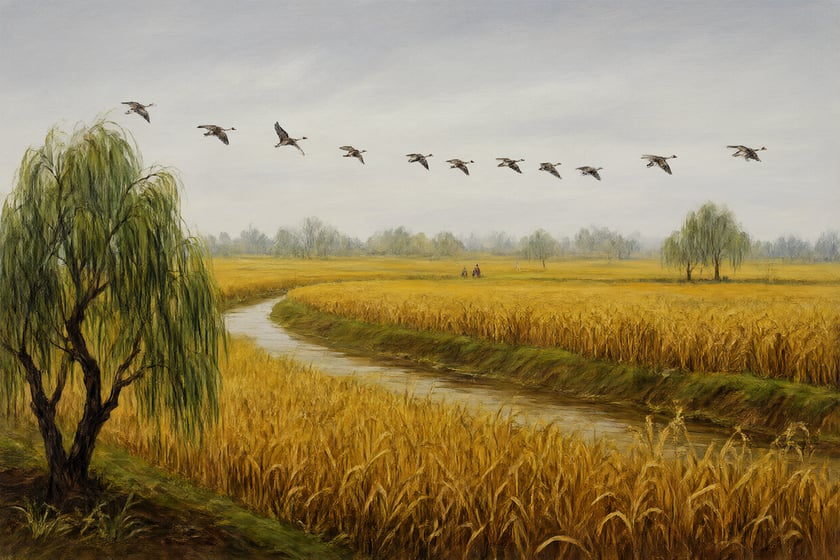
Yanzhou was one of the thirteen provinces of the Eastern Han, also known as the Yanzhou Inspectorate. Its territory roughly corresponded to the southwestern part of present-day Shandong Province and the eastern part of Henan Province. Its administrative seat, Changyi, lay southeast of present-day Juye County, Shandong. In 192, the third year of Chuping, Cao Cao took up the post of governor of Yanzhou. There he incorporated the Qing Province Yellow Turbans and recruited talented people, making Yanzhou the foundation of his rise to power. Xun Yu compared it to Guanzhong under Han Gaozu and Henei under Emperor Guangwu. Juancheng, Dingtao, Chenliu, Jibei, and other places all lay within Yanzhou.
History
When Dong Zhuo held power, he accepted the advice of Zhou Bi and Xu Jing and appointed the Attendant Liu Dai as Inspector of Yanzhou. Upon taking office, Liu Dai raised troops to attack Dong Zhuo. In 192, the third year of Chuping, the Qing Province Yellow Turbans, claiming to number a million, entered Yanzhou and killed Zheng Sui, Chancellor of Rencheng, before moving on to Dongping. Liu Dai ignored Bao Xin’s warning and went into battle; he was defeated and killed. Bao Xin and provincial officials including Wan Qian went to Dongjun to welcome Cao Cao as governor of Yanzhou. Cao Cao fought the Yellow Turbans fiercely east of Shouzhang, and Bao Xin was killed in battle. After the Yellow Turbans retreated to Jibei and surrendered, Cao Cao accepted the surrender of more than 300,000 troops and selected the most able among them, calling them the Qing Province Army.
In 194, the first year of Xingping, Cao Cao campaigned against Tao Qian, leaving Xun Yu to defend Juancheng. Zhang Miao and Chen Gong rebelled in Yanzhou and secretly invited Lü Bu, while city after city in Yanzhou rose in response. Xun Yu and Xiahou Dun, Administrator of Dongjun, stabilized Juancheng, while Xun Yu and Cheng Yu found a way to hold on to Fan and Dong’e. In the end, only these three cities remained in their hands. Zao Zhi, Magistrate of Dong’e, held the city firmly. Later, when Cao Cao’s army ran short of grain, it was supplied entirely by Dong’e. Cao Hong led troops ahead, first securing Dongping and Fan, and gathering grain to supply the main army.
In the summer of 195, the second year of Xingping, Cao Cao defeated Lü Bu’s officers Xue Lan and Li Feng at Juye. By then Tao Qian was dead, and Cao Cao wanted to take Xu Province first. Xun Yu argued that Yanzhou was his foundation and urged him to defeat Lü Bu first. Cao Cao took his advice and resumed the campaign after the wheat harvest. Lü Bu and Chen Gong came from Dongmin to attack, but Cao Cao ambushed and routed them. Lü Bu fled during the night, while Cao Cao captured Dingtao and dispatched troops to pacify the various counties. Lü Bu fled east to join Liu Bei. In the tenth month of that winter, Emperor Xian formally appointed Cao Cao governor of Yanzhou. In the twelfth month, Yongqiu fell, and Zhang Miao’s younger brother Zhang Chao killed himself; Yanzhou was pacified.
In 196, the first year of Jian’an, Emperor Xian established his capital at Xu, but Yanzhou was still unsettled. Cao Cao appointed Cheng Yu General of the Eastern Center and Administrator of Jiyin, placing him in command of affairs in Yanzhou. In 204, the ninth year of Jian’an, Cao Cao took up the post of governor of Jizhou and returned the governorship of Yanzhou to the court. Thereafter, Yanzhou was governed by inspectors appointed by the Cao clan. During the Jian’an era, Sima Lang and Pei Qian held the post in succession. After Cao Pi ascended the throne, Wang Ling and Wang Chang took up the post one after another. In 229, the first year of Huanglong under Eastern Wu, Sun Quan appointed Zhu Ran governor of Yanzhou in absentia. Not long afterward, as Wu and Shu Han had agreed to divide the realm between them, Yanzhou was assigned to Shu Han, and Zhu Ran relinquished the post.
In the later years of Wei, the Inspector of Yanzhou became embroiled in upheavals in Huainan. Linghu Yu, Inspector of Yanzhou, was stationed at Ping’a and conspired with his maternal uncle Wang Ling to install Cao Biao, Prince of Chu, as emperor. The plot came to nothing in 249, the first year of Jiaping, and Linghu Yu died of illness. In 251, the third year of Jiaping, Wang Ling sent Yang Hong to inform Huang Hua, Inspector of Yanzhou, of his plan to depose and enthrone a ruler. The two jointly reported the matter to Sima Yi. With a large army closing in, Wang Ling was out of options and submitted. He took his own life in Xiang County while being escorted to the capital. Later, after Zhuge Ke was executed, Deng Ai was transferred to the post of Inspector of Yanzhou and additionally appointed General Who Inspires Might. In 257, the second year of Ganlu, Zhuge Dan occupied Shouchun and rebelled. Zhou Tai, Inspector of Yanzhou, led a mobile force and repeatedly repelled the Wu general Zhu Yi, who had come to relieve the city.
People
People recruited by Cao Cao in Yanzhou: Bi Chen, a native of Dongping, served as Assistant Officer. When Zhang Miao rebelled, Bi Chen’s mother, younger brother, wife, and children were taken hostage. Cao Cao let him go, but he nevertheless fled back to the rebels’ side. After Lü Bu was defeated, Bi Chen was captured, yet Cao Cao still appointed him Chancellor of Lu. Mao Jie served as Officer of Governance and proposed to Cao Cao the strategy of “supporting the Son of Heaven to command those who do not submit”. Man Chong served as an Officer and later became Magistrate of Xu, enforcing the law without sparing the powerful. Lu Qian defended Hudi with his household troops and later became Administrator of Taishan, governing the commandery for more than ten years.
Inspectors who served in succession: Sima Lang’s administration and instruction flourished, and the people praised him. Pei Qian maintained strict discipline in the army, and Cao Cao gave him a special reward when he was stationed at Mobei. Wang Ling distinguished himself when he and Zhang Liao and others went south to Guangling to attack Sun Quan. When Emperor Ming ascended the throne, Wang Chang was additionally appointed General Who Promotes the Fierce. Xiahou Wei and Huan Fan also served as Inspectors of Yanzhou.
Differences from the Historical Record
The Romance of the Three Kingdoms portrays Yanzhou as a city: Lü Bu left Xue Lan to defend Yanzhou and went to Puyang himself, while Cao Cao sent Cao Ren to lead troops in a siege of Yanzhou. The novel also says that Xu Chu killed Li Feng, and that Lü Qian shot Xue Lan dead with an arrow as he fled toward Juye, allowing Cao Cao to retake Yanzhou. The Records of the Three Kingdoms only records that Cao Cao defeated Xue Lan and Li Feng at Juye and killed Xue Lan and others.
Today
The former territory of Yanzhou lay roughly in the areas of present-day Jining, Heze, and Tai’an in Shandong, as well as east of Kaifeng and Puyang in Henan. Yanzhou District, under the jurisdiction of present-day Jining in Shandong, has retained the name of this ancient province.