Cao Wei · Colonel
Lu Qian
courtesy name 子恪
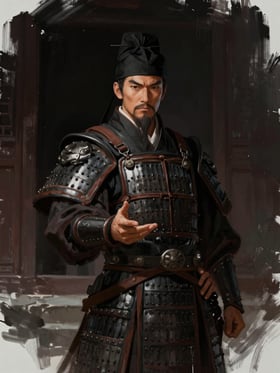
Lu Qian (Zike), a Cao Wei general and official, was famed for governing Taishan and quelling unrest; the Romance says he shot Xue Lan.
Appearances
In the novel: 10 chapters · In the Records: 1 volume
On the boards
Compare with someone →Where this person ranks on each board.
Historical Record
Lü Qian, courtesy name Zike, was from Rencheng. When Cao Cao was in Yanzhou, he heard that Lü Qian was bold and resourceful, appointed him as an aide, and ordered him to lead his household troops in defending Hulu. Jiongmu and others under Du Song rebelled and made contact with Chang Xi, so Cao Cao had Lü Qian replace Du Song. Lü Qian lured Jiongmu and the other leaders to a banquet, served them wine and food, and, once they were drunk, had ambush troops kill them all. He then pacified the remaining followers and put down the rebellion. This response showed that he was willing to use stratagems, but also that he did not simply end matters with violence: he followed it with measures to restore order.
Later, Lü Qian became Grand Administrator of Taishan. Taishan Commandery bordered mountains and the sea, and during the turmoil many people hid in the mountains; Guo Zu, Gongsun Du, and others had established themselves there as bandits. Lü Qian arrived with his household troops and used benevolence and trust to persuade their followers to surrender, allowing those who had fled into the mountains to return, settle down, and pursue their livelihoods. He then selected the strongest and fittest to serve as soldiers, and Taishan consequently acquired elite troops. Xu He and other Yellow Turban rebels in Jinan raided local officials and attacked towns. Lü Qian joined forces with Xiahou Yuan and fought dozens of battles, killing or capturing several thousand men. He was also ordered to command troops from the various commanderies of Qing Province in a campaign against Li Tiao of Donglai and other bandit groups, and distinguished himself. Cao Cao praised him for seizing criminals and suppressing violence, bringing peace to the people, and for personally braving arrows and stones and winning every campaign. He therefore recommended Lü Qian as a maocai, appointed him Cavalry Commandant, and left him in charge of the commandery’s affairs. Lü Qian served in Taishan for more than ten years, and the histories say that he was “greatly respected for both his authority and his benevolence.”
After Cao Pi took the throne as king, Lü Qian was promoted to Assistant General, enfeoffed as Marquis of Yishou Pavilion, appointed Inspector of Xu Province, and additionally named General Who Subdues the Caitiffs. He asked Wang Xiang, a native of Langya, to serve as his Adjutant and entrusted him with all civil administration. People of the time praised Lü Qian for knowing how to employ worthy men. Later, he campaigned against rebels in Licheng and won merit by killing or capturing them. After Cao Rui came to the throne, Lü Qian’s fief was changed to Marquis of Wannian Pavilion, and his taxable household was increased by two hundred, bringing the total, including his original allotment, to six hundred. After Lü Qian died, his son Lü Fan inherited his title; when Lü Fan died, his son Lü Gui inherited it.
In the Novel
The Romance of the Three Kingdoms portrays Lü Qian as both a military officer and an aide in Cao Cao’s camp. In Chapter 10, Liu Ye recommends Lü Qian and Man Chong, and Cao Cao, already familiar with their reputations, recruits them as military aides. The novel also has Lü Qian and Man Chong jointly recommend Mao Jie, depicting Lü Qian as part of the broader circle through which Cao Cao recruited talent and organized his civil and military officials. Later, Lü Qian is listed among the colonels and takes part in several campaigns with Cao Cao’s forces. During the Battle of Puyang, he joins Cao Cao in a night raid on Lü Bu’s western camp; during the retreat, he is ordered to meet Zhang Liao and Zang Ba alongside Cao Hong, but is unsuccessful. In the attack on Yanzhou, he rides after Xue Lan and shoots him down with an arrow.
The novel also has Lü Qian wounded after the defeat at Wancheng, then rallying the defeated troops with Li Dian and retreating to defend Jibei. In the passage about the confrontation with Wen Chou at Guandu, he questions Cao Cao’s decision to send the provisions ahead, but later understands when Cao Cao explains that it is a stratagem to lure the enemy. Other episodes include his participation in opposing a return to aid Yuan Tan, his listing among the rear guard of the Chibi naval force, and his serving as a central-army guard when Cao Pi campaigns against Wu. These fictional scenes enrich his military career, but specific details such as his shooting Xue Lan, asking about the plan at Guandu, and his appointment at Chibi have no corresponding record in the histories and should not be conflated with his attested service in Taishan and Xu Province.
Key Relationships
Lü Qian served Cao Cao from early in his career. Cao Cao both ordered him to replace Du Song and put down the rebellion, and entrusted Taishan Commandery to his governance; he later praised Lü Qian’s military achievements and recommended him as a maocai. In the historical accounts, the relationship between the two centers on Cao Cao recognizing Lü Qian’s ability and relying on his administrative and military skills. Lü Qian’s association with Xiahou Yuan is recorded in their joint campaign against the Yellow Turban rebels in Jinan, during which they fought together dozens of times. His relationship with Wang Xiang, meanwhile, reflects his willingness to recruit worthy men: Lü Qian invited Wang Xiang to serve as Adjutant in Xu Province and entrusted him with civil administration.
In the novel, Liu Ye recommends Lü Qian, and Man Chong and Lü Qian jointly recommend Mao Jie; Li Dian accompanies Lü Qian in retreating to defend Jibei. The novel also has Mi Heng mock him, saying, “Lü Qian could be put to work sharpening knives and forging swords.” This is a derisive joke about his abilities, not an assessment found in the historical accounts. (Novel-only)
Signature Scenes
The scene that best represents Lü Qian’s style of governance in the historical record is his pacification of Taishan and the reorganization of its troops. Through benevolence and trust, he brought the followers of Guo Zu, Gongsun Du, and others into submission, enabled the people who had fled to return to their livelihoods, and then selected the strongest to fill the ranks. The histories thus connect the creation of Taishan’s elite troops with his administration. Cao Cao’s praise that “the people found peace” and the histories’ description of Lü Qian as “respected for both his authority and his benevolence” together capture how his governance extended beyond military suppression.
Another notable scene is his inviting Wang Xiang to serve as Adjutant and entrusting him with civil affairs, illustrating the historical accounts’ description of Lü Qian as someone “able to employ worthy men.” By contrast, the novel’s scene of him galloping after Xue Lan and shooting him down is a more vivid piece of military drama. Lü Qian’s questioning the decision to send provisions ahead, then understanding Cao Cao’s stratagem to lure the enemy, portrays him as a general involved in military deliberations. Neither scene appears in the historical record. (Novel-only)
Quotes
3 lines in the books · 3 featured
「糧草在先,軍兵在後,何意也?」
This line displays Lu Qian's keen insight into military strategy, embodying his loyalty and caution.
「倘遇敵軍劫去,如之奈何?」
This line further underscores Lu Qian's sense of impending danger, an important expression of his character.
「丞相既引兵至此,安可復舍表而助譚?」
This line embodies Lu Qian's questioning of Cao Cao's decisions, displaying his outspoken nature.
- Family
- Lord & vassal
- Friends
- Enemies
- Other
Who is Lu Qian connected to?
Pick someone to see how many steps lie between them and Lu Qian.
History vs. novel
8 points · 5 novel-only
| History | Novel |
|---|---|
| Reason for AppointmentNovel embellishes | |
Having heard that Lu Qian was courageous and resourceful, Cao Cao appointed him as an administrative aide and ordered him to lead his household troops in guarding Hulu. vol. 18 | Liu Ye recommended Lu Qian. Since Cao Cao already knew of his reputation, he appointed him as an administrative aide in the army; the novel adds the detail of the recommendation process. ch. 10 |
| Shooting Xue LanNovel only | |
| — | As Xue Lan retreated in defeat, Lu Qian galloped after him and shot him from his horse with a single arrow, after which the enemy troops scattered. ch. 12 |
| Governing TaishanHistory only | |
Lu Qian used kindness and trustworthiness to induce Guo Zu and the others’ followers to surrender, bringing the people who had taken refuge in the mountains out to settle peacefully. He selected the strongest among them and organized them into soldiers, and Taishan thus gained elite troops. vol. 18 | — |
| Appointment as CommandantHistory only | |
Historical records state that Lu Qian was later recommended as a Maocai, received the additional title of Cavalry Commandant, and continued to govern Taishan; they do not record him being appointed commandant alongside Li Dian and others. vol. 18 | — |
| Retreat to JibeiNovel only | |
| — | After Xiahou Dun was defeated and retreated, Lu Qian and Li Dian led the routed troops to Jibei to set up camp. ch. 18 |
| Provisions Sent AheadNovel only | |
| — | Cao Cao ordered the provisions sent ahead. Lu Qian asked what they should do if the enemy seized them, and Cao Cao replied that they would deal with it when the enemy arrived. ch. 26 |
| Yuan Tan Requests AidNovel only | |
| — | When Yuan Tan asked Cao Cao for aid, Lu Qian and Man Chong argued that they should not abandon their ostensible allies to help Yuan Tan. ch. 32 |
| Naval FlagsNovel only | |
| — | Before the Battle of Chibi, as the commanders were assigned, Lu Qian was listed as a black-flag commander in the rear of the navy; the Records of the Three Kingdoms does not record this arrangement. ch. 48 |
- Reason for AppointmentNovel embellishes
- History
Having heard that Lu Qian was courageous and resourceful, Cao Cao appointed him as an administrative aide and ordered him to lead his household troops in guarding Hulu.
vol. 18
- Novel
Liu Ye recommended Lu Qian. Since Cao Cao already knew of his reputation, he appointed him as an administrative aide in the army; the novel adds the detail of the recommendation process.
ch. 10
- Shooting Xue LanNovel only
- Novel
As Xue Lan retreated in defeat, Lu Qian galloped after him and shot him from his horse with a single arrow, after which the enemy troops scattered.
ch. 12
- Governing TaishanHistory only
- History
Lu Qian used kindness and trustworthiness to induce Guo Zu and the others’ followers to surrender, bringing the people who had taken refuge in the mountains out to settle peacefully. He selected the strongest among them and organized them into soldiers, and Taishan thus gained elite troops.
vol. 18
- Appointment as CommandantHistory only
- History
Historical records state that Lu Qian was later recommended as a Maocai, received the additional title of Cavalry Commandant, and continued to govern Taishan; they do not record him being appointed commandant alongside Li Dian and others.
vol. 18
- Retreat to JibeiNovel only
- Novel
After Xiahou Dun was defeated and retreated, Lu Qian and Li Dian led the routed troops to Jibei to set up camp.
ch. 18
- Provisions Sent AheadNovel only
- Novel
Cao Cao ordered the provisions sent ahead. Lu Qian asked what they should do if the enemy seized them, and Cao Cao replied that they would deal with it when the enemy arrived.
ch. 26
- Yuan Tan Requests AidNovel only
- Novel
When Yuan Tan asked Cao Cao for aid, Lu Qian and Man Chong argued that they should not abandon their ostensible allies to help Yuan Tan.
ch. 32
- Naval FlagsNovel only
- Novel
Before the Battle of Chibi, as the commanders were assigned, Lu Qian was listed as a black-flag commander in the rear of the navy; the Records of the Three Kingdoms does not record this arrangement.
ch. 48
Combat
On the field
Duels, kills and executions as the texts tell them, counted separately for the Records and the Romance.
- RecordsJuan 18AssassinationJiongmuWon「使伏兵盡格殺之」
- RomanceCh. 11DuelZhang LiaoZang BaLost「操使呂虔、曹洪戰之,不利」
- RomanceCh. 12Struck downXue LanWon「卻被呂虔飛馬趕來,一箭射於馬下」
Stratagems
Plans this person devised or saw through, as the texts tell them.
- Records
- 1 carried out · 1 worked · 0 turned down · 0 seen through
- RecordsLure the Target to a Banquet and KillAmbushWorkedJuan 18「簡壯士伏其側,虔察炅母等皆醉,使伏兵盡格殺之」
Events
Events (3)
Battles and events the texts place this person in, by date.
Battles
Other events
Places
- Was at
- Yan ProvinceRecords
- Governed
- Xu ProvinceRecords
- Taishan CommanderyRecords
Continue
Cao Cao
Lord
Relationship timeline7 entries ▸
History · vol. 18
- Cao Cao§35
Lord
While Taizu was in Yanzhou, he heard that Qian had courage and resourcefulness and appointed him as an attendant officer
- Xiahou Yuan§35
Commands
Led troops to join Xiahou Yuan in fighting Xu He and others in dozens of battles, killing and capturing several thousand
- Jiongmu§35
Enemy
Zhao lured Jiongmu and the chiefs with wine and food, then ambushed and killed them all
- Guo Zu§35
Enemy
Extended benevolence and trust; the adherents of Guo Zu, Gongsun Du, and others all surrendered
- Li Tiao§35
Fights
Taizu had him command the troops of the various commanderies in Qing Province to attack the bandits of Donglai, including Li Tiao; he rendered meritorious service
Novel · ch. 12
- Xue Lan§19
Fights
galloped after him and shot him off his horse with one arrow
Novel · ch. 18
- Li Dian§27
Friend
retreated together and encamped in Jibei
Inner monologues · AI-generated3 monologues ▸
- I, Lu Qian, courtesy name Zike, was from Wucheng. There is little written about my early years in the Records of the Thr
- I am Lu Qian, courtesy name Zike. Looking back on my life now, what I dare not forget is not the rise and fall of my fie
- I am Lu Qian, courtesy name Zike, a native of Rencheng. I recall that when Taizu was in Yanzhou, he heard that I had cou