Cao Wei · Grand Commandant
Wang Xiang
courtesy name 休征 · 184–268
Not to be confused with Wang Xiang (王象, ?–c. 222) — Wang Xiang, courtesy name Xibo, was a Wei native recorded for Yang Jun’s favor, overseeing the Huanglan’s compilation, and pleading for him.
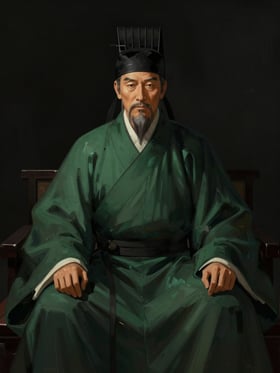
Wang Xiang, a Cao Wei and Western Jin minister, was famed for filial piety and refusing to bow to the Jin king; the novel adds succession advice.
Life
In the novel: 2 chapters · In the Records: 3 volumes
Life184–268
Allegiance
Appearances
By chapter (5)
Novel
- 116
- 119
Records
- 4
- 18
- 22
- Cao Wei
- Hatched: dated by chapter
On the boards
Compare with someone →Where this person ranks on each board.
Historical Record
Wang Xiang, courtesy name Xiuzheng, was from Langya. In the Miscellaneous Sayings by Sun Sheng, quoted in Pei Songzhi’s commentary, he is described as supremely filial. His stepmother was harsh and cruel, and repeatedly tried to harm him, yet Wang Xiang continued to serve her respectfully and with a pleasant expression. During a bitter winter, when she wanted fresh fish, he took off his clothes and broke through the ice to look for some. A fish leapt out from beneath the ice, and he took it to his stepmother. The account also says that he served her for more than thirty years and entered office only after her death. People of the time respected him for his earnest sincerity, uprightness, and purity of character. These accounts of his filial conduct appear in quotations cited in Pei’s commentary; they are not related in the main text of this volume.
After Wang Xiang entered office, Lu Qian, Inspector of Xu Province, invited him to serve as an aide and entrusted all civil administration to him. People of the time praised Lu Qian for his ability to appoint worthy men. The Book of Jin, quoted in Pei’s commentary, says that Wang Xiang was already over fifty when he entered office, and later gradually rose to become Commandant of Sili Province. He subsequently held several important court posts. In the second year of Ganlu, the Wei emperor appointed Wang Xiang as the Three Elders and Zheng Xiaotong as the Five Elders, and personally led the officials in performing the ancient rites. This reflected the court’s ritual practice of using respected elders of virtuous character to encourage and guide public customs.
In the third month of the first year of Xianxi, Wang Xiang was promoted from Minister over the Masses to Grand Commandant. After the Duke of Jin was elevated to king, Xun Yi proposed that the officials pay him homage. Wang Xiang argued that the Three Excellencies of the Wei court should not bow to the King of Jin, lest they damage Wei’s prestige and diminish the king’s virtue. When they went to see the king, Xun Yi bowed, while Wang Xiang alone greeted him with a formal clasped-hands salute. The King of Jin said that only then had he realized how highly Wang Xiang regarded him. The Book of Jin, quoted in Pei’s commentary, also says that after Emperor Wu of Jin ascended the throne, he appointed Wang Xiang Grand Guardian and enfeoffed him as Duke of Juling. Wang Xiang died in the fourth year of Taishi, aged eighty-nine.
In the Novel
In Romance of the Three Kingdoms, Wang Xiang is portrayed as Grand Commandant at the Cao Wei court. The novel places him in court deliberations around the time Zhong Hui and Deng Ai campaigned against Shu, as well as in discussions over Sima Zhao’s succession. He is depicted as a steady man who observes others’ expressions and asks about the prospects of the campaign against Shu, while also taking part in major decisions to remonstrate with powerful ministers and uphold the proper order of rank.
When Zhong Hui set out on campaign, the officials saw him off, and Liu Shi alone laughed. Seeing this, Wang Xiang took his hand and asked whether Zhong Hui and Deng Ai would be able to pacify Shu. Liu Shi replied that they would certainly conquer Shu, but feared that neither man would return. Wang Xiang did not press him further. Through this brief exchange, the novel conveys Wang Xiang’s perceptiveness and restraint. Neither this farewell scene nor his conversation with Liu Shi is recorded in the Records of the Three Kingdoms.
After Sima Zhao was enfeoffed as King of Jin, the novel says that he briefly considered making his second son, Sima You, heir apparent. Wang Xiang and Xun Yi remonstrated with him together, citing precedents in which naming a younger son heir could bring turmoil to the state. Sima Zhao then made his eldest son, Sima Yan, heir apparent. Later, when Sima Zhao was gravely ill, Wang Xiang and the other ministers entered the palace to pay their respects. Sima Zhao pointed to Sima Yan and then died. Wang Xiang’s role in the remonstrance over the succession, the visit during Sima Zhao’s illness, and the scene at his deathbed are all part of the novel’s narrative; these episodes are not recorded in the Records of the Three Kingdoms.
Key Relationships
Wang Xiang and Lu Qian had the relationship of appointing official and subordinate: Lu Qian invited him to serve as an aide in Xu Province and entrusted him with full authority over civil administration. The account praises Lu Qian for his ability to appoint worthy men. Wang Xiang’s relationship with the Wei emperor is reflected in the ceremony of the Three Elders: Wang Xiang was selected as one of the Three Elders, Zheng Xiaotong as one of the Five Elders, and the emperor personally led the officials in performing the rites.
The relationship between the King of Jin and Wang Xiang involved both a dispute over court etiquette and mutual respect. Wang Xiang refused to bow to the King of Jin along with Xun Yi, insisting instead on greeting him with a formal clasped-hands salute in his capacity as one of the Three Excellencies of Wei. The King of Jin said that this act made him understand how highly Wang Xiang regarded him. The novel also depicts Wang Xiang and Xun Yi jointly urging Sima Zhao to name his eldest son, Sima Yan, heir apparent; this episode appears only in the novel.
Defining Scenes
Wang Xiang’s appointment as one of the Three Elders, with the emperor personally leading the officials in performing the ancient rites, was an important public recognition of his virtue. In the account of his filial conduct quoted in Pei’s commentary, the story of his breaking through the ice in winter to obtain fish and serve his stepmother likewise makes his exemplary filiality especially vivid.
Another scene takes place after the Duke of Jin was enfeoffed as king. When Xun Yi proposed that the officials bow, Wang Xiang invoked ritual propriety and Wei’s established hierarchy to refuse and instead offer a formal clasped-hands salute. His action revealed his insistence on proper rank and stands out as the clearest recorded instance of resistance to court protocol in the historical accounts. The novel’s scenes of Wang Xiang asking Liu Shi about the campaign against Shu and joining Xun Yi in urging Sima Zhao to name his eldest son heir apparent are exclusive to the novel.
Lines
- 演 ch.116 §4
「鍾、鄧二人,此去可平蜀乎?」
- 演 ch.119 §30→ Sima Zhao
「前代立少,多致亂國。願殿下思之。」
Family, lords and rivals
2 relationships
 Lu QianLord & vassal · LordQian earnestly invited Langya Wang Xiang to serve as an assistant to the provincial governor, entrusting all civil affairs to him
 Liu ShiOther · AdvisesWang Xiang asked whether Zhong and Deng could pacify Shu by conquering it; Liu Shi replied, “Shu will certainly be conquered; I only fear that none of them will be able to return to the capital”
Who is Wang Xiang connected to?
Pick someone to see how many steps lie between them and Wang Xiang.
History vs. novel
7 points · 2 novel-only
| History | Novel |
|---|---|
| Lying on Ice to Seek CarpHistory only | |
Wang Xiang’s stepmother wanted to eat fresh fish, so in the bitter cold he took off his clothes and chiseled through the ice. When it broke open, a fish leapt out, and Wang Xiang took it to nourish his stepmother. People of the time believed this was the result of filial devotion moving Heaven. vol. 18 | — |
| Serving His Mother for More Than Thirty YearsHistory only | |
Wang Xiang respectfully cared for his stepmother for more than thirty years. Only after she died did he enter official service, earning the respect of his contemporaries for his sincere and generous nature. vol. 18 | — |
| Entering Official Service After the Age of FiftyHistory only | |
The histories record that Wang Xiang was already over fifty when he began his official career, and that he gradually rose to become Commandant of Sili Province. vol. 18 | — |
| Suppressing the Rebels at LichengHistory only | |
Wang Xiang once suppressed rebels at Licheng and distinguished himself in battle, though the Records of the Three Kingdoms give no detailed account of the campaign. vol. 18 | — |
| Asking in Advance How the Campaign Against Shu Would EndNovel only | |
| — | When Zhong Hui set out to campaign against Shu, Wang Xiang saw Liu Shi smiling silently and asked whether the expedition would pacify Shu. Liu Shi predicted that Shu would certainly be conquered, but that the party might not return to the capital. Wang Xiang pressed him for the reason, but Liu Shi only smiled and said nothing. ch. 116 |
| Refusing to Comply with Xun Yi’s Demand for DeferenceHistory only | |
When Sima Wenwang was first enfeoffed as King of Jin, Sikong Xun Yi demanded that Wang Xiang show him proper deference, but Wang Xiang did not comply. vol. 18 | — |
| Urging the Appointment of Sima YanNovel only | |
| — | When Sima Zhao wanted to appoint Sima You as his heir, Wang Xiang and Xun Yi remonstrated with him, pointing out that appointing a younger son could bring turmoil to the state. Sima Zhao then appointed his eldest son, Sima Yan, as his heir. ch. 119 |
- Lying on Ice to Seek CarpHistory only
- History
Wang Xiang’s stepmother wanted to eat fresh fish, so in the bitter cold he took off his clothes and chiseled through the ice. When it broke open, a fish leapt out, and Wang Xiang took it to nourish his stepmother. People of the time believed this was the result of filial devotion moving Heaven.
vol. 18
- Serving His Mother for More Than Thirty YearsHistory only
- History
Wang Xiang respectfully cared for his stepmother for more than thirty years. Only after she died did he enter official service, earning the respect of his contemporaries for his sincere and generous nature.
vol. 18
- Entering Official Service After the Age of FiftyHistory only
- History
The histories record that Wang Xiang was already over fifty when he began his official career, and that he gradually rose to become Commandant of Sili Province.
vol. 18
- Suppressing the Rebels at LichengHistory only
- History
Wang Xiang once suppressed rebels at Licheng and distinguished himself in battle, though the Records of the Three Kingdoms give no detailed account of the campaign.
vol. 18
- Asking in Advance How the Campaign Against Shu Would EndNovel only
- Novel
When Zhong Hui set out to campaign against Shu, Wang Xiang saw Liu Shi smiling silently and asked whether the expedition would pacify Shu. Liu Shi predicted that Shu would certainly be conquered, but that the party might not return to the capital. Wang Xiang pressed him for the reason, but Liu Shi only smiled and said nothing.
ch. 116
- Refusing to Comply with Xun Yi’s Demand for DeferenceHistory only
- History
When Sima Wenwang was first enfeoffed as King of Jin, Sikong Xun Yi demanded that Wang Xiang show him proper deference, but Wang Xiang did not comply.
vol. 18
- Urging the Appointment of Sima YanNovel only
- Novel
When Sima Zhao wanted to appoint Sima You as his heir, Wang Xiang and Xun Yi remonstrated with him, pointing out that appointing a younger son could bring turmoil to the state. Sima Zhao then appointed his eldest son, Sima Yan, as his heir.
ch. 119
Events
Events (1)
Battles and events the texts place this person in, by date.
Other events
Places
- Native of
- LangyaRecords
- Governed
- Sili ProvinceRecords
Continue
Lu Qian
Lord
Relationship timeline1 entry ▸
History · vol. 18
- Lu Qian§39
Lord
Qian earnestly invited Langya Wang Xiang to serve as an assistant to the provincial governor, entrusting all civil affairs to him
Inner monologues · AI-generated1 monologue ▸
- I am Wang Xiang, courtesy name Xiuzheng. I now hold the office of Grand Commandant and have been charged with taking par