Overview
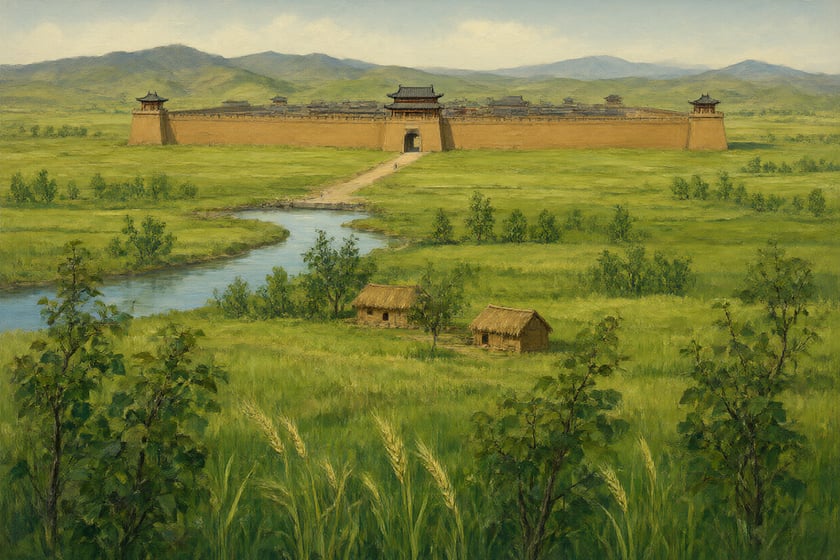
Langya was a kingdom under Xu Province in the Eastern Han (also known as the Kingdom of Langya; later generations often wrote it as “琅琊”), governed from Kaiyang, in the area of present-day Linyi City, Shandong Province. At the end of the Han, it successively came under Tao Qian, Lü Bu, and Cao Cao. After 198, Zang Ba guarded the coast of Qing and Xu Provinces on Cao Cao’s behalf as the Chancellor of Langya. Langya was also a place that produced many distinguished figures: the brothers Zhuge Liang and Zhuge Jin, as well as the Wei general Zhuge Dan, all came from Yangdu in Langya.
History
At the end of the Han, Langya belonged to Tao Qian’s Xu Province. During Dong Zhuo's Coup, Cao Cao’s father, Cao Song, left office and took refuge in Langya, where Tao Qian had him killed. Cao Cao therefore resolved to march east and avenge him. In 194, Cao Cao again campaigned against Tao Qian and conquered and pacified the counties of Langya and Donghai, but soon withdrew after Zhang Miao welcomed Lü Bu into Yanzhou.
When Lü Bu held Xu Province, Xiao Jian, a man from Donghai, served as Chancellor of Langya. He was stationed in Ju County, where he held the walled city and kept to himself, having no dealings with Lü Bu. Lü Bu wrote to persuade him, and Xiao Jian only then sent an envoy with gifts. Not long afterward, he was attacked and defeated by Zang Ba, who was garrisoned at Kaiyang. In 198, Cao Cao captured and killed Lü Bu, accepted Zang Ba’s surrender, and appointed him Chancellor of Langya. He also appointed Wu Dun, Yin Li, Sun Guan, and Sun Kang as the respective Administrators of Licheng, Dongguan, Beihai, and Chengyang, entrusting Zang Ba with the coastal areas of Qing and Xu Provinces. At the same time, the commanderies of Chengyang, Licheng, and Changlü were carved out of Langya, Donghai, and Beihai. In 206, Cao Cao further transferred Xiangben, Tan, and Qi counties from Donghai Commandery into Langya, and abolished Changlü Commandery.
Langya thereafter remained within Cao Wei for a long time. Sun Li successively served as Administrator of Shanyang, Pingyuan, Pingchang, and Langya. He later accompanied Grand Marshal Cao Xiu on a campaign against Wu and tried to dissuade him from advancing too far at Jiashi, but his advice was ignored. When Guan Lu was young, he accompanied his father to study at the county office in Juqiu, Langya. Dan Zichun, the Administrator of Langya, hosted a banquet and debated yin and yang with him; from then on, Guan Lu was known in Xu Province as a “child prodigy”.
Figures
- The Zhuge clan of Yangdu: Zhuge Liang was descended from Zhuge Feng, a Commandant of Sili in the Western Han. His father died when he was young, and he went south with his uncle Zhuge Xuan before later farming in Jing Province. His elder brother Zhuge Jin fled the troubles at the end of the Han for Jiangdong and, recommended by Hong Zi, entered the service of Sun Quan. Their kinsman Zhuge Dan served Wei and once held the posts of Attendant Gentleman of the Palace, Minister, and Inspector of Yangzhou. After the Jin dynasty was founded, Zhuge Jing, a descendant of the Zhuge clan, was recommended by Luo Xian and appointed to office.
- Others from Langya: Xu Sheng was from Ju County. At the end of the Han, he settled in Wu and became known for his courage; while defending Chaisang, he repelled Huang She with fewer than two hundred men. Wang Xiang was renowned for his filial piety. Inspector of Xu Province Lü Qian appointed him as his aide, and under Jin he rose to the post of Grand Guardian. Wang Rong, one of the Seven Sages of the Bamboo Grove, was also from Langya. Zhao Yu, Administrator of Guangling, was a renowned scholar of the Xu region. The General Who Subdues the Caitiffs Liu Xun had longstanding ties with Cao Cao. Lady Wang, a consort of Sun Quan, was the mother of Sun He. Gan Ji, the Daoist who preached and healed in the Wu region and was killed by Sun Ce, also came from Langya.
- Those who governed Langya: Besides Xiao Jian, Zang Ba, Sun Li, and Dan Zichun, there was also Zang Xuan, Chancellor of Langya. When Zhang Hong arranged for Zhao Yu to have an heir, he asked Zang Xuan to select a five-year-old boy from Zhao Yu’s clan to continue the sacrifices to him.
- Those who traveled there to study: At the age of seventeen, the Wei general Wang Ji refused to become a county official and traveled within Langya to pursue his studies.
Differences in Historical Fiction
In Romance of the Three Kingdoms, after Lü Bu defeated Yuan Shu, he recommended Yang Feng as “Governor of Langya” and had him stationed in Langya. The Records of the Three Kingdoms does not mention this. The novel introduces Zhuge Jin as “a man from Nanyang, Langya”, whereas the Records of the Three Kingdoms says he was from Yangdu, Langya. In its account of Zang Ba’s surrender to Cao Cao, the novel says Zhang Liao was ordered to offer Zang Ba amnesty, after which Zang Ba recruited Sun Guan, Wu Dun, and Yin Li, and Cao Cao appointed him Chancellor of Langya. The Records of the Three Kingdoms instead says that after Zang Ba’s forces were defeated, he went into hiding, and Cao Cao sought him out and found him.
Today
The former territory of the Kingdom of Langya lies in the area of present-day Linyi City, Shandong Province. Its seat, Kaiyang, was in the northern part of today’s urban area of Linyi. Yangdu, Zhuge Liang’s hometown, is in present-day Yinan County, Linyi City, where a memorial scenic area has been built to commemorate his birthplace.