Cao Song
courtesy name 巨高 · –194
Not to be confused with Cao Song (曹竦) — Cao Song, a Cao Wei clansman and son of Cao Mao, Prince of Leling, succeeded Cao Shuo in the second year of Zhengyuan.
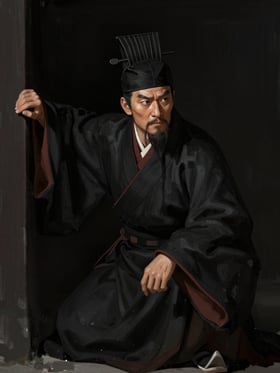
Cao Song, Cao Cao’s father and Cao Teng’s adopted son, was killed by Tao Qian; the Romance says Zhang Kai slew him in a night raid.

Life
In the novel: 6 chapters · In the Records: 1 volume
Life?–194
193 CE (Chuping 4)
Appearances
By chapter (7)
Novel
- 1
- 4
- 5
- 10
- 11
- 22
Records
- 1
- Life event
- Death
List all 2 stops
On the boards
Compare with someone →Where this person ranks on each board.
Historical Record
Cao Song, courtesy name Jugao, was Cao Teng’s adopted son and heir. The Records of the Three Kingdoms says that he rose to the office of Grand Commandant and records Cao Cao as his son. The Continuation of the Book of Han, cited in Pei’s annotations, says that Cao Song was “upright and prudent by nature, and loyal and filial wherever he served.” He once served as Colonel Director of Retainers, and during the reign of Emperor Ling of Han was promoted to Minister of Agriculture and Grand Herald, before succeeding Cui Lie as Grand Commandant. As for his origins, the main text of the Records of the Three Kingdoms explicitly states, “No one could ascertain the beginnings and details of his birth.” By contrast, the Biography of Cao Man by a man of Wu and the Anecdotes of the World by Guo Ban, both cited in Pei’s annotations, claim that he was a son of the Xiahou clan and Xiahou Dun’s uncle. These are alternative accounts cited in the annotations, not an ancestry confirmed by the main text. Cao Song later sought refuge in Langya during Dong Zhuo’s Coup and was killed by Tao Qian. In the first year of Huangchu under Wei, Cao Pi posthumously honored him as Grand Emperor. Thus, historical accounts chiefly confirm his adoptive succession, official career, murder, and posthumous honor, while leaving his birth family uncertain.
In the Novel
The Romance of the Three Kingdoms portrays Cao Song as a father figure in Cao Cao’s early life. When Cao Cao’s uncle made an accusation against him, Cao Song reproached his son, but then believed Cao Cao’s claim that he had feigned a stroke and that his uncle had falsely accused him. Afterward, he no longer trusted his uncle’s complaints about Cao Cao’s misbehavior. The novel uses this episode to explain the family circumstances that allowed Cao Cao to behave recklessly in his youth. Neither this father-son episode nor Cao Song’s being deceived is recorded in the Records of the Three Kingdoms.
The novel also says that Cao Song once took refuge in Langya, and that Cao Cao sent Ying Shao to fetch him. He set out with his younger brother Cao De, his family, attendants, and a convoy of carts. When they passed through Xu Province, Tao Qian hosted a banquet for them and assigned Zhang Kai to escort them with troops. This episode places Cao Song at the center of the chain of events that sparks the conflict between Cao Cao and Tao Qian: Zhang Kai and his men launch a night attack, Cao De is killed first, and Cao Song and a concubine flee into a latrine, where they are ultimately killed amid the chaos. Ying Shao escapes. The novel thus develops the chain of events leading Cao Cao to raise troops against Xu Province in response to his father’s murder. The specific actions of the party on the journey, the details of Zhang Kai’s robbery and killing, and the circumstances of Cao Song’s death are all part of the novel’s narrative and should not be treated as facts recorded in the Records of the Three Kingdoms.
The novel also uses the voice of Chen Lin’s proclamation to denounce Cao Song in harsh terms, calling him “a beggar, taken in and raised, who gained office through bribery,” and making the origins of Cao Teng and Cao Song and Cao Cao’s family background into political attacks. These are literary accusations in a proclamation, not equivalent to historical accounts of Cao Song’s character or career. The historical record says only that his origins could not be ascertained and that he rose to the office of Grand Commandant.
Key Relationships
- Cao Teng: adoptive father. The Records of the Three Kingdoms records that Cao Song, his adopted son, succeeded Cao Teng after his death. The novel likewise explains the father-son relationship by saying that Cao Song was adopted into the Cao family and took the Cao surname because he was Cao Teng’s adopted son. However, the definite claim that his original surname was Xiahou belongs to the novel or to alternative accounts cited in Pei’s annotations; the main text of the historical record does not confirm it.
- Cao Cao: son. The historical record explicitly states that “Song fathered the Great Ancestor” and says that Cao Song rose to the office of Grand Commandant. The novel focuses instead on the father believing Cao Cao’s defense and, later, on the revenge for Cao Song’s murder.
- Cao De: younger brother. Cao De’s traveling with Cao Song’s family and being killed in Zhang Kai’s attack appear only in the novel’s account and are exclusive to the novel.
- Tao Qian and Zhang Kai: The novel says that Tao Qian hosted Cao Song and assigned Zhang Kai to escort him, after which Zhang Kai killed Cao Song. This escort and murder episode is exclusive to the novel. The Records of the Three Kingdoms merely records that Cao Song was killed by Tao Qian, without giving the specific sequence of events found in the novel.
Signature Scene
The most dramatic scene is the one in which Cao Song’s family encounters a rainstorm between Hua and Fei and takes shelter in an old temple. The novel first has Zhang Kai, dissatisfied with his situation and coveting the valuables in the carts, conspire with his men. He then launches an attack in the night rain. Cao De steps outside to investigate and is stabbed to death; Cao Song hurriedly tries to flee over the wall with his concubine, but her heavy build prevents her from escaping. The two hide in a latrine, where they are eventually killed by the attacking troops. The contrast between their frantic search for shelter from the rain and the sudden massacre underscores the brutality of Cao Song’s death and makes it the narrative starting point for Cao Cao’s campaign of revenge. The temple, hiding place, and specific details of the deaths described above are all exclusive to the novel.
In contrast to the novel’s detailed tragedy, the historical record says only that Cao Song sought refuge in Langya during Dong Zhuo’s Coup and was killed by Tao Qian. It says nothing about Zhang Kai, an old temple, or an attempted escape through a latrine. After Cao Song’s death, Cao Pi posthumously honored him as Grand Emperor in the first year of Huangchu. This posthumous honor is the clearest account of his final fate in the historical record.
Lines
- 演 ch.1 §25→ Cao Cao
「叔言汝中風,今已愈乎?」
- 演 ch.5 §1→ Cao Cao
「資少恐不成事。此間有孝廉衛弘,疏財仗義,其家巨富;若得相助,事可圖矣。」
- Family
- Friends
- Enemies
Who is Cao Song connected to?
Pick someone to see how many steps lie between them and Cao Song.
History vs. novel
6 points · 4 novel-only
| History | Novel |
|---|---|
| Birth Father's BackgroundSources disagree | |
Historical records say that Cao Song was Cao Teng's adopted son, but his biological father's identity and background cannot be determined. They also record that Cao Song was Cao Cao's father. vol. 1 | The novel explicitly establishes that Cao Song's original surname was Xiahou, and that he changed it to Cao after becoming Cao Teng's adopted son. ch. 1 |
| Adoption and Official TitlesNovel embellishes | |
Cao Song inherited Cao Teng's title and rose to the office of Grand Commandant. Historical biographies also record that he served as Sili Colonel, Grand Minister of Agriculture, and Grand Herald. vol. 1 | The novel mentions that Cao Song was Cao Teng's adopted son, using this to explain why his surname was Cao, but does not describe Cao Song inheriting a title or holding office. ch. 1 |
| Tricking His Uncle as a ChildNovel only | |
| — | Cao Cao's uncle complained to Cao Song that Cao Cao was behaving wildly. Cao Cao pretended to suffer a stroke, then claimed that his uncle had slandered him. Cao Song believed Cao Cao and thereafter stopped listening to his uncle's complaints. ch. 1 |
| Recruiting VolunteersNovel only | |
| — | Cao Cao fled to Chenliu to see Cao Song, explained what had happened, and said he planned to spend the family's entire fortune recruiting volunteers. Cao Song thought the money would not be enough and advised him to seek help from the wealthy Wei Hong. ch. 5 |
| Bringing His Father to YanzhouNovel only | |
| — | Cao Cao sent Ying Shao to Langya to escort Cao Song back. Cao Song set out for Yanzhou with his younger brother Cao De, more than forty family members, over a hundred attendants, and more than a hundred carts. ch. 10 |
| Tao Qian's Hospitality and EscortNovel only | |
| — | When Cao Song passed through Xu Province, Tao Qian came out to welcome him and hosted a banquet for two days. When Cao Song departed, Tao Qian sent Zhang Kai with five hundred soldiers to escort him. ch. 10 |
- Birth Father's BackgroundSources disagree
- History
Historical records say that Cao Song was Cao Teng's adopted son, but his biological father's identity and background cannot be determined. They also record that Cao Song was Cao Cao's father.
vol. 1
- Novel
The novel explicitly establishes that Cao Song's original surname was Xiahou, and that he changed it to Cao after becoming Cao Teng's adopted son.
ch. 1
- Adoption and Official TitlesNovel embellishes
- History
Cao Song inherited Cao Teng's title and rose to the office of Grand Commandant. Historical biographies also record that he served as Sili Colonel, Grand Minister of Agriculture, and Grand Herald.
vol. 1
- Novel
The novel mentions that Cao Song was Cao Teng's adopted son, using this to explain why his surname was Cao, but does not describe Cao Song inheriting a title or holding office.
ch. 1
- Tricking His Uncle as a ChildNovel only
- Novel
Cao Cao's uncle complained to Cao Song that Cao Cao was behaving wildly. Cao Cao pretended to suffer a stroke, then claimed that his uncle had slandered him. Cao Song believed Cao Cao and thereafter stopped listening to his uncle's complaints.
ch. 1
- Recruiting VolunteersNovel only
- Novel
Cao Cao fled to Chenliu to see Cao Song, explained what had happened, and said he planned to spend the family's entire fortune recruiting volunteers. Cao Song thought the money would not be enough and advised him to seek help from the wealthy Wei Hong.
ch. 5
- Bringing His Father to YanzhouNovel only
- Novel
Cao Cao sent Ying Shao to Langya to escort Cao Song back. Cao Song set out for Yanzhou with his younger brother Cao De, more than forty family members, over a hundred attendants, and more than a hundred carts.
ch. 10
- Tao Qian's Hospitality and EscortNovel only
- Novel
When Cao Song passed through Xu Province, Tao Qian came out to welcome him and hosted a banquet for two days. When Cao Song departed, Tao Qian sent Zhang Kai with five hundred soldiers to escort him.
ch. 10
Combat
On the field
Duels, kills and executions as the texts tell them, counted separately for the Records and the Romance.
- RomanceCh. 10AssassinationZhang KaiLost「與妾躲於廁中,被亂軍所殺」
Events
Events (2)
Battles and events the texts place this person in, by date.
Other events
- 193Murder of Cao SongVictim
- 193Cao Cao's Campaign Against Xu ProvinceVictim
Places
- Governed
- Sili ProvinceRecords
- Died at
- Taishan CommanderyRecords
Continue
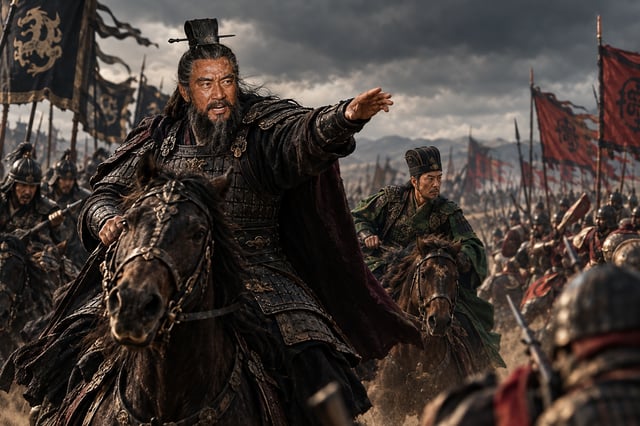
Cao Cao's Campaign Against Xu Province
Relationship timeline3 entries ▸
History · vol. 1
- Cao Cao§1
Child
Song fathered Taizu (parent-child relationship)
Novel · ch. 1
- Cao Cao§25
Child
father and son (Cao Song was the father)
Novel · ch. 10
- Cao Cao§11
Kin
Father; fled trouble from Chenliu and lived in seclusion in Langya; Ying Shao was ordered to escort him back to Yanzhou, but he was killed en route
Inner monologues · AI-generated1 monologue ▸
- I am Cao Song, courtesy name Jugao. My family now stands in prominence, and I have risen to the office of Grand Commanda