Cao Wei · Military Advisor to the Minister of Works
Guo Jia
courtesy name 奉孝 · 170–207
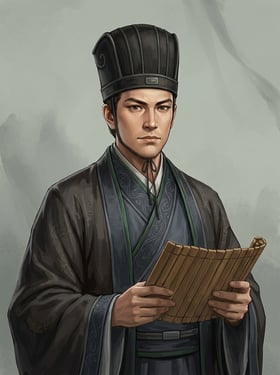
Guo Jia was expansive in temperament and penetrating in his grasp of affairs, giving no heed to petty proprieties of conduct. He set out matters in orderly sequence and marshaled analogies to compare them, adept at discerning the larger trend, far-reaching in strategy and decisive.

Life
In the novel: 16 chapters · In the Records: 4 volumes
Life170–207
189 CE (Zhongping 6)
193 CE (Chuping 4)
196 CE (Jian'an 1)
6 more events
197 CE (Jian'an 2)
198 CE (Jian'an 3)
201 CE (Jian'an 6)
- Cao Cao Pacifies HebeiYeAdvisor
207 CE (Jian'an 12)
207 CE (Jian'an 12)
- Cao Cao's Campaign Against the WuhuanWhite Wolf MountainAdvisor
- Death of Guo JiaYi CountyKilled in action
Allegiance
- Cao Wei
- Hatched: dated by chapter
- Life event
- Death
List all 10 stops
- Yingchuan170Birthplace
- Chenliu189Cao Cao Raises an Army
- Xu Province193Cao Cao's Campaign Against Xu Province
- Ye196Guo Jia Leaves Yuan Shao and Joins Cao Cao
- Xuchang197The Ten Victories and Ten Defeats Theory
- Xiapi198Battle of Xiapi+1 more
- Ye201Cao Cao Pacifies Hebei
- Xiangping207Gongsun Kang Executes the Two Yuans
- White Wolf Mountain207Cao Cao's Campaign Against the Wuhuan
- Yi County207Died hereDeath of Guo Jia
On the boards
Compare with someone →Where this person ranks on each board.
Who they were
Character profile
- Character
- Guo Jia was expansive in temperament and penetrating in his grasp of affairs, giving no heed to petty proprieties of conduct. He set out matters in orderly sequence and marshaled analogies to compare them, adept at discerning the larger trend, far-reaching in strategy and decisive.
- Manner of speech
- Guo Jia's manner of speech was measured and parallel, fond of paired sets of ten clauses—such as the Way, righteousness, governance, magnanimity, strategy, virtue, benevolence, clarity, the civil, and the martial.
- Life
- Guo Jia was a man of Yangzhai in Yingchuan. He first saw Yuan Shao and then left him, and afterward, on Xun Yu's recommendation, was presented to Cao Cao and appointed Libation-Pourer of the Excellency of Works' Army. He followed the campaigns against Lü Bu, the pacification of Hebei, and the subjugation of the Wuhuan; on the return road at Liucheng he fell gravely ill and died at the age of only thirty-eight.
- Anecdotes
- Guo Jia was Cao Cao's foremost strategist. Cao Cao once said, 'Only Fengxiao could truly know my mind,' and when plague struck at Jing Province he sighed, 'Had Guo Fengxiao been alive, he would not have let me come to this'. He established many remarkable achievements, was enfeoffed as Marquis of Weiyang Village, and was posthumously titled Marquis Zhen.
Historical Record
Guo Jia, courtesy name Fengxiao, was from Yangzhai, Yingchuan. In his early years, he traveled north to meet Yuan Shao. He considered that Yuan Shao had many advisers but could not grasp the essentials, and was fond of making plans but poor at making decisions, making it difficult for him to achieve the enterprise of a hegemon. Guo Jia therefore left. Later, on Xun Yu’s recommendation, Cao Cao summoned him. The two discussed the state of the realm and praised one another; Cao Cao appointed Guo Jia as Army Libationer in the Office of the Excellency of Works. Guo Jia was perceptive about worldly affairs and skilled at planning. Cao Cao said, “Only Fengxiao can understand my intentions.”
Guo Jia accompanied Cao Cao on campaigns and repeatedly offered strategies. During the campaign against Lü Bu, Cao Cao’s army was exhausted by successive battles, and Cao Cao briefly considered withdrawing. Guo Jia and Xun You urged him to attack swiftly while Lü Bu’s momentum had waned and Chen Gong had yet to settle on a plan. Cao Cao then diverted the Yi and Si Rivers to flood Xiapi; the city fell, and Lü Bu was captured. When Cao Cao prepared to campaign east against Liu Bei, Guo Jia argued that Yuan Shao was slow and suspicious and would not immediately take advantage of Cao Cao’s absence to attack. He supported the expedition; Liu Bei was defeated and fled, while Yuan Shao indeed made no move. After Yuan Shao’s death, Guo Jia judged that Yuan Tan and Yuan Shang would inevitably clash over the succession. He advised delaying an attack and turning south toward Jing Province while waiting for events to unfold. Cao Cao followed his advice, and the two Yuan brothers soon fell into infighting.
During Cao Cao's Northern Campaign against the Wuhuan, Guo Jia urged Cao Cao to strike while the Wuhuan were far from the frontier and unprepared. At Yixian, he proposed leaving the baggage train behind, sending light troops on forced marches, and launching a surprise attack. Cao Cao advanced through Lulong Pass and routed Tadun’s forces; Yuan Shang and Yuan Xi fled to Liaodong. Guo Jia fell gravely ill on the return journey from Liucheng and died at the age of thirty-eight. Cao Cao mourned him deeply, saying that he had intended to entrust Guo Jia with his affairs after death. The court increased Guo Jia’s fief and posthumously granted him the title Marquis Zhen. Later, when Cao Cao fell ill amid an epidemic at Baqiu and burned his ships, he sighed that if Guo Jia were still alive, he would not have found himself in such a predicament.
In the Novel
Romance of the Three Kingdoms portrays Guo Jia as the sharp and decisive chief strategist in Cao Cao’s camp. The novel has Cheng Yu recommend Guo Jia to Xun Yu, who then asks Cao Cao to recruit him. After Guo Jia and Cao Cao discuss the state of the realm, Cao Cao praises his talent, and Guo Jia replies, “You are truly my lord.” This passage recasts the historical account of Xun Yu recommending a worthy man: in the novel, Cheng Yu recommends Guo Jia first, and Xun Yu brings it about.
The novel also emphasizes Guo Jia’s arguments and ability to judge a situation in the moment. He uses the “Ten Victories and Ten Defeats” argument to analyze the relative strengths of Cao Cao and Yuan Shao, and advocates defeating Lü Bu first before turning against Yuan Shao. When Xiapi remains under siege for a long time, he agrees with diverting the Yi and Si Rivers to flood the city, in keeping with the historical account. When Liu Bei comes to seek refuge, the novel has Guo Jia advise Cao Cao not to kill him, lest Cao Cao lose the trust of the realm’s heroes. But after Liu Bei leaves with troops, Guo Jia joins Cheng Yu in advising Cao Cao not to let Liu Bei go free. This shows that Guo Jia both considered the broader importance of Cao Cao’s reputation and recognized the potential threat Liu Bei posed.
The chapter on the campaign against the Wuhuan expands the historical account of the surprise attack by having Guo Jia, despite being ill, accompany the army and urge Cao Cao to press forward with forced marches. Guo Jia then arrives in Yi Prefecture ahead of Cao Cao and dies there, leaving behind a letter that predicts the situation in Liaodong. These specific dramatic elements—his advice while ill and the letter that settles the situation in Liaodong—are not explicitly recorded in the Records of the Three Kingdoms.
Key Relationships
- Cao Cao: Guo Jia’s lord and an important adviser. Cao Cao relied on his ability to adapt to changing circumstances in battle, saying that Guo Jia understood his intentions better than anyone. After Guo Jia’s death, Cao Cao mourned his early passing and, at Baqiu, lamented, “Had Guo Fengxiao been here, he would not have let me come to this.”
- Xun Yu: An important person in bringing Guo Jia into Cao Cao’s administration. According to the historical account, Xun Yu recommended Guo Jia after Xi Zhicai’s death; the novel adds that Cheng Yu first mentioned Guo Jia to Xun Yu, who then brought about his recruitment.
- Xun You: Both men served as advisers to Cao Cao. They once jointly urged Cao Cao to attack Xiapi swiftly and flood the city with the Yi and Si Rivers, leading to Lü Bu’s capture.
- Yuan Shao and the Yuan sons: Guo Jia left Yuan Shao because he considered him full of plans but short on resolve. He later judged that Yuan Tan and Yuan Shang would contend for power, and advised Cao Cao to wait for them to fall into internal conflict.
- Liu Bei: Guo Jia once advised Cao Cao not to damage his reputation for recruiting heroes over a temporary concern. Later, when Liu Bei obtained troops, campaigned, and raised arms against Cao Cao, the historical account says Guo Jia and Cheng Yu tried to dissuade Cao Cao, who regretted not heeding them.
Signature Scenes
- The Flooding of Xiapi: Cao Cao’s troops were exhausted, and Cao Cao wanted to withdraw. Guo Jia and Xun You judged that Lü Bu’s strength was waning and Chen Gong had yet to settle on a plan, and urged a swift attack. Cao Cao diverted the Yi and Si Rivers to flood the city; Xiapi fell and Lü Bu was captured. This is a representative example of Guo Jia’s ability to seize the moment.
- Ten Victories and Ten Defeats: Guo Jia compares Cao Cao and Yuan Shao point by point in terms of principle, righteousness, governance, adaptability, strategy, virtue, benevolence, insight, culture, and military strength. The orderly parallel structure makes his argument more persuasive. This analysis of their relative positions appears in both the historical account and the novel, which further develops it into a fully staged dramatic scene.
- The Surprise Attack on the Wuhuan: Guo Jia argues that speed is essential in warfare, advising Cao Cao to abandon the baggage train and send light troops on forced marches. Cao Cao advances through Lulong Pass and routs Tadun’s forces. The novel’s additions of Guo Jia offering advice while ill and leaving behind a letter that settles the situation in Liaodong are unique to the Romance.
- Cao Cao’s Lament at Baqiu: Returning from his campaign against Jing Province, Cao Cao encounters an epidemic and burns his ships. He laments that if Guo Jia were alive, he would not have fallen into such a predicament. This scene captures Cao Cao’s longing for the adviser he had lost.
Quotes
26 lines in the books · 3 featured
「劉項之不敵,公所知也。高祖惟智勝,項羽雖強,終為所擒。今紹有十敗,公有十勝;紹兵雖盛,不足懼也。紹繁禮多儀,公體任自然,此道勝也;紹以逆動,公以順率,此義勝也;桓、靈以來,政失於寬,紹以寬濟,公以猛糾,此治勝也;紹外寬內忌,所任多親戚,公外簡內明,用人惟才,此度勝也;紹多謀少決,公得策輒行,此謀勝也;紹專收名譽,公以至誠待人,此德勝也;紹恤近忽遠,公慮無不周,此仁勝也;紹聽讒惑亂,公浸潤不行,此明勝也;紹是非混淆,公法度嚴明,此文勝也;紹好為虛勢,不知兵要,公以少克眾,用兵如神,此武勝也。公有此十勝,於以敗紹無難矣。」
Guo Jia's "Ten Victories and Ten Defeats" discourse laid the foundation for Cao Cao's unification of the north and is of great strategic significance.
「策新並江東,所誅皆英豪雄傑,能得人死力者也。然策輕而無備,雖有百萬之眾,無異於獨行中原也。若刺客伏起,一人之敵耳。以吾觀之,必死於匹夫之手。」
Precisely foretelling the Death of Sun Ce, this displays Guo Jia's extraordinary insight into human nature.
「夫智者審於量主,故百舉百全而功名可立也。袁公徒欲效周公之下士,而未知用人之機。多端寡要,好謀無決,欲與共濟天下大難,定霸王之業,難矣!」
Guo Jia's appraisal of Yuan Shao as "full of schemes but short on essentials, fond of planning but unable to decide" incisively exposes the root of his failure.
- Family
- Friends
- Enemies
- Other
Who is Guo Jia connected to?
Pick someone to see how many steps lie between them and Guo Jia.
History vs. novel
7 points
| History | Novel |
|---|---|
| Recommendation for OfficeSources disagree | |
After Xi Zhicai died, Cao Cao wrote to Xun Yu asking who could succeed him. Xun Yu recommended Guo Jia directly; after discussing affairs with Guo Jia, Cao Cao appointed him Army Libationer to the Director of the Secretariat. vol. 14 | The novel has Xun Yu recommend Cheng Yu, who then recommends Guo Jia to Xun Yu. Guo Jia is subsequently summoned and discusses the realm with Cao Cao. ch. 10 |
| Ten Advantages and Ten DisadvantagesNovel embellishes | |
Comparing Liu Bang and Xiang Yu, Guo Jia analyzed point by point ten advantages and disadvantages each for Cao Cao and Yuan Shao, concluding that although Yuan Shao was powerful, he was no cause for fear. vol. 14 | The novel largely follows the analysis of ten advantages and ten disadvantages, while adding that Xun Yu agrees and having Guo Jia further advise taking Lü Bu first, then turning against Yuan Shao. ch. 18 |
| Lü Bu's DefeatNovel embellishes | |
After Cao Cao's forces defeated Lü Bu in three battles, the troops were exhausted and Cao Cao briefly considered withdrawing. Guo Jia urged him to press the attack while they had the advantage, and Lü Bu was ultimately captured. vol. 14 | The novel adds that after Cao Cao fell into a trap at Puyang and was attacked with fire, he feigned death, luring Lü Bu to advance to Mount Malingshan, where an ambush was laid and Lü Bu defeated. ch. 12 |
| Liu Bei's FateSources disagree | |
The Wei Shu quoted in historical accounts records Guo Jia advising Cao Cao not to kill Liu Bei, who had come over to join him, lest it harm his reputation for attracting worthy men. The Fuzi, however, records that Guo Jia believed Liu Bei would never accept a subordinate position and urged Cao Cao to deal with him promptly. vol. 14 | The novel has Guo Jia urge Cao Cao not to kill Liu Bei, reasoning that killing a man of heroic repute who had come over to join him would make the realm's wise men fearful and suspicious. Later, he also advises Cao Cao not to let Liu Bei leave. ch. 16 |
| Death of Sun CeHistory only | |
Guo Jia judged Sun Ce to be rash and lacking in caution, and therefore likely to die at an assassin's hand. Before crossing the river at the frontier, Sun Ce was indeed killed by Xu Gong's retainers. vol. 14 | — |
| Delaying the Attack on the Yuan ClanNovel embellishes | |
After Yuan Shao's death, Guo Jia advised delaying an attack on Yuan Tan and Yuan Shang and turning instead toward Jing Province, waiting for the brothers to fall out. Cao Cao followed his advice, and the Yuan brothers did indeed fight over Jizhou. vol. 14 | The novel also has Guo Jia advise marching south toward Jing Province and waiting for the Yuan brothers to quarrel, adding the background that the Yuan clan had set aside the eldest son in favor of a younger one, leading the brothers to fight for power. ch. 32 |
| Campaign Against the WuhuanNovel embellishes | |
Guo Jia believed the Wuhuan, relying on their remoteness, were unprepared, and that Liu Biao was no cause for concern either. After reaching Yixian, he further advised leaving the baggage train behind and making a rapid surprise attack with light troops. Cao Cao consequently routed the Wuhuan. vol. 14 | The novel retains Guo Jia's recommendation to launch the campaign and use a rapid surprise attack with light troops, while adding that he suffered from the unfamiliar climate en route, fell ill in his carriage, and that Cao Cao wept because of his illness. ch. 33 |
- Recommendation for OfficeSources disagree
- History
After Xi Zhicai died, Cao Cao wrote to Xun Yu asking who could succeed him. Xun Yu recommended Guo Jia directly; after discussing affairs with Guo Jia, Cao Cao appointed him Army Libationer to the Director of the Secretariat.
vol. 14
- Novel
The novel has Xun Yu recommend Cheng Yu, who then recommends Guo Jia to Xun Yu. Guo Jia is subsequently summoned and discusses the realm with Cao Cao.
ch. 10
- Ten Advantages and Ten DisadvantagesNovel embellishes
- History
Comparing Liu Bang and Xiang Yu, Guo Jia analyzed point by point ten advantages and disadvantages each for Cao Cao and Yuan Shao, concluding that although Yuan Shao was powerful, he was no cause for fear.
vol. 14
- Novel
The novel largely follows the analysis of ten advantages and ten disadvantages, while adding that Xun Yu agrees and having Guo Jia further advise taking Lü Bu first, then turning against Yuan Shao.
ch. 18
- Lü Bu's DefeatNovel embellishes
- History
After Cao Cao's forces defeated Lü Bu in three battles, the troops were exhausted and Cao Cao briefly considered withdrawing. Guo Jia urged him to press the attack while they had the advantage, and Lü Bu was ultimately captured.
vol. 14
- Novel
The novel adds that after Cao Cao fell into a trap at Puyang and was attacked with fire, he feigned death, luring Lü Bu to advance to Mount Malingshan, where an ambush was laid and Lü Bu defeated.
ch. 12
- Liu Bei's FateSources disagree
- History
The Wei Shu quoted in historical accounts records Guo Jia advising Cao Cao not to kill Liu Bei, who had come over to join him, lest it harm his reputation for attracting worthy men. The Fuzi, however, records that Guo Jia believed Liu Bei would never accept a subordinate position and urged Cao Cao to deal with him promptly.
vol. 14
- Novel
The novel has Guo Jia urge Cao Cao not to kill Liu Bei, reasoning that killing a man of heroic repute who had come over to join him would make the realm's wise men fearful and suspicious. Later, he also advises Cao Cao not to let Liu Bei leave.
ch. 16
- Death of Sun CeHistory only
- History
Guo Jia judged Sun Ce to be rash and lacking in caution, and therefore likely to die at an assassin's hand. Before crossing the river at the frontier, Sun Ce was indeed killed by Xu Gong's retainers.
vol. 14
- Delaying the Attack on the Yuan ClanNovel embellishes
- History
After Yuan Shao's death, Guo Jia advised delaying an attack on Yuan Tan and Yuan Shang and turning instead toward Jing Province, waiting for the brothers to fall out. Cao Cao followed his advice, and the Yuan brothers did indeed fight over Jizhou.
vol. 14
- Novel
The novel also has Guo Jia advise marching south toward Jing Province and waiting for the Yuan brothers to quarrel, adding the background that the Yuan clan had set aside the eldest son in favor of a younger one, leading the brothers to fight for power.
ch. 32
- Campaign Against the WuhuanNovel embellishes
- History
Guo Jia believed the Wuhuan, relying on their remoteness, were unprepared, and that Liu Biao was no cause for concern either. After reaching Yixian, he further advised leaving the baggage train behind and making a rapid surprise attack with light troops. Cao Cao consequently routed the Wuhuan.
vol. 14
- Novel
The novel retains Guo Jia's recommendation to launch the campaign and use a rapid surprise attack with light troops, while adding that he suffered from the unfamiliar climate en route, fell ill in his carriage, and that Cao Cao wept because of his illness.
ch. 33
Combat
On the field
Duels, kills and executions as the texts tell them, counted separately for the Records and the Romance.
Stratagems
Plans this person devised or saw through, as the texts tell them.
- Records
- 3 carried out · 3 worked · 0 turned down · 0 seen through
- Romance
- 4 carried out · 4 worked · 0 turned down · 0 seen through
- RecordsFlood the EnemySiegeWorkedagainst Lu BuJuan 1「用荀攸、郭嘉計,遂決泗、沂水以灌城」
- RecordsDelay the Enemy and Wait for Events to ChangeSowing discordWorkedagainst the Yuan clanJuan 14「不如南向荊州若征劉表者,以待其變;變成而後擊之,可一舉定也」
- RecordsLaunch a Surprise Attack with Lightly Armed TroopsOtherWorkedagainst WuhuanJuan 14「不如留輜重,輕兵兼道以出,掩其不意」
- RomanceFlood the EnemySiegeWorkedagainst XiapiCh. 19「即令軍士決兩河之水」
- RomanceWatch Their Situation ChangeSowing discordWorkedagainst the Yuan clanCh. 32「以候袁氏兄弟之變;變成而後擊之,可一舉而定也」
- RomanceLaunch a Surprise Attack with Lightly Armed TroopsOtherWorkedagainst WuhuanCh. 33「不如輕兵兼道以出,掩其不備」
All stratagems (7)
Loading…
Events
Events (19)
Battles and events the texts place this person in, by date.
Battles
Other events
- 189Cao Cao Raises an ArmyAdvisor
- 193Cao Cao's Campaign Against Xu ProvinceAdvisor
- 194Lü Bu's Seizure of Yanzhou
- 195Defeat of Lü Bu at Dingtao
- 196Guo Jia Leaves Yuan Shao and Joins Cao CaoAdvisor
- 197The Ten Victories and Ten Defeats TheoryAdvisor
- 198Flooding of Xiapi via the Yi and Si RiversAdvisor
- 198Cao Cao Cuts His Hair in Place of His HeadAdvisor
All 15
- 200Guan Yu Surrenders to Cao Cao
- 200Death of Sun Ce
- 200Girdle Edict
- 201Cao Cao Pacifies HebeiAdvisor
- 207Gongsun Kang Executes the Two YuansAdvisor
- 207Cao Cao's Campaign Against the WuhuanAdvisor
- 207Death of Guo JiaKilled in action
Places
Continue
The Battle of Xiapi in 3D
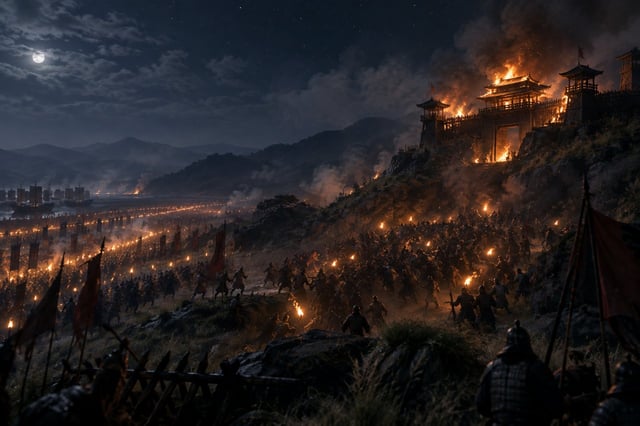
Replay the Battle of Xiapi phase by phase on real terrain: troop strengths, movements and turning points at a glance, each marked as coming from the Records of the Three Kingdoms or the Romance.
Relationship timeline15 entries ▸
History · vol. 14
- Yuan Shao§20
Rival
Initially went north to see Yuan Shao and then left
- Cao Cao§23
Advised
told Cao Cao of Yuan Shao’s ten defeats and Lord Cao’s ten victories
- Lü Bu§25
Enemy
used a strategy of swiftly attacking Lü Bu, and consequently captured Lü Bu
- Sun Ce§26
Rival
Anticipated that Sun Ce was rash and unprepared, and would certainly die at the hands of an ordinary man
- Yuan Tan§27
Enemy
proposed delaying matters to wait for Yuan Tan and Yuan Shang to fight among themselves
- Cao Cao§30
Advised
He proposed a campaign against the Wuhuan and a surprise attack; the strategy that speed was essential in war.
Novel · ch. 11
- Cao Cao§12
Advised
Guo Jia successively proposed the strategies of "first courtesy, then force" and "doing Liu Bei a favor to make him withdraw his troops and recover Yanzhou"
Novel · ch. 12
- Cao Cao§8
Advised
Praised Cao Cao’s plan to turn the enemy’s scheme against them by feigning death as a good strategy
All 15
Loading…
Inner monologues · AI-generated3 monologues ▸
- I am Guo Jia, courtesy name Fengxiao. At this moment I lie ill in the carriage, with the northern winds and sand seeming
- I am Guo Jia, courtesy name Fengxiao. What it means to hold the advantage lies not in having more troops at any given mo
- I am Guo Jia, courtesy name Fengxiao, from Yangzhai in Yingchuan. As the Han dynasty neared its end, the realm fell into