Overview
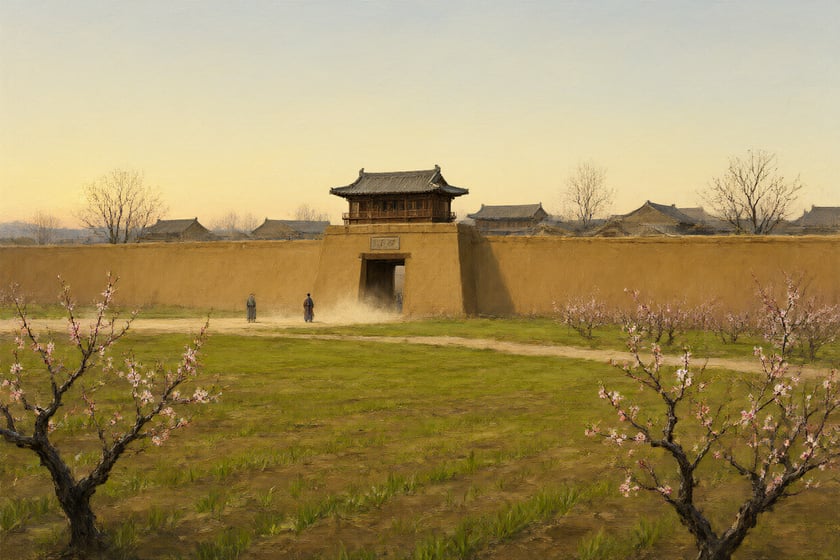
Chenliu Commandery was a commandery under Yanzhou in the Eastern Han dynasty. Its seat, Chenliu County, lay southeast of present-day Kaifeng in Henan Province. Suanzao, where the forces of the eastern passes formed an alliance to campaign against Dong Zhuo, was also within the commandery. In the sixth year of Zhongping (189), Cao Cao fled from Luoyang and returned home. He used his family’s wealth to raise a volunteer army, and in the twelfth month launched his uprising in Jiwu County within the commandery. Chenliu thus became the starting point of his career. Gao Rou called Chenliu “a place fought over on all four sides”. Under Wei, Chenliu became a princedom.
History
When Dong Zhuo held power, he accepted the advice of Zhou Bi and others and appointed Zhang Miao of Dong Commandery as Administrator of Chenliu. After taking office, Zhang Miao immediately raised troops against Dong Zhuo. Also in the sixth year of Zhongping (189), Wei Zi, a Filial and Incorruptible from Chenliu, contributed his family’s wealth to support Cao Cao, helping him recruit five thousand men. In the first year of Chuping (190), Zhang Chao, Administrator of Guangling, and Zang Hong traveled west to Chenliu to see Zhang Chao’s elder brother, Zhang Miao. The various provinces and commanderies then set up an altar at Suanzao and swore an oath, jointly urging Zang Hong to ascend the altar and seal the pact with blood. Dong Zhuo’s son-in-law Niu Fu also sent the Commandant Li Jue, Guo Si, and Zhang Ji to plunder counties in Chenliu and Yingchuan.
In the fourth year of Chuping (193), Yuan Shu led his army into Chenliu and camped at Fengqiu. Cao Cao defeated Yuan Shu and besieged Fengqiu. Yuan Shu fled to Xiangyi, and Cao Cao pursued him to Taishou, diverting a canal to flood the city. Xiahou Dun later served as Administrator of Chenliu and Jiyin. During a severe drought and locust plague, he dammed the waters of Taishou to build an irrigation pond, carried earth himself, and led his officers and soldiers in planting rice, bringing relief to the people.
In the third year of Huangchu under Wei (222), Cao Jun was enfeoffed as Prince of Chenliu. Five years later, his fief was changed to Xiangyi; in the sixth year of Taihe (232), he was again enfeoffed as Prince of Chenliu. He died in the fourth year of Ganlu (259), and his son Cao Ao succeeded him. In the second year of Xianxi (265), Emperor Yuan of Wei, Cao Huan, abdicated in favor of Jin. Cao Huan moved to Jinyong Fortress and later lived in Ye. Pei Songzhi’s commentary cites the Wei Shìpu as saying that he was enfeoffed as Prince of Chenliu and died in the first year of Taian (302).
People
- Administrators and chancellors of the princedom: Besides Zhang Miao and Xiahou Dun, Xiahou Yuan was appointed Administrator of Chenliu and Yingchuan after joining Cao Cao Raises an Army. Zao Zhi pioneered the tuntian system. After his early death, he was posthumously appointed Administrator of Chenliu; in an edict, Cao Cao praised his “innate loyalty and ability”. Under Wei, Sun Yong, Liu Shao (who championed education and moral instruction and was praised by the people), and Gaotang Long (who recommended You Mu, a man over seventy known for his filial conduct, as an Assistant in the Accounting Office) successively served as Administrators of Chenliu. Sima Qi, son of Sima Zhi, served as Chancellor of Chenliu.
- People from Chenliu: Cao Cao’s fierce general Dian Wei was from Jiwu in Chenliu. Mao Jie was from Pingqiu and once advised Cao Cao to uphold the Son of Heaven’s authority and command those who would not submit. Wei Zi and his son Wei Zhen were from Xiangyi. Wei Zi joined Cao Cao’s campaign against Dong Zhuo and was killed in battle at Xingyang. Gao Rou was from Yu; his cousin Gao Gan once persuaded Han Fu on Yuan Shao’s behalf to yield Jizhou. Kong Zhou served as Inspector of Yu Province during the campaign against Dong Zhuo. The men of letters Ruan Yu, Lu Cui, Ruan Ji, Su Lin, and Yu Song were all from Chenliu, while Bian Rang was killed for offending Cao Cao with his words. Lady Wu, Liu Bei’s Mu Empress, and her elder brother Wu Yi also came from Chenliu. Puyang Yi fled the turmoil to Jiangdong; his son Puyang Xing served as Grand Master of Ceremonies and General of the Guard under Sun Xiu of Wu.
Differences Between History and Romance
In Romance of the Three Kingdoms, Cao Cao flees Luoyang, parts ways with Chen Gong, and rides through the night to Chenliu, where he finds his father. His father introduces him to the immensely wealthy Filial and Incorruptible Wei Hong, who contributes his family’s wealth to help Cao Cao raise troops under the banner of “Loyalty and Righteousness”. Pei Songzhi’s commentary to the Records of the Three Kingdoms cites the Shiyu as identifying the benefactor as Wei Zi, a Filial and Incorruptible from Chenliu. The Records of the Three Kingdoms, “Annals of Emperor Wu,” says that Cao Cao’s father, Cao Song, took refuge in Langya during Dong Zhuo's Coup; it does not record that he met Cao Cao in Chenliu.
Today
The former seat of Chenliu Commandery was at present-day Chenliu Town, Xiangfu District, Kaifeng, Henan Province. The commandery’s territory roughly covered present-day Kaifeng and the areas to its southeast, including Lankao, Qi County, Tongxu, and Weishi.