Cao Wei · Chancellor's Clerk for Military Deliberations
Gaotang Long
courtesy name 升平 · –237
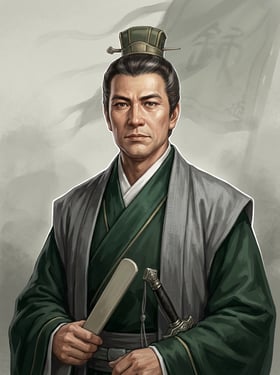
Deep and superior in learning, and expert in astronomy as well; loyal to the utmost and earnest in remonstrance, his aim was to set his sovereign right; he laid hand to sword to save his lord, and even at the point of death still worried for the altars of state.

Life
In the Records: 6 volumes
Life?–237
230 CE (Taihe 4)
237 CE (Jingchu 1)
- Cao Wei· Undated
- Life event
- Death
List all 2 stops
- Taishan CommanderyBirthplace
- Luoyang230–237Emperor Ming of Wei's Lavish Palace Construction+1 more
On the boards
Compare with someone →Where this person ranks on each board.
Who they were
Character profile
- Character
- Deep and superior in learning, and expert in astronomy as well; loyal to the utmost and earnest in remonstrance, his aim was to set his sovereign right; he laid hand to sword to save his lord, and even at the point of death still worried for the altars of state.
- Manner of speech
- He cited the classics at length, fond of drawing contrasts between the Three Kings and Five Emperors and the tyrants Jie, Zhou, You, and Li; he repeatedly used the language of calamities and portents as warnings.
- Life
- Gaotang Long, a native of Pingyang in Taishan, styled Shengping, was a descendant of Gaotang Sheng of Lu. He held such posts as Aide for Military Deliberations to the Chancellor, Tutor to the Prince of Pingyuan, Palace Attendant, Erudite, Commandant of the Imperial Son-in-law, Administrator of Chenliu, Cavalier Regular Attendant, and Chamberlain for the Imperial Insignia (guanglu xun); he repeatedly remonstrated against the labor of palace construction, and to his last hour still worried for the altars of state.
- Anecdotes
- A Palace Attendant, Grand Astrologer, and Chamberlain for the Imperial Insignia of Cao Wei, he is one of the subjects of this biography; in discussing the suburban sacrifices he held Wei to be the descendant of Shun.
Historical Record
Gaotang Long, courtesy name Shengping, was from Pingyang, Taishan Commandery. He claimed descent from Gaotang Sheng of the State of Lu. In his youth, he was a student, and Xue Ti, the Administrator of Taishan, appointed him as a circuit inspector. When the commandery’s military inspector argued with Xue Ti, he even addressed him by his personal name and rebuked him. Gaotang Long laid his hand on his sword and denounced the man for “addressing a minister by his name as though he were a ruler,” judging this contrary to a subject’s proper conduct. Xue Ti rose to stop him, and the military inspector turned pale. In the eighteenth year of Jian’an, Cao Cao summoned him to serve as a military council aide in the Chancellor’s staff. Thereafter he held posts including literary officer to Cao Hui, Marquis of Licheng; chancellor; Chief of Tangyang; and tutor to the Prince of Pingyuan. When Cao Hui showed no grief during Cao Cao’s mourning period and continued to hunt and ride about, Gaotang Long admonished him with appeals to moral principle, fulfilling his duty as a mentor. After Cao Rui ascended the throne, Gaotang Long served as Gentleman of the Palace, Erudite, and Commandant of the Imperial Escorts. He later held the posts of Administrator of Chenliu, Regular Mounted Attendant, Palace Attendant, Director of the Astronomical Bureau, and Excellency of Light, and was granted the title of Marquis within the Passes.
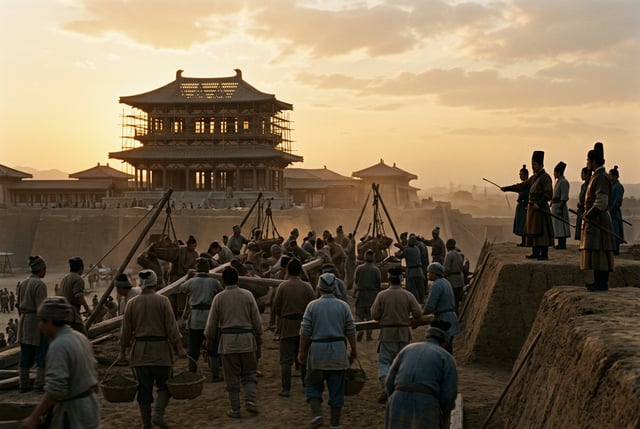
Gaotang Long was well versed in the classics and also skilled in astronomy and calendrical science. While serving as a Regular Mounted Attendant, he worked with Yang Wei, Luo Lu, and others to revise the calendar. Although his calculations were not accepted in a dispute over predicting a solar eclipse, his learning was widely known. He repeatedly remonstrated over palace construction, the undertaking of numerous corvée projects, and extravagant spending, advocating frugality, reducing labor demands, and bringing peace to the people. He also stressed that the rites for the suburban sacrifices and ancestral temples should be established first, and military supplies stored up. He opposed the construction of palaces and the distant transport of a great bell from Chang'an, warning Cao Rui with the lesson of King Jing of Zhou, who had cast a bell. When Cao Rui ordered Bian Lan to challenge him, Gaotang Long still argued on the relationship between ritual and music and the ordering or disordering of governance, and the emperor praised his response. He also used the fire at Chonghua Hall, magpies nesting on Lingxiao Gate, and the cometary appearance of the Great Fire Star as omens to urge Cao Rui, drawing on the classics and historical examples of the rise and fall of ancient states, to cultivate virtue and reduce corvée labor. His advice was not always accepted: Chonghua Hall was later rebuilt and renamed Jiulong Hall.
He also took part in matters of ritual and education, proposing a change to the calendar’s epoch and a new color for official dress. After Cao Rui accepted his proposal, the third month of the fifth year of Qinglong was changed to the fourth month, the first month of summer, in the first year of Jingchu; yellow was designated as the auspicious color for clothing, and white animals were prescribed for sacrifices. By imperial command, he helped teach the classics, and Cao Rui ordered palace officials to study the Confucian classics and ritual learning under Gaotang Long and others. Even when gravely ill, Gaotang Long continued to dictate memorials, urging precautions against powerful ministers within the palace and recommending that princes be chosen to garrison the realm and command troops. After his death, Cao Rui lamented his passing, and his son Gaotang Chen inherited his title. Gaotang Long left instructions that he be buried simply.
In the Novel
The materials provided do not describe or mention Gaotang Long in novels such as Romance of the Three Kingdoms. Accordingly, they do not allow his fictional portrayal to be summarized or specific comparisons to be made between the novel and historical accounts; within these materials, he does not appear in the novel.
Key Relationships
In his early years, Gaotang Long was appointed by Xue Ti, and once defended Xue Ti’s dignity by laying his hand on his sword and denouncing the commandery’s military inspector. Later, he mentored Cao Hui and admonished him for hunting during Cao Cao’s mourning period without showing grief. After entering Cao Wei’s service, he repeatedly remonstrated with Cao Rui on palace construction, the interpretation of omens, ritual reforms, and the teaching of the classics. Cao Rui sometimes accepted his advice, but did not accept his calendrical proposals on one occasion. Historical accounts record that Cao Rui lamented Gaotang Long’s death, attesting to his importance at court.
Notable Scenes
The first notable scene occurred when he was a young circuit inspector. When the military inspector treated Xue Ti disrespectfully, Gaotang Long laid his hand on his sword and rebuked him directly, invoking the proper conduct of a subject and the distinction between ruler and minister. This showed his unyielding integrity in the face of force. The second was his remonstrance over the great bell from Chang'an: he opposed extracting labor to obtain the bell, citing the story of King Jing of Zhou, whose casting of a bell brought decline. Even when faced with questions arranged by the emperor, he maintained that ritual and music were bound up with the rise and fall of political order, and Cao Rui ultimately praised him. The third was his remonstrance over magpies nesting on Lingxiao Gate. He interpreted the nest atop the gate as a warning that the palace buildings were unfinished and that another surname might take power, and called for the suspension of corvée projects and the promotion of virtuous governance. Cao Rui was moved by his words. Even when gravely ill, he remained concerned for the court and the state, leaving advice to guard against powerful ministers and secure the imperial region. In his final instructions, he called for a simple burial.
Quotes
8 lines in the books · 3 featured
「昔周景王不儀刑文、武之明德,忽公旦之聖制,旣鑄大錢,又作大鍾,單穆公諫而弗聽,泠州鳩對而弗從,遂迷不反,周德以衰,良史記焉,以爲永鑒。然今之小人,好說秦、漢之奢靡以盪聖心,求取亡國不度之器,勞役費損,以傷德政,非所以興禮樂之和,保神明之休也。」
These words warn the sovereign against imitating the extravagance of Qin and Han, lest he repeat their ruin—carrying a profound lesson from history.
「詩云『惟鵲有巢,惟鳩居之』。今興宮室,起陵霄闕,而鵲巢之,此宮室未成身不得居之象也。天意若曰,宮室未成,將有他姓制御之,斯乃上天之戒也。夫天道無親,惟與善人,不可不深防,不可不深慮。夏、商之季,皆繼體也,不欽承上天之明命,惟讒諂是從,廢德適欲,故其亡也忽焉。太戊、武丁,覩災竦懼,祗承天戒,故其興也勃焉。今若休罷百役,儉以足用,增崇德政,動遵帝則,除普天之所患,興兆民之所利,三王可四,五帝可六,豈惟殷宗轉禍爲福而已哉!臣備腹心,苟可以繁祉聖躬,安存社稷,臣雖灰身破族,猶生之年也。豈憚忤逆之災,而令陛下不聞至言乎?」
Invoking the allusion of 'the magpie's nest taken by the dove,' it warns that Cao Rui's excessive palace-building will invite the calamity of a fallen state; highly recognizable culturally.
「凡帝王徙都立邑,皆先定天地社稷之位,敬恭以奉之。將營宮室,則宗廟爲先,廄庫爲次,居室爲後。今圜丘、方澤、南北郊、明堂、社稷,神位未定,宗廟之制又未如禮,而崇飾居室,士民失業。外人咸云宮人之用,與興戎軍國之費,所盡略齊。民不堪命,皆有怨怒。書曰『天聦明自我民聦明,天明畏自我民明威』,輿人作頌,則嚮以五福,民怒吁嗟,則威以六極,言天之賞罰,隨民言,順民心也。是以臨政務在安民爲先,然後稽古之化,格于上下,自古及今,未嘗不然也。夫采椽卑宮,唐、虞、大禹之所以垂皇風也;玉臺瓊室,夏癸、商辛之所以犯昊天也。今之宮室,實違禮度,乃更建立九龍,華飾過前。天彗章灼,始起於房心,犯帝坐而干紫微,此乃皇天子愛陛下,是以發教戒之象,始卒皆於尊位,殷勤鄭重,欲必覺寤陛下;斯乃慈父懇切之訓,宜崇孝子祗聳之禮,以率先天下,以昭示後昆,不宜有忽,以重天怒。」
It stresses that the people's allegiance determines a nation's rise and fall, and uses celestial omens as a warning, reflecting ancient political wisdom and the notion of resonance between Heaven and humankind.
- Family
- Lord & vassal
- Enemies
- Teacher & student
Who is Gaotang Long connected to?
Pick someone to see how many steps lie between them and Gaotang Long.
Events
Events (2)
Battles and events the texts place this person in, by date.
Other events
- 230Emperor Ming of Wei's Lavish Palace ConstructionAdvisor
- 237Jingchu Calendar ReformAdvisor
Places
- Native of
- Taishan CommanderyRecords
- Governed
- ChenliuRecords
Continue
Emperor Ming of Wei's Lavish Palace Construction
Relationship timeline5 entries ▸
History · vol. 3
- Cao Rui§27
Advised
the upright minister Gaotang Long repeatedly remonstrated sternly against the extensive renovation of the Luoyang palace
History · vol. 25
- Xue Ti§30
Lord
Administrator Xue Ti appointed him as post-station inspector; he pressed his hand on his sword and rebuked the military inspector to save him from humiliation
- Cao Rui§31
Student
Tutor to the Prince of Pingyuan; when the prince ascended the throne as Emperor Ming, Long became a Palace Attendant, Erudite, and Commandant of the Imperial Son-in-Law
- Cao Hui§31
Student
Served as literary aide and assistant to Cao Hui, Marquis of Licheng; directly remonstrated with him for not mourning the Grand Ancestor’s death.
- Cao Rui§32
Advised
repeatedly submitted memorials remonstrating about palaces, omens, and changing the calendar
Inner monologues · AI-generated3 monologues ▸
- I am Gaotang Long, courtesy name Shengping. Now that my end is near, I reflect on what I have said throughout my life. I
- I am Gaotang Long, courtesy name Shengping. I often recall that when Your Majesty first ascended the throne, the ministe
- My name is Gaotang Long, my courtesy name is Shengping, and I am from Pingyang in Taishan. I am a descendant of Gaotang