Xue Ti
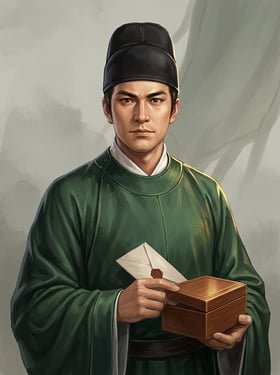
Xue Ti helped Cheng Yu secure three Yanzhou cities and held secret orders for Hefei; in the novel, he delivered urgent news.

Life
In the novel: 1 chapter · In the Records: 4 volumes
Life?–?
194 CE (Xingping 1)
215 CE (Jian'an 20)
Appearances
By chapter (5)
Novel
- 67
Records
- 14
- 17
- 22
- 25
- Life event
List all 3 stops
On the boards
Compare with someone →Where this person ranks on each board.
Who they were
Character profile
- Anecdotes
- Xue Ti served as an Attendant Officer of Yanzhou and as Protector of the Army, and held the post of Grand Administrator of Taishan. Together with Cheng Yu he held three cities, and he once carried Cao Cao's secret letter, serving as Cao Cao's envoy at the Battle of Hefei.
Historical Record
Xue Ti served as an administrator in Cao Cao’s Yanzhou. After rebellion broke out in Yanzhou and Zhang Miao welcomed Lü Bu, many commanderies and counties followed suit. Juancheng, Fan, and Dong’e became the only strongholds left to Cao Cao’s side. Cheng Yu traveled back and forth to manage the crisis, Zao Zhi led the officials and people of Dong’e in defending the city, and Xue Ti worked with Cheng Yu to devise a plan. In the end, they held all three cities until Cao Cao returned with his army. This gave Cao Cao a foothold on his return, and the histories summed up Xue Ti’s contribution with the phrase “ultimately preserving the three cities,” without further detailing his specific plans or actions.
The Shiyu adds that Xue Ti’s courtesy name was Xiaowei, and that at the age of twenty-two he became the governor of Taishan Commandery while serving as an administrator in Yanzhou. After Cao Cao pacified Jizhou, Xue Ti and the King of Dongping served as left and right chief clerks; he later rose to become Commandant of the Central Army. Pei’s commentary further describes him as “loyal, upright, and experienced in affairs,” a functionary praised by his contemporaries. While Xue Ti was governor of Taishan, he appointed Gaotang Long as an inspector. On one occasion, a commandery military supervisor argued with Xue Ti, addressed him by name, and berated him. Gaotang Long laid a hand on his sword and rebuked the man for showing disrespect to his superior, but Xue Ti sprang up and stopped him. The incident illustrates Xue Ti’s relations with his subordinates and the importance placed on observing distinctions of rank and proper conduct in official circles at the time.
Xue Ti also took part in the defense of Hefei as a military supervisor. Before Cao Cao’s Campaign Against Zhang Lu, Cao Cao left sealed instructions ordering that they be opened only when the enemy arrived, and entrusted them jointly to Xue Ti. After Sun Quan’s army besieged Hefei, the generals opened the instructions. As directed, Zhang Liao and Li Dian went out to fight, while Yue Jin guarded the camp. The histories focus on Zhang Liao’s defeat of Wu, the restoring of morale, and Sun Quan’s withdrawal; they do not portray Xue Ti as a leading battlefield commander. His clearly stated role was to convey and safeguard Cao Cao’s prior deployment plan.
In the Novel
In Chapter 67 of Romance of the Three Kingdoms, Xue Ti is portrayed as Cao Cao’s messenger: Cao Cao orders him to deliver a wooden box to Hefei, inscribed with the words “Open when the enemy arrives.” When Sun Quan arrives with an army of one hundred thousand, Zhang Liao opens the box and finds the written instructions. Following the arrangement that “Generals Zhang and Li shall go out to fight, while General Yue shall defend the city,” he discusses the counterattack with Li Dian. The novel gives Xue Ti the visible task of delivering the secret orders, making him a key link in the transmission of military commands before battle. Zhang Liao’s specific deployments, charge into battle, and reversal of the situation nevertheless remain at the center of the narrative. Compared with the historical accounts, the details of the box’s delivery and the dramatic portrayal of Xue Ti as Cao Cao’s messenger are elaborations of the novel and should not be conflated with the historical record of his role as a military supervisor.
The novel also depicts Zhang Liao worrying that Hefei has too few troops and ordering Xue Ti to ride through the night to Hanzhong to ask Cao Cao for reinforcements. After consulting his ministers, Cao Cao decides to withdraw troops to relieve Hefei. This episode further casts Xue Ti as a bearer of urgent military intelligence. However, the extant Records of the Three Kingdoms does not record this nighttime message or the ensuing discussion about withdrawing troops, so it should be regarded as a fictional episode.
Key Relationships
Xue Ti and Cheng Yu worked together to devise a plan to hold the three cities during the crisis in Yanzhou, a collaboration explicitly recorded in the histories. Zao Zhi also took part in the defense: the histories separately record that he led Dong’e’s officials and people in holding the city, and that Xue Ti and Cheng Yu worked together to preserve the three cities. Xue Ti was on friendly terms with Chen Jiao; when he was governor of Taishan, he became a close friend of Chen Jiao. Pei’s commentary also says that Chen Jiao later succeeded Xue Ti in several of the offices he held. Gaotang Long was an inspector appointed by Xue Ti. When a military supervisor showed disrespect to Xue Ti, Gaotang Long spoke up in his defense, and Xue Ti immediately intervened to stop the situation from escalating. At Hefei, Xue Ti held Cao Cao’s secret instructions as military supervisor, while Zhang Liao, Li Dian, and Yue Jin divided the fighting and defensive duties in accordance with them. The novel adds a messenger relationship between Xue Ti and Cao Cao: delivering the box and carrying the urgent message to Hanzhong are both unique to the novel.
Defining Scenes
The scene that best represents Xue Ti’s historical image is his work with Cheng Yu to preserve Juancheng, Fan, and Dong’e after the rebellion in Yanzhou. With the three cities still held, Cao Cao had a foothold when he returned with his army. Although Xue Ti is not portrayed with the same detailed counsel and direction as Cheng Yu, he is explicitly named among those who devised the plan to “ultimately preserve the three cities.”
Another scene takes place when the instructions are opened at Hefei. With Sun Quan’s troops at the city gates, the letter held by Xue Ti, marked “Open when the enemy arrives,” is opened, and Cao Cao’s prearranged plans for battle and defense are put into effect. The military achievements belong chiefly to Zhang Liao and the other commanders; Xue Ti’s defining role is to safeguard and convey the orders. The novel rewrites this scene as Xue Ti personally delivering the wooden box to Hefei, and separately depicts him riding through the night to Hanzhong for reinforcements. Both specific scenes are unique to the novel.
Lines
- 史 ch.22 §49→ Chen Jiao
「以郡吏而交二千石,邻國君屈從陪臣游,不亦可乎!」
Family, lords and rivals
2 relationships


Who is Xue Ti connected to?
Pick someone to see how many steps lie between them and Xue Ti.
Events
Events (3)
Battles and events the texts place this person in, by date.
Battles
- 215Battle of Xiaoyao FordAdvisor
- 216Battle of Ruxu (217)
Other events
Places
- Native of
- Dong CommanderyRecords
- Was at
- HefeiRecords
- Governed
- Wei CommanderyRecords
- Taishan CommanderyRecords
Continue
The Battle of Xiaoyao Ford in 3D
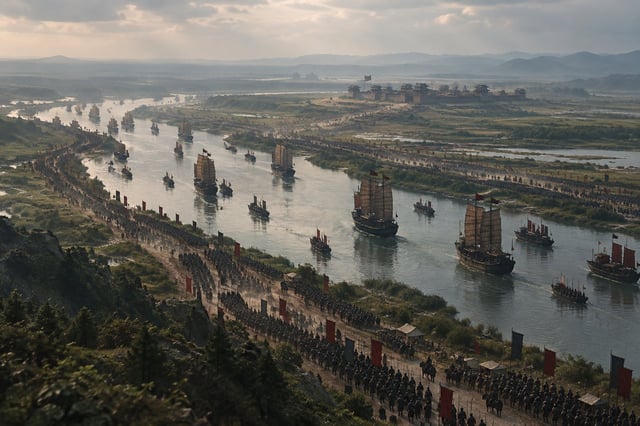
Replay the Battle of Xiaoyao Ford phase by phase on real terrain: troop strengths, movements and turning points at a glance, each marked as coming from the Records of the Three Kingdoms or the Romance.
Inner monologues · AI-generated1 monologue ▸
- My courtesy name was Xiaowei. I recall that when I was twenty-two, I served as an aide in Yanzhou, and later became Admi