Cao Wei · Army Adviser
Yang Fu
courtesy name 义山
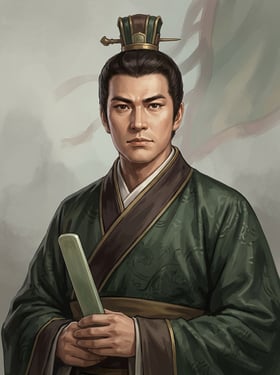
Yang Fu was upright and stern, long established in prestige and trust; he held his ruler to ritual and law, his words pointed and to the heart, able to discern great principles, and he reproached himself for the shame of not dying in defense of his city. Loyal, righteous, and deep in counsel, he was the chief architect of the uprising to restore order at Jicheng, and a renowned gentleman of Tianshui.

Life
In the novel: 5 chapters · In the Records: 4 volumes
Life?–?
212 CE (Jian'an 17)
- Siege of JichengJichengInstigator
213 CE (Jian'an 18)
230 CE (Taihe 4)
Allegiance
- Cao Wei
- Hatched: dated by chapter
- Life event
On the boards
Compare with someone →Where this person ranks on each board.
Who they were
Character profile
- Character
- Yang Fu was upright and stern, long established in prestige and trust; he held his ruler to ritual and law, his words pointed and to the heart, able to discern great principles, and he reproached himself for the shame of not dying in defense of his city. Loyal, righteous, and deep in counsel, he was the chief architect of the uprising to restore order at Jicheng, and a renowned gentleman of Tianshui.
- Manner of speech
- Yang Fu's manner of speech was to cite the classics for support, contrast right and wrong, and remonstrate at length in pointed terms; before his ruler he often submitted memorials, and could also question sternly in a raised voice.
- Life
- Yang Fu, styled Yishan, was a man of Ji in Tianshui. He served as chief clerk of Anding and as staff military officer in the Chancellor's office. When Ma Chao raided Longyou, Yang Fu, together with his cousin, firmly held Jicheng, and later plotted with Jiang Xu and others to campaign against Ma Chao; he took five wounds to his body, and seven of his clansmen died. After Longyou was pacified, he was granted the rank of Marquis Within the Passes, and later served as Inspector of Yi Province and Grand Administrator of Jincheng and Wudu, and was promoted to Grand Master of Palace Works and Chamberlain of the Privy Treasury. He repeatedly remonstrated against Emperor Ming's lavish construction of palaces, ever taking the realm as his own charge; his repeated remonstrances went unheeded, and though he repeatedly begged to resign his post it was not permitted. In the end he died in office, leaving no surplus wealth in his household.
- Anecdotes
- In the end, after all seven of his brothers had perished and he himself, pierced by five spear-wounds, still fought to the death, Yang Fu helped Xiahou Yuan drive off Ma Chao; Cao Cao enfeoffed him as Marquis Within the Passes, and he yielded the title. He was a former officer of Wei Kang, and together with Hua Xin submitted a memorial remonstrating against a campaign to attack Shu.
Historical Record
Yang Fu, courtesy name Yishan, was from Jixian in Tianshui. Early in his career, he served as an aide in Liang Province and was once sent on a mission to Xu at Wei Duan’s command. He later became Chief Clerk of Anding. He commented that Yuan Shao was generous but indecisive, while Cao Cao possessed great talent and far-reaching vision and acted with resolve. Yang Fu later left office, then was appointed by Wei Kang and held posts including Assistant to the Governor. After Ma Chao was defeated at Weinan and withdrew to seek the support of the various Rong tribes, Yang Fu was sent to warn Cao Cao that Ma Chao had won the hearts of the Qiang and Hu; if the army withdrew without making strict preparations, the commanderies north of Longshan would be difficult to hold. Cao Cao acknowledged his assessment but still hurried east. Ma Chao then led the various Rong tribes in seizing commanderies and counties north of Longshan, leaving Jicheng isolated. Yang Fu led more than a thousand scholar-officials and members of his clan in holding the city. From the first through the eighth month, no reinforcements arrived. The Inspector Wei Kang and the Administrator eventually opened the gates and surrendered to Ma Chao. Yang Fu wept and earnestly remonstrated, but could not stop them.
Using the death of his wife as a pretext, Yang Fu requested leave and went to Licheng to contact his maternal cousin Jiang Xu and Jiang Xu’s mother. He also joined forces with Zhao Ang, Yin Feng, and others to raise troops against Ma Chao, while Zhao Qu, Liang Kuan, and others coordinated efforts to retake Jicheng. Mother of Jiang Xu supported the uprising, but Ma Chao attacked Licheng and killed her. Yang Fu fought Ma Chao and suffered five wounds; seven of his clan brothers were killed. Ma Chao eventually fled south to Zhang Lu. After the western regions of Longyou were pacified, Cao Cao enfeoffed Yang Fu as a Marquis Within the Passes. Yang Fu declined, citing his failure to hold Jicheng, his failure to die in defense of his principles, and the fact that Ma Chao had yet to be executed. Cao Cao said he had helped everyone achieve a great victory and ordered him to accept the title and reward.
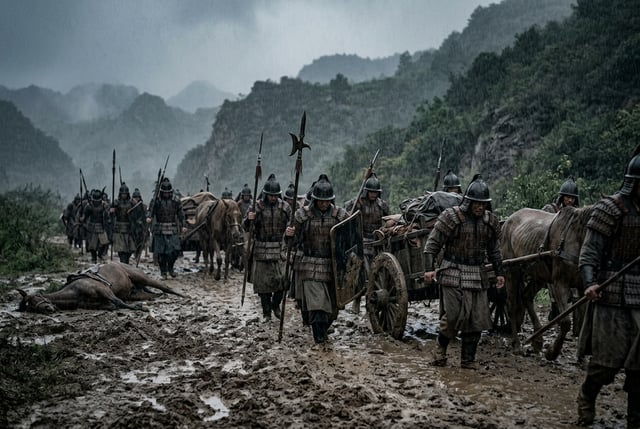
Yang Fu later served in posts including Inspector of Yi Province, Administrator of Jincheng, and Administrator of Wudu. In governing, he focused on setting broad principles, and his authority and reputation became widely established. He once relocated more than ten thousand households of Han Chinese and Di people from Wudu to the areas around Jingzhao, Fufeng, and Tianshui; the people followed, supporting the elderly and carrying the young. After entering the court, he served as Commandant of the City Gates, Director of the Palace Buildings, and Minister of the Household. He repeatedly remonstrated with Emperor Ming: he reproached him for wearing attire that did not accord with ritual, opposed lavish palace construction, the recruitment of palace women, and his indulgence in hunting, and also once dissuaded him from personally escorting a princess who had died young. Cao Rui repeatedly praised and accepted his loyal advice, though he did not always follow it. When Cao Zhen’s Invasion of Shu was hampered by rain, Yang Fu urged him to stop, saying, “Advance when there is an opportunity, and withdraw when you know the way is difficult.” The emperor immediately ordered the army to return to court. Yang Fu also put forward governing principles such as appointing worthy men, promoting agriculture, avoiding extravagance, and governing leniently. Yang Fu remonstrated repeatedly without being heeded and often requested permission to retire, but was not granted it. He later died, leaving no surplus wealth; his grandson Yang Bao succeeded him.
In the Novel
The Romance of the Three Kingdoms portrays Yang Fu as a Liang Province officer famed for loyalty, steadfastness, and skill in plotting and sowing discord. The novel has him urge Cao Cao to leave troops behind to guard against Ma Chao before the army returns, and recommend that Wei Kang defend Jicheng; the Records of the Three Kingdoms records Yang Fu’s warning about the threat posed by Ma Chao, but not this recommendation of Wei Kang. When Jicheng is about to fall, the novel depicts Yang Fu weeping as he urges Wei Kang not to surrender, but Wei Kang refuses to listen. Ma Chao, admiring his steadfast loyalty, keeps Yang Fu in his service. Yang Fu then uses the pretext of returning to bury his deceased wife to go to Licheng, where he contacts Jiang Xu and his mother and conspires with Zhao Qu, Liang Kuan, and others to coordinate an uprising from within and without. After the uprising begins, the novel has Yang Fu and Jiang Xu go out to battle to lure the enemy, coordinating with the inside collaborators and reinforcements led by Xiahou Yuan to defeat Ma Chao. Seven of Yang Fu’s brothers die in battle, while Yang Fu continues fighting despite being struck by five spears. Xiahou Yuan eventually sends him to Xu, where Cao Cao enfeoffs him as a Marquis Within the Passes. The historical account likewise records that Yang Fu suffered five wounds, that seven members of his clan died, and that he declined an enfeoffment, but it does not say that seven of his brothers died fighting alongside him or that Xiahou Yuan sent him to Xu. The novel also depicts Yang Fu and Hua Xin jointly submitting a memorial that prompts the Wei ruler to recall Cao Zhen and Sima Yi; this joint memorial is a feature of the novel’s narrative.
Key Relationships
- Ma Chao: Yang Fu first warned Cao Cao of the threat he posed, then held out at Jicheng and took part in organizing the campaign against him. The historical account records that Yang Fu fought Ma Chao and was wounded, and that Ma Chao fled to Hanzhong.
- Jiang Xu and his mother: Jiang Xu was Yang Fu’s maternal cousin. Yang Fu persuaded Jiang Xu to rise in revolt, and Jiang Xu’s mother also urged him to act out of loyalty and righteousness. After Ma Chao attacked Licheng, he killed Jiang Xu’s mother.
- Cao Cao and Cao Rui: Yang Fu served under Cao Wei and was enfeoffed by Cao Cao. In dealing with Cao Rui, he repeatedly remonstrated with him in his capacity as a minister, daring to challenge him directly over his attire, palaces, and the affairs of the palace women.
- Wei Kang and his Liang Province allies: Yang Fu was once appointed by Wei Kang. After Wei Kang surrendered to Ma Chao and was killed, Yang Fu joined forces with Jiang Xu, Zhao Ang, Yin Feng, Zhao Qu, Liang Kuan, and others to oppose Ma Chao.
- Brothers fighting and dying alongside him in the novel: All seven of Yang Fu’s brothers died while helping in the fighting, while Yang Fu continued fighting despite being struck by five spears. (Unique to the novel.)
Signature Scenes
- The eight-month defense of Jicheng: Yang Fu led more than a thousand men in holding the city, while reinforcements were long in coming. When Wei Kang decided to open the gates, Yang Fu urged him that there could be no surrender, but ultimately failed to change the city’s fate.
- Going to Licheng on the pretext of mourning his wife: Yang Fu turned a journey of mourning into the starting point of his campaign against Ma Chao. He told Jiang Xu and his mother of Wei Kang’s death and the disgrace suffered by the province, bringing about their joint uprising.
- Declining rewards for his military service: When Yang Fu was granted the title of Marquis Within the Passes, he declined it on the grounds that he had failed to hold the city and had not died in defense of his principles, revealing his self-reproach and steadfastness. Cao Cao insisted on rewarding his achievements.
- Harshly rebuking Cao Hong over a banquet: Cao Hong had female entertainers dance upon drums during a feast. Yang Fu reproached him in front of everyone over the distinction between men and women, then swept out of the hall. Cao Hong immediately dismissed the female musicians and invited him to return to his seat.
- Directly urging the ruler to abandon extravagance: Yang Fu invoked the frugality of ancient rulers and the extravagance that had brought kingdoms to ruin as warnings, repeatedly opposing Emperor Ming’s palace construction and expansion of the inner court. He even beat an official of the Imperial Treasury who refused to answer how many people were in the inner palace, demonstrating an unyielding integrity that did not falter in the ruler’s presence.
- Joint memorial with Hua Xin to recall the army on the campaign against Shu (unique to the novel): The novel depicts Yang Fu and Hua Xin submitting memorials in succession, after which the Wei ruler issues an edict recalling Cao Zhen and Sima Yi.
Quotes
18 lines in the books · 3 featured
「袁公寬而不斷,好謀而少決;不斷則無威,少決則失後事,今雖彊,終不能成大業。曹公有雄才遠略,決機無疑,法一而兵精,能用度外之人,所任各盡其力,必能濟大事者也。」
This line precisely appraises the character and ability of Yuan Shao and Cao Cao, embodying Yang Fu's discernment of men.
「守城不能完,君亡不能死,亦何面目以視息於天下!馬超背父叛君,虐殺州將,豈獨阜之憂責,一州士大夫皆蒙其恥。君擁兵專制而無討賊心,此趙盾所以書殺君也。超彊而無義,多釁易圖耳。」
This line shows Yang Fu's loyal, unyielding resolve to repay his lord unto death, embodying a core trait of his character.
「堯尚茅茨而萬國安其居,禹卑宮室而天下樂其業;及至殷、周,或堂崇三尺,度以九筵耳。古之聖帝明王,未有極宮室之高麗以彫弊百姓之財力者也。桀作琁室、象廊,紂爲傾宮、鹿臺,以喪其社稷,楚靈以築章華而身受其禍;秦始皇作阿房而殃及其子,天下叛之,二世而滅。夫不度萬民之力,以從耳目之欲,未有不亡者也。陛下當以堯、舜、禹、湯、文、武爲法則,夏桀、殷紂、楚靈、秦皇爲深誡。高高在上,實監后德。慎守天位,以承祖考,巍巍大業,猶恐失之。不夙夜敬止,允恭卹民,而乃自暇自逸,惟宮臺是侈是飾,必有顛覆危亡之禍。易曰:『豐其屋,蔀其家,闚其戶,閴其無人。』王者以天下爲家,言豐屋之禍,至於家無人也。方今二虜合從,謀危宗廟,十萬之軍,東西奔赴,邊境無一日之娛;農夫廢業,民有饑色。陛下不以是爲憂,而營作宮室,無有已時。使國亡而臣可以獨存,臣又不言也;君作元首,臣爲股肱,存亡一體,得失同之。孝經曰:『天子有爭臣七人,雖無道不失其天下。』臣雖駑怯,敢忘爭臣之義?言不切至,不足以感寤陛下。陛下不察臣言,恐皇祖烈考之祚,將墜于地。使臣身死有補萬一,則死之日,猶生之年也。謹叩棺沐浴,伏俟重誅。」
This line draws on the past to mirror the present, plainly warning of the harm of an emperor's extravagance, embodying Yang Fu's loyalty and foresight.
- Family
- Lord & vassal
- Friends
- Other
Who is Yang Fu connected to?
Pick someone to see how many steps lie between them and Yang Fu.
History vs. novel
9 points · 1 novel-only
| History | Novel |
|---|---|
| Yuan and Cao: Victory and DefeatHistory only | |
Yang Fu assessed Yuan Shao as broad-minded but indecisive, while Cao Cao possessed outstanding talent and knew how to employ people. He declared that Cao Cao would surely achieve great things. This assessment of the balance of power appears in historical accounts, but is absent from the novel. vol. 25 | — |
| Urging Precautions Against Ma ChaoNovel embellishes | |
After Ma Chao was defeated and fled, Yang Fu warned Cao Cao that Ma Chao was brave and had won the deep support of the Qiang and Hu peoples; unless they took precautions, Long would be lost. Although Cao Cao agreed, he still failed to make adequate preparations because he hurried east. vol. 25 | As Cao Cao's forces were returning, Yang Fu advised him that Ma Chao had Lü Bu's courage and urged him to seize the opportunity to eliminate him. Cao Cao could not stay long because affairs in the Central Plain and the south remained unsettled, so he instructed Yang Fu to defend Liang Province. ch. 59 |
| Jicheng: Defend or SurrenderNovel embellishes | |
Jicheng had been besieged for several months, and no relief forces had arrived. The provincial governor and commandery administrator planned to surrender. Yang Fu wept as he earnestly tried to dissuade them, saying he would rather die defending the city, but in the end the two men still opened the gates to welcome Ma Chao. vol. 25 | When Wei Kang wanted to surrender, Yang Fu wept and protested that Ma Chao was a traitor to his lord. Wei Kang ignored him, opened the gates, and surrendered; Ma Chao then killed him. The novel also says that Ma Chao spared Yang Fu because he had upheld his principles, and appointed him as an aide. ch. 64 |
| The Campaign Against Ma ChaoNovel embellishes | |
Using his wife's death as a pretext to request leave, Yang Fu went to Jiang Xu and his mother and wept as he recounted the events at Jicheng. He rallied local men and Liang Kuan, Zhao Qu, and others to rise in arms. Ma Chao attacked Licheng and killed Jiang Xu's mother. vol. 25 | Under the pretext of returning to bury his wife, Yang Fu went to Licheng, where he wept as he recounted events to his aunt and Jiang Xu, rousing them to campaign against Ma Chao. The novel portrays Yang Fu and Jiang Xu as cousins on their maternal side, and elaborates on Jiang Xu's mother berating her son for not sending out troops. ch. 64 |
| A Bloody Battle, Five WoundsNovel embellishes | |
Yang Fu fought Ma Chao and suffered five wounds. Seven of his kinsmen and brothers died in battle, and Ma Chao then fled south to Zhang Lu. vol. 25 | Yang Fu and his seven brothers fought Ma Chao together, and all seven were killed. Yang Fu was struck by five spears but continued fighting; Ma Chao fled after Xiahou Yuan's relief forces arrived. ch. 64 |
| Rebuking Cao HongHistory only | |
At a banquet, Cao Hong ordered female entertainers in gauzy clothing to dance on drums. Yang Fu rebuked him in front of everyone, saying that this violated the proper distinction between men and women, then walked out in a huff. Cao Hong immediately dismissed the entertainers and invited him back to his seat. vol. 25 | — |
| Declining the Title of Marquis Within the PassesNovel embellishes | |
After Liang Province was pacified, Cao Cao made Yang Fu a Marquis Within the Passes. Yang Fu declined, on the grounds that he had neither protected his lord nor died in his lord's service. Cao Cao nevertheless ordered him to accept the title. vol. 25 | Cao Cao made Yang Fu a Marquis Within the Passes. Yang Fu declined, saying he had neither defended his lord in a crisis nor given his life in his lord's service. Cao Cao praised his loyalty and righteousness, but still bestowed the title. ch. 64 |
| Advising Against the Campaign Against ShuNovel only | |
| — | When the Wei ruler hesitated over whether to campaign against Shu, Yang Fu and Hua Xin submitted a joint memorial urging him not to do so. The Wei ruler then issued an edict summoning Cao Zhen, Sima Yi, and others back to court. ch. 99 |
| Urging an End to ConstructionNovel embellishes | |
After Yang Fu became Minister of the Imperial Household, he submitted a memorial in response to Emperor Ming's construction of a palace at Xu and palaces, towers, and pavilions in Luoyang, urging him to limit palace construction and show consideration for the people. Emperor Ming replied with a personal edict expressing his approval. vol. 25 | The novel says that Emperor Ming had bronze figures and a dew-catching plate made, and planted exotic flowers and trees in Shanglin Park. Yang Fu, serving as Junior Tutor, submitted a memorial to remonstrate with him. The official title and the specific construction projects here differ from those recorded in historical accounts. ch. 105 |
- Yuan and Cao: Victory and DefeatHistory only
- History
Yang Fu assessed Yuan Shao as broad-minded but indecisive, while Cao Cao possessed outstanding talent and knew how to employ people. He declared that Cao Cao would surely achieve great things. This assessment of the balance of power appears in historical accounts, but is absent from the novel.
vol. 25
- Urging Precautions Against Ma ChaoNovel embellishes
- History
After Ma Chao was defeated and fled, Yang Fu warned Cao Cao that Ma Chao was brave and had won the deep support of the Qiang and Hu peoples; unless they took precautions, Long would be lost. Although Cao Cao agreed, he still failed to make adequate preparations because he hurried east.
vol. 25
- Novel
As Cao Cao's forces were returning, Yang Fu advised him that Ma Chao had Lü Bu's courage and urged him to seize the opportunity to eliminate him. Cao Cao could not stay long because affairs in the Central Plain and the south remained unsettled, so he instructed Yang Fu to defend Liang Province.
ch. 59
- Jicheng: Defend or SurrenderNovel embellishes
- History
Jicheng had been besieged for several months, and no relief forces had arrived. The provincial governor and commandery administrator planned to surrender. Yang Fu wept as he earnestly tried to dissuade them, saying he would rather die defending the city, but in the end the two men still opened the gates to welcome Ma Chao.
vol. 25
- Novel
When Wei Kang wanted to surrender, Yang Fu wept and protested that Ma Chao was a traitor to his lord. Wei Kang ignored him, opened the gates, and surrendered; Ma Chao then killed him. The novel also says that Ma Chao spared Yang Fu because he had upheld his principles, and appointed him as an aide.
ch. 64
- The Campaign Against Ma ChaoNovel embellishes
- History
Using his wife's death as a pretext to request leave, Yang Fu went to Jiang Xu and his mother and wept as he recounted the events at Jicheng. He rallied local men and Liang Kuan, Zhao Qu, and others to rise in arms. Ma Chao attacked Licheng and killed Jiang Xu's mother.
vol. 25
- Novel
Under the pretext of returning to bury his wife, Yang Fu went to Licheng, where he wept as he recounted events to his aunt and Jiang Xu, rousing them to campaign against Ma Chao. The novel portrays Yang Fu and Jiang Xu as cousins on their maternal side, and elaborates on Jiang Xu's mother berating her son for not sending out troops.
ch. 64
- A Bloody Battle, Five WoundsNovel embellishes
- History
Yang Fu fought Ma Chao and suffered five wounds. Seven of his kinsmen and brothers died in battle, and Ma Chao then fled south to Zhang Lu.
vol. 25
- Novel
Yang Fu and his seven brothers fought Ma Chao together, and all seven were killed. Yang Fu was struck by five spears but continued fighting; Ma Chao fled after Xiahou Yuan's relief forces arrived.
ch. 64
- Rebuking Cao HongHistory only
- History
At a banquet, Cao Hong ordered female entertainers in gauzy clothing to dance on drums. Yang Fu rebuked him in front of everyone, saying that this violated the proper distinction between men and women, then walked out in a huff. Cao Hong immediately dismissed the entertainers and invited him back to his seat.
vol. 25
- Declining the Title of Marquis Within the PassesNovel embellishes
- History
After Liang Province was pacified, Cao Cao made Yang Fu a Marquis Within the Passes. Yang Fu declined, on the grounds that he had neither protected his lord nor died in his lord's service. Cao Cao nevertheless ordered him to accept the title.
vol. 25
- Novel
Cao Cao made Yang Fu a Marquis Within the Passes. Yang Fu declined, saying he had neither defended his lord in a crisis nor given his life in his lord's service. Cao Cao praised his loyalty and righteousness, but still bestowed the title.
ch. 64
- Advising Against the Campaign Against ShuNovel only
- Novel
When the Wei ruler hesitated over whether to campaign against Shu, Yang Fu and Hua Xin submitted a joint memorial urging him not to do so. The Wei ruler then issued an edict summoning Cao Zhen, Sima Yi, and others back to court.
ch. 99
- Urging an End to ConstructionNovel embellishes
- History
After Yang Fu became Minister of the Imperial Household, he submitted a memorial in response to Emperor Ming's construction of a palace at Xu and palaces, towers, and pavilions in Luoyang, urging him to limit palace construction and show consideration for the people. Emperor Ming replied with a personal edict expressing his approval.
vol. 25
- Novel
The novel says that Emperor Ming had bronze figures and a dew-catching plate made, and planted exotic flowers and trees in Shanglin Park. Yang Fu, serving as Junior Tutor, submitted a memorial to remonstrate with him. The official title and the specific construction projects here differ from those recorded in historical accounts.
ch. 105
Combat
On the field
Duels, kills and executions as the texts tell them, counted separately for the Records and the Romance.
- RomanceCh. 64DuelMa ChaoBroken off「阜身中五槍,猶然死戰」
Stratagems
Plans this person devised or saw through, as the texts tell them.
- Records
- 1 carried out · 1 worked · 0 turned down · 0 seen through
- Romance
- 1 carried out · 1 worked · 0 turned down · 0 seen through
- RecordsRaise an Army to Lure Ma Chao into Closing the CityLureWorkedagainst Ma ChaoJuan 25「超聞阜等兵起,自將出。而衢、寬等解岳,閉冀城門,討超妻子」
- RomanceCoordinate from Within and WithoutOtherWorkedagainst Ma Chao's armyCh. 64「吾已暗約下梁寬、趙衢。兄若肯興兵,二人必為內應」
Events
Events (5)
Battles and events the texts place this person in, by date.
Battles
- 211Battle of Tong Pass
- 230Cao Zhen's Invasion of ShuAdvisor
Other events
- 212Siege of JichengInstigator
- 213Yang Fu Raises Troops Against Ma ChaoInstigator
- 230Emperor Ming of Wei's Lavish Palace ConstructionAdvisor
Places
- Native of
- JichengRecords
- Was at
- Liang ProvinceRecords
- LuchengRecords
- Governed
- WuduRecords
Continue
Cao Zhen's Invasion of Shu
Relationship timeline12 entries ▸
History · vol. 3
- Cao Rui§27
Advised
the upright minister Yang Fu repeatedly remonstrated sternly against the extensive renovation of the Luoyang palace
History · vol. 25
- Wei Kang§14
Lord
Duan Zheng served as Minister of the Imperial Stud; his son Kang succeeded him as governor, and recruited Fu as an administrative aide
- Wei Duan§14
Lord
as Governor Wei Duan’s envoy, went to Xu and was appointed Administrator of Anding
- Jiang Xu§16
Kin
older maternal cousin; Fu grew up in the Xu household and plotted to attack Ma Chao
- Ma Chao§16
Fights
Raised troops to attack Ma Chao; fought Chao and suffered five wounds, while seven members of his clan were killed
- Cao Hong§18
Advised
sternly rebuked Cao Hong for the impropriety of having naked women at a public gathering; Cao Hong dismissed the female musicians
- Cao Rui§20
Advised
asked the emperor why wearing half-sleeves was not proper attire, but the emperor did not answer; repeatedly submitted urgent remonstrances about the palaces, releasing palace women, and stopping the campaign against Shu
History · vol. 36
- Ma Chao§19
Fights
Fu and Xu rose up at Lucheng; Chao went out to attack them but could not overcome them; Kuan and Qu shut the gates of Jicheng, and Chao could not enter; Chao fled to Hanzhong
All 12
Loading…
Inner monologues · AI-generated3 monologues ▸
- I am Yang Fu, courtesy name Yishan. Looking back now, what I relied on was not skill with words, but a sense of duty as
- I am Yang Fu, courtesy name Yishan, from Jixian in Tianshui. In my youth, I encouraged and challenged myself alongside f
- I am Yang Fu, courtesy name Yishan. Looking back on my life, I see that all I upheld was a single word: “righteousness.”