Cao Wei · Inspector of Liang Province
Wei Kang
–213
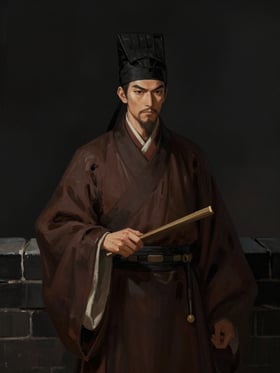
Wei Kang, Cao Wei's Liang Province inspector, was killed resisting Ma Chao at Jicheng; the novel says he was executed after surrendering.

Life
In the novel: 2 chapters · In the Records: 5 volumes
Life?–213
212 CE (Jian'an 17)
- Siege of JichengJichengVictim
Allegiance
Appearances
By chapter (7)
Novel
- 59
- 64
Records
- 9
- 10
- 18
- 25
- 36
- Cao Wei
- Hatched: dated by chapter
- Life event
- Death
List all 2 stops
- JingzhaoBirthplace
- Jicheng212–213Died hereSiege of Jicheng
On the boards
Compare with someone →Where this person ranks on each board.
Historical Record
Wei Kang, whose courtesy name was Yuanjiang, was from Jingzhao. Xun Yu once recommended him to Cao Cao. Wei Kang later succeeded his father, Wei Duan, as Inspector of Liang Province; people at the time considered this an honor. Pei’s commentary quotes a letter Kong Rong sent to Wei Duan, describing Wei Kang as “gifted and brilliant, of refined bearing and steadfast character,” and praising his great talent and generous disposition. Wei Kang later served as Inspector of Liang Province and was stationed at Jicheng.
During the Jian’an era, after Ma Chao was defeated south of the Wei River and withdrew to take refuge among the various Rong tribes, Cao Cao led his army east in response to affairs in the north. Yang Fu once warned Cao Cao that Ma Chao was brave and had won the deep loyalty of the Qiang and Hu peoples; unless they took strict precautions, the commanderies west of Long might fall. Cao Cao’s forces withdrew hastily and left their defenses inadequate. Ma Chao then led the various Rong tribes in seizing commanderies and counties west of Long, and many localities joined him, while Jicheng remained loyal to the province and commandery and held out. Ma Chao brought the troops of the Right of Long under his control and also received help from Zhang Lu’s general Yang Ang. With a combined force of ten thousand, he besieged the city. Yang Fu rallied more than a thousand local gentry, clansmen, and others to help defend it. They held out from the first through the eighth month but never received reinforcements. The deputy governor Yan Wen left the city to seek help and was killed by Ma Chao; only then did the Inspector and the Administrator begin considering surrender. Yang Fu wept as he urged them against it, declaring that he would rather die defending the city. But the Inspector and Administrator ultimately sent envoys to sue for peace and opened the gates to Ma Chao. After entering the city, Ma Chao detained Yang Fu’s younger cousin Yang Yue and ordered Yang Ang to kill the Inspector and Administrator.
Another account in the Records of the Three Kingdoms states directly that Ma Chao “killed Wei Kang, Inspector of Liang Province, and occupied Jicheng,” and says that Ma Chao’s former subordinates Yang Fu, Jiang Xu, Liang Kuan, Zhao Qu, and others later conspired to strike back. Liang Kuan and Zhao Qu shut the gates of Jicheng, leaving Ma Chao unable to advance or retreat, and he fled to Hanzhong. The Records of the Three Kingdoms thus clearly records that Wei Kang was killed by Ma Chao, but says little about Wei Kang’s specific words or actions before and after the surrender. The details of the defense, the pleas over surrender, and the opening of the gates are chiefly related in Yang Fu’s biography.
In the Novel
Chapter 59 of Romance of the Three Kingdoms has Yang Fu recommend Wei Kang for appointment as Inspector of Liang Province before Cao Cao withdraws his army. Wei Kang is ordered to lead troops to garrison Jicheng, and Yang Fu asks that a strong force be left in Chang’an as support. Wei Kang is thus portrayed as part of Cao Cao’s arrangements for defending the western lands; historical biographies contain no corresponding account of these recommendations, appointments, or requests for reinforcements.
Chapter 64 places Wei Kang at the center of the siege of Jicheng: Ma Chao attacks the city, and Wei Kang repeatedly sends envoys to seek help from Xiahou Yuan, but when the reinforcements fail to arrive, he consults with his men about surrendering. Yang Fu weeps as he remonstrates, but Wei Kang decides to open the gates because the situation is desperate. The novel has Ma Chao denounce him for surrendering insincerely and execute Wei Kang and more than forty others. Yang Fu is spared for upholding his principles and is subsequently appointed as a military adviser. The Records of the Three Kingdoms likewise records Wei Kang’s death and the fall of Jicheng, but does not mention the execution of more than forty people, Ma Chao’s face-to-face denunciation of Wei Kang’s intention to surrender, or Yang Fu’s pardon for upholding his principles and return to office. These details are dramatic embellishments in the novel.
Key Relationships
Wei Kang and Wei Duan were father and son. Wei Duan had served as Inspector of Liang Province before being summoned to serve as Grand Master of the Palace, and Wei Kang succeeded him as Inspector. Xun Yu was the one who recommended Wei Kang, while Cao Cao was the leader who accepted the recommendation and appointed him Inspector of Liang Province. Wei Kang and Yang Fu were colleagues in the provincial and commandery administration who jointly defended Jicheng: the historical account says that Yang Fu led his clansmen and local scholars in defending the city, and wept as he remonstrated when the Inspector and Administrator were preparing to surrender to Ma Chao. The novel goes further, portraying Yang Fu as a military adviser under Wei Kang and depicting the two in direct conflict over whether to surrender. Wei Kang rejects Yang Fu’s pleas, while Yang Fu survives and continues in office—a relationship the novel makes a prominent feature of its portrayal.
Wei Kang and Ma Chao stood opposed as defender and besieger, Inspector of Liang Province and commander of the attacking army. The historical account explicitly says that Ma Chao killed Wei Kang and occupied Jicheng; the novel portrays Wei Kang as being killed even after he opens the gates and surrenders, and expands the execution to a mass killing of more than forty people, including Wei Kang.
Signature Scene
The scene that best sums up Wei Kang’s image in the historical account is Jicheng holding out for months without reinforcements, until its gates are finally opened, Ma Chao enters, and the Inspector is killed. During the siege, Yang Fu weeps as he insists on upholding his principles, underscoring the city’s isolation and the collapse of its defenses. The historical account nevertheless preserves the fact that the Inspector and Administrator ultimately chose to sue for peace and open the gates.
The novel’s signature scene has Wei Kang face Yang Fu’s tearful remonstrance and still resolve to surrender, saying, “Matters have come to this,” before Ma Chao executes him. It recasts the historical account’s brief record of Jicheng’s fall and Wei Kang’s death as a dramatic confrontation centered on remonstrance in the name of loyalty, a desperate choice in a besieged city, and the denial of clemency after surrender. The execution of more than forty people and Ma Chao’s decision to spare Yang Fu because he “upheld his principles” are unique to the novel.
Lines
- 演 ch.64 §24
「不如投降馬超。」
- 演 ch.64 §24→ Yang Fu
「事勢至此,不降何待?」
- Family
- Lord & vassal
- Friends
- Enemies
Who is Wei Kang connected to?
Pick someone to see how many steps lie between them and Wei Kang.
History vs. novel
6 points
| History | Novel |
|---|---|
| Appointment as Inspector of Liang ProvinceNovel embellishes | |
After Wei Duan was summoned to serve as Minister of the Imperial Stud, his son Wei Kang succeeded him as Inspector of Liang Province; the historical records also say that people of the time regarded this as an honor. vol. 25 | The novel depicts Yang Fu recommending Wei Kang for the post of Inspector of Liang Province, and then garrisoning Jicheng with him to guard against Ma Chao. ch. 59 |
| Defending JichengNovel embellishes | |
Ma Chao led his forces in an attack on Jicheng. Wei Kang and the others held the city and defended it stubbornly from the first through the eighth month, but no reinforcements ever arrived. vol. 25 | The novel depicts Wei Kang repeatedly seeking aid from Xiahou Yuan, who dared not send troops without Cao Cao’s orders; it also elaborates on the city’s siege. ch. 64 |
| Envoy seeking aid is killedHistory only | |
The province sent its Biejia, Yan Wen, out of the city underwater to seek aid. Ma Chao killed him, and Wei Kang and the others then began considering surrender. vol. 25 | — |
| Yang Fu urges surrenderNovel embellishes | |
Yang Fu wept as he urged Wei Kang and the others to hold out, saying he would rather die than give up. Wei Kang and the others nevertheless sent someone to negotiate peace and opened the gates to welcome Ma Chao. vol. 25 | The novel depicts Yang Fu weeping as he remonstrates with Wei Kang not to surrender to Ma Chao, but Wei Kang refuses to listen, saying that matters have reached this point. ch. 64 |
| Wei Kang’s fateNovel embellishes | |
After entering the city, Ma Chao detained Yang Fu’s younger cousin Yang Yue and sent Yang Ang to kill Wei Kang, the Inspector, and the Governor. The Records of the Three Kingdoms does not say that Wei Kang was killed for surrendering. vol. 25 | The novel depicts Ma Chao, after Wei Kang opens the gates and surrenders, having Wei Kang and more than forty others beheaded on the grounds that Wei Kang had not surrendered sincerely. ch. 64 |
| Ma Chao’s titlesHistory only | |
After occupying Jicheng, Ma Chao declared himself General Who Attacks the West and Acting Governor of Bing Province, and took charge of military affairs in Liang Province. vol. 36 | — |
- Appointment as Inspector of Liang ProvinceNovel embellishes
- History
After Wei Duan was summoned to serve as Minister of the Imperial Stud, his son Wei Kang succeeded him as Inspector of Liang Province; the historical records also say that people of the time regarded this as an honor.
vol. 25
- Novel
The novel depicts Yang Fu recommending Wei Kang for the post of Inspector of Liang Province, and then garrisoning Jicheng with him to guard against Ma Chao.
ch. 59
- Defending JichengNovel embellishes
- History
Ma Chao led his forces in an attack on Jicheng. Wei Kang and the others held the city and defended it stubbornly from the first through the eighth month, but no reinforcements ever arrived.
vol. 25
- Novel
The novel depicts Wei Kang repeatedly seeking aid from Xiahou Yuan, who dared not send troops without Cao Cao’s orders; it also elaborates on the city’s siege.
ch. 64
- Envoy seeking aid is killedHistory only
- History
The province sent its Biejia, Yan Wen, out of the city underwater to seek aid. Ma Chao killed him, and Wei Kang and the others then began considering surrender.
vol. 25
- Yang Fu urges surrenderNovel embellishes
- History
Yang Fu wept as he urged Wei Kang and the others to hold out, saying he would rather die than give up. Wei Kang and the others nevertheless sent someone to negotiate peace and opened the gates to welcome Ma Chao.
vol. 25
- Novel
The novel depicts Yang Fu weeping as he remonstrates with Wei Kang not to surrender to Ma Chao, but Wei Kang refuses to listen, saying that matters have reached this point.
ch. 64
- Wei Kang’s fateNovel embellishes
- History
After entering the city, Ma Chao detained Yang Fu’s younger cousin Yang Yue and sent Yang Ang to kill Wei Kang, the Inspector, and the Governor. The Records of the Three Kingdoms does not say that Wei Kang was killed for surrendering.
vol. 25
- Novel
The novel depicts Ma Chao, after Wei Kang opens the gates and surrenders, having Wei Kang and more than forty others beheaded on the grounds that Wei Kang had not surrendered sincerely.
ch. 64
Combat
On the field
Duels, kills and executions as the texts tell them, counted separately for the Records and the Romance.
Events
Events (1)
Battles and events the texts place this person in, by date.
Other events
- 212Siege of JichengVictim
Places
- Native of
- JingzhaoRecords
- Was at
- JichengRecords
- Governed
- Liang ProvinceRecords
- Died at
- JichengRecords
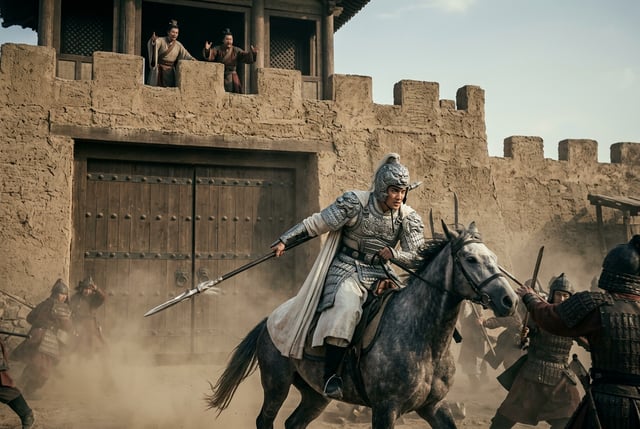
Continue
Siege of Jicheng
Relationship timeline1 entry ▸
Novel · ch. 64
- Ma Chao§24
Defected to
When the troops were in dire straits, [he] surrendered; Ma Chao, angered that his surrender was not sincere, executed him
Inner monologues · AI-generated1 monologue ▸
- Jicheng was besieged from the first month until the eighth, yet no relief troops ever arrived. The governor and commande