Records
No victor stated
- Commanders
- Dong ZhuoDong Zhuo
Vol. 1「諸軍兵十餘萬,日置酒高會,不圖進取」
190 CE (Chuping 1) · Suanzao
In the first month of the first year of Chuping (190 CE), more than ten regional governors — including Rear General Yuan Shu, Jizhou Governor-General Han Fu, Yuzhou Inspector Kong Zhou, Dongjun Administrator Qiao Mao, and Jibei Chancellor Bao Xin — raised troops to campaign against Dong Zhuo, elected Bohai Administrator Yuan Shao as their alliance leader, and proclaimed themselves the Coalition of the Passes. Upon learning of the mobilization, Dong Zhuo moved the Emperor Xian westward from Luoyang to Changan in the second month, burning the Luoyang palaces and desecrating the imperial tombs. The main allied forces encamped and waited at Suanzao, Henei, and Nanyang without advancing; only Cao Cao led his own contingent westward to Xingyang on the Bian River, where he fought the Dong Zhuo commander Xu Rong unsuccessfully and fell back with casualties. The vanguard Sun Jian successively defeated Hu Zhen at Yangren and beheaded Hua Xiong, shaking the defenders of the pass — but was set back for a time when Yuan Shu withheld his grain supply. Internal rivalries between Yuan Shu and Yuan Shao also produced disputes over attributing credit for the achievements of Liu Bei and his companions, and the coalition began to dissolve within the same year. Dong Zhuo was compelled to abandon Luoyang but preserved his regime in the Guanzhong heartland. The campaign failed to eliminate Dong Zhuo, yet it profoundly reshaped the political landscape east of the passes.
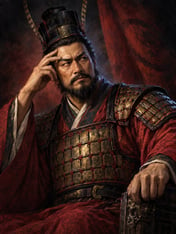 Yuan ShaoCommanderTalk to me
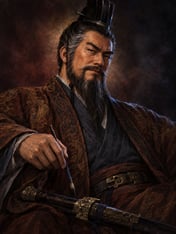 Cao CaoLivedCommanderTalk to me
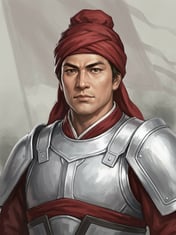 Sun JianWarriorTalk to me
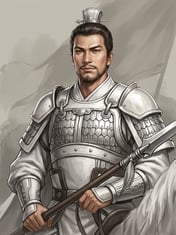 Gongsun ZanCommanderTalk to me
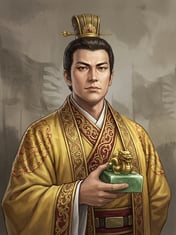 Yuan ShuCommanderTalk to me
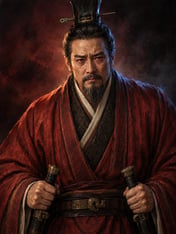 Liu BeiLivedWarriorTalk to me
Who won, as each book tells it; commanders as the text names them.
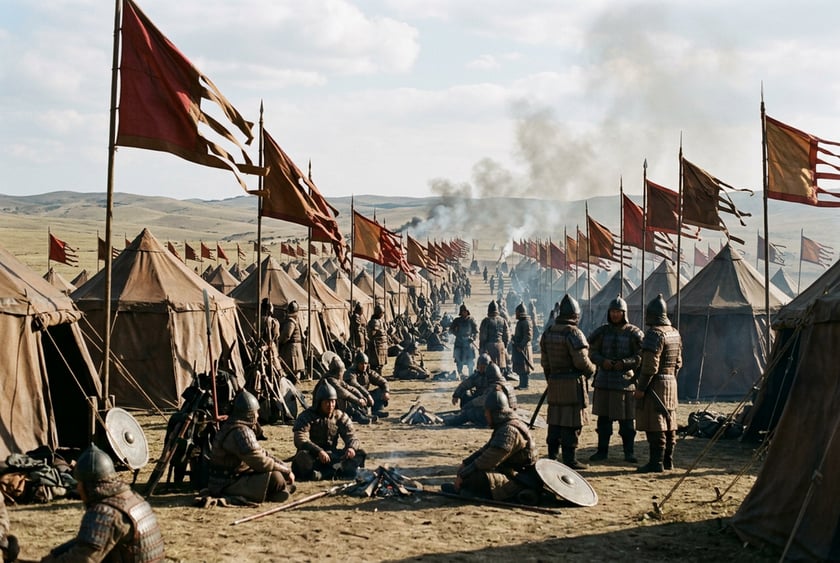
Scene
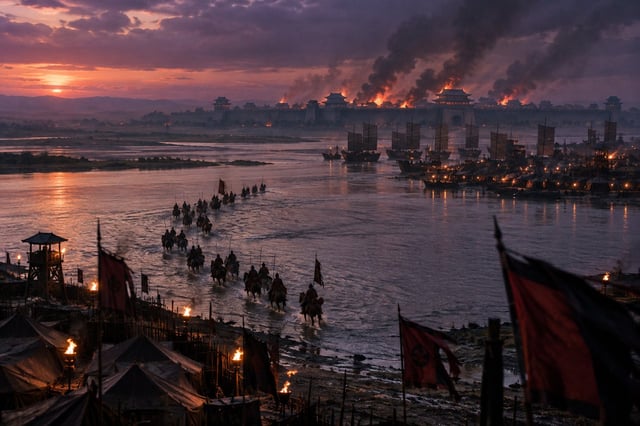
Along the line from Suanzao through Henei to Nanyang, the allied forces’ main camps stretch out, their banners fluttering, but the soldiers sit or stand idle. Cooking smoke rises in the distance, and all wait without advancing.
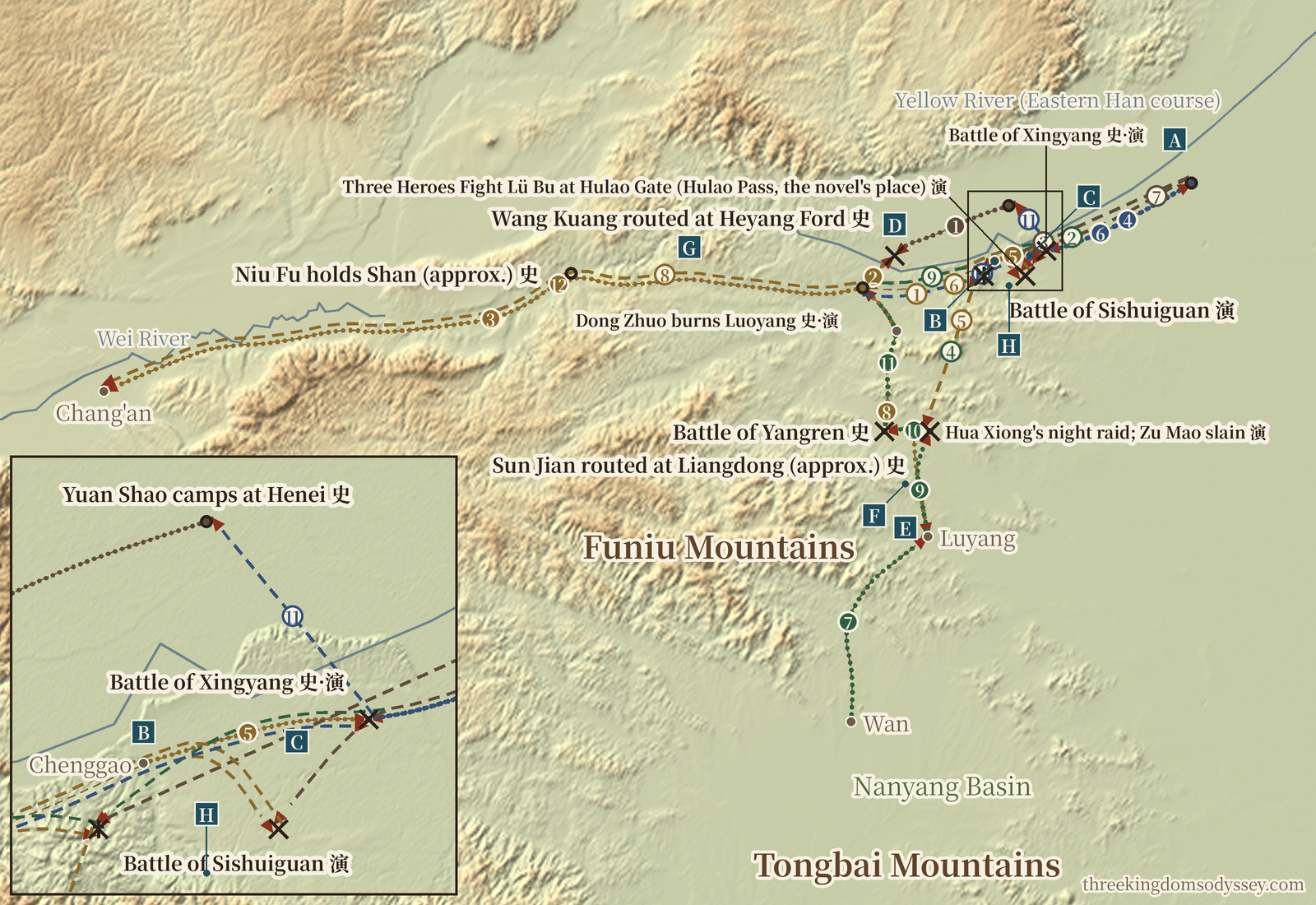
Swipe to see the whole map
In the Sanguozhi's main text Sun Jian kills Hua Xiong at Yangren; the novel has Guan Yu slay him at Sishui Pass and adds the three heroes' fight with Lü Bu at Hulao Pass.
The books mostly say only where an army set out and arrived: a Records line is solid between the places they name and dotted where it follows a reconstructed road between them; an open ring marks an end the books don't give.
Base map: Natural Earth; terrain: AWS Terrain Tiles (SRTM and others). Roads and marches reconstructed from the sources listed; positions approximate.
Replay the battles on this map in 3D, phase by phase:▶ Campaign against Dong Zhuo
Continue
Replay the Campaign against Dong Zhuo phase by phase on real terrain: troop strengths, movements and turning points at a glance, each marked as coming from the Records of the Three Kingdoms or the Romance.
1893 people in common
1923 people in common
1963 people in common
1973 people in common
1912 people in common
1932 people in common
1962 people in common
1962 people in common
Guandonglianjuntaodong was the first military coalition of genuinely "national political significance" in the late Eastern Han. After Dong Zhuo took the emperor hostage and monopolized the court, his personnel appointments — originally designed to win over the gentry — by placing men such as Han Fu, Liu Dai, Kong Zhou, Zhang Zi, and Zhang Miao in command of various provinces and commanderies actually provided the organizational scaffolding for the anti-Dong campaign. Viewed through the lens of modern strategic history, this is a textbook case of "reverse manipulation" — Dong Zhuo had dispatched gentry elites to the provinces as a gesture of appeasement, but these same elites, in their new capacity as appointed governors, completed the military mobilization of their localities and then turned around to campaign against Dong Zhuo. The Dong Commandery grand administrator Qiao Mao forged a letter purportedly from the Three Excellencies to manufacture a pretext for legitimacy, while the Jizhou governor Han Fu — reminded by his Administrator of Records, Liu Zihui, that "military affairs are inauspicious; one should not be first to move" — decided to follow along rather than take the lead. These two details reveal a critical fact: the coalition was not formed by a single, unifying objective but was stitched together by a chain of subordinate decisions along the lines of "I do not want to move first, but I am willing to follow." This structural problem of a "leaderless coalition" pervaded the entire campaign.
Dong Zhuo's strategic choice was to abandon the strategic disadvantage of Luoyang and contract back toward Guanzhong. In the second month he moved the capital to Changan and burned the Luoyang palace complex — in essence a deliberate "active contraction, trading space for time." He transformed the imperial capital from a politically symbolic target visible to the coalition into a wasteland, while himself withdrawing into the natural fortress west of the passes. This deployment was militarily highly rational: with the elite Xiliang troops defending Hanguguan, Huyao Pass, and Sishui Pass and compressing the battle line into the narrows, Dong Zhuo neutralized the coalition's ability to exploit its numerical advantage.
The coalition's deployment was scattered across three assembly points: Yuan Shao at Henei toward Mengjin, Zhang Miao, Liu Dai, Qiao Mao, and Yuan Yi at Suanzao, and Yuan Shu at Nanyang. In theory this constituted a fan-shaped "three-directional converging strike." The strategic plan Cao Cao proposed at Suanzao — "the Bohai army presses Mengjin, the Suanzao forces hold Chenggao and hold the Aocang grain depot and fortify Yuanmen and Taigao, the Nanyang army enters through Wuguan to threaten the Sanfu region" — was the optimal use of this fan-shaped deployment, intended to achieve victory without pitched battle through strategic feints and dispersed threats. But the coalition did not adopt it. Cao Cao led his own contingent westward to Xingyang at the Bian River, engaged Xu Rong in battle, suffered a defeat and was struck by a stray arrow, and escaped only by night when his cousin Cao Hong yielded his horse. Sun Jian's forces on the southern route, serving as the vanguard, routed Hu Zhen at Yangren and killed Hua Xiong — demonstrating that the coalition was not without the capacity for military success, but simply lacked unified command.
Three critical decision points determined the ultimate failure of this campaign. The first was the hollowing out of Yuan Shao's authority as commander-in-chief: when Yuan Shao was nominated as supreme commander at the grand assembly at Suanzao he "declined repeatedly before accepting" — a legitimacy derived from patriarchal prestige rather than military competence, and one that could not be converted into command authority on the battlefield. The second was Yuan Shu's severing of grain supply to Sun Jian: at the moment Sun Jian was scoring victories at Yangren, Yuan Shu was persuaded by a provocateur's argument — "Sun Jian is a fierce tiger of Jiangdong; if he breaks through Luoyang and kills Dong Zhuo, it is merely removing a wolf to get a tiger" — and accordingly withheld the grain shipments. This decision exposed the fact that the coalition's fear of "who would harvest the fruits of victory" had already eclipsed its fear of the common enemy — it was the true starting point of the alliance's dissolution. The third was the behavior of the Suanzao armies, who "every day held banquets and reveled without making any move to advance," refusing to heed Cao Cao's earnest remonstrations — which meant that once the coalition had completed its political performance (forming the alliance, issuing the proclamation, taking the oath), it had lost the will to push any further. For each provincial governor individually, the anti-Dong declaration had already secured its most important political capital — establishing authority internally and winning the acclaim of the gentry nationally.
The direct result of the campaign was a lose-lose outcome: Dong Zhuo lost Luoyang and the east of the passes and was compressed into Guanzhong; the coalition failed to eliminate Dong Zhuo and quickly fell apart. But the deeper reverberations are the true historical significance of this campaign. First, Luoyang as the political center of the Eastern Han was burned by Dong Zhuo and its imperial tombs plundered — a physical desecration of the sacred character of the Han house. From that point the court of Emperor Xian lost the tangible vessel of its status as "the symbolic center," creating the legitimating vacuum that Cao Cao would later fill through "keeping the Son of Heaven to command the feudal lords." Second, after the coalition disbanded, every provincial governor converted the military strength and resources gained in the name of the anti-Dong campaign into a fully independent warlord power: Yuan Shao toward Jizhou, Cao Cao toward Yanzhou, Sun Jian toward Jing and Yu, Gongsun Zan toward Hebei, Yuan Shu toward Nanyang — the true starting pistol of the warlord fragmentation era was fired at the moment this coalition failed. Third, the personal lessons drawn from the internal dynamics of the alliance also became canonical references in later political thought: Cao Cao thereafter maintained a constant wariness of the structural failure of a "leaderless coalition," and his later maneuver of "keeping the Son of Heaven to command the feudal lords" was in essence a transformation of the role of "shared suzerain" into that of "sole master" — a deliberate effort to avoid the tragedy of the Guandong coalition, in which everyone was notionally in charge and no one was actually responsible.
Had Cao Cao's "fan-shaped strategy" been adopted, the coalition would very likely have penetrated Guanzhong in the second half of Chuping year one — but this fork in the road required Yuan Shao to have genuine military command authority, required Yuan Shu not to be at odds with his elder brother, and required Sun Jian's vanguard to have reliable logistics. All of these conditions are at odds with "how the coalition was assembled in the first place," so the scenario was unachievable in practice. A more radical counterfactual: had Sun Jian pressed north through Hanguguan and truly broken into Changan, what might have unfolded would not have been the elimination of Dong Zhuo but "Sun clan entering the passes" — given Sun Jian's political ambitions and military capability, even if he would not have replaced the emperor, he would in all likelihood have become a new Dong Zhuo-type strongman. It was precisely this prospect that Yuan Shu sensed and that led him to cut the grain supply. From this angle, the coalition's failure to topple Dong Zhuo was not pure failure: it gave the entire Guandong power structure a "military dress rehearsal," allowing Yuan Shao, Cao Cao, Sun Jian, Gongsun Zan, and Liu Bei — the future protagonists — all to make their entrance on the same stage, each taking away his own read on his future path. This is the true legacy that this seemingly ineffective campaign against Dong Zhuo bequeathed to the San Guo era.