Liu Biao's faction · Senior Guest
He Qia
courtesy name 阳士 · –c. 230
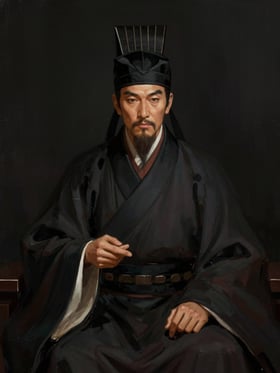
He Qia, a Cao Wei official, urged review of Mao Jie's case and thrift; the novel shows him backing Cao Cao as Wei King.
Life
In the novel: 1 chapter · In the Records: 2 volumes
Life?–230
Appearances
- Liu Biao's faction· Undated
- Cao Wei· Undated
On the boards
Compare with someone →Where this person ranks on each board.
Historical Record
He Qia, courtesy name Yangshi, was from Xiping in Runan. He was recommended as a Filial and Incorruptible and summoned by the Grand General, but declined both appointments. When Yuan Shao sent envoys to welcome scholars from Runan, He Qia judged that although Jizhou was powerful, it was a land exposed to attack from all sides, and it remained uncertain whether Yuan Shao could achieve his ambitions. Liu Biao, by contrast, had no far-reaching ambition to contend for supremacy, while Jing Province was protected by its terrain and offered a more secure refuge. He therefore went south with relatives and old friends to join Liu Biao, who received him as an honored guest. He later crossed over to Wuling. After Cao Cao pacified Jing Province, he summoned He Qia to serve as an aide in the Chancellor’s office. After the establishment of the Wei kingdom, He Qia served as Palace Attendant and later held the posts of Gentleman Director, Grand Herald, and Minister of Ceremonies.
He Qia was clear-minded, even-tempered, and capable, and in discussion he valued caution and moderation. When Mao Jie and Cui Yan selected officials, they favored frugality and restraint. He Qia warned the court against judging talent by a single standard. If excessive austerity were made a universal norm, officials might deliberately wear ragged clothes, hide their fine carriages, or even bring their own meals to government offices, thereby fostering hypocrisy. He argued that moral instruction should accord with moderation and understanding of human nature, rather than overcorrecting.
After the establishment of the Wei kingdom, someone accused Mao Jie of slandering Cao Cao. Cao Cao was enraged, but He Qia believed that Mao Jie had always been upright and loyal to the public good, and that the statements of both sides should still be verified. If Mao Jie was indeed guilty, he should be dealt with according to the law; if the accuser had falsely slandered a senior official, that too should be investigated. He stressed that he could not be at ease unless the truth was established. Cao Cao declined to investigate, citing his military duties. Later, Huan Jie and He Qia pleaded on Mao Jie’s behalf. Mao Jie was removed from office and eventually died at home.
After Cao Cao conquered Zhang Lu, He Qia advised him to withdraw the army promptly and resettle the population, thereby reducing the cost of maintaining a garrison. Cao Cao did not accept the advice at the time, but eventually relocated the people and abandoned Hanzhong. During Emperor Ming’s reign, when people discussed irregularities in the weather, He Qia connected them to the small population engaged in farming and the heavy burden of corvée labor. He urged the reduction of labor service and wasteful expenditure, the revival of agriculture, and advance preparations for frontier defenses and military supplies. He served with probity and lived frugally, even selling his fields and house to support himself. When Emperor Ming learned of this, he bestowed grain and silk on him. After He Qia died, he was given the posthumous title Marquis Jian, and his son He Li succeeded him.
In the Novel
Chapter 66 of Romance of the Three Kingdoms places He Qia among the attendants and literary figures at Cao Cao’s side. After Cao Cao halted his southern campaign, established schools, and honored men of letters, the Palace Attendants Wang Can, Du Xi, Wei Kai, and He Qia discussed honoring Cao Cao as King of Wei. Xun You objected that Cao Cao had already reached the highest position a subject could hold. Cao Cao became angry when he heard this, and Xun You later died of illness brought on by grief and indignation. Cao Cao then dropped the matter. This episode depicts He Qia taking part in the political scene surrounding Cao Cao’s elevation. However, the Records of the Three Kingdoms recounts his official appointments and several instances of his participation in government discussions, but does not record his involvement in this proposal to honor Cao Cao as King of Wei. The novel’s scene should therefore not be treated as a verifiable event.
Key Relationships
In his early years, He Qia went with relatives and old friends to join Liu Biao, who received him with honor. He later entered Cao Cao’s regime, serving as an aide in the Chancellor’s office and as a Palace Attendant in the Wei kingdom. His career thus took him from Jing Province into Cao Wei. His relationship with Mao Jie is chiefly characterized by his willingness to speak frankly: when Cao Cao was enraged and the accusation had yet to be verified, He Qia insisted on establishing the facts. He neither distorted right and wrong to defend Mao Jie nor allowed the accuser’s claims to stand without investigation. Huan Jie and He Qia both spoke up in the effort to save Mao Jie. In his family, He Qia was succeeded by his son He Li after his death; his younger brother He You later rose to the posts of Minister of Justice and Minister of Personnel.
Signature Episodes
Insisting that the case against Mao Jie be investigated. When Cao Cao heard that Mao Jie had slandered him, he was furious. He Qia did not offer a merely personal defense, but insisted that the facts had to be established: if the accusation was true, Mao Jie should be punished; if it was false, the accuser should not be allowed to mislead the ruler. He also pointed out that failing to investigate would leave right and wrong unclear. Cao Cao ultimately deferred the inquiry, citing military duties. Later, He Qia and Huan Jie spoke up, and Mao Jie was removed from office rather than executed.
Rejecting frugality as a universal measure of officials. In response to a court culture that treated ragged clothes and worn furs as signs of integrity, and fine clothes and good carriages as signs of corruption, He Qia argued that deliberately cultivating an appearance of hardship would encourage concealment and hypocrisy. He was not advocating extravagance, but a measured and sustainable form of moral instruction based on moderation. This position echoed his later call, during Emperor Ming’s reign, to reduce labor service and prioritize agriculture and military preparedness.
The novel’s discussion of honoring Cao Cao as king. The novel depicts He Qia discussing the proposal to honor Cao Cao as King of Wei alongside Wang Can, Du Xi, and Wei Kai, making him part of a court political scene. This episode appears only in the novel; the historical biographies contain no corresponding account. (Unique to the novel)
Quotes
7 lines in the books · 3 featured
「天下大器,在位與人,不可以一節檢也。儉素過中,自以處身則可,以此節格物,所失或多。今朝廷之議,吏有著新衣、乘好車者,謂之不清;長吏過營,形容不飾,衣裘敝壞者,謂之廉潔。至令士大夫故汙辱其衣,藏其輿服;朝府大吏,或自挈壺餐以入官寺。夫立敎觀俗,貴處中庸,爲可繼也。今崇一概難堪之行以檢殊塗,勉而爲之,必有疲瘁。古之大敎,務在通人情而已。凡激詭之行,則容隱僞矣。」
This remark sharply criticizes formalism and advocates the doctrine of the mean, carrying universal social significance.
「民稀耕少,浮食者多。國以民爲本,民以穀爲命。故費一時之農,則失育命之本。是以先王務蠲煩費,以專耕農。自春夏以來,民窮於役,農業有廢,百姓囂然,時風不至,未必不由此也。消復之術,莫大於節儉。太祖建立洪業,奉師徒之費,供軍賞之用,吏士豐於資食,倉府衍於穀帛,由不飾無用之宮,絕浮華之費,方今之要,固在息省勞煩之役,損除他餘之務,以爲軍戎之儲。三邊守禦,宜在備豫。料賊虛實,蓄士養衆,算廟勝之策,明攻取之謀,詳詢衆庶以求厥中。若謀不素定,輕弱小敵,軍人數舉,舉而無庸,所謂『悅武無震』,古人之誡也。」
It emphasizes the importance of the people's livelihood and of frugality, reflecting the wisdom of governance and exerting a profound influence on later generations.
「天下事豈有盡邪?卿晝侍可矣,悒悒於此,欲兼之乎!」
In a lighthearted tone, this line expresses the philosophy that life is finite and one need not be exacting about everything.
- Family
- Enemies
- Other
Who is He Qia connected to?
Pick someone to see how many steps lie between them and He Qia.
History vs. novel
6 points · 1 novel-only
| History | Novel |
|---|---|
| Honoring Cao Cao as King of WeiNovel only | |
| — | After Cao Cao ended his southern campaign, established schools, and treated scholars with courtesy, Wang Can, Du Xi, Wei Kai, and He Qia jointly proposed honoring Cao Cao as King of Wei; this proposal by the assembled ministers appears in the novel. ch. 66 |
| Rejecting Yuan Shao and joining Liu BiaoHistory only | |
Yuan Shao sent men to recruit scholars from Runan. He Qia believed that although Jizhou was powerful, it was a land surrounded by enemies on all sides, so he instead took his family and friends to join Liu Biao, who welcomed them with the honors due to distinguished guests. vol. 23 | — |
| Leaving Liu BiaoHistory only | |
He Qia believed that although Liu Biao cherished scholars, he was an ineffectual ruler in troubled times and was not someone one should remain close to for long. He later crossed south to Wuling. vol. 23 | — |
| Opposing excessive austerityHistory only | |
He Qia opposed judging officials by a single standard of frugality, pointing out that overcorrecting could breed hypocrisy. He argued that moral instruction should accord with moderation and human nature. vol. 23 | — |
| Seeking an investigation on behalf of Mao JieHistory only | |
Mao Jie was accused of slandering Cao Cao. He Qia vouched for his consistent conduct and insisted that the facts be established: if the accusation was true, Mao Jie should be punished; if it was a false charge, the accuser should also be held to account. vol. 23 | — |
| Discussing corvée labor and farmingHistory only | |
During the Taihe era, He Qia believed that heavy corvée labor and neglected farming might be preventing the seasonal winds from arriving. He recommended reducing burdensome labor, stockpiling military supplies, and planning military action with care. vol. 23 | — |
- Honoring Cao Cao as King of WeiNovel only
- Novel
After Cao Cao ended his southern campaign, established schools, and treated scholars with courtesy, Wang Can, Du Xi, Wei Kai, and He Qia jointly proposed honoring Cao Cao as King of Wei; this proposal by the assembled ministers appears in the novel.
ch. 66
- Rejecting Yuan Shao and joining Liu BiaoHistory only
- History
Yuan Shao sent men to recruit scholars from Runan. He Qia believed that although Jizhou was powerful, it was a land surrounded by enemies on all sides, so he instead took his family and friends to join Liu Biao, who welcomed them with the honors due to distinguished guests.
vol. 23
- Leaving Liu BiaoHistory only
- History
He Qia believed that although Liu Biao cherished scholars, he was an ineffectual ruler in troubled times and was not someone one should remain close to for long. He later crossed south to Wuling.
vol. 23
- Opposing excessive austerityHistory only
- History
He Qia opposed judging officials by a single standard of frugality, pointing out that overcorrecting could breed hypocrisy. He argued that moral instruction should accord with moderation and human nature.
vol. 23
- Seeking an investigation on behalf of Mao JieHistory only
- History
Mao Jie was accused of slandering Cao Cao. He Qia vouched for his consistent conduct and insisted that the facts be established: if the accusation was true, Mao Jie should be punished; if it was a false charge, the accuser should also be held to account.
vol. 23
- Discussing corvée labor and farmingHistory only
- History
During the Taihe era, He Qia believed that heavy corvée labor and neglected farming might be preventing the seasonal winds from arriving. He recommended reducing burdensome labor, stockpiling military supplies, and planning military action with care.
vol. 23
Places
Continue
He Li
Kin
Relationship timeline5 entries ▸
History · vol. 12
- Mao Jie§29
Witnessed
Advised rescuing Mao Jie.
History · vol. 23
Rival
refused Yuan Shao's invitation and went south to rely on Liu Biao
- Mao Jie§5
Advised
reported to Mao Jie that his conduct was upright and well-founded, and requested an investigation into the facts
- Cao Cao§5
Advised
urged Taizu to verify the matter concerning Mao Jie, advising him not to leave it unexamined because of military affairs
Novel · ch. 66
- Cao Cao§17
Advised
In segment 17, discussed together honoring Cao Cao as King of Wei
Inner monologues · AI-generated1 monologue ▸
- I am He Qia, courtesy name Yangshi, from Xiping in Runan. I recall that when Yuan Shao sent envoys to invite the scholar