Cao Wei · Minister of Ceremonies
Chang Lin
courtesy name 伯槐
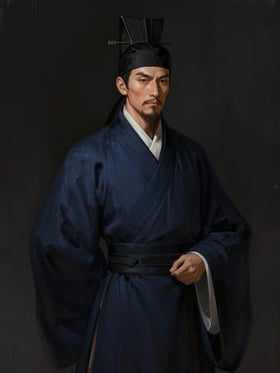
Chang Lin, courtesy name Bohuai, was a respected Cao Wei elder known for urging Cao Pi against rash personal campaigns and for fearing no powerful figures.
On the boards
Compare with someone →Where this person ranks on each board.
Historical Record
Chang Lin, courtesy name Bohuai, was from Wen in Henei. When he was seven, a friend of his father came to the house and asked whether his father was home, then rebuked him for not bowing. Chang Lin explained that, as the visitor was addressing a child as though he were speaking to the child’s father, he did not need to bow in greeting. The visitor and the others praised the boy for his early sense of propriety. The Wei lüe, quoted in Pei Songzhi’s annotations, also records that Chang Lin was poor in his youth but refused to take what belonged to others by any means other than earning it through his own labor. In the final years of the Han, he worked the fields with the classics in hand as a student, and when his wife brought him food, the couple treated one another with the respect due to honored guests.
When the Administrator Wang Kuang campaigned against Dong Zhuo, Chang Lin’s uncle was denounced after striking a retainer and arrested by Wang Kuang. Chang Lin explained to Humu Biao that if Wang Kuang wished to uphold the royal house, he should appoint capable people through benevolence and virtue. After Humu Biao wrote to reprimand Wang Kuang, Wang released Chang Lin’s uncle. Chang Lin then withdrew to Shangdang and farmed the hillsides. Despite drought and locusts, his harvest alone was good, so he summoned his neighbors and shared his grain with them. Later, he took refuge within Chen Yan’s fortified settlement and helped the Chen and Feng families plan its defenses. Zhang Yang besieged the stronghold for more than sixty days, but it ultimately held.
Gao Gan, Inspector of Bing Province, once recommended Chang Lin for the post of Cavalry Commandant, but Chang Lin declined. Later, Liang Xi recommended him, and Cao Cao appointed him County Chief. He governed Nanhe successfully and went on to serve as Administrator of Boling and Inspector of You Province. When Cao Pi was General of the Household for All Purposes, Chang Lin served as his Chief Clerk. After Tian Yin and Su Bo rebelled and You and Ji Provinces were thrown into turmoil, Cao Pi wanted to lead a campaign in person. Chang Lin urged him not to, arguing that officials and people in the north were glad to enjoy stability, the rebels were no serious threat, and generals should not undertake distant expeditions lightly. Cao Pi accepted his advice and sent generals to suppress the rebellion, which was quickly put down.
After the founding of Wei, Chang Lin served as a Minister of the Secretariat. Following Cao Pi’s accession, he was promoted to Grand Minister of the Household, enfeoffed as Marquis of Leyang Pavilion, and later transferred to Grand Minister of Agriculture. During the reign of Emperor Ming of Wei, he was elevated to Marquis of Gaoyang Township and served in succession as Chamberlain for the Palace Revenues and Grand Master of Ceremonies. When Lu Yu recommended candidates for the post of Minister over the Masses, he described Chang Lin as “steadfast, upright, and wholly pure,” but Emperor Ming ultimately appointed Han Ji. Chang Lin was renowned for his austere integrity and high-minded conduct. Because Sima Yi was older and held a respected standing in their native region, he bowed to Chang Lin whenever they met. When someone urged Chang Lin to stop him, Chang Lin replied that Sima Yi wished to uphold the proper deference between young and old; Sima Yi’s high rank was nothing he feared, and he had no control over whether another person bowed to him. Later, Chang Lin pleaded illness and declined an appointment to a senior ministerial post. He served as Grand Master of Guanglu, died at the age of eighty-three, and was posthumously awarded the title General of Agile Cavalry and the posthumous name Marquis Zhen.
In the Novel
The Romance of the Three Kingdoms material provided contains no mention of Chang Lin, so it offers no basis for describing his words, deeds, appearances, or characterization in the novel; nor can his portrayal in the novel be compared point by point with the historical accounts. The deeds of Chang Lin described here all come from the Records of the Three Kingdoms and Pei Songzhi’s annotations, not from episodes in the novel.
Key Relationships
Chang Lin’s connection with Wang Kuang began when his uncle was arrested. Rather than resorting to force, he used Humu Biao to explain to Wang Kuang the principles of good governance and the appointment of capable people, ultimately securing his uncle’s release. This incident also shows that, even in his youth, Chang Lin could speak frankly about the issues at stake before powerful figures. After withdrawing to Shangdang, he shared grain with his neighbors and helped Chen Yan’s side defend its stronghold. Zhang Yang besieged it for more than sixty days but failed to breach it, illustrating how Chang Lin combined mutual aid among his neighbors with defensive planning amid the chaos of the age.
In his service to Cao Wei, Chang Lin entered official life on Liang Xi’s recommendation and served in succession under the courts of Cao Cao, Cao Pi, and Emperor Ming of Wei. He advised Cao Pi against leading a campaign in person, urging him to assess the situation and avoid rash action; Cao Pi followed his advice and sent generals to suppress the rebellion. When Lu Yu discussed candidates for the post of Minister over the Masses, he named Chang Lin as an upright and steadfast man, describing him as “steadfast, upright, and wholly pure.” However, the recommendation did not result in Chang Lin’s appointment to the post. Chang Lin and Sima Yi observed the proper courtesies between older and younger men: Sima Yi bowed whenever they met, and Chang Lin neither let the other man’s high rank intimidate him nor treated his respectful gesture as something he could dictate.
Signature Scenes
The boy who did not bow. When he was seven, Chang Lin explained that he did not bow to his father’s friend because the man had addressed a child as though he were speaking to the child’s father. The account highlights Chang Lin’s early sense of propriety. It does not portray him as disrespectful to his elders; rather, he distinguished the situation at hand according to status and ritual.
Sharing grain amid drought and locusts. After withdrawing to Shangdang, Chang Lin alone had a good harvest despite drought and locusts. He summoned his neighbors and distributed grain to them by measured amounts. This scene gives concrete expression to his unselfish integrity: he did not keep his unexpected surplus for himself, but shared it so those around him could endure the famine.
Urging Cao Pi not to act rashly. After Tian Yin and Su Bo rose in rebellion, Cao Pi considered leading a campaign in person. Drawing on his experience as a local official in Boling and You Province, Chang Lin judged that the people of the north had long been content with the established order and that the rebels lacked the strength and strategy to pose a serious threat. He also cautioned that generals should not undertake distant expeditions lightly. Cao Pi heeded his advice, sent generals to campaign, and the rebellion was soon put down.
Sima Yi bows, and Chang Lin does not stop him. Sima Yi bowed whenever he met Chang Lin. Concerned that Sima Yi’s position and prestige were too great, bystanders urged Chang Lin to stop him. Chang Lin replied that Sima Yi was willingly observing the proper deference between young and old; his high rank was nothing to fear, and the bow was not something Chang Lin could decide on Sima Yi’s behalf. This exchange reinforces the historical accounts’ portrayal of Chang Lin’s austere integrity.
In the sources
Where the books name Chang Lin
History · vol. 22Records of the Three Kingdoms
…贞固纯粹,則太常常林。」帝乃用暨。毓於人及選舉,先舉性行,而後言才。…
Read the whole paragraph
帝納其言,即诏作考课法。會司徒缺,毓舉处士管宁,帝不能用。更问其次,毓对曰:「敦笃至行,則太中大夫韩暨;亮直清方,則司隶校尉崔林;贞固纯粹,則太常常林。」帝乃用暨。毓於人及選舉,先舉性行,而後言才。黄门李丰尝以问毓,毓曰:「才所以爲善也,故大才成大善,小才成小善。今称之有才而不能爲善,是才不中器也。」丰等服其言。
History · vol. 23Records of the Three Kingdoms
== 常林 ==
History · vol. 23Records of the Three Kingdoms
常林字伯槐,河內溫人也。年七歲,有父黨造門,問林:「伯先在否?…
Read the whole paragraph
常林字伯槐,河內溫人也。年七歲,有父黨造門,問林:「伯先在否?汝何不拜!」林曰:「雖當下客,臨子字父,何拜之有?」於是咸共嘉之。〈魏略曰:林少單貧。雖貧,自非手力,不取之於人。性好學,漢末爲諸生,帶經耕鉏。其妻常自餽餉之,林雖在田野,其相敬如賓。〉太守王匡起兵討董卓,遣諸生於屬縣微伺吏民罪負,便收之,考責錢穀贖罪,稽遲則夷滅宗族,以崇威嚴。林叔父撾客,爲諸生所白,匡怒收治。舉宗惶怖,不知所責多少,懼繫者不救。林往見匡同縣胡母彪曰:「王府君以文武高才,臨吾鄙郡。鄙郡表裏山河,土廣民殷,又多賢能,惟所擇用。今主上幼沖,賊臣虎據,華夏震慄,雄才奮用之秋也。若欲誅天下之賊,扶王室之微,智者望風,應之若響,克亂在和,何征不捷。苟無恩德,任失其人,覆亡將至,何暇匡翼朝廷,崇立功名乎?君其藏之!」因說叔父見拘之意。彪即書責匡,匡原林叔父。林乃避地上黨,耕種山阿。當時旱蝗,林獨豐收,盡呼比鄰,升斗分之。依故河間太守陳延壁。陳、馮二姓,舊族冠冕。張楊利其婦女,貪其資貨。林率其宗族,爲之策謀。見圍六十餘日,卒全堡壁。
Quotes
4 lines in the books · 2 featured
「雖當下客,臨子字父,何拜之有?」
This line embodies Chang Lin's refusal to be cowed by the powerful and his steadfast adherence to propriety.
「司馬公自欲敦長幼之敘,爲後生之法。貴非吾之所畏,拜非吾之所制也。」
This line further underscores Chang Lin's integrity and principle, unmoved by rank or power.
- Friends
- Enemies
- Teacher & student
- Other
Places
- Was at
- Wei CommanderyRecords
- Shangdang CommanderyRecords
- Governed
- You ProvinceRecords
- PingyuanRecords
Continue
Zhang Yang
Enemy
Relationship timeline5 entries ▸
History · vol. 23
- Wang Kuang§13
Advises
Because his uncle was detained, entrusted Humu Biao to pass on a letter warning Kuang, and secured his uncle’s release
- Zhang Yang§13
Enemy
led his clan in devising plans to resist Zhang Yang; after more than sixty days under siege, the fortress and its defenses remained intact
- Gao Gan§14
Rival
The Inspector of Bing Province, Gao Gan, recommended him for the post of Cavalry Commandant; Lin declined and did not accept
- Cao Pi§14
Advises
When Emperor Wen was Wuguan General, Chang Lin served as chief clerk; advised Emperor Wen against personally campaigning against Tian Yin and Su Bo
- Sima Yi§15
Student
Sima Yi regarded Lin as an elder of virtue from his native district and always bowed to him
Inner monologues · AI-generated1 monologue ▸
- I am Chang Lin, courtesy name Bohuai, from Wen in Henei. Now I serve at court as Grand Minister of Ceremonies, and looki