Liang Xing
–212
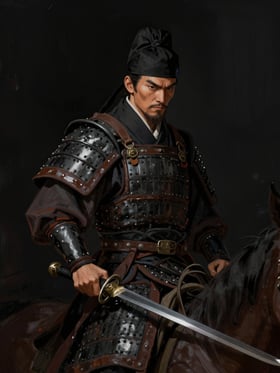
Liang Xing, a Guanzhong commander among Ma Chao’s and Han Sui’s forces, was killed by Cao Wei’s army in history and by Ma Chao in the novel.
Life
In the novel: 2 chapters · In the Records: 4 volumes
Life?–212
Appearances
By chapter (6)
Novel
- 58
- 59
Records
- 1
- 9
- 16
- 17
On the boards
Compare with someone →Where this person ranks on each board.
Historical Record
Liang Xing was one of the remnants of Ma Chao’s forces. He once garrisoned Lantian, and Cao Cao ordered Xiahou Yuan to attack and pacify his followers. The first fascicle of the Records of the Three Kingdoms summarizes the Guanzhong campaigns in this way; the ninth fascicle gives a fuller account, recording that Xiahou Yuan besieged Liang Xing at Hu, captured the place, and executed Liang Xing, then was enfeoffed as the Marquis of Bochangting for his achievements. This shows that Liang Xing did not appear only in the novel: the historical record identifies him as a leader of the remnants who remained active in Guanzhong after Ma Chao’s forces were defeated, until he was ultimately defeated and killed by Cao Wei forces.
The sixteenth fascicle describes Liang Xing’s power from the perspective of local administration. Liang Xing and others raided more than five thousand households of officials and commoners. The counties were unable to resist, and the terrified people took refuge at the commandery seat. Zheng Hun did not advocate retreating to defensible terrain. Instead, he repaired the city walls, prepared the defenses, offered broad terms for surrender, and encouraged the people to capture bandits by promising rewards. In the process, Liang Xing’s followers gradually scattered. Fearing this, Liang Xing later gathered his remaining forces at Fucheng. Xiahou Yuan was ordered to assist the commandery in suppressing them, and Zheng Hun led officials and commoners in the first assault, killing Liang Xing and his associates. The account thus depicts not only a clash between commanders, but also the raiding of local households by Liang Xing’s followers and Cao Wei’s efforts to quell the unrest through surrender offers, division, and military force.
The seventeenth fascicle adds an account of the battle with Liang Xing when Xu Huang crossed the Yellow River at Pubanjin. Xu Huang was ordered to lead four thousand infantry and cavalry across first. Before the camp defenses had been completed, Liang Xing led more than five thousand infantry and cavalry in a night attack, but Xu Huang drove them back, allowing Cao Cao’s army to cross the river. Cao Cao later defeated Ma Chao and the others, and Xu Huang joined Xiahou Yuan in pacifying the remaining bandits in Fu and Xiayang, killing Liang Xing and securing the surrender of more than three thousand households. Like the accounts in the ninth and sixteenth fascicles, these records place Liang Xing’s death amid Cao Wei’s campaigns to pacify Guanzhong and the bandits in the Fu region. Each passage, however, focuses respectively on Xiahou Yuan’s military operations, Zheng Hun’s local administration, and Xu Huang’s river crossing.
In the Novel
Romance of the Three Kingdoms portrays Liang Xing as a Xiliang officer serving under Han Sui. In Chapter 58, it lists him as one of Han Sui’s “eight divisions,” alongside Hou Xuan, Cheng Yin, Li Kan, and others, who join Han Sui and Ma Chao in raising an army and attacking Chang'an. This broadly accords with the historical account of Liang Xing as one of Ma Chao’s remnants active in Guanzhong and the Fu region, but the novel places him among a more dramatically depicted Xiliang coalition.
In Chapter 59, Liang Xing accompanies Han Sui into battle and also takes part in the scene in which Han Sui and the other commanders discuss secretly defecting to Cao Cao. Suspicious of Han Sui, Ma Chao later sneaks into the tent and catches the commanders conferring in secret, then attacks them with his sword. The novel says that Ma Chao felled Ma Wan and cut down Liang Xing, who was killed in the ensuing internal conflict. The factional conflict and the specific manner of his death are dramatic inventions of the novel; the Records of the Three Kingdoms says that Liang Xing was executed by Cao Wei forces, and does not record his death in a surprise attack inside Ma Chao’s tent.
Key Relationships
- Ma Chao: The historical record identifies Liang Xing as one of Ma Chao’s remnants, but gives no details of their personal dealings. In the novel, Liang Xing is placed in Han Sui’s camp and caught up in the conflict that follows the breakdown of relations between Ma Chao and Han Sui.
- Han Sui: The novel names Liang Xing as one of Han Sui’s eight commanders, and later has him accompany Han Sui and the others into battle and discuss surrendering to Cao Cao. These specific roles and the secret deliberations are inventions of the novel; the Records of the Three Kingdoms gives no corresponding details about Liang Xing and Han Sui. (Novel only)
- Xiahou Yuan, Zheng Hun, and Xu Huang: The historical record says that Xiahou Yuan besieged Hu and executed Liang Xing, and that he was also ordered to assist Zheng Hun in suppressing the bandits. Zheng Hun led officials and commoners in the first assault and killed Liang Xing and his associates. Xu Huang, meanwhile, repelled Liang Xing’s night attack at Pubanjin, then later joined in pacifying the remaining bandits in Fu and Xiayang and executed Liang Xing.
- The novel’s conflict between Ma Chao and Liang Xing: Ma Chao’s nighttime entry into Han Sui’s tent, where he fights five commanders and kills Liang Xing, is a direct confrontation between the two. The Records of the Three Kingdoms does not record this episode. (Novel only)
Signature Scenes
The scene that best conveys Liang Xing’s situation in the historical record is the suppression of his forces after he gathered his remaining troops at Fucheng: Zheng Hun led officials and commoners in the first assault, and Liang Xing and his associates were executed. Another passage recounts that when Xu Huang crossed Pubanjin, Liang Xing launched a night attack before the camp defenses were complete, but Xu Huang drove him back. The former highlights the joint role of local officials and commoners in quelling the unrest; the latter shows that Liang Xing still had the ability to organize troops and take the initiative.
The novel’s most dramatic scene is Ma Chao’s nighttime intrusion into Han Sui’s tent. Liang Xing and the other commanders are conferring in secret when Ma Chao bursts in with his sword; he then fights five commanders and is ultimately depicted as dying by Ma Chao’s blade. This recasts Liang Xing’s death as the result of infighting within the Xiliang camp, in sharp contrast to the historical account of his execution during Cao Wei’s campaigns to pacify Guanzhong and the Fu region. (Novel only)
- Enemies
- Other
Who is Liang Xing connected to?
Pick someone to see how many steps lie between them and Liang Xing.
History vs. novel
5 points
| History | Novel |
|---|---|
| Campaign in FuNovel embellishes | |
Historical records state that Cao Cao sent Xiahou Yuan to assist the commandery in suppressing Liang Xing in Fu. Liang Xing was ultimately beheaded, and the rest of his followers surrendered. vol. 16 | The novel depicts Ma Chao sneaking into Han Sui’s tent and clashing with five generals, then personally hacking Liang Xing down as part of the melee in the tent. ch. 59 |
| Liang Xing’s endSources disagree | |
Liang Xing gathered the remnants of his forces and held Fu City, but was later killed by Cao Cao’s army. vol. 16 | Liang Xing was hacked down by Ma Chao’s sword in Han Sui’s tent, dying in the clash between Ma Chao and the five generals. ch. 59 |
| Night attack on Xu HuangHistory only | |
During the Battle of Tong Pass, Liang Xing led more than five thousand infantry and cavalry in a night attack on Xu Huang. Xu Huang drove them back, enabling Cao Cao’s army to cross the river. vol. 17 | — |
| Remnant rebels in FuHistory only | |
Cao Cao later ordered Xu Huang and Xiahou Yuan to pacify the remaining bandits in Fu and Xiayang, behead Liang Xing, and secure the surrender of more than three thousand households. vol. 17 | — |
| Local plunderingHistory only | |
Historical records state that Liang Xing and others plundered more than five thousand households, overwhelming the local officials; the rest of their followers later gathered in Fu City and were attacked. vol. 16 | — |
- Campaign in FuNovel embellishes
- History
Historical records state that Cao Cao sent Xiahou Yuan to assist the commandery in suppressing Liang Xing in Fu. Liang Xing was ultimately beheaded, and the rest of his followers surrendered.
vol. 16
- Novel
The novel depicts Ma Chao sneaking into Han Sui’s tent and clashing with five generals, then personally hacking Liang Xing down as part of the melee in the tent.
ch. 59
- Liang Xing’s endSources disagree
- History
Liang Xing gathered the remnants of his forces and held Fu City, but was later killed by Cao Cao’s army.
vol. 16
- Novel
Liang Xing was hacked down by Ma Chao’s sword in Han Sui’s tent, dying in the clash between Ma Chao and the five generals.
ch. 59
- Night attack on Xu HuangHistory only
- History
During the Battle of Tong Pass, Liang Xing led more than five thousand infantry and cavalry in a night attack on Xu Huang. Xu Huang drove them back, enabling Cao Cao’s army to cross the river.
vol. 17
- Remnant rebels in FuHistory only
- History
Cao Cao later ordered Xu Huang and Xiahou Yuan to pacify the remaining bandits in Fu and Xiayang, behead Liang Xing, and secure the surrender of more than three thousand households.
vol. 17
- Local plunderingHistory only
- History
Historical records state that Liang Xing and others plundered more than five thousand households, overwhelming the local officials; the rest of their followers later gathered in Fu City and were attacked.
vol. 16
Combat
On the field
Duels, kills and executions as the texts tell them, counted separately for the Records and the Romance.
Records
- Duels
- 0W 0L 0D
DeathKilled by Xiahou YuanStruck down · Juan 9
Romance
- Duels
- 0W 0L 0D
DeathKilled by Ma ChaoDuel · Ch. 59
- RecordsJuan 9Struck downXiahou YuanLost「圍遂、超餘党梁興於鄠,拔之,斬興」
- RomanceCh. 59DuelMa ChaoLost「砍翻馬玩,剁倒梁興,三將各自逃生」
- RomanceCh. 59DuelMa ChaoLost「砍翻馬玩,剁倒梁興,三將各自逃生」
Events
Events (2)
Battles and events the texts place this person in, by date.
Battles
Other events
Continue
Zhang He
Enemy