Yuan Shu's Faction · Senior General
Chen Ji
129–199
Not to be confused with Chen Ji (陈济) — Chen Ji, son of Chen Zhen of Shu Han, inherited his father’s title after his death.
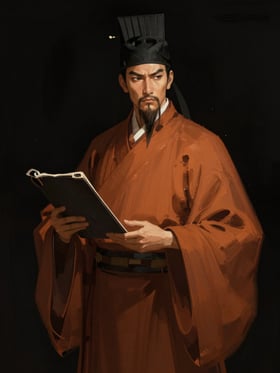
Chen Ji was a Yingchuan notable and Chen Qun’s father; he held many posts and wrote books, and the novel says he died defending Shouchun for Yuan Shu.
Life
In the novel: 1 chapter · In the Records: 4 volumes
Life?–199
Appearances
By chapter (5)
Novel
- 17
Records
- 11
- 22
- 38
- 46
- Yuan Shu's Faction
- Hatched: dated by chapter
On the boards
Compare with someone →Where this person ranks on each board.
Historical Record
Chen Ji, courtesy name Yuanfang, was from Xu Chang in Yingchuan. He was the son of Chen Shi and the father of Chen Qun. Three generations of the Chen family were renowned, and people of the time collectively called Chen Shi, Chen Ji, and Chen Chen the “Three Gentlemen.” The people of Yu Province even had portraits made of the three. Chen Ji served successively as Chancellor of Pingyuan, Palace Attendant, and Minister of the Grand Herald. He wrote dozens of works and was known to later generations as “Master Chen.” The sources also record that when Chen Shi died, Chen Ji’s family reputation stood alongside his father’s illustrious name, and many came to pay their respects. The Fuzi, cited in Pei Songzhi’s commentary, says that thirty thousand attended the funeral procession. These accounts present the image of a scholar-official whose standing rested on family prestige, official service, and literary works.
During Dong Zhuo’s rule, Zhou Bi served as Minister of Personnel. Together with Xu Jing, he discussed the advancement and dismissal of scholars across the realm and recommended overlooked talent. Chen Ji was consequently appointed to one of the posts of minister or commandery governor. Xu Jing later became a close associate of Chen Ji and treated him with the respect due an elder brother. After Xu Jing entered Shu, Chen Ji’s son Chen Qun continued to correspond with him, and other old associates from the early Wei period also wrote to renew their ties.
Beyond his official career, Chen Ji also appears in accounts of personnel affairs and local politics at the end of the Han. Sun Ce once asked Yuan Shu to let him inherit his father Sun Jian’s former troops. Yuan Shu initially promised him the post of Administrator of Jiujiang, but then appointed Chen Ji, a native of Danyang, instead. This prevented Sun Ce from getting what he wanted, but the sources say nothing further about Chen Ji’s administration in the post or how long he held it.
In the Novel
Chapter 17 of Romance of the Three Kingdoms portrays Chen Ji as a general under Yuan Shu. When Yuan Shu Proclaims Himself Emperor and sends troops to attack Xu Province, he appoints Chen Ji as the senior general of the third column, leading his army on the right route. Later, when Yuan Shu adopts a plan to retreat and hold the city, he leaves four generals—Li Feng, Yue Jiu, Liang Gang, and Chen Ji—with 100,000 troops to defend Shouchun. After Cao Cao breaches the city, Chen Ji and the other three generals are captured and, by order, beheaded in the marketplace. The novel thus depicts a military commander who follows Yuan Shu through his claim to the throne, campaigns and defends a city, and is ultimately defeated and killed.
This trajectory differs markedly from the Chen Ji presented in historical accounts. Those accounts describe him as a renowned scholar, official, and author, and record that Yuan Shu replaced Sun Ce with Chen Ji, a native of Danyang, as Administrator of Jiujiang. They do not say that he led troops against Xu Province, remained to defend Shouchun, or was executed by Cao Cao. His military career and fate in the novel are therefore literary inventions and should not be confused with his historical record.
Key Relationships
Chen Ji came from the prominent Chen family of Yingchuan. He was the son of Chen Shi and the father of Chen Qun; Chen Shi, Chen Ji, and Chen Ji’s uncle Chen Chen were jointly renowned as the “Three Gentlemen.” When Chen Qun was young, his grandfather Chen Shi believed he would one day restore the family’s fortunes. Chen Ji was also among the people Kong Rong befriended and respected in his early years.
Xu Jing and Chen Ji were old associates. Xu Jing “served Chen Ji as an elder brother,” showing the respect he accorded him in their dealings. Their network of scholarly figures also extended to people such as Yuan Huan, Hua Xin, and Wang Lang. After Xu Jing entered Shu, Chen Ji’s son Chen Qun and other old friends from the early Wei period continued to write to Xu Jing, maintaining their old bonds.
Politically, Chen Ji was among the men recommended by Zhou Bi and Xu Jing during Dong Zhuo’s rule. In the account of Sun Ce and Yuan Shu, he was the candidate Yuan Shu chose instead for Administrator of Jiujiang. The novel goes further, casting him as a general in Yuan Shu’s army who leads troops to defend Shouchun and is killed after defeat. This military role and fate appear only in the novel.
Signature Scenes
The episode that best captures Chen Ji’s standing in the historical accounts is the widespread renown of the Chen family: Chen Shi, Chen Ji, and Chen Chen were known together as the “Three Gentlemen,” and the people of Yu Province made portraits of them. Chen Ji himself held important offices and left dozens of writings. These accounts place him among the scholars and officials of Yingchuan at the end of the Han.
Another significant historical episode comes when Sun Ce asked Yuan Shu to appoint him Administrator of Jiujiang. Yuan Shu first promised the post to Sun Ce but later appointed Chen Ji instead. This shows that Chen Ji was considered for an appointment by Yuan Shu, but the sources do not say how he took up the post or governed Jiujiang.
The novel’s signature scene, by contrast, is the fall of Shouchun. Cao Cao directs his troops to fill the moats and attack the city; after it falls, Li Feng, Chen Ji, Yue Jiu, and Liang Gang are captured together and then beheaded in the marketplace. In this way, Chen Ji is transformed from the renowned scholar-official of the historical accounts into a defeated general of Yuan Shu’s Faction. His defense of Shouchun, capture, and execution appear only in the novel.
- Family
- Friends
Who is Chen Ji connected to?
Pick someone to see how many steps lie between them and Chen Ji.
History vs. novel
7 points · 4 novel-only
| History | Novel |
|---|---|
| Chen Ji's identityNovel embellishes | |
Historical records state that Chen Ji, courtesy name Yuanfang, was Chen Qun's father and held the posts of Chancellor of Pingyuan, Attendant to the Emperor, and Grand Herald. His writings have also been preserved. vol. 22 | The novel portrays Chen Ji as a general under Yuan Shu and has him take part in the campaign against Xu Province. ch. 17 |
| Yuan Shu Proclaims Himself EmperorNovel only | |
| — | The novel depicts Yuan Shu proclaiming himself emperor, naming his dynasty Zhongshi, establishing court offices, and riding in a dragon-and-phoenix carriage to make sacrifices at the suburban altars and ancestral temples. ch. 17 |
| Campaign plans against Xu ProvinceNovel only | |
| — | Yuan Shu ordered Zhang Xun to command more than 200,000 troops and divide them into seven routes to campaign against Xu Province. Chen Ji was appointed commander of the third route, positioned on the right wing. ch. 17 |
| Marriage demands and Han YinNovel only | |
| — | When Lü Bu failed to hand over his daughter and instead sent Yuan Shu's emissary, Han Yin, to Xu to be executed, Yuan Shu flew into a rage and dispatched troops to retaliate. ch. 17 |
| Provisions for the seven routesNovel only | |
| — | The novel has Jin Shang, Inspector of Yanzhou, oversee the transport of provisions and funds for the seven armies. When Jin Shang refused, Yuan Shu had him killed. ch. 17 |
| Chen Ji and Kong RongHistory only | |
Historical records state that Kong Rong first befriended Chen Ji, and later also became friends with Chen Qun, for which he bowed to Chen Ji in a formal gesture of respect. vol. 22 | — |
| Chen Ji and Xu JingHistory only | |
Historical records state that Xu Jing once treated Chen Ji with the respect due an elder brother. Xu Jing was on friendly terms with Chen Ji, Yuan Huan, Hua Xin, Wang Lang, and others. vol. 38 | — |
- Chen Ji's identityNovel embellishes
- History
Historical records state that Chen Ji, courtesy name Yuanfang, was Chen Qun's father and held the posts of Chancellor of Pingyuan, Attendant to the Emperor, and Grand Herald. His writings have also been preserved.
vol. 22
- Novel
The novel portrays Chen Ji as a general under Yuan Shu and has him take part in the campaign against Xu Province.
ch. 17
- Yuan Shu Proclaims Himself EmperorNovel only
- Novel
The novel depicts Yuan Shu proclaiming himself emperor, naming his dynasty Zhongshi, establishing court offices, and riding in a dragon-and-phoenix carriage to make sacrifices at the suburban altars and ancestral temples.
ch. 17
- Campaign plans against Xu ProvinceNovel only
- Novel
Yuan Shu ordered Zhang Xun to command more than 200,000 troops and divide them into seven routes to campaign against Xu Province. Chen Ji was appointed commander of the third route, positioned on the right wing.
ch. 17
- Marriage demands and Han YinNovel only
- Novel
When Lü Bu failed to hand over his daughter and instead sent Yuan Shu's emissary, Han Yin, to Xu to be executed, Yuan Shu flew into a rage and dispatched troops to retaliate.
ch. 17
- Provisions for the seven routesNovel only
- Novel
The novel has Jin Shang, Inspector of Yanzhou, oversee the transport of provisions and funds for the seven armies. When Jin Shang refused, Yuan Shu had him killed.
ch. 17
Combat
On the field
Duels, kills and executions as the texts tell them, counted separately for the Records and the Romance.
- RomanceCh. 17ExecutionCao CaoLost「操令皆斬於市」
Events
Events (3)
Battles and events the texts place this person in, by date.
Places
Continue
Chen Qun
Kin
Inner monologues · AI-generated1 monologue ▸
- I, Chen Ji, have now been appointed as the right-route senior general in the seven-pronged campaign against Xu Province.