Cao Wei · Minister of Ceremonies
Zhao Zi
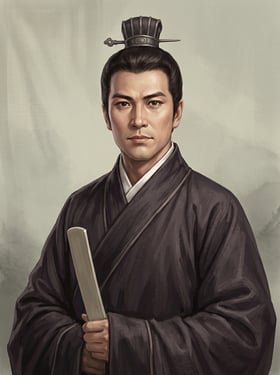
Zhao Zi was a friend of Sima Lang from the same county. He rose to become Grand Master of Ceremonies (taichang), and was esteemed by his age as a man of quality.

Life
In the novel: 1 chapter · In the Records: 3 volumes
Life?–?
223 CE (Huangchu 4)
230 CE (Taihe 4)
233 CE (Qinglong 1)
- Sun Quan's Faction
- Cao Wei· Undated
- Hatched: dated by chapter
- Life event
List all 2 stops
- Wuchang223Deng Zhi's Mission to Wu
- Hefei230–233Man Chong's Defense of Huainan+1 more
On the boards
Compare with someone →Where this person ranks on each board.
Who they were
Character profile
- Character
- Zhao Zi was a friend of Sima Lang from the same county. He rose to become Grand Master of Ceremonies (taichang), and was esteemed by his age as a man of quality.
- Manner of speech
- Zhao Zi answered fluently, and before Cao Pi warmly praised the lord of Wu as 'brilliant, benevolent, wise, and boldly strategic'. He handled 'missions to the four quarters' with propriety.
- Life
- When the armies of Guandong rose up, Zhao Zi moved his whole household eastward to Liyang together with Sima Lang. He later rose to the office of Grand Master of Ceremonies.
- Anecdotes
- Zhao Zi swore to undertake his mission on pain of death, and Cao Pi praised him: 'Sent to the four quarters, he did not disgrace his sovereign's charge'. He once went as a Palace Grandee (zhong dafu) of Eastern Wu to Xu to seek aid.
Historical Record
Zhao Zi, courtesy name Junchu, was a fellow native of the same county as Sima Lang. When the turmoil caused by Dong Zhuo broke out, Sima Lang feared that the area around Wen County would become a battlefield torn apart by war. He urged the people of his native place to move east to Liyang with their families. Most of the elders were attached to their homes and did not follow; Zhao Zi alone took his family and went with them. After the commanderies and provinces east of the Passes rose in arms, warfare and looting continued. By the time the eastern forces had dispersed and Sima Lang’s family returned to Wen County, Zhao Zi’s early experience of migration had become part of Sima Lang’s biography. Zhao Zi later rose to the office of Grand Minister of Ceremonies and was renowned for his fondness for worthy men. Pei Songzhi’s annotation records his courtesy name as Junchu and notes that his son Zhao Feng later became a General of Agile Cavalry in the Jin dynasty and was enfeoffed as Duke of Dongpingling.
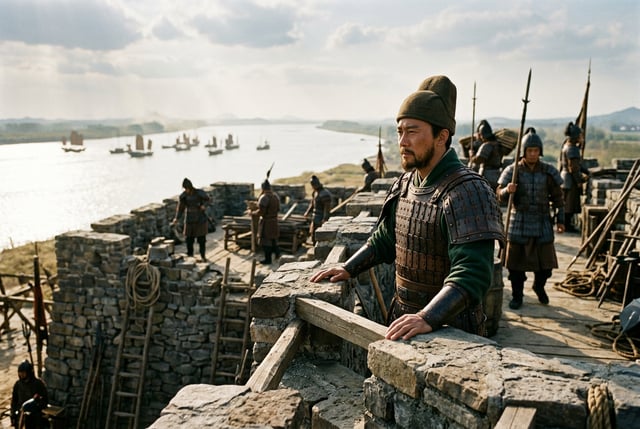
Zhao Zi later served Cao Wei as a Minister of the Secretariat. In the first year of the Qinglong era, Man Chong proposed moving the troops stationed inside Hefei to a defensible site thirty li west of the city and building a new city there. Jiang Ji opposed the proposal, arguing that it would show weakness. Man Chong submitted another memorial, explaining his strategy on the grounds that military forces could feign their intentions to lure the enemy. Zhao Zi agreed with Man Chong, and the court approved the proposal. The related account goes on to describe Sun Quan’s attack on the new city being repulsed, an ambush by Wei forces, and other events; Zhao Zi’s explicit role here, however, was to take part in the deliberation and support the plan to relocate the city.
Zhao Zi later went on a mission to Wei in his capacity as an officer of the Eastern Wu commandery. Emperor Wen of Wei asked what sort of ruler Sun Quan was. Zhao Zi described him as intelligent, benevolent, wise, and possessed of grand strategic ambition, citing his employment of Lu Su, promotion of Lü Meng, capture of Yu Jin without harming him, acquisition of Jing Province, and submission to Wei as evidence. The emperor then asked whether Wu valued learning, whether it could be conquered, whether it feared Wei, and how many talented men like Zhao Zi it had. Zhao Zi answered each question in turn, emphasizing that Wu had the strength to defend itself, and used the phrase “as numerous as the carts and measures” to describe the abundance of talent in Wu. The Wu shu, quoted in Pei Songzhi’s annotation, also says that Zhao Zi made several missions to the north and was held in high regard. Sun Quan commended his performance and appointed him Cavalry Commandant. Zhao Zi also once proposed changing the era name and correcting the color of official dress, and Sun Quan accepted his advice.
In the Novel
Chapter 82 of Romance of the Three Kingdoms portrays Zhao Zi as an envoy who, when Sun Quan faced pressure from the Shu army, volunteered for a diplomatic mission and used his quick wit to safeguard Eastern Wu’s position. In the novel, Sun Quan is worried after Zhuge Jin fails to secure peace with Shu. Zhao Zi offers to go to Wei, explain the strategic situation, and urge Wei to seize Hanzhong to tie down the Shu army. He also vows to throw himself into the river if anything goes wrong, saying he would then have no face to return and meet the people of Jiangnan. This proposal to “use Wei to attack Shu,” and his oath to die, are inventions of the novel; the Records of the Three Kingdoms records neither this crisis nor this plan.
When Zhao Zi reaches Xu, the novel has him praise Sun Quan point by point before Cao Pi, then answer questions about Wu’s learning, the relative strength of Wei and Wu, and the number of talented men in Wu. Cao Pi praises him for traveling on missions in all directions without disgracing his sovereign’s command. The central exchange echoes the biography’s account of Zhao Zi’s mission to Wei, his description of Sun Quan as “intelligent, benevolent, and wise, a ruler of grand strategic ambition,” and his answers about Wu’s talent. The novel, however, places the exchange in the dramatic context of Sun Quan seeking aid and heightens Zhao Zi’s image as a quick-witted envoy devoted to his mission.
The novel also relates that Cao Pi enfeoffed Sun Quan as King of Wu and bestowed the Nine Honors upon him, after which Zhao Zi took his leave and departed the city. Cao Pi rejected Liu Ye’s suggestion to attack Wu and ordered Xing Zhen to accompany Zhao Zi to Eastern Wu with the letter of investiture. Historical sources record Zhao Zi’s mission to Wei and his diplomatic responses, but do not mention this investiture mission described in the novel. This episode is therefore part of the novel’s elaboration.
Key Relationships
Zhao Zi’s relationship with Sima Lang began through their association as fellow natives of the same county. When Sima Lang left Wen County and took his clan east to Liyang, the other people of their native place did not follow; Zhao Zi was the only one who brought his family along. This makes Zhao Zi’s early image one linked first to the choice to migrate amid the turmoil of the age and to his trust in a friend.
Zhao Zi later served Cao Wei, held the office of Minister of the Secretariat, and supported Man Chong over the question of Hefei Xincheng. Later still, he became an envoy sent by Sun Quan to Wei. The historical biographies thus portray an official who served different regimes, took part in deliberations, and undertook diplomatic missions.
In the Romance, Zhao Zi works directly to resolve Sun Quan’s crisis, explaining to Cao Pi the strategy of using Wei to contain the Shu army. Sun Quan trusts him and sends him on the mission, while Cao Pi also recognizes his diplomatic ability. These specific interactions, centered on seeking aid and receiving an investiture, are part of the novel’s portrayal and are not recorded in the Records of the Three Kingdoms. (Unique to the Romance)
Signature Scenes
The scene that best conveys Zhao Zi’s choice in his early years is Sima Lang urging the people of their native place to escape the warfare and move east to Liyang: the elders did not follow, but Zhao Zi took his family and went with him. Though brief, this episode places Zhao Zi amid the instability following Dong Zhuo’s upheaval and explains why the biography brings him into the narrative through Sima Lang’s life.
Another scene from the historical record takes place at the Wei court. Cao Pi presses Zhao Zi with a series of questions about Sun Quan and Wu. Citing Lu Su, Lü Meng, Yu Jin, and Jing Province, Zhao Zi both praises Sun Quan and demonstrates the quickness of an envoy in answering. This is the most concentrated presentation of Zhao Zi’s diplomatic skill in the historical biography.
The climax in the Romance is Zhao Zi’s exchange with Cao Pi on the palace steps. He insists on calling Sun Quan “an intelligent, benevolent, and wise ruler of grand strategic ambition,” then answers the question of whether Wu can be conquered by invoking its military strength and the terrain of the Jiang and Han rivers. Cao Pi finally commends him for “not disgracing his sovereign’s command.” The scene draws on the main substance of the historical exchange, but places it in the novel’s context of seeking Wei’s aid and makes Zhao Zi’s quick wit the focus of the episode. (Unique to the Romance)
Quotes
11 lines in the books · 3 featured
「臣非過譽也。吳侯納魯肅於凡品,是其聰也;拔呂蒙於行陣,是其明也;獲于禁而不害,是其仁也;取荊州兵不血刃,是其智也;據三江虎視天下,是其雄也;屈身於陛下,是其略也。以此論之,豈不為聰明仁智雄略之主乎?」
This line fully conveys Sun Quan's grand vision and talent, a classic of Zhao Zi's diplomatic eloquence.
「聰明特達者八九十人;如臣之輩,車載斗量,不可勝數。」
This line uses humble words to underscore how the state of Wu abounds in talent, displaying diplomatic wisdom.
「大國有征伐之兵,小國有禦備之策。」
Concise and to the point, this line embodies the survival wisdom of a weak state facing a powerful one.
Family, lords and rivals
1 relationships
Who is Zhao Zi connected to?
Pick someone to see how many steps lie between them and Zhao Zi.
History vs. novel
7 points · 2 novel-only
| History | Novel |
|---|---|
| Background to the missionNovel embellishes | |
According to historical records, after Liu Bei advanced on Wushan and Zigui, Sun Quan sent Commandant Zhao Zi on a mission to Wei; they do not mention Zhuge Jin failing in a diplomatic mission. vol. 47 | The novel says that Zhuge Jin failed to negotiate peace with Liu Bei, and that Sun Quan, worried that Jiangnan was in peril, heard Zhao Zi volunteer the plan to travel to Cao Wei on a diplomatic mission. ch. 82 |
| Urging Wei to attack HanzhongNovel only | |
| — | Zhao Zi advised Sun Quan to submit a memorial declaring himself a subject and to persuade Cao Pi to seize Hanzhong, thereby tying down the Shu army and relieving Eastern Wu’s peril. ch. 82 |
| Vow to throw himself into the riverNovel only | |
| — | Sun Quan cautioned Zhao Zi not to let Eastern Wu lose face. Zhao Zi replied that if anything went wrong, he would throw himself into the river and die, so he would never have to face the people of Jiangnan in shame. ch. 82 |
| Assessing Sun QuanNovel embellishes | |
When Cao Pi asked what kind of ruler Sun Quan was, Zhao Zi called him “a wise, benevolent, and discerning ruler of great ambition,” and explained his answer with six examples. vol. 47 | The novel likewise has Zhao Zi use six examples to illustrate Sun Quan’s wisdom, benevolence, and ambition, but changes “commanding three provinces” to “commanding the three rivers.” ch. 82 |
| Replying to the question about Sun Quan’s love of learningNovel embellishes | |
When Cao Pi mockingly asked whether Sun Quan loved learning, Zhao Zi said that he appointed the worthy and put the capable to work, with his sights set on governing and developing the realm. In his spare time, he read widely in books and records, but did not pore over texts like a pedantic scholar, searching for isolated phrases. vol. 47 | The novel retains Zhao Zi’s reply and elaborates that Sun Quan read widely in books and records, studied historical works, and drew out their main points. ch. 82 |
| Exchange on the relative strength of Wei and WuNovel embellishes | |
Cao Pi asked whether Wu could launch an attack and whether it feared Wei. Zhao Zi replied that Wu had strong defenses and that the Yangtze and Han River served as natural barriers. vol. 47 | The novel also has Cao Pi ask about attacking Wu and whether Wu feared Wei. Zhao Zi responds that Wu had a large army and that the Yangtze and Han River provided natural defenses, upholding Eastern Wu’s position. ch. 82 |
| Number of talented peopleNovel embellishes | |
Cao Pi asked how many people like Zhao Zi there were in Wu. Zhao Zi replied that Wu had eighty or ninety outstanding talents, while people like himself were too numerous to count. vol. 47 | The novel retains Zhao Zi’s answer about the number of talented people in Wu, and adds that Cao Pi praised him afterward for fulfilling his mission without disgracing his ruler. ch. 82 |
- Background to the missionNovel embellishes
- History
According to historical records, after Liu Bei advanced on Wushan and Zigui, Sun Quan sent Commandant Zhao Zi on a mission to Wei; they do not mention Zhuge Jin failing in a diplomatic mission.
vol. 47
- Novel
The novel says that Zhuge Jin failed to negotiate peace with Liu Bei, and that Sun Quan, worried that Jiangnan was in peril, heard Zhao Zi volunteer the plan to travel to Cao Wei on a diplomatic mission.
ch. 82
- Urging Wei to attack HanzhongNovel only
- Novel
Zhao Zi advised Sun Quan to submit a memorial declaring himself a subject and to persuade Cao Pi to seize Hanzhong, thereby tying down the Shu army and relieving Eastern Wu’s peril.
ch. 82
- Vow to throw himself into the riverNovel only
- Novel
Sun Quan cautioned Zhao Zi not to let Eastern Wu lose face. Zhao Zi replied that if anything went wrong, he would throw himself into the river and die, so he would never have to face the people of Jiangnan in shame.
ch. 82
- Assessing Sun QuanNovel embellishes
- History
When Cao Pi asked what kind of ruler Sun Quan was, Zhao Zi called him “a wise, benevolent, and discerning ruler of great ambition,” and explained his answer with six examples.
vol. 47
- Novel
The novel likewise has Zhao Zi use six examples to illustrate Sun Quan’s wisdom, benevolence, and ambition, but changes “commanding three provinces” to “commanding the three rivers.”
ch. 82
- Replying to the question about Sun Quan’s love of learningNovel embellishes
- History
When Cao Pi mockingly asked whether Sun Quan loved learning, Zhao Zi said that he appointed the worthy and put the capable to work, with his sights set on governing and developing the realm. In his spare time, he read widely in books and records, but did not pore over texts like a pedantic scholar, searching for isolated phrases.
vol. 47
- Novel
The novel retains Zhao Zi’s reply and elaborates that Sun Quan read widely in books and records, studied historical works, and drew out their main points.
ch. 82
- Exchange on the relative strength of Wei and WuNovel embellishes
- History
Cao Pi asked whether Wu could launch an attack and whether it feared Wei. Zhao Zi replied that Wu had strong defenses and that the Yangtze and Han River served as natural barriers.
vol. 47
- Novel
The novel also has Cao Pi ask about attacking Wu and whether Wu feared Wei. Zhao Zi responds that Wu had a large army and that the Yangtze and Han River provided natural defenses, upholding Eastern Wu’s position.
ch. 82
- Number of talented peopleNovel embellishes
- History
Cao Pi asked how many people like Zhao Zi there were in Wu. Zhao Zi replied that Wu had eighty or ninety outstanding talents, while people like himself were too numerous to count.
vol. 47
- Novel
The novel retains Zhao Zi’s answer about the number of talented people in Wu, and adds that Cao Pi praised him afterward for fulfilling his mission without disgracing his ruler.
ch. 82
Combat
On the field
Duels, kills and executions as the texts tell them, counted separately for the Records and the Romance.
Stratagems
Plans this person devised or saw through, as the texts tell them.
- Romance
- 1 carried out · 0 worked · 0 turned down · 0 seen through
- RomanceUse Wei to Attack ShuPersuasionFailedagainst Shu troopsCh. 82「奈魏主不肯接應」
Events
Events (5)
Battles and events the texts place this person in, by date.
Battles
Other events
Continue
Man Chong Relocates and Builds the New Hefei City
Inner monologues · AI-generated1 monologue ▸
- I am Zhao Zi, courtesy name Dedu, from Nanyang. By order of the King of Wu, I went on a mission to the Wei court. As I p