Overview
Wuzhang Plains is a plateau on the south bank of the Wei River in Wugong County, near the mouth of Xie Valley. In the twelfth year of the Jianxing era (234), Zhuge Liang led his army out through Xie Valley and encamped there. He faced off against Sima Yi on the south bank of the Wei River, and died of illness in the army that August. Wuzhang Plains thus became the final chapter of Zhuge Liang’s life.
History
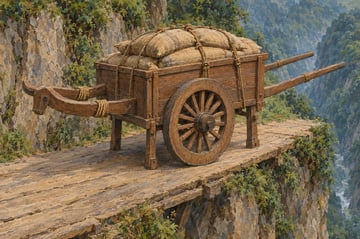
In the spring of the twelfth year of the Jianxing era (234), Zhuge Liang led his entire army north through Xie Valley, using oxen-shaped supply carts to transport grain. He occupied Wuzhang Plains in Wugong and faced off against Sima Yi south of the Wei River. Emperor Ming of Wei issued an edict ordering Sima Yi to hold his fortified camps, blunt the enemy’s momentum, and wait for the Shu army to withdraw once its provisions ran out. Zhuge Liang was often concerned that the supply of grain would fail to keep up, so he sent troops to settle and farm the land as a foundation for a prolonged stay. The soldiers farming there worked alongside the residents along the Wei River; the people lived in peace, and no one in the army disturbed them.
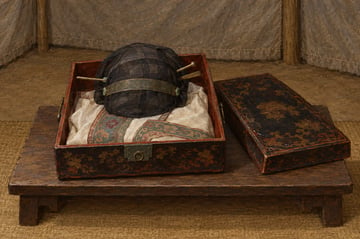
The two armies remained locked in a standoff. Zhuge Liang repeatedly challenged the Wei army, but Sima Yi held his position and did not respond. Emperor Ming of Wei sent Xin Pi to the army with imperial authority to restrain Sima Yi, after which none of the generals dared disobey the order and go out to fight. Pei Songzhi’s annotation cites the Spring and Autumn Annals of the Wei Clan, which says that Zhuge Liang also sent women’s clothing, including a headscarf, to provoke Sima Yi. When Sima Yi received an envoy from Shu, he asked only about Zhuge Liang’s food, daily routine, and workload. On hearing that Zhuge Liang handled everything himself and ate very little, he concluded that Zhuge Liang would not live long.
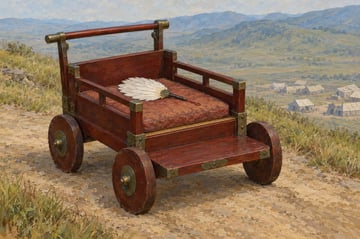
After more than a hundred days of stalemate, Zhuge Liang died of illness in the army in the eighth month, at the age of fifty-four. Pei Songzhi’s annotation preserves differing accounts of his death: the Book of Wei says that, with provisions exhausted and his position hopeless, he became so grief-stricken that he vomited blood, burned the camps, and withdrew; he died of illness on the way into the valley. Pei Songzhi considered this an exaggeration by the people of Wei. The Spring and Autumn Annals of Han and Jin, by contrast, says that he died at Guo Clan Fort. As the Shu army withdrew, Yang Yi led the troops out in formation. Sima Yi pursued them, and Jiang Wei ordered Yang Yi to turn the banners around, beat the drums, and feign a counterattack. Sima Yi withdrew and did not dare approach. Only after the Shu army had entered the valley did it announce Zhuge Liang’s death, prompting the saying among the people, “The dead Zhuge Liang drives off the living Zhongda”. Later, Sima Yi inspected the Shu army’s abandoned camps and praised Zhuge Liang as “a rare talent under heaven”.
Differences Between History and Fiction
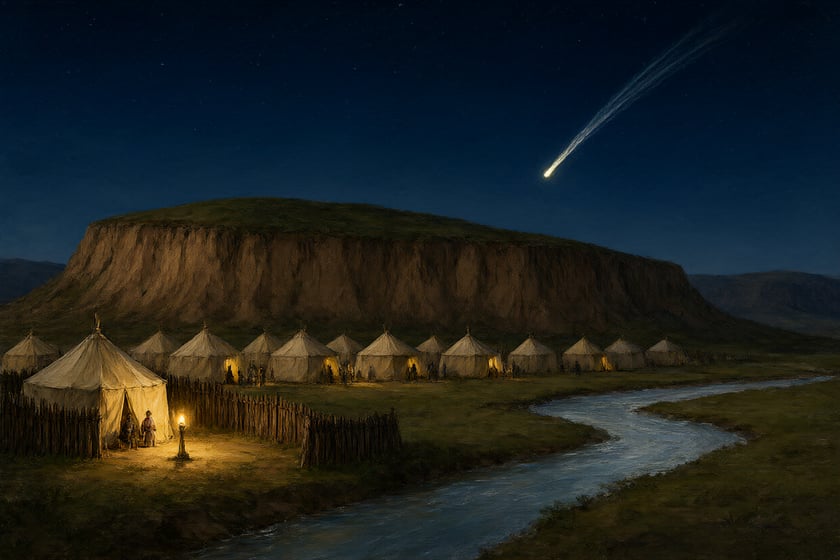
At the end of Chapter 38, Romance of the Three Kingdoms foreshadows Zhuge Liang’s fate with the line “The star falls in the autumn wind at Wuzhang Plains”. The novel depicts Zhuge Liang setting up lamps in his tent at Wuzhang Plains to perform a rite seeking an extension of his life. On the sixth night, the principal lamp was still lit, but Wei Yan rushed in with news that Wei troops had arrived and accidentally extinguished it. Zhuge Liang sighed, “Life and death are governed by fate”. The rite to prolong his life is not recorded in the Records of the Three Kingdoms. Pei Songzhi’s annotation cites the Autumn Annals of Jin, which says only that a star with red rays fell toward the Shu camp three times, and Zhuge Liang died not long afterward.
Today
Wuzhang Plains is in Wuzhangyuan Town, south of Qishan County, Baoji City, Shaanxi Province. A temple commemorating Zhuge Liang stands on the plateau.