Overview
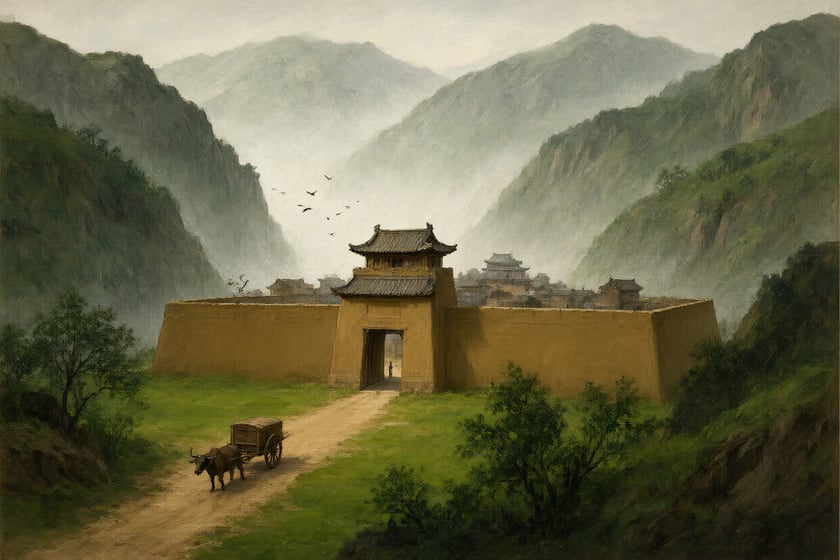
Xixian was a county under Hanyang Commandery in Liang Province during the Eastern Han (known as Tianshui Commandery under Wei). Its county seat was called Xicheng, and its former site lay around southwest of present-day Tianshui City and northeast of Li County in Gansu Province. The Liang Province official Yan Wen was a native of Xicheng in Tianshui. In the sixth year of Jianxing (228), during Zhuge Liang’s first northern campaign, after the defeat at Jieting, he moved more than a thousand households from here back to Hanzhong. The Romance of the Three Kingdoms also places the Empty Fort Strategy in this city, making Xixian widely known.
History
In the final years of the Eastern Han, Liang Province was in turmoil. Liang Shuang, a native of Tianshui, rebelled and captured Xicheng. At the time, Wang Yi, wife of Zhao Ang, the magistrate of Qiangdao, was in Xicheng. Her two sons were killed, and she disfigured herself to survive; she remained in danger until Liang Shuang reconciled with the provincial and commandery authorities.
In the spring of the sixth year of Jianxing (228), Zhuge Liang led his army to attack Mount Qi. The three commanderies of Nanan, Tianshui, and Anding rebelled against Wei in response. Ma Su disobeyed orders at Jieting and was decisively defeated by Zhang He. Zhuge Liang then moved more than a thousand households from Xixian and withdrew to Hanzhong. That year, Jiang Wei joined Zhuge Liang and also entered Shu with the retreat, becoming separated from his mother.
Figures
- Yan Wen: A native of Xicheng in Tianshui, he served as Liang Province’s deputy governor and as magistrate of Shanggui. When Ma Chao besieged Jicheng, Yan Wen slipped out at night to seek help but was captured. Though brought beneath the city walls, he shouted that reinforcements would arrive within three days, and Ma Chao ultimately killed him.
- Wang Yi: Wife of Zhao Ang. When Liang Shuang captured Xicheng, she was inside the city and protected herself by wearing filthy clothes. The account appears in Pei’s annotations, citing Huangfu Mi’s Biographies of Exemplary Women.
Differences in the Literary Account
The Romance of the Three Kingdoms calls this place “Xicheng County” and, speaking through Sima Yi, says that although it was a small county in a remote mountain region, it was where the Shu army stored grain and the main route to the three commanderies of Nanan, Tianshui, and Anding. The novel says that Zhuge Liang brought five thousand troops to Xicheng to transport grain and provisions; after half left, only 2,500 men remained in the city. Sima Yi arrived with an army of 150,000, and Zhuge Liang threw open all four gates and burned incense and played the qin on the city tower. After Sima Yi withdrew and later returned to Xicheng, he learned that there had been only 2,500 men in the city and no ambush. He regretted it too late and lamented that he was no match for Kongming. The Empty Fort Strategy at Xicheng is not recorded in the Records of the Three Kingdoms. Pei Songzhi’s annotations to the Biography of Zhuge Liang in the Records of the Three Kingdoms cite Guo Chong’s Three Anecdotes, which contains a similar story, but places it at Yangping; Pei Songzhi had already argued that the account was untrustworthy. The novel also says that Zhuge Liang ordered the people of Xicheng to accompany the army to Hanzhong, which accords with the historical record that more than a thousand households were moved from Xixian.