Background
The key circumstance surrounding Sun Quan Succeeds to Power was Sun Ce’s sudden death while the regime in Jiangdong was still being founded and consolidated. Romance of the Three Kingdoms depicts Sun Ce summoning Zhang Zhao and others, along with Sun Quan, to his bedside, handing over his seal and ribbons of office, and entrusting his affairs to them with the words, “Make your own plans carefully.” He also explicitly compared the strengths of the brothers: Sun Ce considered himself skilled at making decisions amid battle, while Sun Quan excelled at selecting worthy men, assigning them responsibilities, and enabling everyone to put their abilities to use. This casts the transfer of power not merely as an inheritance within the family, but as a choice based on governing ability. The prompt dates this event to the fifth year of Jian’an (200), but the cited chapters focus more on Sun Ce’s deathbed instructions and the succession process than on recording the transfer’s institutional details.
Sun Ce’s instructions also point out that Jiangdong’s prospects rested on its population in Wu and Yue and the natural defenses of the Yangtze and the Three Rivers. Yet these advantages would not automatically produce stable rule. The new ruler had to secure the allegiance of military and civil officials, maintain local order, and prevent the succession crisis from driving people away. Sun Quan’s first task, therefore, was not to prove immediately that he could charge into battle like Sun Ce, but to turn the military foundations left by his father and brother into sustainable institutions and alliances.
Key Figures
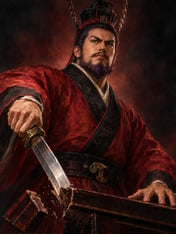
Sun Quan was the heir, but he was also assigned a political role distinct from Sun Ce’s. In his deathbed assessment, Sun Ce did not describe Sun Quan as his military substitute; instead, he emphasized his potential to recognize and employ talent and to hold Jiangdong together. This appraisal expressed both a brother’s trust and a political demand placed on the new ruler: Sun Quan had to ensure that the generals and civil officials each found their proper place, drawing on the abilities of the group to offset his relative lack of battlefield decisiveness.
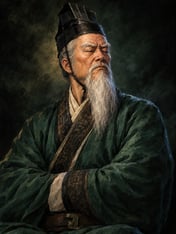
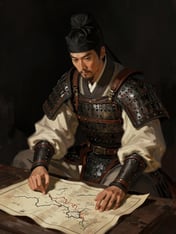
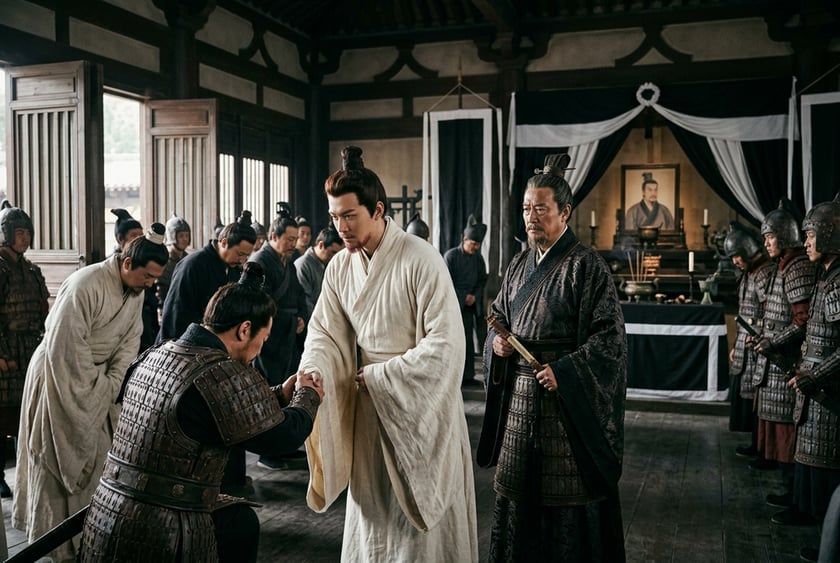
Zhang Zhao served as a guardian of order during the transition. Seeing Sun Quan grieving before the coffin, he urged him to handle mourning and the affairs of state and war in parallel. He then arranged for Sun Jing to preside over the funeral rites and invited Sun Quan to receive the civil and military officials in the main hall. This scene shows that mourning could not be allowed to extend indefinitely into a power vacuum; public recognition through ritual could also turn a private fact of inheritance into a political fact visible to the assembled officials. By overseeing the funeral, Sun Jing linked family rites with the day-to-day functioning of the regime.
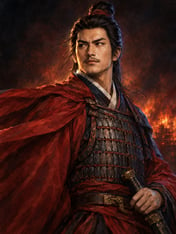
Zhou Yu’s return and loyalty provided crucial military support for the new regime. After news of Sun Ce’s death arrived, Zhou Yu hurried back to mourn and pledged to serve Sun Quan until death. Sun Quan himself declared, “Now that Gongjin has returned, I have nothing to worry about.” This is not simply a depiction of personal affection. It signals that the security of Sun Quan’s succession depended on whether generals with troops and prestige would transfer their loyalty from Sun Ce personally to the new center of rule. Lu Su is listed among the participants, but the passages provided do not directly show what he did at the time of the succession; his later role as a strategist should therefore not be projected backward as evidence for this moment.
Core Issues
The foremost issue is how the legitimacy of succession moved from blood ties to political recognition. Sun Quan inherited the foundations laid by his father and brother, with Sun Ce’s personal transfer of the seal and ribbons of office and his deathbed charge serving as grounds within both family and political spheres. Zhang Zhao’s arrangement for the officials to pay their respects then made the succession public. The text does not depict a complex struggle over the succession, but that does not mean the transition was without risk. Precisely because the new ruler still had to establish his authority, the deathbed charge, ritual, officials’ declarations, and military support had to reinforce one another.
The second issue is the tension between grief and governance. Zhang Zhao’s demand that Sun Quan dry his tears did not deny the bond between the brothers; rather, it stressed that a ruler’s personal emotions must not bring the affairs of state and war to a halt. The reasoning reflects a clear political realism: the funeral had to be completed, and the succession had to take effect at the same time. Sun Quan’s restraint thus became a public performance of rule, showing his subjects that he honored Sun Ce’s achievements while also accepting the responsibilities of his successor.
The third issue is the shift from rule by an individual hero to collaborative governance. Sun Ce described his strength as prevailing in the contest of battle, while Sun Quan’s lay in selecting and employing worthy men. Zhou Yu’s military support, Zhang Zhao’s administrative and stabilizing role, and Sun Jing’s handling of the funeral together form a picture of complementary strengths. The novel later depicts Sun Quan welcoming worthy men, inviting guests to his court, and drawing on both civil and military talent, presenting a direction in which his talent base gradually expanded after he took power. These later passages show how the work portrays Sun Quan’s rule; they should not be mistaken for institutional arrangements already completed on the day of his succession.
Political Consequences
In the immediate term, Sun Quan took control of Jiangdong and won the support of important subordinates, so Sun Ce’s death did not immediately lead to an open succession war in the novel’s account. Zhou Yu’s return to Wu, Zhang Zhao’s management of the transition, and Sun Jing’s handling of the funeral answered the needs of the army, bureaucratic order, and family ritual respectively. Together, they formed the new regime’s initial stabilizing mechanism. This “stability” is a political effect presented by the narrative; it does not justify concluding that every local power thereafter raised no objections.
Over the longer term, Sun Quan’s rule is portrayed as gradually attracting talent and strengthening its civil and military ranks. Volume 38 says that he welcomed worthy men and received guests from across the realm, lists a number of civil and military officials, and sums up the situation with the phrases “all assisting one another” and “Jiangdong was renowned for the abundance of capable men.” This echoes Sun Ce’s deathbed assessment: Sun Quan’s authority came not only from inheritance but also had to be continually affirmed through the employment of talent. Yet this account is a successful outcome depicted in hindsight, not a result already assured at the outset of his succession.
The succession also left Sun Quan with the dual responsibility of preserving Jiangdong’s foundations: he had to defend the territory and troops left by his father and brother while building a political network of his own. In later chapters, when Sun Quan receives Lady Wu’s charge, he is still instructed to treat Zhang Zhao and Zhou Yu with the respect due to his teachers. The novel thus continues to portray relations between ruler and ministers as central to supporting the new ruler and restraining his impulsiveness. From this perspective, succession meant not only gaining power but also accepting expectations of governance centered on trust, respect for ritual propriety, and shared responsibility.
Counterfactual Analysis
Had Sun Ce left no clear deathbed charge, Sun Quan might have found it harder to turn family inheritance into a succession arrangement accepted by the assembled officials. In the situation depicted in the text, Sun Ce’s death came suddenly, and Zhang Zhao had to move at once to handle the funeral alongside the affairs of state and war. Without an explicit designation on his deathbed, civil officials, generals, and members of the clan might each have interpreted for themselves who was entitled to rule, and the succession dispute could have turned into military division. This is an inference based on the narrative structure, not evidence from historical sources that such a crisis actually occurred.
Had Zhou Yu failed to return promptly or refused to serve, Sun Quan, even with a nominal claim to succeed, would have lacked the public endorsement of an important military leader. The novel directly links Sun Quan’s having “nothing to worry about” with Zhou Yu’s return, suggesting that the new ruler’s sense of security was inseparable from his military alliances. Conversely, Zhang Zhao’s administrative measures alone could not replace the support of a military commander. This does not mean that Zhou Yu alone determined whether the Jiangdong regime survived; the text presents him as a crucial pillar, not as the whole of its strength.
Had Sun Quan chosen to imitate Sun Ce and tried to unify Jiangdong solely through his own ability in battle, he might have ignored the difference in abilities noted by his brother and failed to make full use of the civil and military talent already available. Conversely, if he had relied entirely on his advisers without establishing his own authority, the regency network might itself have become a constraint on his power. The ideal solution offered by the novel is to take Sun Ce’s deathbed charge as the starting point for legitimacy, rely on Zhang Zhao and others to maintain order, and then gradually build a ruling base of his own through the employment and recruitment of worthy men. Even so, the political-historical significance of the outcome cannot be determined fully from these passages alone.